



What is an EGR Delete? Key Takeaways
A foundational engineering explanation of diesel Exhaust Gas Recirculation (EGR) deletes, their purpose, and their impact on heavy-duty engine performance:
- Definition & Function: An EGR delete kit completely removes or blocks off the factory exhaust gas recirculation system—including coolers, valves, and crossover tubes—stopping the engine from recycling hot, soot-laden exhaust gases back into the intake manifold.
- Core Purpose & Benefits: By eliminating soot buildup and internal cooler cracking, an EGR delete prevents catastrophic coolant leaks and hydro-locking, lowers intake air temperatures, improves throttle response, and enhances overall engine reliability.
- Required Tuning & Compliance: Physical removal of the EGR system must always be paired with custom ECM programming to disable diagnostic fault codes, prevent engine derate (limp mode), and adjust fuel-air mapping for off-road or competition use.
Your $60,000 diesel truck is overheating again, blowing white smoke, and has lost half its power. The shop says "EGR cooler failed." Sound familiar?
The EGR system (Exhaust Gas Recirculation) reroutes a portion of exhaust back into the intake to lower combustion temperatures and reduce NOx emissions. If you've wondered what EGR means, that's the basic idea.
Recently, diesel owners have discussed removing or blocking the EGR system. An EGR delete kit removes or blocks the exhaust gas recirculation system on a diesel engine. It stops hot soot-filled exhaust from going back into the intake, preventing common failures and restoring lost power.
I have helped hundreds of truck owners fix these exact problems since 2005. Some chose deletes. Some kept the EGR.
Today I will show you everything you need to know, including what an EGR delete is, why to install it, pros and cons, legal risks, alternatives, and costs, so you can decide what is right for your truck.
Table of Contents
- What Is an EGR Delete Kit?
- How Does the EGR System Work (And Why It Fails)
- Why Do People Install an EGR Delete Kit?
- Pros and Cons of EGR Delete Kits
- Is an EGR Delete Kit Legal?
- EGR Delete Kit Installation Tips
- Cost of an EGR Delete Kit
- Symptoms That Lead Owners to Consider an EGR Delete
- EGR Performance EGR Deletes for Diesel Engines (6.0/6.4/6.7 Powerstroke, 6.7 Cummins, Duramax, EcoDiesel)
- Legal Alternatives to EGR Delete
- EGR Delete vs. DPF Delete: What's the Difference?
- FAQs
- Should You Delete Your EGR System?
What Is an EGR Delete Kit?
Most owners think an EGR delete is just "a plate". It is much more than that if you want the truck to run right.
An EGR delete kit physically blocks the EGR valve and usually reroutes coolant lines. It stops exhaust gases from re-entering the engine and requires tuning to turn off related error codes. Dive deeper Paragraph as below:

1. EGR Delete Explained
When you install a delete kit, the EGR valve and cooler are blocked or removed, so exhaust stops entering the intake.
If you ask EGR delete what it does, the short answer is: deleting an EGR on a diesel prevents exhaust dilution of the intake charge and you will have fewer intake problems.
Many people ask what EGR delete means for their truck. An Echange reduces soot entering the intake and can stop coolant leaks tied to bad coolers.
Some owners also need a software change so the engine control unit doesn't flag an error. Keep in mind the ECU expects an EGR system. Without addressing the electronics, you'll likely see fault codes.
So the EGR removal includes both the hardware and the tuning side.
2. What Components are Typically Included
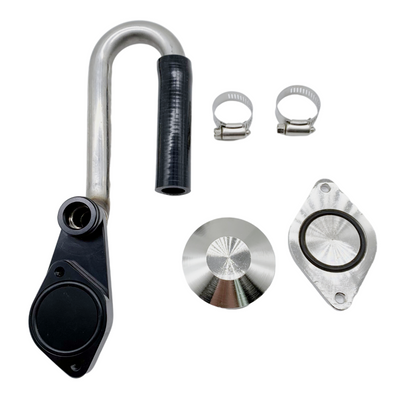
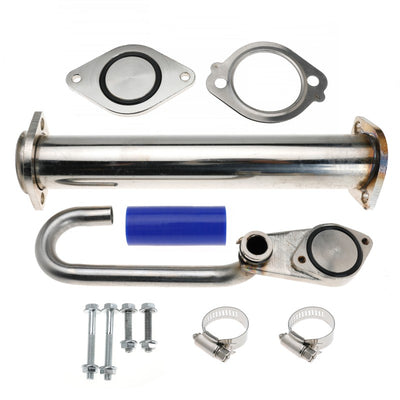
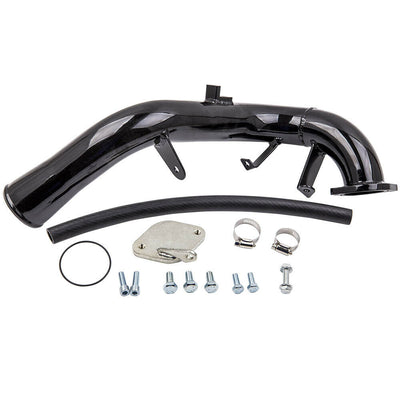
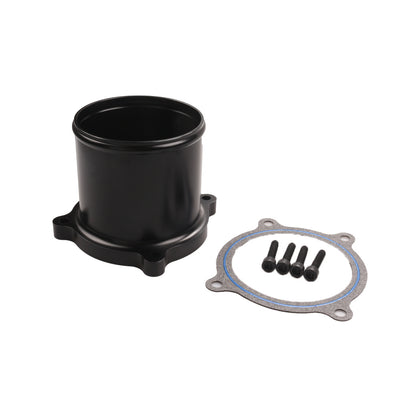
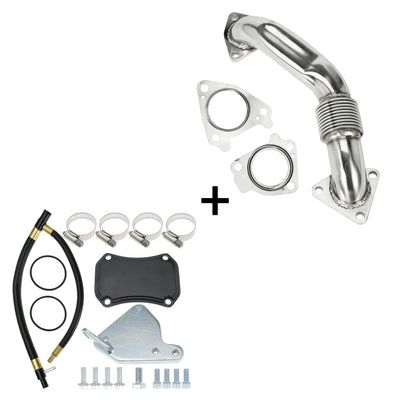
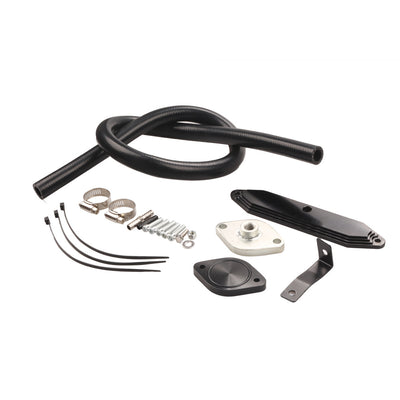
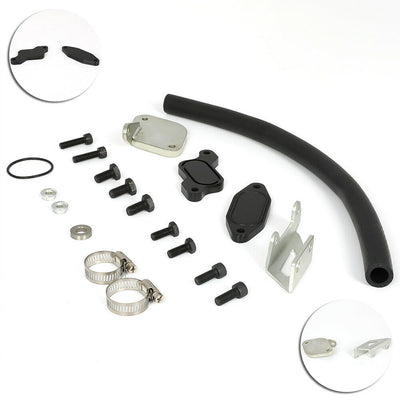
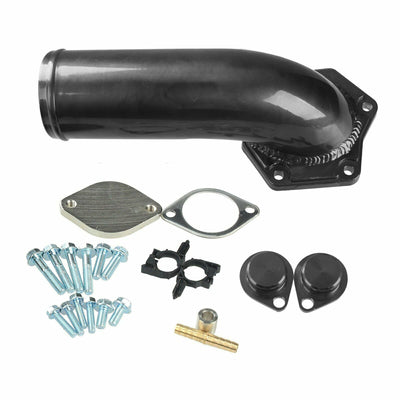
An EGR delete kit typically contains block-off plates, gaskets, bolts, clamps, and silicone coolant bypass hoses.
- EGR block-off plates – usually two CNC-machined plates with gaskets
- Coolant bypass hose or block-off plug – stops coolant flow to the failed cooler
- New clamps and hardware – stainless steel, so they don't rust
- Optional full race pipe – replaces the entire cooler assembly
3. What Does an EGR Valve Delete Do
Physically, deleting the valve stops exhaust from diluting intake air. The engine now only breathes fresh air. That reduces carbon buildup in the throttle body and intake manifold.
It can also remove a source of coolant leaks and white smoke if the cooler is failing. But the computer still expects to see EGR flow, so you get check-engine lights unless you tune it out.
I did my first 6.0 Powerstroke delete in my driveway back in 2016. The intake manifold was packed solid with black soot. After the delete, it stayed shiny clean even after 150,000 miles.
How Does the EGR System Work (And Why It Fails)
The EGR system sounded great on paper in 2003. EGR takes exhaust, runs it through a cooler, and mixes it with incoming air to lower NOx emissions. But in real life, soot and heat destroy the valves and coolers over time, and it destroys modern diesels.
Here is exactly what happens inside your engine.
1. What EGR Actually Does on a Diesel
When the computer commands EGR, the valve opens. Exhaust pushes past the cooler into the intake. This drops peak combustion temperature and reduces nitrogen oxides (NOx). That is the only reason it exists – emissions.
2. Common EGR Failure Points
The usual failures are soot buildup, clogged valves, cooler leaks, and warped hardware from thermal stress. Soot restricts flow, causing poor idle and reduced power.
Cooler leaks let coolant into the exhaust, producing white smoke and dropping coolant levels. That symptom alone pushes many owners toward diesel EGR delete kits.
- Soot packs the valve solid – it sticks open or closed
- Coolers crack and leak coolant into the exhaust (white smoke)
- Excessive heat warps the valve
- Coolant boiling inside the cooler causes steam pockets
3. Why Diesels Suffer More Than Gas Engines
Diesel exhaust is dirtier. Diesels run with high compression and heavy particulate output, which means EGR components see a lot of carbon. We run 20:1 compression ratios.
Short trips that don't reach self-cleaning temperatures make deposits worse. Cylinder temperatures are higher. The EGR cooler has to handle 1,200°F exhaust and 200°F coolant right next to each other.
That thin wall fails eventually. Trucks used for city driving suffer more than long-haul rigs.
Why Do People Install an EGR Delete Kit?
People delete EGR to stop repeated cooler failures, regain lost horsepower, lower EGTs, reduce soot, and make the engine last longer. Here are the real-world benefits I have seen on hundreds of trucks.

1. Preventing Coolant Loss & EGR Cooler Failure
No more coolant leaks into cylinders – prevents hydrolock.
Removing the cooler and sealing the passages stops coolant from flowing through the EGR circuit. This directly addresses white smoke and coolant loss. Many drivers consider what an EGR delete is after enduring repeated cooler repairs.
Proper coolant reroute is essential. If hoses are left open or not secured, you risk engine overheating. Follow the kit instructions or use a shop that knows diesel cooling systems.
In short, a delete can remove a recurring failure point if the job is done correctly.
2. Improving Engine Reliability
Intake manifold stays clean forever.
Less soot in the intake means fewer intake and turbo problems. That often translates into lower maintenance costs and fewer shop visits.
Those looking for the benefits of deleting a diesel typically list reliability improvements.
However, reliability gains depend on a clean install and appropriate tuning. A sloppy job can introduce leaks or sensor problems that harm reliability instead of helping it.
If you want better longevity, pair the high-quality delete kit from EGR Performance and correct ECU adjustments.
3. Restoring Lost Power and Extending Component Life
40–80 hp recovery on most trucks (the EGR was robbing that power)
Clogged EGR passages reduce airflow and can make the engine feel sluggish. Blocking that flow usually brings back throttle response.
For example, some owners want to regain lost power on older Powerstroke engines and they will need to install an EGR delete kit for 6.0 Powerstroke.
4. Reducing Soot Buildup
Oil stays cleaner without EGR soot contamination。
The accumulation of soot continuously within the intake is one of the largest reasons why people consider having an EGR delete. When exhaust is recirculated by the EGR system, the soot at some point would rest in the intake runners, sensors, and even the turbo vanes.
With time, the engine begins to get dawed as there is limited airflow.
Removing the EGR path cuts down a lot of that grime. The intake stays cleaner for longer, which helps the engine breathe the way it should.
It doesn't turn the truck into a race machine, but it does keep things running smoother and cleaner internally.
5. Lowering Exhaust Temperatures
Exhaust temps drop 200–400°F while towing.
The engine typically becomes slightly cooler with load when exhaust gases are not being returned into the intake.
There is a benefit in lower exhaust gas temperatures (EGTs), particularly among guys who use their trucks to tow or work hard. High EGTs may overload the turbo, head gasket, and pistons.
A delete will not resolve all the heat problems, but a lot of owners report a slight reduction in heat during heavy pulls. That's one of the practical advantages people point to when they talk about long-term durability.
6. Extending Turbocharger Life
Turbo lasts longer because it runs cooler and cleaner.
Cleaner airflow and slightly lower exhaust temps can take some strain off the turbo. Soot buildup and high EGT levels are both factors that shorten turbo life over time.
By reducing those stress points, a delete can help the turbo last longer. It's not a guaranteed fix, but many owners see fewer sticking vanes and stronger spools once the intake and exhaust paths stay clean.
My own 2006 6.0 went from 215 rwhp stock (with clogged EGR) to 312 rwhp after delete and mild tuning. It towed 12,000 lbs up mountains without exceeding 1,100 °F ever again.
Pros and Cons of EGR Delete Kits
Deletes are not magic. They fix some problems but create others.
There are clear EGR delete pros and cons. Pros include a cleaner engine, more power, lower temps, and better reliability. Cons: illegal on-road, voided warranty, emissions increase, possible inspection failure.
Pros:
- Almost zero soot in the intake
- Throttle response feels instant
- Many owners gain 1–3 mpg
- No more $2,000 EGR cooler bills
- The engine runs cooler and lasts longer
These gains are most visible on trucks that had severe EGR-related problems to begin with.
Cons:
- Fails visual and OBD emissions tests in most states
- Factory warranty gone
- Insurance may deny claims if discovered
- Increases NOx and particulate emissions
- Check engine light without proper tuning
Is an EGR Delete Kit Legal?
The EPA is cracking down harder every year. Fines are now in the millions for companies.
EGR deletes are illegal for on-road use under the Clean Air Act. The EPA considers them tamper devices. Some states still pass deleted trucks, many do not. Here is the current 2025 situation.

Federal Laws and EPA Restrictions
Federal law says you cannot remove or disable any emissions device on a vehicle used on public roads.
The EPA has fined delete-kit sellers over $10 million in the last three years.
That's why most tuning companies now label delete products as "off-road only" or" race-use only," even if many buyers aren't actually racing their trucks.
Whether an EGR-Deleted Vehicle Can Pass Inspection
A deleted EGR often triggers diagnostic trouble codes or fails visual inspection for missing parts.
States like California, Colorado, and New York now fail vehicles with missing EGR components during smog checks.
Texas, Wyoming, and most farm states still only sniff the tailpipe or do OBD scans, so many deleted trucks pass there.
I had a customer get a $2,500 fine in California because the referee station spotted block-off plates. Know your local rules.
Tampering with factory emissions control hardware subjects vehicle owners and installers to federal Clean Air Act enforcement, with strict penalties enforced across state-level smog inspection programs. To check specific state vehicle codes, off-road racing exemptions, and EPA enforcement policies, read our detailed legal breakdown on is EGR delete legal.
EGR Delete Kit Installation Tips
The job looks scary under the hood, but most competent shade-tree mechanics finish in a weekend.
Installation Time
Installation takes 4–12 hours depending on the truck.
- 6.7 Cummins – easiest, 4–6 hours
- L5P Duramax – moderate, 6–8 hours
- 6.4 Powerstroke – hardest, 10–14 hours (intake manifold removal)
Preparation
- You need basic hand tools, torque wrench, and a tuner.
- New gaskets and torque bolts should be used to spec. Lack of proper sealing is an invitation to the problem of exhaust leak and loss of coolant.
- A clean work area and the right tools will make the installation take place easily.
Steps:
You remove the intake manifold or cooler, install plates, reroute coolant, and flash a new tune.
DIY vs. Professional Installation
If you're comfortable with diesel disassembly, a careful DIY job can work. Otherwise, a pro avoids mistakes that cost more later.
A shop can also advise about platform-specific quirks, which is helpful for engines like Powerstroke, Cummins, and Duramax. If you pay a shop, expect $800–$1,800 labor on top of parts.
Many owners shopping for EGR delete costs include labor and tuning in their budget.
Troubleshooting: Check Engine Lights
At last, the tuning step is also important: failure to do it may leave the engine in a limp or fault mode.
After a delete, CELs commonly appear because sensors and expected EGR flow no longer match.
A tune or emulator is the usual fix. Without it, the ECU will log errors and may reduce performance.
Diagnose codes with an OBD reader and address each sensor condition. Emulators that mimic signals are sometimes used, but they increase legal risk.
Cost of an EGR Delete Kit
A full delete used to cost $1,500. Prices crashed in the last five years.
Basic kits now run $50–$150. Full race kits with pipes are $250–$400. Tuning adds $400–$800. Professional install another $800–$1,800. Still cheaper than one factory EGR cooler replacement.
Kit Price Ranges
Cheaper kits include simple plates and basic hardware. More expensive bundles have machined plates, silicone hoses, and rerouted coolant bundles. Vehicle kits are usually more expensive and fitting.
An EGR delete kit costs around $50–$400, depending on quality and vehicle specificity.
Required Labor Cost
Labor varies by shop and region. Expect several hours at local shop rates; that often adds $800–$1,800. Complex intake or turbo removal raises costs. A professional installation reduces the chance of leaks and warranty issues.
Additional Tuning Cost
A handheld or custom tune usually costs a few hundred dollars. Custom dyno tuning is more expensive but can optimize safety and performance.
Tuning adjusts fuel maps and clears EGR-related codes, preventing limp modes and misfires. Include tuning in your EGR delete cost estimate.
Total expenses vary depending on whether you choose a basic block-off plate set or a complete bypass system with full coolant reroute piping and custom software tuning. To review average shop labor hours, CNC hardware pricing, and complete project breakdowns, check out our guide on EGR delete cost.
Symptoms That Lead Owners to Consider an EGR Delete
These warning signs show up in my shop every single week. Overheating, white smoke, surging idle, P0401–P0408 codes, and sudden power loss all point to EGR system failure. Watch for these exact symptoms.
Before deleting, get a proper diagnosis. Sometimes, a cooler replacement or cleaning solves the problem legally and effectively.

1. Frequent Overheating
The truck overheats only when towing.
A failing EGR cooler leaks coolant, which can lower levels and cause overheating. If you see repeated overheating, the cooler is a likely suspect. Many drivers wonder what deleting a diesel aims to stop the repeated failure.
Fixes range from cooler replacement to a full delete. Choose the solution that fits your driving needs and legal constraints.
2. White Smoke From Coolant Leaks
Sweet smell and white smoke (coolant burning).
White exhaust smoke usually signals coolant in the exhaust or combustion. If the EGR cooler is cracked, deleting the cooler and sealing the circuit stops that source of white smoke.
But be sure coolant passages are properly rerouted. Improper reroute leads to overheating and engine damage.
A correct repair or a quality delete install fixes the symptom; the choice depends on legality and intended use.
3. Loss of Power, Rough Idle, and Check Engine Light
- Random power loss above 2,500 rpm
- Rough idle that smooths out when you unplug the EGR valve
- Constant "reduced engine power" message
I have seen trucks come in completely dead on a hook because the EGR cooler ruptured and hydrolocked cylinders.
Clogged EGR passages restrict airflow and can cause rough idling and limp behavior. Owners often ask what EGR delete means when they want to restore smooth operation.
Cleaning the EGR or replacing parts can fix many issues without legal risks. Consider this first if you must remain emissions-compliant.
If cleaning fails and you operate off-road, a delete might be reasonable; keep reversibility in mind.
EGR Performance EGR Deletes for Diesel Engines (6.0/6.4/6.7 Powerstroke, 6.7 Cummins, Duramax, EcoDiesel)
Not all trucks respond the same way to deletes.
6.0/6.4/6.7 Powerstroke, 6.7 Cummins, LML/L5P Duramax, and 3.0 EcoDiesel all gain reliability and power from EGR deletion.
Quick rundown by engine.
- 2003–2007 6.0 Powerstroke – delete almost mandatory for survival
- 2008–2010 6.4 Powerstroke – delete saves the engine from itself
- 2011–2019 6.7 Powerstroke – huge EGT drop when towing
- 2007.5–2025 6.7 Cummins – simplest install, massive reliability gain
- 2014–2016 LML Duramax – stops CP4 contamination risk
- 2017+ L5P Duramax – still beneficial but newer trucks have better coolers
- 3.0 EcoDiesel – delete turns it into a completely different engine
Confirm the kit matches your year and variant before buying. Platform forums and shops help identify which parts fit your model.
Legal Alternatives to EGR Delete
You do have options that keep you street-legal. Deep EGR cleaning, upgraded coolers, or regular replacement can extend life without breaking federal law.
Compare costs and long-term effects before deciding. If you want reliability without legal exposure, repair or upgrade is usually wiser than deletion.
1. OEM EGR Cleaning and Replacement
Cleaning removes carbon and often restores function for less cost than replacement. If cleaning fails, OEM replacement returns the system to like-new condition and keeps emissions equipment intact.
Upgraded coolers are more durable and reduce repeat failures for heavy-duty use. These options suit drivers who must pass inspections.
2. EGR Block-Off (Off-Road Only)
Some off-road or race trucks use block-off plates to stop exhaust flow into the EGR system. This is simple and cheap, but it's only legal when the truck is not driven on public roads.
Using EGR block-off plates on a street vehicle can lead to fines, failed inspections, and voided warranties.
3. Cooler Replacement
A failing EGR cooler is one of the biggest reasons owners start looking into deletes. Replacing the cooler fixes coolant loss, white smoke, and overheating risks without touching emissions hardware.
It's legal, reliable, and a straightforward way to deal with repeated cooler failures.
4. Upgraded EGR Coolers
Aftermarket upgraded coolers are built to handle more heat and resist cracking. They're a strong option for trucks that tow, see heavy loads, or have had repeated cooler failures.
You get better durability while staying within emissions rules, which makes this a popular middle-ground solution.
Comparison Table of These Alternatives
Option |
Cost |
Legal |
What It Solves |
Best For |
|---|---|---|---|---|
OEM EGR Cleaning |
Low |
Yes |
Soot buildup, sticking valve |
Budget-friendly maintenance |
EGR Block-Off (Off-Road Only) |
Low |
No (on-road) |
Stops EGR flow entirely |
Race or off-road trucks only |
EGR Replacement |
Medium |
Yes |
Faulty EGR valve |
Daily drivers who need reliability |
Cooler Replacement |
Medium–High |
Yes |
Cracked or leaking cooler |
Trucks with coolant loss or overheating |
Upgraded EGR Coolers |
High |
Yes |
Repeated cooler failures, durability issues |
Heavy-duty or towing applications |
I run an upgraded cooler on my daily-driven 6.7 Cummins. Zero issues in 180,000 miles.
EGR Delete vs. DPF Delete: What's the Difference?
People always mix these two up. EGR delete stops exhaust going back into the intake. DPF delete removes the diesel particulate filter from the exhaust stream.
EGR regulates NOx and combustion temperature. A DPF delete removes soot particles and affects visible smoke and filter regeneration systems.
EGR deletes often improve throttle response; DPF deletes mainly alter exhaust flow and backpressure.
They both influence the emissions, but at different points of the system. Both deletions are illegal for road use in many places and have different technical and legal consequences.
While an EGR bypass targets top-end intake soot contamination and heat exchanger failures, removing the downstream DPF eliminates exhaust backpressure and active regeneration cycles. For a complete system-by-system technical comparison of component functions and installation steps, consult our guide on EGR delete vs DPF delete.
Feature |
EGR Delete |
DPF Delete |
|---|---|---|
What it removes |
Recirculated exhaust |
Soot trap in exhaust |
Main benefit |
Cleaner intake, lower EGT |
More power, no regen |
Typical HP gain |
30–80 hp |
80–150 hp |
Legal status |
Illegal on-road |
Illegal on-road |
FAQs
Does an EGR delete increase horsepower?
It can restore lost power by removing intake restrictions, so you may notice better throttle response. Many owners see modest power recovery after a delete.
Will an EGR delete damage the engine?
Providing that they are installed and tuned properly, there is a low chance of damage. Bad installation or omission of coolant reroute and tuning may cause leaks, overheating, or drivability issues.
Do I need a tuner for an EGR delete?
For reliable, error-free operation on most modern diesels, yes. Tuning prevents constant CELs and limp modes.
Is an EGR delete reversible?
Often, yes, if you keep the original parts and wiring intact. Reversal can be more work if sensors or wiring were cut.
Is an EGR delete better for towing?
It can assist by decreasing intake soot and under-load exhaust temperatures, but legal and warranty concerns can be greater than the advantages with day-to-day towing.
What is the difference between an EGR delete and an EGR cooler?
One of the elements is the cooler, which deletes or bypasses the cooler and closes the EGR circuit. Removing the cooler without properly handling sensors and coolant routing is incomplete.

Should You Delete Your EGR System?
An EGR delete can be a worthy idea in terms of reliability and reduced intake maintenance. In those contexts, the EGR delete pros often outweigh legal risks.
Expert Recommendation
Make the choice that fits your driving needs and local laws.
If you race, farm, or live where nobody checks – delete it. You will thank yourself every time you tow without overheating.
In the case of daily-driven trucks, vehicles in the emissions states, or those that you intend to sell, the EGR is not deleted. Compliance and resale value are maintained by repairing, cleaning, or updating coolers.
If you still consider a delete, consult local regulations, keep the work reversible, use proper hardware, and include tuning in your plan. That way, you protect your engine while minimizing legal exposure.
I deleted my off-road trucks. I kept my daily driver stock-ish with an upgraded cooler. Both choices work – just match the mod to your actual use.
About the Author- John Barrett

EGR Performance Writer and a 20-year veteran of the truck industry—whether it's diesel engines, or transmission systems, I've spent decades getting my hands dirty with every part of a truck.
I love tearing down worn components to trace exactly why they fail, and I firmly believe: if a truck part can't be fixed right, it's not worth keeping on the road.


