




6.0 Powerstroke Upgrades Key Takeaways
A essential bulletproofing guide and performance upgrade path for the 2003–2007 Ford 6.0L Powerstroke diesel engine:
- Core Bulletproofing Priorities: Resolving factory weak points requires installing ARP head studs with OEM gaskets, replacing or deleting the failure-prone EGR cooler, and upgrading to a heavy-duty oil cooler to prevent head gasket failures and coolant-oil contamination.
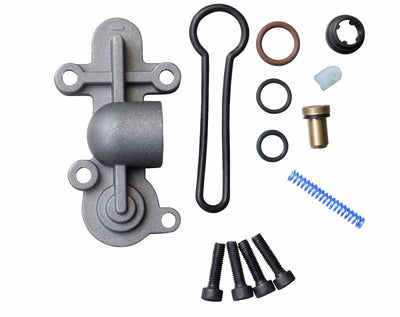
- High-Value Reliability Mods: Essential supporting upgrades include installing a Blue Spring fuel pressure kit, an upgraded FICM (Fuel Injection Control Module), and an aftermarket coolant filtration system to protect delicate fuel injectors and high-pressure oil pumps (HPOPs).
- Performance & Airflow Strategy: Pairing bulletproofing hardware with a high-flow exhaust system, upgraded turbo piping, and custom ECM/TCM tuning lowers EGTs, improves throttle response, and unlocks reliable daily towing performance.
The 6.0 PowerStroke upgrades topic leaves many truck owners scratching their heads. This engine has a bad reputation from the factory, but it's got a lot of potential. Here is the truth: most of the problems are fixable, and once they are fixed, you are looking at one of the most capable diesel platforms ever made.
The best 6.0 Powerstroke upgrades start with the "Big Seven" reliability fixes — ARP head studs, an upgraded oil cooler, a 58V FICM, STC fitting replacement, Powerstroke EGR delete or cooler upgrade, a coolant filtration system, and a blue spring fuel pressure kit. Once those are in place, the 6.0L can reliably support 500–600 HP with the right performance parts.
Before we start listing parts and prices, we want to be clear about one thing: there are two types of upgrades for the 6.0L Powerstroke.
- The first type is reliability upgrades — these are not optional. They fix the factory's weak points that cause the engine to fail and solve real 6.0 Powerstroke problems.
- The second type is performance upgrades — these are the fun stuff, but they should only come after the foundation is solid.
This guide walks you through the two kinds of upgrades in the right order, with real costs and real advice from our experience working with these trucks. By the time you're done reading, you'll have a clear picture of how to make a 6.0 Powerstroke reliable and map smart performance gains without risking your engine.
Table of Contents
- Why Should You Upgrade a 6.0 Powerstroke? What Are the Factory Weak Points?
- What Is Phase 1 of 6.0 Powerstroke Upgrades? The Bulletproofing Essentials
- What Are the Best EGR, CAT Pipe, and CCV Solutions for a 6.0 Powerstroke?
- Phase 2: What Are the Best Airflow and Thermal Upgrades for a Bulletproofed 6.0 Powerstroke?
- Phase 3: How Do You Unlock Real Performance from a 6.0 Powerstroke?
- What Are the Budget-Friendly vs. Full-Build 6.0 Powerstroke Upgrade Paths?
- 6.0L Powerstroke Cost Breakdown (2026 Estimates)
- FAQs
- Final Conclusion
Why Should You Upgrade a 6.0 Powerstroke? What Are the Factory Weak Points?
Most Ford 6.0 Powerstroke mods are needed because most of the stock components were manufactured to comply with emissions regulations from the early 2000s and not for long-term durability. This has resulted in multiple well-known points of failure that shorten the lifespan of the engine and create expensive repairs.
Address factory weak points in your 6.0 Powerstroke by replacing stretched head bolts, clogged oil coolers, weak FICM, and leaky oil fittings to prevent failures and boost longevity.
Build a Bulletproof 6.0L Powerstroke.
Stop waiting for the next breakdown. Our curated performance kits address the 6.0L's fatal flaws while unlocking the massive torque Ford intended. From high-flow EGR solutions to complete cooling overhauls, get the parts that keep your truck on the road and off the tow truck.
Shop 6.0L Performance Kits →Thermal Stress (EGR Cooler and Oil Cooler Failure)
The oil cooler factory is installed, frequently clogging with debris, causing a rise in oil temperature, which results in overheating the EGR Cooler. Ultimately, the EGR Cooler ruptures, which lets coolant into the intake manifold and can cause catastrophic engine damage.
We have seen trucks with less than 80,000 miles blow an EGR cooler for exactly this reason. The "Delta" rule is important here — if you monitor your Engine Oil Temp (EOT) versus your Engine Coolant Temp (ECT) and see a difference greater than 15°F at highway speeds, your oil cooler is almost certainly clogged.

Structural Weakness (Head Bolts)
Ford used Torque-to-Yield head bolts on the 6.0L. These bolts are designed to stretch when torqued, and they only stretch once. Under high boost pressure, these bolts act like rubber bands and lose their clamping force.
Stock Torque to yield head bolts stretch with boost, leading to blown head gaskets, especially when tuned. Then end up with coolant in your oil or white smoke pouring out the tailpipe. This is not a matter of "if" on a high-mileage or tuned 6.0 — it is a matter of "when."
Electrical Issues (FICM Failure)
Low FICM Voltage damages injectors. This is one of the most costly 6.0 Powerstroke problems owners face.
The FICM (Fuel Injection Control Module) powers the injectors with 48 volts from the factory. Over time, that voltage drops below 45V, and the injectors start misfiring, causing rough idle, poor fuel economy, and eventually injector failure at $250+ per injector.
High-Pressure Oil Leaks (STC Fitting)
On top of that, 2005–2007 models have the notorious STC (Snap-to-Connect) fitting on the high-pressure oil pump.
A failed STC fitting can result in either hard-starting conditions or no-start conditions because oil pressure cannot get to the injectors. Both of these problems are easy to fix before they cause expensive secondary damage.
Many owners don't realize how factory compromises affect daily drivability. These weak points demonstrate why it is very important to perform the appropriate 6.0 powerstroke reliability upgrades before adding power.
What Is Phase 1 of 6.0 Powerstroke Upgrades? The Bulletproofing Essentials
True 6 0 powerstroke bulletproofing kits focus on fixing known weak points, not just adding HP. A weak base causes even mild tuning to damage the engine. Begin with these upgrades, as they are the core of all smart 6.0 Powerstroke upgrades.
Phase 1 covers four critical upgrades: ARP head studs, a high-flow oil cooler with coolant filtration, a 58V FICM, and the STC fitting replacement on 2005–2007 models. These four items alone transform the 6.0 from a liability into a workhorse that can run for 300,000 miles or more.
1. Addressing the Head Gasket Problem
From the factory, there are only 10 torque-to-yield bolts per cylinder head. When the boost increases, the cylinder heads stretch and lose clamp load. This loss of clamp load allows combustion pressure to escape, which ultimately leads to head gasket failure.
The Fix: 6.0 Powerstroke head studs
These replace the weak OE-style bolts with significantly stronger fasteners. ARP 250-4202 head studs are rated at 220,000 psi tensile strength and provide far more clamping force than the factory bolts. They do not stretch, and they can be reused if you ever need to pull the heads again.
These fasteners keep the clamping load high and maintain consistent pressure, even when tuning the engine. This upgrade forms the backbone of building reliable, high-quality engines.

We will be honest — this is not a cheap job. The studs themselves run $600–$800, but labor is where it gets expensive. Most shops charge $2,500–$4,500 because the job requires either pulling the cab off the truck or removing the engine.
But here is our advice: if you are going to do head studs, do everything else at the same time. Replace the oil cooler, do the EGR work, swap the water pump, and install the coolant filter while the cab is off. You will save thousands in labor by doing it all at once rather than paying for multiple teardowns.
2. Oil Cooler & Coolant Management
A failed oil cooler leads to excessive engine oil temperature. A blocked oil cooler ultimately results in an overheated EGR (exhaust gas recirculation) cooler and can even cause EGR cooler failure.
The Delta Rule:
At constant highway speed, subtract the Engine Coolant Temperature (ECT) from the Engine Oil Temperature (EOT). If the difference between the two temperatures is greater than 15°F, there is likely a restriction.
The Fix: 6.0 Powerstroke oil cooler upgrade
First, upgrade to a larger-capacity, high-flow oil cooler— either an OEM replacement ($300–$500) or a remote-mount unit from BulletProof Diesel for even better cooling.
Second, add a coolant filtration system ($150–$250). The coolant filter captures and retains casting sand, debris, and other contaminants before they reach the oil cooler. It catches the debris before it reaches the oil cooler, which dramatically extends the life of the cooler and the EGR system and prevents repeated failures.
Maintaining proper coolant and oil flow reduces engine stress under load. This step is critical for long-term 6.0 powerstroke reliability upgrades. We run coolant filters on every 6.0 we build, and we consider it one of the cheapest insurance policies you can buy for this engine.
3. The FICM 58V Upgrade
The Fuel Injection Control Module (FICM) provides the voltage necessary to operate the individual injectors. From the factory, it outputs 48 volts.
Over time, that voltage sags below 45V, and injectors stop firing properly and misfire. You get hard starts in cold weather, rough idle, misfires, and eventually dead injectors that cost $250+ each to replace.
The Fix: Upgrade to a 58V FICM
With this upgrade, you will experience improved cold start performance, improved throttle response, and protection from costly injector failures caused by low voltage.
58V FICM ($350–$600) is a plug-and-play fix. You unbolt the old one, bolt in the new one, and the difference is immediate. Cold starts are crisp, throttle response is sharper, and your injectors are protected from low-voltage damage.
Some owners report a noticeable seat-of-the-pants improvement just from this one upgrade — and it takes less than an hour to install.
4. HPOP and STC Fitting (2005–2007 Models)
Ford changed the high-pressure oil pump (HPOP) connector fitting in mid-2004 to a "Snap-to-Connect" design. This two-piece fitting is the weakest link in the entire high-pressure oil system.
The snap-to-connect factory fitting located on the HPOP can crack or loosen and create an oil pressure drop. As a result, you may experience crank but not start — especially on hot restarts.
The Fix: Replace the fitting with a solid threaded fitting.
This helps maintain consistent oil pressure and proper injector operation in all conditions. If you are already doing head studs or an oil cooler job, add this to the list — it is a no-brainer while the engine is apart.
The part is only $100–$150, but labor runs $500–$800 because you need to access the HPOP under the turbo and HPOP cover.
These aboved steps represent the best upgrades for 6.0 powerstroke reliability and form the core of proper bulletproofing before any performance modifications.
What Are the Best EGR, CAT Pipe, and CCV Solutions for a 6.0 Powerstroke?
The emissions system is one of the biggest failure points on the 6.0L. It's important to check that you comply with any local EPA regulations before modifying or removing emissions equipment. Modifying or removing emissions equipment can greatly increase your engine's reliability and longevity and protect sensitive engine components.
Whether choosing a full EGR delete for off-road reliability or a heavy-duty stainless cooler for street-legal compliance, integrating these solutions with CCV reroutes and CAT-pipe deletes is the definitive way to fix the 6.0L’s emissions vulnerabilities and boost performance.
These modifications are also a significant aspect of the 6.0 Powerstroke upgrades in terms of performance and durability.
Disclaimer: Make sure you check your local EPA and emissions rules before changing any emissions equipment. The following information is for educational purposes — off-road use only where applicable.
1. EGR System Solutions
The factory EGR cooler (exhaust gas recirculation cooler) on the 6.0L uses a "radiator-style" core that is prone to cracking and leaking coolant into the exhaust. When it fails, you get white smoke, coolant loss, and potential hydro-lock.
Proper filtration keeps engines cleaner and lasts longer under heavy use. These upgrades also reduce costly repairs from soot and oil buildup. <Read more benefits of deleting EGR for 6.0 Powerstroke>
Off Road: 6.0 Powerstroke Delete Kit
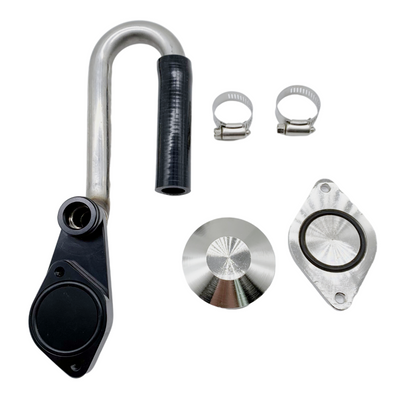
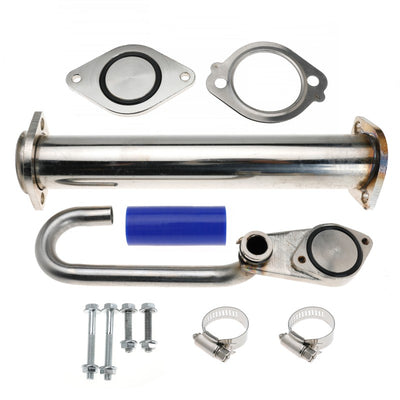
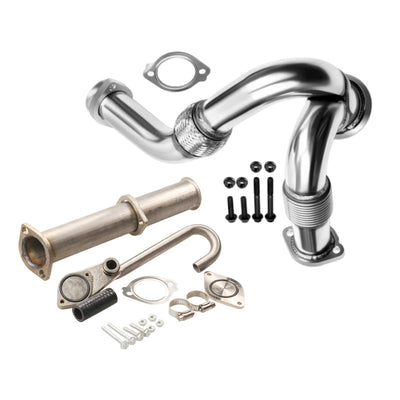
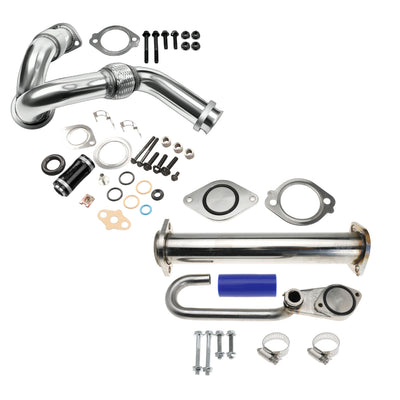
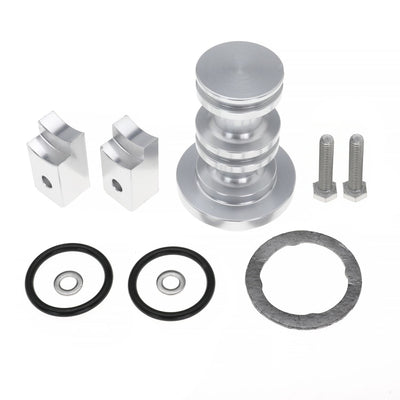
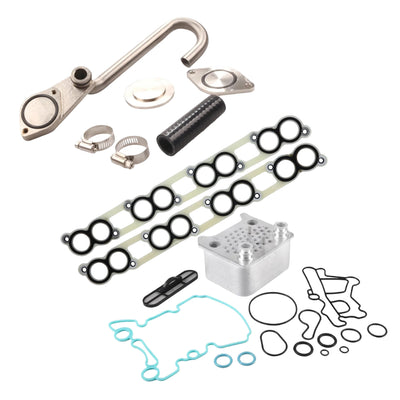
The delete kit for 6.0 Powerstroke replaces the stock EGR cooler, completely removing it and installing a stainless steel up-pipe. For off-road trucks, race trucks, and dedicated tow rigs that do not need to pass emissions testing, this is the most reliable option.
By eliminating this weak point, the EGR delete kit for 6.0 Powerstroke improves reliability for off-road or heavy-duty use.

A basic EGR delete kit runs $50–$150 for simple block-off plates and gaskets. But we strongly recommend spending more on a premium 6.0 Powerstroke EGR Delete kit w/up pipe that includes a new stainless steel up-pipe. The factory up-pipe uses flexible bellows that crack and leak exhaust gas, robbing your turbo of drive pressure.
EGR Performance Delete Kit for the 6.0L Powerstroke is CNC-machined from 304 stainless steel and billet aluminum, and it eliminates the entire EGR cooler along with the up-pipe bellows. It is a complete, bolt-on solution that we have used on multiple builds with zero issues.
On Road: BulletProof Diesel EGR Cooler
For builds that need emissions compliance, you can upgrade to a stainless steel EGR cooler. Unlike stock EGR coolers, which use radiator-style cores, a BulletProof EGR cooler has a core that does not fail from heat or pressure, ensuring reliability while staying legal. If you live in an emissions-testing state, this is the best option.
2. CAT Pipe & CCV Upgrades
Soot and oil vapor contamination are issues for many later 6.0 Powerstrokes, so addressing them is necessary for performance upgrades on the 6.0 Powerstroke.
CAT Pipe Solutions:
For heavy-duty or performance builds, using a Muffler Delete CAT Pipe for 6.0 Powerstroke, which is a high-flow exhaust upgrade that replaces your restrictive factory muffler and catalytic converter with straight-through piping to significantly increase exhaust flow, lower backpressure, and give your truck a more aggressive, unfiltered diesel sound.
CCV Reroute / Filter:
The Crankcase Ventilation (CCV) system is another often-overlooked problem. The factory CCV dumps oil mist directly into the turbo inlet, which soaks the intercooler boots, causes carbon buildup in the intake, and can make the intercooler boots blow off under boost.
The crankcase ventilation (CCV) system regularly releases oil mist, which contacts the turbo and intake components. A CCV reroute kit ($150–$300) redirects the crankcase vapors through an external filter and vents them safely. Installing a CCV filter or rerouting the system prevents engine carbon build-up, keeps intercooler boots free from oil, maintains proper turbo performance, and keeps the engine healthy.
A CCV/PCV reroute kits for Powerstroke engines that keep your intake system clean and your intercooler boots dry.
|
Emissions Upgrade
|
Cost Range
|
Best For
|
|---|---|---|
|
Basic EGR Delete (block-off plates)
|
$50 – $150
|
Budget off-road only
|
|
Premium EGR Delete w/ Up-Pipe
|
$70 – $300
|
Off-road reliability (recommended)
|
|
BulletProof EGR Cooler (street-legal)
|
$450 – $600
|
Emissions-testing states
|
|
CCV Reroute Kit
|
$150 – $300
|
All builds — keeps intake clean
|
These 6.0 Powerstroke reliability upgrades are critical to safeguard your investment and prepare your engine for any further performance modifications.
Phase 2: What Are the Best Airflow and Thermal Upgrades for a Bulletproofed 6.0 Powerstroke?
Once you correctly modify your engine with essential 6.0 Powerstroke reliability upgrades, the next step to improve overall performance is air flow and thermal management.
Phase 2 focuses on three key upgrades: a 4-inch turbo-back exhaust system, a cold air intake with a dry filter, and a billet water pump. These mods improve exhaust flow, intake efficiency, and cooling system reliability — all of which matter when you start adding power later.

A properly configured thermal management system helps eliminate heat-related failures as you prepare your truck for performance tuning. These best upgrades for the 6.0 PowerStroke optimize engine efficiency and protect key components under heavy loads or towing.
1. 4-Inch Turbo-Back Exhaust
The factory exhaust on the 6.0 is restrictive, especially for a turbocharged diesel. Higher back pressure from the exhaust increases the amount of EGT collected at the engine. Lowering these temperatures allows longer use of your turbo and exhaust valves, especially during heavy-load or towing applications.
Therefore, a 4-inch turbo-back exhaust system ($400–$700) is one of the best upgrades for dropping EGTs (Exhaust Gas Temperatures). It works well for daily drivers and performance builds. However, a 5-inch turbo-back system works better for higher-horsepower applications.
Lower EGTs mean less stress on the turbo, the manifolds, and the head gaskets. You will also notice the truck spools faster and has a more responsive throttle feel. If you are towing heavy loads in mountains or hot weather, this upgrade alone can drop EGTs by 100–200°F, which is the difference between a safe truck and a melted turbo.
2. Cold Air Intake
Stock intakes inhibit the amount of air that flows into the vehicle's engine, limiting performance and fuel efficiency.
An S&B dry air filter system allows more air to reach the engine. A quality cold air intake brings cooler, denser air into the turbo, which improves combustion efficiency.
It is the go-to option for the 6.0 — specifically the "Dry" filter version. They do not contaminate the MAF sensor with oil, maintain accurate readings, and provide consistent fuel to the engine.
While oiled filters can coat the MAF (Mass Air Flow) sensor with oil residue, throwing off air-fuel readings and triggering check engine lights.
A dry filter costs $350–$450 and provides better airflow than the factory air box without the risk of MAF contamination.
3. Billet Water Pump
The factory water pump on the 6.0 uses a plastic impeller. Over time, the impeller blades erode and cavitate, especially at high RPMs or under sustained load. When the impeller fails, coolant flow drops, and the engine overheats quickly.
A billet aluminum water pump impeller replaces the plastic with a machined metal that will not erode. It provides a constant and consistent flow of coolant and prevents potential hot spots that may damage cylinder head gaskets or EGR coolers.
This is a relatively cheap upgrade ($200–$400 for the pump), and we recommend doing it during the head stud job when the cooling system is already drained. Therefore, it forms an essential part of your 6.0 PowerStroke performance upgrades, ensuring long-term durability.
By upgrading the airflow and thermal capacity of the 6.0 Powerstroke engine, you add additional power safely while maintaining dependability in all conditions.
Phase 3: How Do You Unlock Real Performance from a 6.0 Powerstroke?
After completing 6.0 powerstroke reliability upgrades, focus on performance. To unlock more power, you need to properly tune, install a turbo, and provide fuel.
Phrase 3 Tuning, upgraded turbos, and bigger injectors paired with a lift pump can push the 6.0L Powerstroke from its stock 325 HP to a reliable 500–600 HP. But each piece needs to match the others, and the transmission must be addressed at higher power levels.
This is where the 6.0 goes from a reliable truck to a genuinely fast one. Not doing these three things while bulletproofing can cause your truck to fail.
1. Tuning and Programming: FICM and PCM
FICM Tuning
FICM tuning sharpens throttle response and adds about 15–40 HP. It also improves injector voltage and timing.
When paired with the 58V FICM hardware upgrade, the injectors fire faster and more precisely, which improves throttle response, reduces smoke, and makes the truck feel more alive.
PCM Tuning:
PCM (Powertrain Control Module) tuning is where the big power comes. SCT and Mini Maxx-style tuners are the industry standards for the performance upgrades on a 6.0 Powerstroke Diesel engine.
A good custom tune adjusts fuel delivery, boost targets, and injection timing for your specific combination of parts to allow maximum efficiency and minimal component wear. Just as importantly, custom tunes also help modify the Transmission Control Module (TCM) on your truck.
This protects the stock 5R110 automatic transmission rated for 450–500 HP. The 5R110 TorqShift transmission can handle decent power in stock form, but once you push past 450–500 HP, it needs firmer shift points, higher line pressure, and adjusted converter lockup strategies to stay alive.
A tuner runs $450–$550, and it is the upgrade we recommend doing first in the performance phase. Custom tuning adapts your engine to your driving needs. It ensures performance gains are safe and consistent with all Ford 6.0 Powerstroke mods.
2. Turbo and Injector Upgrades
Turbo Upgrades:
The factory VGT (Variable Geometry Turbo) on the 6.0 is a good design, but it has limits.
Stage 1 or Stage 2 Variable Geometry Turbos/VGT from companies like KC Turbos or Titan Turbo ($1,300–$2,000+) maintain low spool during low RPMs and deliver 450–500 Nm of torque throughout the RPM range.
It supports 450–550+ HP. The variable geometry vanes still give you the EGT control and response of the factory turbo — you just get more flow at the top end. EGT drops significantly, and engine efficiency improves.

Fueling Upgrade:
On the fueling side, bigger injectors are needed to support higher power levels. A set of 155cc/30% over injectors ($1,200–$1,600) is the sweet spot for most "tow beast" builds in the 450–525 HP range.
For full builds pushing 600+ HP, 175cc or even 190cc+ injectors ($1,800–$2,500) are needed.
Any time you upgrade injectors, a lift pump is required. The factory fuel system on the 6.0 is weak, and bigger injectors demand more fuel volume and consistent pressure. A FASS or AirDog lift pump ($700–$900) removes air from the fuel, maintains steady pressure, and prevents the cavitation that kills injection pumps. The most effective way to safely gain power on the Ford 6.0 is a proper turbo-injector combination.
These steps are the best upgrades for 6.0 PowerStroke performance. They provide more power, better throttle, and long-term reliability.
What Are the Budget-Friendly vs. Full-Build 6.0 Powerstroke Upgrade Paths?
Not everyone can drop $15,000 at once. The good news is that you can upgrade your 6.0 in stages, starting with whatever your budget allows. Owners can choose a budget path or a full build for 6.0 powerstroke upgrades, depending on goals.
The budget path focuses on EGR solutions, basic tuning, and monitoring. The full-build path includes everything — head studs, turbo, injectors, lift pump, and custom tuning for 500+ HP.

Here is how we break it down.
Three Upgrade Paths: Choose Your Level
The key is to understand what each level gives you and where the money goes.
Budget Path:
Includes EGR delete or cooler upgrade, basic tune, upgraded oil cooler, and proper maintenance for 6.0 Powerstroke. Suitable for daily drivers.
A budget reliability build keeps the truck on the road and prevents the most common failures.
The Bulletproof Build:
It is for owners who plan to keep the truck for years and want genuine peace of mind.
Full-Build Path:
Includes ARP head studs, upgraded injectors, lift pump, larger turbo, intercooler, and custom tuning. Supports 500+ HP safely.
The full performance build is for those who want a 6.0 that embarrasses newer trucks at the drag strip or pulls a 14,000 lb trailer up a mountain pass without breaking a sweat.
|
Path
|
Components
|
Target Goal
|
|---|---|---|
|
Budget Reliability
|
EGR Upgrade, Blue Spring Kit, Monitor (Edge Insight)
|
Daily Driver Longevity
|
|
The "Bulletproof"
|
ARP Studs, Oil Cooler, 58V FICM, Coolant Filter
|
300,000+ Mile Workhorse
|
|
Full Performance
|
Stage 2 Turbo, 175cc Injectors, Custom Tuning, Lift Pump
|
550+ HP Street Beast
|
The budget path focuses on 6.0 powerstroke reliability upgrades first. The full build combines reliability and performance for maximum output. Choosing the right path depends on your goals and budget. Starting with reliability ensures any future 6.0 PowerStroke performance upgrades work safely.
If you can only do one thing right now, start with the EGR solution and a coolant filtration kit. Then add the blue spring fuel pressure kit and a digital monitor like the Edge Insight CTS3 so you can watch your EOT, ECT, and FICM voltage in real time.
This alone prevents the majority of catastrophic failures and buys you time to save for the bigger jobs.
6.0L Powerstroke Cost Breakdown (2026 Estimates)
Money is the real question. Everyone wants to know what it costs before they commit. Here is our honest breakdown based on current 2026 parts pricing and shop labor rates.
A full bulletproofing with professional labor runs $8,000–$12,000. Add performance upgrades on top, and you are looking at $15,000+ for a truck that can reliably make 500+ HP. But you can DIY the reliability package for around $2,500 in parts if you are willing to turn wrenches.

1. Reliability and Bulletproofing Costs
If you plan to keep your truck long-term, at least for more than a year, these 6.0 PowerStroke reliability upgrades are baseline costs.
|
Upgrade Item
|
Estimated Part Cost
|
Estimated Labor
|
|---|---|---|
|
ARP Head Studs (250-4202)
|
$600 – $800
|
$2,500 – $4,500*
|
|
OEM / Upgraded Oil Cooler
|
$300 – $500
|
$600 – $900
|
|
Coolant Filtration System
|
$150 – $250
|
$100 – $200
|
|
58V FICM (Upgraded)
|
$350 – $600
|
$0 (Plug & Play)
|
|
STC Fitting (HPOP Fix)
|
$100 – $150
|
$500 – $800
|
|
Blue Spring Kit (Fuel Pressure)
|
$40 – $70
|
$100 – $150
|
*Head stud labor is high because it often requires removing the cab or engine heads. Most owners combine other repairs to save labor.
2. EGR & Emissions Upgrade Pricing
- Basic EGR Delete Kit (Off-Road): Includes simple block-off plates and gaskets.
- Premium EGR Delete Kit (w/ Up-Pipe): Includes stainless steel up-pipe to prevent bellows failure.
- BulletProof Diesel EGR Cooler (Street Legal): Best option for emissions-testing states.
- CCV Reroute Kit: Keeps oil out of the turbo and intercooler.
Whether you choose a full delete or a legal upgrade, these are the costs for specialized kits.
|
EGR / Emissions Upgrade
|
Cost Range
|
|---|---|
|
Basic EGR Delete Kit (Off-Road Only)
|
$50 – $150
|
|
Premium EGR Delete w/ Up-Pipe (Recommended)
|
$350 – $500
|
|
BulletProof Diesel EGR Cooler (Street-Legal)
|
$450 – $600
|
|
CCV Reroute Kit
|
$150 – $300
|
3. Performance Upgrade Budgeting
Once the engine is stable, scale power upgrades based on your budget. Here is how the three performance levels break down.
Level 1: "Street" Tune (400–450 HP) — Budget: ~$2,000
- Digital Monitor (Edge CTS3): $600
- SCT Custom Tuner: $450 – $550
- 4-Inch Exhaust System: $400 – $700
- Cold Air Intake (S&B): $350 – $450
Total Budget: ~$2,000
This level gives you a truck that feels twice as powerful as stock and is still perfectly comfortable as a daily driver.
Level 2: The "Towing Beast" (450–525 HP) — Budget: ~$3,200–$4,300 plus labor
- Stage 1/1.5 VGT Turbo (KC/Titan): $1,300 – $1,800
- A set of 155cc/30% over injectors: $1,200 – $1,600
- FASS/AirDog Lift Pump: $700 – $900
Total Budget: ~$3,200 – $4,300 (Plus Labor)
This is the build that turns heads at truck pulls and tows a fifth-wheel up the Rockies without flinching.
Level 3: The "Full Build" (600+ HP) — Budget: $10,000+
- Stage 2+ Turbo: $2,000+
- 190cc+ Injectors: $1,800 – $2,500
- Upgraded Transmission (built 5R110): $5,000 – $7,000
Total Budget: ~$10,000+
At this level, the transmission is the weak link, and a stock 5R110 will not survive for long. A professionally built transmission is not optional — it is required.
Total Investment Summary
- DIY Reliability:~$2,500 (Parts only, excluding head stud labor)
- Full Shop "Bulletproofing": $8,000 – $12,000 (Parts + Professional Labor)
- Performance Ready: $15,000+ (Reliability + Performance components)
It sounds like a lot, but consider this: a properly bulletproofed and built 6.0 Powerstroke can last 400,000+ miles and outperform trucks that cost twice as much from the dealer lot.
FAQs
Do I need a lift pump on a 6.0 Powerstroke?
Yes. For a stock or mildly tuned 6.0, the factory fuel system is usually fine. But if you are running upgraded injectors, a tune with more fuel, or you tow heavy loads regularly, a lift pump is highly recommended.
A lift pump ensures consistent fuel pressure for 6.0 powerstroke performance upgrades and protects injectors. For any build over 400 HP, we consider a lift pump mandatory.
Can I install a delete kit without head studs?
No. Skipping head studs risks blown head gaskets under boost, even with a 6.0 Powerstroke delete kit. Our recommendation is to plan for both, even if you do them at different times.
Why does the 6.0 Powerstroke blow head gaskets?
The factory TTY (Torque-to-Yield) head bolts stretch during installation and lose clamping force over time.
When boost pressure exceeds the clamping force of the bolts, the cylinder heads lift slightly, the gasket seal is broken, and coolant or combustion gases leak across the sealing surface. This is one of the most common 6.0 Powerstroke problems.
Is deleting the EGR system safe for the engine?
Yes, removing the EGR system is one of the safest reliability upgrades you can make on the 6.0, from a pure engine health perspective. The EGR system recirculates hot, soot-laden exhaust gas back into the intake, which raises combustion temperatures and adds carbon buildup.
Without it, the engine runs cooler and cleaner. The catch is legality — EGR deletes are not legal for on-road use in most states.
Is an EGR delete necessary for a 6.0 Powerstroke?
It is not strictly necessary if you install a high-quality, upgraded EGR cooler and maintain a clean cooling system. But it is recommended for off-road reliability. Combined with bulletproofing, it improves engine life.
It is one of the most impactful reliability upgrades you can make. It eliminates one of the most common failure points on the engine entirely.
How much horsepower can a 6.0 Powerstroke handle?
With proper upgrades, 450–500 HP is safe. Full builds can exceed 600 HP with tuned components.
Which upgrade should be done first on a 6.0 Powerstroke?
Start with reliability upgrades: 6.0 Powerstroke head studs, oil cooler, FICM, and coolant filtration.
Do delete kits improve reliability or just performance?
They improve both. Delete kits remove weak EGR components and allow safe 6.0 powerstroke performance upgrades.
How long does a 6.0 Powerstroke last after upgrades?
With proper maintenance and 6.0 powerstroke reliability upgrades, a properly bulletproofed 6.0 can last 300,000–500,000 miles. We have seen trucks with head studs, upgraded oil coolers, and EGR deletes running well past 400,000 miles without major issues.
The key is to address all the weak points — not just one or two — and stay on top of oil changes and coolant maintenance.
How much does it cost to bulletproof a 6.0 Powerstroke fully?
A complete 6.0 Powerstroke bulletproofing job — head studs, oil cooler, coolant filter, 58V FICM, STC fitting, EGR delete or upgrade, and a blue spring kit — costs $8,000–$12,000 at a shop with parts and labor.
DIY with just parts runs about $2,500, but that does not include the head stud labor, which most people cannot do at home without a cab lift or engine hoist.
Final Conclusion
The 6.0 Powerstroke is not a bad engine — it is an engine with bad factory parts that are easy to fix.
The ideal 6.0 Powerstroke upgrades path starts with reliability, then progresses toward performance for long-lasting success.
The first step in upgrading your Powerstroke is to replace the EGR components on 6.0 Powerstroke with delete kits. This eliminates weak EGR parts, prevents leaks, and reduces the risk of engine failure. Before any type of tuning, you complete the 6.0 Powerstroke reliability upgrades, including head studs, oil cooler, FICM, and coolant filtration.
For the EGR system specifically, we believe EGR Performance offers the best combination of quality, completeness, and value — their CNC-machined 304 stainless steel kits, paired with matching up-pipes, tuners, and CCV reroute kits, make them our go-to recommendation for anyone building a reliable, long-lasting 6.0 Powerstroke.
Once you finish the reliable upgrades, you move on to performance upgrades, such as PCM tuning, turbo upgrades, injectors, and lift pumps, to achieve maximum safe horsepower.
Following the Big Seven, follow the phased upgrade path to ensure a durable, fully functional 6.0 Powerstroke capable of handling heavy loads or providing street performance. Your 6.0 will reward you with hundreds of thousands of miles of dependable, powerful service.


