


AFM Disabler vs. DOD Delete Key Takeaways
A comprehensive side-by-side comparison between electronic plug-in disablers and full mechanical hardware deletes for GM V8 engines:
- AFM Disabler (Electronic Preventative Solution): A 100% non-invasive OBD-II module that electronically forces the engine to stay in full V8 mode. It requires no mechanical teardown, leaves zero ECU traces when unplugged, and serves as an affordable preventative measure before valvetrain damage occurs.
- DOD Delete Kit (Mechanical Permanent Solution): A complete top-end mechanical overhaul that replaces factory collapsible lifters, non-AFM camshaft, valley cover plate, and pushrods, paired with custom ECU tuning. It permanently eliminates all failure-prone hardware from the engine block.
- When to Choose Which: Opt for an electronic AFM disabler if your engine is running smoothly without mechanical noise and you want fast, reversible protection. Choose a mechanical DOD delete kit if your lifters have already collapsed or if you are rebuilding the engine for long-term heavy towing and performance gains.
Your Chevy 5.3L engine ticks like a time bomb. Lifter failures cost thousands in repairs. We know how to stop it with disablers or deletes.
AFM Disabler vs. DOD Delete is one of the most common questions Chevy 5.3L owners ask when facing lifter problems, ticking noises, or oil consumption.
AFM disablers keep your engine in V8 mode to prevent wear, but DOD deletes remove faulty parts for a lasting fix. Choose based on mileage and budget to avoid breakdowns.
This guide explains how each of these functions works, how they differ from one another, and which one is best suited for your specific situation.
You'll learn about the real pros and cons, price differences, and long-term durability considerations for both AFM Disablers and DOD Delete.
After reading this guide, you'll have enough information to determine if a simple AFM disabler is enough or if a complete mechanical delete is a better investment.
Table of Contents
- What is AFM/DOD on the Chevy 5.3L?
- Chevy 5.3L Dilemma: Why You Must Choose AFM Disabler or DOD Delete
- AFM Disablers: The "Plug-and-Play" Preventive Strike
- Mechanical DOD Delete: The Permanent "Nuclear" Option
- AFM Disabler vs. DOD Delete: Side-by-Side Comparison
- 6.6 Real-World Owner Experiences
- Common Mistakes to Avoid when Deleting or Disabling AFM
- How to Decide: AFM Disabler or DOD Delete
- FAQs
- Conclusion
What is AFM/DOD on the Chevy 5.3L?
You hear strange noises from your engine. AFM causes early failures. We can explain this system and why it matters.
AFM and DOD shut off cylinders 1, 4, 6, and 7 during light loads to save 5-7% fuel. Special lifters and ECM control make this happen.
Active Fuel Management (AFM), or Displacement on Demand (DOD), is an engine feature found on many Chevrolet 5.3-liter V8s that saves fuel when driven lightly.
How AFM Works
While operating at a constant speed, the AFM will deactivate cylinders 1, 4, 6, and 7 and convert a V8 to a short-term four-cylinder engine. GM claims AFM can increase fuel economy by 5 to 7 percent.
AFM/DOD works using:
- Special collapsible lifters
- Oil control passages inside the engine
- ECM (engine computer) commands
The oil pressure in the lifters is trapped due to AFM activation, cutting off all movement of the valves and fuel injectors to those cylinders.
When more power is needed, the oil pressure re-expands the lifters and the engine returns to its full V8 capability.
Special lifters collapse to stop valves from opening. Oil passages direct pressure to these lifters. The ECM decides when to activate AFM based on speed, load, and other factors.
We once had a customer with a 2015 Silverado. He noticed rough shifts. It was AFM switching modes. He ignored it until a lifter stuck. The repair cost him $2,000.

Problems with AFM
Though theoretically good, the weak AFM lifters are the main reason several 5.3L motors suffer from tick, backfire, and internal damage.
AFM aims for better fuel economy. But it leads to issues. Lifters cycle a lot. This wears them out fast. Oil gets dirty from carbon buildup. Poor lubrication causes failures.
In Vortec and EcoTec3 engines, this is common. Misfires happen. Noise like ticking appears. Severe cases damage the camshaft.
Data shows many trucks over 100,000 miles face this. Forums are full of stories. One owner reported failure at 80,000 miles after highway driving.
Benefits of Understanding AFM
Know AFM to spot problems early. Check oil often. Use good-quality oil. If you hear ticks, act fast.
This knowledge helps you decide on a disabler or a delete. We see owners save money by addressing it soon.
Component |
Function |
Common Issue |
|---|---|---|
Lifters |
Collapse to deactivate cylinders |
Wear and failure |
Oil passages |
Control pressure |
Clogging from dirt |
ECM |
Manages mode switch |
Software glitches |
AFM saves fuel but risks engine health. Many choose to disable it for peace of mind. Our team has fixed dozens of these engines. Early action prevents big bills.
Chevy 5.3L Dilemma: Why You Must Choose AFM Disabler or DOD Delete
Your truck shakes at idle. Oil burns fast. AFM failures hit hard and empty your wallet.
While AFM boosts efficiency, it causes lifter collapse, noise, and damage in 5.3L engines. Disablers manage it; deletes remove it.
See why this choice matters for your engine's future.

Causes of AFM Failures
The AFM/DOD was developed as a method to improve fuel economy, but it has created a substantial number of reliability issues on many Chevy 5.3L Vortec and EcoTec3 Engines.
Carbon builds up in lifters. Lubrication fails during mode switches. This stresses parts.
Lifter collapse is one of the primary issues with AFM lifters. While the vehicle is in operation, the AFM lifters will continue to collapse and lock back together. Over time, the continual operating cycle will cause wear on the internal components of the lifters.
In higher mileage engines, it's worse. Poor maintenance speeds it up. We saw a Tahoe with 120,000 miles. The owner skipped oil changes. Lifters collapsed, bent pushrods.
Misfires and low power follow. Internal damage can total the engine.
Symptoms to Watch
- Lifter tick or tapping noise
- Rough idle and misfires
- Loss of power
- Increased oil consumption
- Camshaft lobe damage
- In severe cases, internal engine failure
Two main factors speed up these failures:
- Carbon buildup inside the lifters
- Poor or inconsistent lubrication when AFM activates
Once an engine is damaged by AFM, the damage is almost always irreversible. This is why owners are forced to decide between AFM Disabler vs DOD Delete.
One customer brought his Yukon. It misfired on the highway. We found the AFM lifter stuck. Delete fixed it for good.
Recent reports show even 2026 models have issues, though GM removed DFM in some. Older trucks need action.
Why Choose Now
Ignore it, pay thousands later. Disabler stops cycling cheaply. Delete eliminates risk.
The disabled AFM option only deals with the symptom of engine damage by disabling the AFM system from deactivating cylinders.
The next option (DOD deletion) removes the entire cause of the engine damage by completely removing the AFM System from the truck.
Your own situation will dictate which option you choose based on the following factors: your truck's mileage, your current repair budget, your current symptoms, and how long you plan to keep the truck.
Think about your use. Daily drive? Tow heavy? Long ownership? Pick based on that.
Issue |
Symptom |
Cost to Fix |
|---|---|---|
Lifter collapse |
Ticking |
$1,000–$3,000 |
Cam damage |
Misfires |
$2,000–$5,000 |
Oil consumption |
Low oil light |
$500–$1,500 |
We help owners avoid these. Our experience shows proactive steps save engines. Act before failure hits.
AFM Disablers: The "Plug-and-Play" Preventive Strike
You worry about engine failure on long trips. AFM cycling wears parts. A simple device can stop it.
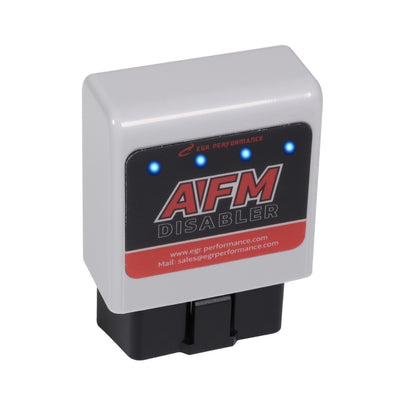
AFM disablers plug into OBD-II and force V8 mode always. No internal changes needed.
Learn how this easy fix protects your truck.
An AFM Disabler 5.3 is an electronic device or ECM tune that keeps AFM turned off. The engine will always run as a full V8, and nothing inside the engine is modified.

The majority of AFM Disablers are designed as 'Plug-n-Play'. When plugged into the OBD-II connector, they instantly disable the operation of AFM. They offer affordable prices, easy installation, and reversibility.
Some key points to note:
The AFM Disabler does not remove faulty lifters from the AFM system (they will still be in the engine); it simply disables the activation of the cylinder deactivation feature. The AFM Disabler 5.3 is a preventative measure and should not be considered a mechanical "repair".
How an AFM Disabler Works
- Plugs into the OBD-II diagnostic port
- Sends command directly to the ECU.
- Locks the engine into "V8 mode" all of the time.
- Prevents the AFM from activating.
Does not require tuning software or disassembly of the engine to install. We installed one on a low-mile Silverado. The owner noticed a better response right away.
The Big Pro
- Low cost (usually $50–$300)
- Very fast installation
- Reversible (unplug anytime)
- Reduces stress on AFM lifters
- Often improves throttle response
For many owners, this is cheap insurance. Owners report no failures after install. Good for prevention.
Hard Truth – The Cons
- The original AFM lifters are still inside the engine.
- There is nothing to fix any present damage.
- Ticking lifters are not going to be cured
- A marginal lifter could still fail after installation.
- You will lose the minor fuel-saving benefit of AFM.
- Minor draining of the battery when parked for long periods is possible.
These are common AFM disabler problems that buyers should understand before choosing this route.
Best Use Cases for an AFM Disabler
- Lower-mileage Chevy 5.3L engines
- No lifter tick or misfire
- No heavy oil consumption
- Owners wanting a low-cost, non-invasive option
For many drivers, an AFM Disabler 5.3 is the easiest first step in the AFM Disabler vs DOD Delete decision. We recommend it for new trucks.
Pro |
Con |
|---|---|
Low cost |
Doesn't remove parts |
Easy install |
Potential drain |
Reversible |
No fix for existing damage |
Disablers offer quick relief. Our shop fits many. They extend life without big spending.
Mechanical DOD Delete: The Permanent "Nuclear" Option
Engine damage scares you. Repairs cost too much. A full delete removes the problem forever.
DOD deletes swaps AFM parts with standard ones, tunes ECM, acts likea non-AFM engine.
Discover this robust solution.

A mechanical DOD delete is the best option for completely removing AFM/DOD from a Chevrolet 5.3L engine. Instead of turning the system off, it physically removes the parts that cause failures.
Many owners ask: What does a DOD delete do?
In layman's terms, it converts the engine to a standard non-AFM V8 by replacing AFM's weak components with a standard part. This is a real hardware fix.
The Delete Process
A DOD delete:
- Replaces AFM lifters with standard lifters
- Installs non-AFM camshaft
- Replaces factory AFM valley cover
- Updates the PCM tune
Cylinder heads must be removed, requiring internal engine work. Many shops perform a mild performance cam install at this time as well. The engine will run like a traditional, non-AFM LS-style V8 engine after the delete.
Parts Typically Included in a DOD/AFM Delete Kit
Most kits include:
- Non-AFM camshaft
- Standard lifters
- Lifter trays
- Non-AFM valley cover
- Head gaskets
- Head bolts
- Seals and hardware
Optional upgrades may include:
- Valve springs
- Pushrods
- Performance camshaft
These upgrades are common if extra power is desired.
The Essential Hardware for a True DOD Delete
While an AFM disabler manages the electronics, a physical Non-AFM DOD Valley Cover Plate is the cornerstone of a mechanical delete. If you are performing a full lifter and cam swap, this plate is required to properly block off the oil passages that previously fed the AFM lifters.
Our precision-machined DOD Delete valley covers ensure consistent oil pressure and a leak-free seal, providing the structural integrity your GM engine deserves.
Benefits of Delete
- No more AFM hardware.
- Reduces the chances of lifter failure.
- Eliminates all weak points associated with AFM.
- Camshaft upgrades can also provide additional horsepower and torque.
- AFM parts can no longer fail once removed.
Many owners see this as a final solution to their AFM issues.
Cons to Weigh
- High cost ($1,500–$3,500+)
- Requires PCM tuning
- Significant labor time
- Engine downtime
- Not easily reversible
This is a serious mechanical commitment.
Best Use Cases for a DOD Delete
- High mileage engines
- Existing problems with lifter tick (clicking noise from the compression)
- Excessive oil consumption
- Long-term ownership plans
- Performance or reliability builds
If you want the ultimate peace of mind, this option usually wins out over AFM Disablers vs. DOD Deletes. For towing, it's ideal. We see deletes last longer.
Part |
Purpose |
|---|---|
Camshaft |
Non-AFM |
Lifters |
Standard |
Valley cover |
Blocks passages |
Deletes provide the ultimate fix. Our team prefers them for serious issues.
AFM Disabler vs. DOD Delete: Side-by-Side Comparison
Confused which to pick? Costs and benefits differ. We break it down clearly.
Disablers are cheap and easy but temporary. Deletes cost more but is permanent.

For owners of Chevy 5.3L vehicles, the decision about which product to use is a major turning point. While both solutions prevent cylinder deactivation, only one is a long-term repair and eliminates the component that caused the issue.
Understanding the real differences helps you avoid wasting money or choosing the wrong fix.
Cost Comparison: AFM Disabler vs DOD Delete
AFM Disabler Cost
- Device price: $50–$300
- Installation: Usually free (DIY)
- Optional tune: Low-cost
Total investment is usually in the few-hundred-dollar range.
Why Spend $6,000 on Repairs? Fix It for Under $100.
Mechanical DOD deletes are permanent but cost thousands in labor. Our AFM disabler offers the same protection against lifter failure and oil consumption with zero tools required. Keep your 5.3L in V8 mode 100% of the time and protect your engine without voiding your warranty.
Shop 5.3L AFM disabler devices →DOD Delete Cost
- Delete kit: $600–$1,200
- Labor: $800–$2,000+
- Tune: Required
Total commonly lands between $1,500–$3,500+.
Bottom line:
- An AFM disabler is the budget option.
- A DOD delete is a major mechanical investment.
Impact on Reliability and Engine Life
AFM lifters are the main failure point in the 5.3L.
With an AFM Disabler
- Stops lifters from collapsing repeatedly
- Reduces wear over time
- Weak lifters still exist
This is preventive, not curative.
With a DOD Delete
- AFM lifters are removed
- Non-AFM lifters installed
- Non-AFM camshaft installed
This removes the failure-prone parts.
Many owners asking if AFM delete is worth it are really asking:
"Do I want prevention, or permanent removal?"
For long-term reliability, mechanical delete wins.
Fuel Economy, Power, and Drivability
Fuel Economy
- Both options lose the small AFM fuel-saving benefit
- Usually 1–2 MPG difference
Drivability
- No AFM transition feeling
- Smoother throttle
- More consistent power delivery
Power
- Disabler: No major horsepower gain
- Delete with performance cam: Often noticeable power increase
Shops regularly report 5.3L builds approaching 400 crank horsepower with a mild cam.
Daily Driver vs Work Truck vs Performance Build
Daily Driver
- No symptoms
- Lower mileage
- Tight budget
Start with AFM Disabler vs DOD Delete, leaning toward disabler.
Work Truck / Towing
- High load usage
- Long-term ownership
DOD delete is safer.
Performance Build
- Cam swap planned
- Reliability focus
DOD delete makes more sense.
Warranty, Emissions, and Legal Considerations
- Plug-in disablers are usually removable
- Tunes and deletes may affect the warranty
- Emissions laws vary by location
Always check local rules before modifying factory systems.
Real-World Owner Experiences
Owner feedback generally falls into two camps:
Some love disablers for simplicity
- Installed the disabler early
- No issues years later
Others swear by deletes after failures
- Experienced lifter failure
- Performed a delete after damage
- One Reddit user paid $6,000 for repair, then deleted.
Reports of problems after AFM delete usually trace back to:
- Poor-quality parts
- Bad tuning
- Installation mistakes
A proper delete with quality components has very high success rates.
Step-by-Step: What Happens During a DOD Delete Job?
- Drain oil
- Intake removed
- Cylinder heads removed
- Camshaft swapped
- Lifters replaced
- Non-AFM valley cover installed
- New gaskets and bolts installed
- ECM retuned
Because of labor overlap, many owners add:
- Timing chain
- Oil pump
- Performance cam
Comparison Table
Feature |
AFM Disabler (Electronic) |
DOD Delete (Mechanical) |
|---|---|---|
Cost |
$50–$300 |
$1,500–$3,500+ |
Installation |
Plug-in (seconds) |
15–20 hours |
Reversible |
Yes |
No |
Reliability |
Good (prevents cycling) |
Excellent (removes parts) |
Power Gain |
None |
Possible |
Best For |
Low mileage, budget |
High mileage, failure present |
In short: AFM Disabler vs DOD Delete is prevention vs elimination.
- Disabler reduces risk.
- Delete removes risk.
Your mileage, budget, and long-term plans decide which path makes sense. Comparisons help decide. We guide based on your truck.
Common Mistakes to Avoid when Deleting or Disabling AFM
Wrong choices lead to more problems. Learn from others' errors. We share key pitfalls.
Avoid using the disabler on damaged engines. Fix mechanical issues first.
Steer clear of these traps.

Many Chevy 5.3L owners make costly mistakes when choosing between an electronic solution and a mechanical fix. Avoiding these errors can save thousands of dollars.
Using an AFM Disabler on an Engine with Active Lifter Failure
If your engine already has:
- Lifter tick
- Misfires
- Rough idle
Installing an AFM Disabler 5.3 will not fix the problem. A disabler only stops future cycling. It does not repair damaged lifters.
This is one of the biggest causes of reported AFM disabler problems. We saw engines worsen because owners delayed.
Skipping a Tune After a DOD Delete
A mechanical delete changes how the engine operates.
Without proper tuning, you may experience:
- Check engine light
- Poor idle quality
- Reduced fuel economy
- Driveability issues
A tune is mandatory after a delete. Many cases of problems after AFM delete happen because tuning was ignored or done incorrectly.
A customer had a rough run. Tune fixed it.
Choosing Cheap or Low-Quality Parts
Low-quality lifters, camshafts, or gaskets can fail early. Always use reputable brands and complete kits. Deletes need good cam, lifters.
Not Addressing Supporting Components
When the engine is apart, worn parts should be inspected:
- Timing chain
- Oil pump
- Pushrods
- Valve springs
Ignoring these can shorten engine life.
DIY Without Skill
Deleting requires tools and knowledge. Mess up, cost more. Disabler is easy, but delete the shop job.
Forgetting Maintenance
After changing the oil regularly. AFM is gone, but care is still needed.
Owners report issues if neglected.
Expecting a Disabler to Be a Permanent Cure
An AFM disabler is preventive. It is not the same as removing AFM hardware.
Understanding this difference avoids disappointment in the AFM Disabler vs DOD Delete decision.
Mistake |
Consequence |
|---|---|
Disabler on bad lifter |
No fix, worse damage |
No tune |
Check lights |
Cheap kit |
Early failure |
Avoid mistakes for success. Our advice saves trouble.
How to Decide: AFM Disabler or DOD Delete
Mileage high? Budget low? We help you choose right.
Assess mileage, symptoms, and plans. Disabler for quick, delete for permanent.

Follow this guide.
Factors to Consider
Choosing between these two options comes down to five main factors:
- Mileage
- Budget
- Current symptoms
- Mechanical skill level
- Long-term ownership plans
There is no single answer that fits everyone.
Choose an AFM Disabler If:
- You want a cheap solution
- You want something reversible
- Your engine runs quietly
- No misfires
- No oil consumption
- You want prevention
An AFM Disabler 5.3 makes sense when the engine is still healthy.
This approach is often used by owners who ask if AFM delete is worth it, but are not ready for a large expense.
Choose a DOD Delete If:
- You hear lifter tick
- You have misfires
- You burn oil
- You plan to keep the truck long-term
- You want maximum reliability
This option removes the weak hardware.
The Real-World Dilemma
Some owners report lifter failure even with AFM turned off. Others report zero AFM-related failures after a proper mechanical delete.
Disablers help, but lifters can still fail. Deletes end it.
We had a customer with 90k miles, no issues. Disabler worked for years.
Another with a tick at 110k. Delete the saved engine.
Simple Decision Guide
Choose the Disabler if:
- Under 80k–100k miles
- No ticking noises
- No oil burning
- The budget is limited
Choose the Delete if:
- Any lifter noise exists
- Oil consumption is present
- Mileage is high
- You want another 150k miles of reliable service
If you want the safest long-term path, a delete is the stronger choice. If you want a low-cost preventive step, start with a disabler.
Scenario |
Choice |
|---|---|
Under 80k, no noise |
Disabler |
Over 100k, tick |
Delete |
Tow heavy |
Delete |
Decide smart. We consult for free.
FAQs
Will an AFM disabler hurt my engine?
No. An AFM Disabler 5.3 does not harm the engine. It simply prevents cylinder deactivation. It reduces lifter cycling, which may lower wear.
However, it will not fix existing mechanical damage. Many use an AFM disabler safely for years.
Will a DOD delete void my warranty?
Yes, in most cases. A mechanical delete involves internal engine modifications and tuning. This can affect powertrain warranty coverage. Disabler is better for warranty as removable.
Can lifters still fail after a DOD delete?
Rarely. With quality parts and proper installation, AFM-specific lifter failures are eliminated. Most reported problems after AFM delete are caused by poor parts or bad tuning.
Does deleting AFM improve reliability on the 5.3L?
Yes. Removing AFM hardware removes the main failure point in the engine. This is why it's an easy "yes" for long-term ownership. Owners report longer life, no failures. Good maintenance helps.
Do I need a tune after installing a DOD/AFM delete kit on my 5.3L?
Yes. A tune is mandatory. Without it, check engine lights and drivability issues will occur.
Is an AFM disabler worth it if I plan to sell the truck soon?
Yes. A disabler is inexpensive, reversible, and can help prevent problems while you own the truck. Unplug before sale. Buyers like a full V8.
Which years of the Chevy 5.3L have the worst AFM/DOD problems?
Most commonly reported issues are on 2007–2018 AFM-equipped engines. 2007-2014 Vortec worst. EcoTec3 2014-2021 also bad. 2026 improved but some issues.
Will a DOD/AFM delete make my truck louder or rougher at idle?
No. Stock-style deletes usually feel smooth. Only aggressive performance cams change idle sound.
What camshaft should I choose when deleting AFM on a 5.3L?
A mild Stage 1 cam is popular for daily-driven trucks. It improves torque without hurting drivability.
At what mileage should I consider deleting AFM on my 5.3L?
If you hear lifter noise at any mileage, consider deleting immediately. If symptom-free, many owners wait until 100k+ miles or perform a disabler first.
Conclusion
The AFM disabler vs DOD delete decision ultimately comes down to budget, mileage, and long-term goals. An AFM disabler is a cost-effective and reversible way to reduce risk; however, if you are looking for the most dependable long-term solution, a DOD delete will be your best option.
If your engine has low mileage and is in good condition, then an AFM disabler may be all you need. Protect your GM engine from costly lifter failure and get smooth V8 power with an AFM/DFM disabler guide.
On the other hand, if you have a high-mileage engine with known issues or want to ensure maximum durability for your Chevy 5.3L for as long as possible, then performing a DOD delete will be the better investment.
Choose the option that best matches how long you plan on keeping your Chevy 5.3L and how much peace of mind you want. EGR Performance offers top AFM disablers and guidance as the best choice.


