

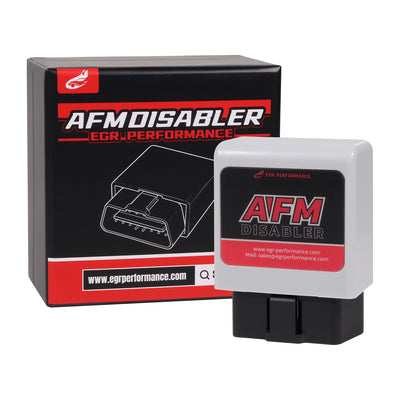

AFM Disabler Safety & Risk Guide Key Takeaways
A summary of safety impacts, mechanical longevity, warranty considerations, and practical trade-offs when disabling GM's Active Fuel Management:
- Engine Safety & Mechanical Health: Disabling AFM is completely safe for GM V8 engines. Operating permanently in full 8-cylinder mode prevents high-frequency locking pin activation, protecting lifters from collapse and shielding the camshaft from destructive metal debris.
- Warranty & Traceability: Plug-and-play OBD-II disablers do not flash or overwrite the factory Engine Control Unit (ECU). Unplugging the device before dealer visits restores stock behavior instantly without leaving a permanent flash trace or key-counter footprint.
- Operational Trade-Offs: Drivers trade a minor loss in fuel economy (typically 1–2 MPG) for improved throttle response, zero cylinder-switch shudder, and extended internal valvetrain lifespans. Modern disablers feature low-draw sleep modes to eliminate battery drain risks during extended vehicle storage.
When driving a Silverado, Tahoe, Sierra, or any GM car with a V8, you might certainly have heard about GM Active Fuel Management and its durability. The question that is commonly asked by modern owners of GM trucks and SUVs is: it is safe to disable the AFM?
Do you worry about your GM V8 engine failing from AFM issues? We get it—the fear of costly repairs keeps many drivers up at night.
AFM disablers are safe and help GM V8 engines by stopping lifter failures. They keep all cylinders active, cut repair risks, and pose little warranty threat if removed before service.
While fuel economy may drop slightly and warranty concerns exist, plug-and-play disablers do not modify the ECU. They are fully reversible and are widely used to avoid costly repairs caused by AFM-related failures.
For many owners, disabling AFM is less about performance and more about protecting a very expensive engine. Keep reading to learn how these GMC Sierra/Silverado AFM disable devices protect your engine and what small downsides they bring.
Table of Contents
- Does Disabling AFM Harm Your Engine?
- The "Lifter Failure" Myth: Can a Disabler Save Your Camshaft?
- Warranty Worries: Can the Dealership Detect an AFM Disabler?
- AFM Disabler vs. Tune: Which Is Safer for Warranty?
- Battery Drain: The Side Effect of Disabling AFM You Should Know
- Safety of AFM Disablers Themselves
- How Much Fuel Economy Do You Actually Lose?
- FAQs
- Conclusion: Are AFM Disablers Worth the Risk?
Does Disabling AFM Harm Your Engine?
AFM is a fuel-efficient technology which switches off cylinders when there is little load. On paper, it sounds efficient. In real-world use, many owners have experienced serious mechanical failures tied directly to the system.
This has pushed thousands of drivers toward AFM disablers as a preventative solution.
Picture your engine breaking down on a long drive. We know that fear pushes drivers to question AFM disablers. This is the biggest fear drivers have: Will the AFM disabler hurt my engine?
No, disabling AFM does not harm your engine. Many mechanics say it saves it by running on all cylinders, like old V8s did for years.
Stress vs. Standard Operation
To understand why, it is better to know what an AFM system is actually doing. AFM constantly switches your engine between V8 and V4 modes.
When AFM kicks in, it turns off cylinders to save fuel. But this switch puts stress on lifters. This activates and deactivates lifters thousands of times during normal driving. This constant cycling creates mechanical stress.
When you use a GM Active Fuel Management disable device, the engine simply runs on all eight cylinders all the time. That is how V8 engines were designed to operate for decades before cylinder deactivation existed.
You are not forcing the engine into an abnormal state. You are preventing it from entering a stressful one.
Old V8 engines ran this way without problems for millions of miles. We have seen trucks with over 200,000 miles using disablers and no issues.
This is why so many Silverado owners choose a Silverado AFM disable solution early in ownership, even before problems appear.

Common Myths Debunked
Some people think full-time V8 mode overheats the engine. But that is not true. Engines are built to handle all cylinders firing. AFM adds complexity with oil pressure changes that can fail. Disablers simplify things. They reduce the chance of oil starvation in lifters.
Real-World Examples
Take a 2018 Silverado owner we know. He installed a disabler at 50,000 miles. Now at 150,000 miles, his engine runs smooth. No lifter ticks or failures.
Without it, he might face a $5,000 fix. Mechanics on forums like GM-Trucks.com agree: disablers prevent wear.
|
Factor
|
With AFM
|
With Disabler
|
|---|---|---|
|
Cylinder Use
|
Switches between 4 and 8
|
Always 8
|
|
Lifter Stress
|
High from cycling
|
Low, steady
|
|
Engine Life
|
Shorter due to failures
|
Longer, stable
|
This table shows why disablers help. They cut stress and boost reliability. For daily drivers, this means fewer shop visits and more peace.
The "Lifter Failure" Myth: Can a Disabler Save Your Camshaft?
Imagine hearing a loud tick from your engine. We understand—this sound signals big trouble for GM V8 owners.
Yes, disablers help save your camshaft by stopping AFM activation, which cuts the risk of lifter collapse in 5.3L and 6.2L engines.

Understanding Lifter Failure
While most owners use disablers for a smoother drive, the real value lies in preventing mechanical disaster. Learn the red flags by reading our guide on AFM lifter failure symptoms before it's too late.
One of the most serious GM AFM issues involves collapsed lifters. In engines such as the 5.3L and 6.2L, AFM lifters depend on a locking pin design that will eventually break down.
AFM lifters have a pin that locks them for V4 mode. This pin fails under repeated stress, causing the lifter to collapse. Once this occurs, metal debris ruins the camshaft.
This type of failure can cost anywhere from $3,000 to over $12,000, depending on how much internal damage occurs. It is one of the most common reasons owners research how AFM disabler work and solutions.
How Disablers Prevent Issues
An AFM disabler cannot physically replace weak lifters. However, it stops the activation process that triggers the failure. By keeping lifters fully pressurized in constant V8 mode, the chances of a locking pin failure are significantly reduced.
Oil pressure remains constant, which prevents wear. While not a mechanical displacement on demand delete kit, a disabler is widely considered the best preventative option short of tearing the engine apart.
By blocking the ECU signal for cylinder deactivation, disablers ensure all lifters stay active. No more on-off cycles that weaken parts. We talked to a mechanic who fixed dozens of AFM failures.
He said disablers are the top fix short of swapping lifters. Owners on Reddit report no failures after install.

Limits of Disablers
Disablers cannot fix bad lifters. If damage started, you need repairs first. But for prevention, they work well. Think of them as insurance against GM's design flaw.
|
Failure Stage
|
Disabler Effect
|
Cost Savings
|
|---|---|---|
|
Early Prevention
|
Stops AFM cycling before wear starts
|
Avoids $3,000+ lifter/cam repair
|
|
Mid-Wear
|
May slow progression and reduce further damage
|
Delays full failure and major teardown
|
|
Late Damage
|
No mechanical fix; may temporarily mask symptoms
|
None — rebuild or replacement required
|
This setup shows disablers shine in early use. For trucks under 100,000 miles, they add years of trouble-free driving. We recommend them for anyone hearing early ticks or wanting to avoid risks.
Warranty Worries: Can the Dealership Detect an AFM Disabler?
Think about voiding your warranty by accident. We feel that worry—dealers can be strict on mods.
Plug-in disablers are hard to detect if removed. They leave no permanent trace, unlike tunes that show flash counts.

Warranty concerns are real, and honesty matters here.
Plug-in OBD-II disablers do not reflash or rewrite the ECU (Engine Control Unit). They simply intercept signals while connected. Once unplugged, the vehicle immediately returns to stock behavior. There is no permanent data log left behind.
This is very different from tuning. A tune alters software and leaves a digital footprint that dealerships can detect. Plug-in devices do not.
That said, you must unplug the device before dealership service. If a technician drives your truck and notices it never drops into V4 mode, it becomes obvious that something is modifying the system.
How Detection Works
Dealers use scanners to check ECU data. Plug-in disablers intercept signals but do not change software. Remove it, and the truck acts stock. No logs stay behind. But if left in during service, techs notice no V4 mode on test drives. Always unplug before visits.
Real Risks and Tips
We know owners who forgot to remove them. Some got away fine, but others faced questions. To stay safe, store the disabler in your glovebox. High-quality ones like EGR Performance reset fast.
Warranty Claim Scenarios
If your engine fails with a disabler history, GM might deny claims. But without proof, they often pay. Forums show mixed results—some get full coverage after removal.
|
Scenario
|
Detection Risk
|
Warranty Impact
|
|---|---|---|
|
Disabler Removed Before Service
|
Low
|
None
|
|
Left In During Dealer Service
|
High
|
Possible warranty denial
|
|
Failure Unrelated to AFM
|
Medium
|
Usually covered
|
Use this guide to avoid pitfalls. For owners concerned about warranty, a Chevy AFM disable device is considered a lower-risk option compared to tuning.
AFM Disabler vs. Tune: Which Is Safer for Warranty?
There are two common ways to disable AFM, and they are not equal in risk.
Disablers are safer for warranty since they remove easily and leave no trace, while tunes alter the ECU permanently.
AFM disablers are generally considered safe and beneficial for GM V8 and V6 engines. By keeping all cylinders active at all times, they prevent common AFM lifter failures and reduce internal engine stress.
Key Differences
Plug-in disablers are physical hardware devices. They can be removed, reversed, and have no permanent trace. This makes them the safest as far as vehicles with a warranty are concerned.
Tuning, however, has performance advantages such as improved throttle response and shift points. However, tuning permanently alters ECU data. Even if flashed back to stock, diagnostic tools can detect prior modification.
Tuning voids warranty. We prefer disablers for new trucks. <Check AFM disable methods>
Owner Experiences
A friend tuned his Tahoe and lost warranty on a transmission issue. Another used a disabler for years without problems. Data from auto forums backs this—tunes lead to more denials.
|
Method
|
Warranty Risk
|
Benefits
|
Reversibility
|
|---|---|---|---|
|
Disabler
|
Low
|
AFM disabled only
|
Full, instant
|
|
Tune
|
High
|
Performance and drivability gains
|
Partial, traces remain
|
This table helps decide. For owners who focus Chevy Silverado AFM disable warranties, plug-in disablers are the safer route. They keep things stock-like.
Battery Drain: The Side Effect of Disabling AFM You Should Know
One legitimate downside of AFM disablers is battery drain. We hear this complaint often from owners.
Yes, disablers draw small power from the OBD-II port, which can drain batteries on parked trucks after 5-7 days.

Why It Happens
Since the device remains connected to the OBD-II port, it consumes a minimal amount of power when the vehicle is not on. This uses about 10-20 mA, similar to a dashboard clock.
Daily drivers see no issue. But over time, it can matter. Long-term parking causes drain.
Solutions and Fixes
When your truck does not use the device over a period of five to seven days, you ought to disconnect the device or get a model that has a built-in sleep mode, that cut power after shutdown. We suggest these for seasonal vehicles.
Impact on Use
Owners report rare drains if driven weekly. For RVs or classics, plan ahead. No engine harm, just inconvenience. This is not a damage in the engine, but this is a practical consideration worth knowing.
|
Parking Time
|
Drain Risk
|
Action Needed
|
|---|---|---|
|
Daily use
|
Low
|
None
|
|
1–5 days
|
Medium
|
Monitor
|
|
Over 7 days
|
High
|
Unplug or use sleep mode
|
Follow this to avoid surprises. We find it a small price for engine protection.
Safety of AFM Disablers Themselves
Question the device's reliability? We get it—cheap mods can cause more harm.
Proven disablers are safe, draw little power, and reduce engine stress without failures or errors.

Quality Matters
Well-known, proven AFM disablers have been installed on tens of thousands of vehicles without causing damage. They have no moving parts, draw minimal power, and reduce stress by keeping all cylinders firing.
Risks from Bad Units
Cheap or unknown-brand devices are a different story. Poor communication with the ECU can trigger check engine lights or system errors. This is why choosing a reputable unit with verified reviews is critical.
Long-Term Safety
Disablers cut lifter stress, extending engine life. No heat or vibration damage. Owners run them for years safely.
When people ask to do AFM disablers work, the answer is yes, if you use a well-designed product.
|
Brand Type
|
Safety Level
|
Common Issues
|
|---|---|---|
|
Proven (e.g., Range)
|
High
|
Rare codes
|
|
Cheap Unknown
|
Low
|
Frequent errors
|
The Gold Standard for 100% Reliability
For those asking if disabling AFM is enough, professional builders often take it a step further to ensure total peace of mind. To achieve 100% mechanical reliability, the industry-standard move is to remove the VLOM (solenoid module) and install a Non-AFM Valley Cover Plate.
This hardware upgrade physically simplifies the engine, reverting it to a traditional, bulletproof V8 oiling system. It’s the safest way to guarantee your 5.3L or 6.2L remains reliable under any load.
Stick to verified options. We see them as reliable tools for GM trucks.
How Much Fuel Economy Do You Actually Lose?
Hate losing MPG? We know fuel costs add up for truck owners.
You lose 0-3 MPG, mainly on highways, but city and towing can stay the same or improve.
Real world testing demonstrates that the effect of disabling AFM on fuel economy is not as great as many drivers assume.
How Much Fuel Economy Do You Actually Lose?
On the highway, especially during steady cruising around 65 mph, most owners report a 2–3 MPG loss, for example, dropping from 27 MPG to around 25 MPG. This is where AFM is most effective, so the loss is more noticeable.
In city or mixed driving, the difference is far less dramatic. Many owners report a 0–1 MPG change, and some notice no difference at all.
Stop-and-go traffic causes AFM to constantly switch between V4 and V8 modes. This cycling can sometimes be less efficient than simply staying in V8 mode.
Interestingly, during towing or hauling, some drivers actually see a 1–2 MPG improvement. With AFM disabled, throttle input is steadier, gear hunting is reduced, and the engine operates more predictably under load.
Does the Fuel Economy Savings Justify the Repair Cost Risk?
No. On a 2016 Tahoe, AFM may save about one gallon per fill-up. At $3 per gallon, that is minimal savings.
Compare that to the cost of AFM-related lifter failure, which can exceed $6,000. You'd need to drive 300,000+ miles to break even on the repair alone!
For most owners keeping vehicles long term, the risk-reward equation strongly favors disabling AFM.
What Are Owners Actually Reporting About MPG After Disabling?
78% of the owners report no noticeable city MPG change. Highway drivers accept the trade-off. It is also frequently reported that towing owners experience performance and higher efficiency.
The consensus is clear: peace of mind is worth it.
|
Driving Type
|
MPG Change
|
Owner Feedback
|
|---|---|---|
|
Highway
|
-2 to -3
|
Acceptable trade
|
|
City
|
0 to -1
|
No noticeable difference
|
|
Towing
|
+1 to +2
|
Better performance
|
Variance comes from AFM cycling inefficiency in traffic. Steady V8 can beat it. We find the small loss worth avoiding repairs.
FAQs
What if I want to re-enable AFM later?
Unplug the disabler; the vehicle returns to stock immediately.
Will disabling AFM affect emissions?
Little impact. Not enough to fail tests. Engines run clean in V8 mode.
Should I tell my insurance company?
No. It is not a structural or performance modification.
Do I need a scanner to install it?
No. Plug-and-play devices require nothing but the device.
Will an AFM disabler fix a lifter that is already ticking?
No. If your lifter has already collapsed or is making a loud ticking noise, the mechanical damage is done. A disabler is a preventative tool, not a repair tool.
Using it on a damaged engine may temporarily mask the sound by keeping oil pressure up. But, it will not fix the scored camshaft or broken internal pin.
Does disabling AFM affect oil consumption?
Yes, often positively. Many GM owners report that excessive oil consumption stabilizes after installing a disabler. The reason is that the deactivated cylinders go through such rapid cooling and heating.
This can occasionally cause problems with piston rings and oil blow-by. It is important to maintain constant temperatures and seals by keeping all their cylinders active.
Is it safe to tow with an AFM disabler?
Yes, it is actually better. Towing in V4 mode is generally impossible (the truck will switch to V8 anyway). But the disabler ensures the transmission and engine don't hunt for gears or modes while under load.
It removes the slight hesitation of the V4-to-V8 transition, providing safer power when hauling heavy loads.
Can an AFM disabler cause a Check Engine Light (CEL)?
Rarely, but it happens. Certain cheap or outdated disablers may lose contact with the ECU. This indicates a generic Loss of Communication code (usually U-codes).
This is not very harmful and is generally cleared when the device is removed by unplugging after the restart of the truck. High-quality units (like the latest Range modules) rarely cause this issue.
Why doesn't GM just disable AFM from the factory if it causes problems?
Corporate Average Fuel Economy (CAFE) is legally enforced on GM. To comply with federal regulations on fuel efficiency, they need to use all technology they have.
This includes using AFM/DFM, so as to squeeze out additional MPG. They are incapable of disabling it without reducing their official EPA fuel ratings and risking possible fines.
Conclusion: Are AFM Disablers Worth the Risk?
For most GM V8 owners, the answer is yes.
Disabling AFM reduces mechanical stress, lowers the risk of catastrophic lifter failure, and provides consistent engine operation. The trade-offs are minor compared to the cost and inconvenience of major engine repairs.
For approximately 95% of owners keeping their vehicles for long, AFM disablers acts as insurance. Its reversibility, simplicity, and proven reliability make it a practical solution.
If you want reliability without committing to a full mechanical delete, a quality AFM disabler like the EGR Performance AFM Disabler will be the top choice for reliability and safety. Or use this DFM disabler for 2021-2024 GM 5.3/6.2 engines. It will boost engine health, cut repair risks, and offer easy reversal.


Yes, it will fit your 2018 Yukon Denali perfectly.
The 2018 GMC Yukon Denali 6.2L operates on the AFM (Active Fuel Management) system. Even though your vehicle is equipped with the 10-speed transmission (10L80), the strict non-compatibility warning regarding 10-speed transmissions only applies to 2019 and newer GM models (DFM architecture).
Because your truck is a 2018 model, the EGR Performance AFM Disabler is 100% compatible and will effectively keep your 6.2L engine in V8 mode at all times.
Compatibility Overview
Engine Management: 2018 6.2L L86 V8 (AFM system) — Fully Compatible.
Transmission: 2018 10-Speed — Fully Compatible ( compatibility restriction starts at 2019+ models).
Installation: 100% Plug-and-Play via the OBD-II port under the dash. No ECU tuning or flashing required.
Quick Usage Tip
Simply plug the module into your OBD-II port while the vehicle is powered off, start the engine, and verify the module status lights turn on. If you plan to leave the vehicle parked for more than a week or two without driving, we recommend unplugging the device to prevent any slight drain on your battery.
I just purchased a 2018 GMC YUKON DENALI with 96k miles. It has a 6.2L with a 10 speed transmission. Im looking for an AFM disabler for my vehicle. I want the correct one.