

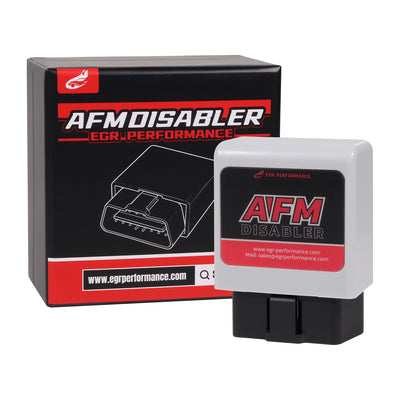

AFM Disabler Pros and Cons Key Takeaways
A balanced evaluation of the advantages, potential drawbacks, and practical trade-offs when installing an AFM disabler module:
- Primary Pros (Benefits): Prevents premature lifter collapse and camshaft wear, restores linear throttle response, eliminates exhaust drone and cylinder-switching vibration, and installs via OBD-II in seconds without ECU modification.
- Primary Cons (Drawbacks): Results in a slight drop in fuel economy (typically 1–2 MPG loss during highway cruising), requires physical removal before dealer service to avoid warranty questions, and can slowly draw battery power if left plugged in during weeks of non-use without built-in sleep mode.
- Overall Verdict: For the vast majority of GM 5.3L and 6.2L V8 owners, the minimal loss in fuel savings is far outweighed by the long-term protection against multi-thousand-dollar mechanical lifter repair costs.
If you own a GM V8 truck, you have probably heard about Active Fuel Management, or AFM. You may also know its newer version, Dynamic Fuel Management, called DFM. Paperwise, it is a brilliant concept to fire off the cylinders when you are not in need of full power and conserve on fuel. In the actual world ownership, however, AFM has emerged as one of the most hot-tempered systems GM ever installed in a truck engine.
An AFM disabler keeps your engine in full V8 mode, reducing lifter failure risks and improving drivability, but it may slightly lower MPG—worth it for longevity if you plan to keep your truck long-term.
Over the years, Silverado and Sierra owners have raised serious concerns about these systems. They report AFM related lifter failures, oil usage, misfires and early engine wear.
The stories of either minor inconveniences or complete rebuilds in the thousands can be found all over online forums. That has compelled a lot of owners to find a way of disabling the system without dismantling the engine.
Frustrated with your GM truck's engine switching cylinders and risking costly failures? We know the pain of unexpected repairs eating into your budget and downtime.
This guide breaks down exactly what an AFM disabler does. It covers the real-world AFM disabler pros and cons, and whether it's actually worth installing on your Silverado or Sierra truck. By the end, you'll have a clear idea of whether an AFM disabler makes sense for your driving style, ownership plans, and risk tolerance.
Table of Contents
- What Does An AFM Disabler Actually Do?
- Pros Of Using An AFM Disabler On Your Truck
- Cons And Risks Of Using An AFM Disabler
- Real-World Trade-offs: MPG vs. Engine Longevity
- Long-Term Effects: What Do Real Owners Report?
- AFM Disabler Vs. Full AFM Delete (Cam/Lifter Swap)
- FAQs
- Is An AFM Disabler Worth It For Your Truck?
What Does An AFM Disabler Actually Do?
Tired of your truck's engine acting up with mode switches that lead to breakdowns? We understand how AFM issues disrupt daily drives.
A plug-in AFM disabler prevents the ECU from activating cylinder deactivation via the OBD-II port, keeping your engine in full-cylinder mode without rewriting software—reversible and low-risk.
We explain the mechanics and benefits to show why many owners choose this over permanent changes- DOD delete.
How AFM Disablers Work Without Tuning
AFM, or Active Fuel Management, saves fuel by shutting down cylinders under light load, but it stresses lifters.
A plug-in AFM/DFM disabler is a small electronic device that connects to your truck's OBD-II port. Popular options include units from Range Technology. EGR Performance Active Fuel Management disabler models are also quite popular.
When it is plugged in, the machine denies the ECU the ability to order the deactivation of the cylinder. Simply put, it maintains your engine in full-cylinder mode at all times. Your V8 stays a V8. No switching to V4. No constant cylinder cycling.
To understand the technology behind your engine's cylinder deactivation and how to bypass it, check out our deep dive into [What is AFM/DFM Disabler & How it works?]
We see this as a smart, non-invasive option for owners who want protection without voiding warranties or spending big on mechanics.

Why It's Seen as Reversible Insurance
Many GM owners face lifter failures after warranty ends, costing thousands. The disabler acts as cheap insurance—around $50 to $300—against that. Forums like GM-Trucks.com share stories of engines lasting longer without the constant cycling.
We have heard from users who installed one early and avoided the common ticking sounds that signal trouble.
It is necessary to explain what an AFM disabler does not mean. It is not a tune, and it does not rewrite or modify the ECU permanently. No flashing, no rewrite of software, no permanent change. If you unplug the device, AFM or DFM immediately returns to normal operation.
This reversibility is why many owners view a disabler as a low-risk insurance policy. It gives you control over AFM behavior without committing to a mechanical teardown or expensive tuning solution.
Compare this to tunes that alter ECU code permanently; disablers keep things simple and flexible.
Key Differences from Other Solutions
|
Feature
|
AFM Disabler
|
ECU Tune
|
Mechanical Delete
|
|---|---|---|---|
|
Cost
|
$50–$300
|
$300+
|
$2,000+
|
|
Installation
|
Plug-and-play
|
Software flash
|
Engine teardown
|
|
Reversibility
|
Yes, unplug
|
No, permanent
|
No, parts replaced
|
|
Risk Level
|
Low
|
Medium
|
High
|
Pros Of Using An AFM Disabler On Your Truck
Worried about shaky drives and engine breakdowns ruining your trips? We get the hassle of unreliable performance in GM vehicles.
Pros include smoother drivability, reduced lifter risks, less oil use, easy install, and long-term savings—making it a top choice for preventing expensive repairs.

We break down each advantage with real insights to help you see the value.
1. Better Drivability and Throttle Response
One of the most noticeable benefits reported in AFM/DFM disabler reviews is improved drivability. AFM engines constantly switch between cylinder modes. This happens mostly during light throttle driving, especially in city traffic. That transition can cause shudder, hesitation, or a "rubber band" feeling in the throttle.
When the engine has an AFM disabler fitted, the engine is more predictable. The throttle response is smoother, gear changes are smoother, and the truck does not go between modes at low speeds any longer. Many drivers say the truck simply feels more natural to drive.
We have read reports on Silverado forums where users say throttle feels more responsive, with no lag during light cruising. This matters for daily drivers who haul loads or tow trailers.
No more unpredictable shifts that make merging or passing feel risky. It turns your truck into a reliable performer, like it was meant to be without fuel-saving gimmicks.
2. Reduced Lifter and Valvetrain Risk
AFM lifters are mechanically different from standard lifters. They are dependent on oil pressure to fall and switch back on repeatedly. Technicians believe this repeated cycling is a major problem. It causes lifter breakdown, ticking, and misfiring as well as camshaft wear, as believed by many long term owners.
An AFM disabler reduces the frequency with which such AFM lifters are forced to collapse and re-engage. It does so by maintaining the engine in full-cylinder mode. It does not eliminate the weak parts, but it increases the load on them, and this will reduce the chances of failure in the long run.
Mechanics on sites like BobIsTheOilGuy note that constant mode changes cause ticking and failures. We know owners who installed disablers at 50,000 miles and reached 150,000 without issues.
This preventive step saves on $2,500+ repairs. While not foolproof, it lowers the odds significantly, based on community feedback.
3. Lower Oil Consumption and Carbon Buildup
The usage of oil is also one of the frequent complaints with the engines with AFM installed, particularly with the 5.3L and 6.2L. According to some of the owners, V4 mode makes the engine pull the oil past rings and into the combustion chamber.
Vendors like EGR Performance claim reduced carbon in chambers and lifters from AFM disabler reviews. We see mixed but positive reports—some users drop from a quart every 3,000 miles to almost none.
Good oil changes help, but disabling AFM aids long-term cleanliness. This keeps performance steady and avoids rough idles from gunk.

4. Plug-and-Play Installation
AFM disablers are as simple as it gets. No tuning software. No laptop. No mechanical work. You unplug it in case you have to take it out. That's it.
This gives it an all-inclusive reversibility, which makes it attractive to the owners who do not want to permanently alter it. We appreciate this for busy owners who avoid complex mods.
Ready to take control of your V8? Check different ways to disable AFM to get up and running smoothly.
5. Long-Term Ownership Benefits
The Silverado and Sierra owners who have reached out of warranty also install AFM disablers. A $50-300 device is cheap insurance compared to possible repairs of the engine costing as much as $2,500-7,000.
To drivers who intend to extend their truck much beyond 100,000 miles, long-term peace of mind is usually the only worthwhile reason to pay the price.
Cons And Risks Of Using An AFM Disabler
Scared of hidden downsides that could cost you more in the long run? We know the fear of mods going wrong on your daily driver.
Cons include minor MPG loss, battery drain risks, warranty concerns, emissions issues, no fix for existing problems, and compatibility limits—balance these against the pros.

1. Possible Fuel-Economy Loss (Often Small)
The most widespread AFM disabler problems is the decreased fuel economy. Since the engine stays in V8 mode, some drivers see a drop of about 0–1.5 MPG, mostly in city driving.
Highway mileage usually remains constant, particularly at constant speeds. Your actual driving behavior is very much affected by where you drive and how you drive.
We hear from users who notice little change with careful habits, but heavy footers see drops.
2. Potential Battery Drain if Parked for Long Periods
Since the device is plugged in the OBD-II port, it consumes power when the truck is not running. Sleep modes are found in premium models; however, battery consumption may still occur when the truck is idle.
Drain of the battery is possible when the truck is parked for a total of two weeks or more without driving. You should take out the disabler when storing the vehicle over a long period, or you should use a battery maintainer.
Leaving a disabler in a vehicle that is scarcely used has led to dead batteries among some customers. This is reported more often during cold weather.
Brands like Range and EGR Performance have sleep modes, but we advise unplugging during storage. Real cases show dead batteries after 2+ weeks; avoid by removing it or using a maintainer. Read more about the safety and engine health impact.
3. Warranty and Dealer-Visit Considerations
While many devices are advertised as "undetectable," some owners prefer to unplug them before dealer visits. This prevents any possible warranty claim argument on the engine or emission systems.
It is more of a precautionary measure than an assurance, but it is something to consider. Dealers might blame mods, so play safe.
4. Emissions and Diagnostic Issues
Some users report occasional check engine lights. This usually happens if the device is unplugged and plugged back in frequently.
Emissions readiness can also be affected. If you go for a state inspection or smog check , you may fail. Even with the device plugged in, or immediately after unplugging it, you may fail due to emissions monitors showing "Not Ready."
The fix: Unplug the device and drive normally for 50–100 miles before inspection to allow the system to reset.
5. Doesn't Fix Existing Mechanical Problems
AFM disablers are preventative. A disabler will never repair an engine that already has ticking, misfires or low compression due to a faulty lifter. Mechanical repair is inevitable at that stage.
If ticking or misfires exist, you need repairs first. Forums warn against using it as a band-aid for failed lifters.
When a Disabler Isn't Enough
Is your engine already showing signs of oil consumption or mysterious ticking? At this stage, an electronic disabler might be "too little, too late." While a plug-in device stops future cycling, it cannot fix a mechanically compromised valvetrain.
For a permanent fix, you need a Full Delete Solution. Our Billet Aluminum DOD Valley Cover Plate allows you to physically bypass the problematic AFM system, providing a robust, leak-free seal that an electronic tool simply can't offer.

6. Compatibility Limitations
Some newer GM vehicles, especially 2022 and newer models, may not work properly. Updated ECUs and transmission logic can limit support for older disablers. It is advisable to always check your truck's fit before buying.
Unsure if your vehicle is compatible? Review our fitment list of EGR Performance AFM disabler below to make sure your engine is covered!
Make |
Supported Model |
Year Range |
|---|---|---|
Chevrolet |
Silverado 1500 |
2007–2020 |
Suburban |
2014–2020 |
|
Colorado |
2015–2020 |
|
Corvette |
Various |
|
Tahoe |
Various |
|
GMC |
Sierra 1500 |
2007–2020 |
Yukon XL |
2015–2020 |
|
Canyon |
2015–2020 |
|
Envoy / Denali |
Various |
|
Cadillac |
Escalade |
2010–2018 |
CTS |
2004–2018 |
|
ATS |
2016–2018 |
|
SRX |
Various |
Unsupported Models
2019+ GM vehicles equipped with 10-speed transmissions (5.3L/6.2L engines).
Real-World Trade-offs: MPG vs. Engine Longevity
Battling the choice between saving gas and saving your engine from early death? We feel the struggle of weighing daily costs against big fixes.
Trade-offs show 1-2 MPG city loss but better longevity—most owners say the fuel hit is minor compared to avoiding $3,000+ repairs.
We analyze data and owner experiences to clarify this key decision.
Understanding the MPG Impact
City driving sees the biggest drop because AFM shines in light loads. You feed all cylinders constantly, so expect 1-2 MPG less. Highway cruising often matches stock, as full mode is efficient at speed.
We reviewed logs from apps like Fuelly; urban users report 15-16 MPG instead of 17, but rural ones see no change.
Driving style matters—aggressive acceleration amplifies losses, while steady habits minimize them.
Longevity Gains Outweigh Fuel Costs
For many, the math is simple. The minor fuel cost is a small price to pay compared to a $3,000 repair bill for collapsed lifters or a worn camshaft caused by the AFM system.
Lifter failures from AFM cycling cost $3,000-$7,000. Disablers reduce this risk, extending engine life. Owners on Chevy forums calculate: extra fuel at $4/gallon adds $100/year, but one repair dwarfs that.
We think for haulers or towers, constant power prevents strain elsewhere, like transmissions. Data from high-mileage trucks shows fewer breakdowns post-install.
That trade-off is why "do AFM disablers work?" remains one of the most searched questions among GM truck owners.
Factors Influencing the Balance
|
Driving Type
|
MPG Loss
|
Longevity Benefit
|
|---|---|---|
|
City/Stop-Go
|
1–2 MPG
|
High (less cycling)
|
|
Highway
|
0–0.5 MPG
|
Medium
|
|
Towing/Hauling
|
Variable
|
High (steady power)
|
Long-Term Effects: What Do Real Owners Report?
Curious if AFM disablers hold up over years or cause new problems? We share the uncertainty of long-term mods on your investment.
Owners report 50,000+ miles with smoother runs, fewer repairs, but stress maintenance is key—disabling reduces but doesn't eliminate risks.

We gather forum insights and patterns to reveal the reality.
Positive Reports from Extended Use
Silverado owners on Reddit say no shudder, better response, and engines staying clean. We found threads where one hit 200,000 miles without lifter woes, crediting the disabler.
Long-term AFM DFM disabler reviews show many owners running tens of thousands of miles with no major issues. Reports are especially positive on 2007–2019 AFM-equipped trucks. So, when asking yourself, "Will AFM disabler hurt my engine?" rest assured.
Oil changes every 5,000 miles with quality synthetics amplify benefits. No major downsides beyond slight MPG dips.
Lingering Risks and Maintenance Needs
Maintenance is, nevertheless, an issue. Oil changes and quality oil are of paramount importance. Making AFM inoperable decreases risk but does not reduce it to zero.
Forums note 10-20% risk remains from original parts.
We advise monitoring for ticks. Some report no carbon buildup, others minimal. Good habits like using 5W-30 oil matter more than ever.
Common Patterns Across Models
|
Model Year
|
Common Reports
|
Mileage Achieved
|
|---|---|---|
|
2007–2013
|
Smoother, less oil use
|
150,000+
|
|
2014–2019
|
Reduced ticking
|
100,000+
|
|
2020+
|
Mixed compatibility
|
Varies
|
This shows trends. Critically, for older trucks, benefits shine; newer ones need model checks.
Balancing Expectations
Owners view it as risk reduction, not cure. We heard stories of engines failing despite disablers from prior damage. Overall, positive feedback dominates for daily use.
AFM Disabler Vs. Full AFM Delete (Cam/Lifter Swap)
Torn between a quick fix and a total overhaul for AFM troubles? We know the dilemma of choosing depth over ease.
A disabler is cheap, reversible electronic protection; a full delete swaps parts for permanent fix—pick disabler for budgets, delete for performance.

An AFM disabler is purely electronic, inexpensive, and reversible. It prevents the ECU from using AFM but leaves the hardware in place.
A full AFM delete is mechanical. It replaces the camshaft, lifters, valley cover, and requires a tune. It's expensive, invasive, and permanent.
- AFM Disabler ($50–$300): Best for daily drivers, budgets, and owners who want protection without engine teardown. It's an insurance policy, not a cure.
- Mechanical Delete Kit ($2,000+): The only way to guarantee an AFM lifter never fails. This is the nuclear option, typically chosen after a failure or during a performance build.
Pros and Cons Comparison
|
Factor
|
Worth It If
|
Not If
|
|---|---|---|
|
Mileage
|
High
|
Low
|
|
Usage
|
Towing/Hauling
|
Highway Only
|
|
Warranty
|
Expired
|
Active
|
|
Concerns
|
Lifter Fears
|
None
|
This highlights trade-offs. We recommend disablers first for most.
When to Choose Each
For out-of-warranty keepers, disabler protects without hassle. If engine's open for fixes, go delete. Critically, disabler fits budgets; delete ensures max reliability for heavy use.
Protect Your Engine. Restore Full Power.
The pros are clear: disabling AFM/DFM is the best way to prevent lifter failure and oil consumption issues. Don't let your V8 run on 4 cylinders—our plug-and-play disablers keep you in full power mode 100% of the time without voiding your warranty.
Shop an AFM/DFM Disabler →FAQs
Does the AFM disabler add horsepower?
No. It improves drivability, not peak power. But smoother mode means better usable power. Some feel 5-10 HP from consistent delivery, per dyno threads. We note it's drivability, not raw boost.
Is it legal to use an AFM/DFM disabler?
Yes, for off-road or personal use, but check emissions laws. It does not increase pollutants, but unplug for tests to pass readiness.
Can I leave my AFM disabler plugged in all the time?
Yes, but unplug it if parked weeks to avoid drain. We suggest checking battery monthly.
Is an AFM disabler worth it compared to getting a custom tune?
For most owners, yes. Disabler is simpler, reversible. Tunes are permanent and cost more. tune offers more tweaks but risks warranty. For basic protection, disabler wins.
Does an AFM disabler help with oil consumption on 5.3/6.2 engines?
Yes, by keeping all cylinders active, reducing blow-by. Users report less quart use per change.
Is it safe to tow with an AFM disabler installed on my truck?
Yes, full mode gives steady power, better for loads. We hear improved stability from towers.
Will an AFM disabler prevent lifter failure completely or just reduce the risk?
Reduces risk by stopping cycles, but not 100%—maintenance key. Existing issues need fixes.
Can I use a remote starter with an AFM disabler plugged in?
Yes, most modern disablers support remote start. Test your setup.
Should I install an AFM disabler on a high‑mileage Silverado that's already showing ticking or misfires?
No, it's preventive. That issue usually indicates existing mechanical failure. Repair first. Disabler won't fix damage.
What is the difference between AFM and DFM, and do I need a different disabler for each?
AFM deactivates 4 cylinders; DFM does 1-7 variably. Some disablers like EGR Performance AFM/DFM disablers work for both, but check model.
Completing your setup with high-quality Chevy LS 5.3 exhaust manifold header will ensure your V8 sounds and performs exactly as it was meant to.
Is An AFM Disabler Worth It For Your Truck?
Is an AFM disabler worth the investment? Considering that a collapsed lifter can cost you thousands in repairs, it definitely is.
The AFM disabler pays off when you have an AFM/DFM-equipped GM truck (e.g. many Silverado/Sierra V8s). It is especially useful when using it over an extended period, doing a lot of towing or hauling or are out of warranty and worried about lifter failures.
It will not be the solution to the issues that already exist, and there will always be failures. However, it is capable of lessening pressure on the areas that have been identified as weak.
That's why AFM disabler pros and cons remains one of the most searched topics among GM truck owners today.
We outline scenarios to match your needs.
When It's More Likely Worth It
If your Silverado or Sierra has AFM/DFM, you keep it past 100k miles, tow often, or worry post-warranty. Lifter failures hit hard; disabler cuts risks cheap.
We know haulers who value steady power over slight fuel costs. For 5.3/6.2 engines prone to issues, it's smart prevention.
When It Might Not Be Necessary
Low-mileage trucks under warranty benefit from stock MPG. If mostly highway and no AFM history, skip it. Accept factory setup if repairs are covered.
|
Factor
|
Worth It If
|
Not If
|
|---|---|---|
|
Mileage
|
High
|
Low
|
|
Usage
|
Towing/Hauling
|
Highway Only
|
|
Warranty
|
Expired
|
Active
|
|
Concerns
|
Lifter Fears
|
None
|
An AFM disabler for 2005-2020 Chevy 5.3 offers solid pros for longevity with minor cons; we recommend EGR Performance as the best choice for reliable, effective protection. Or shop the 2022-2024 Silverado DFM disabler here.


Dear readers, not sure if your truck is supported? Check the full compatibility list below before ordering!
Supported: 2007–2020 Chevrolet Silverado 1500, Suburban, Tahoe, Colorado, Corvette | GMC Sierra 1500, Yukon XL, Canyon, Envoy, Denali | Cadillac Escalade, CTS, ATS, SRX.
Not Supported: 2019+ GM vehicles equipped with 5.3L/6.2L engines and 10-speed transmissions.
If your truck falls into the supported list, an AFM/DFM disabler is a direct plug-and-play setup via the OBD-II port:
https://www.egrperformance.com/products/active-fuel-management-afm-disabler-for-gm-vehicles-3
Hi Tony, absolutely. At 181,000 miles, an AFM disabler is still a great preventive measure because lifter failure can happen suddenly, with no prior warning. Keeping all 8 cylinders running full-time will protect your 5.3L engine from oil consumption and help keep it running smoothly for many more miles.
I have a 2009 Silverado with a 5.3 engine that has 181,000 miles that has no ticking. Would a AFM disabler be a plus for me?
No, plug-in AFM/DFM disablers do not work on a 2020 GMC Sierra 1500 with a 10-speed transmission. General Motors’ Global B electronic architecture and complex DFM logic prevent standard OBD-II modules from communicating properly, leading to dashboard error codes and shifting glitches.
Disabling the system on these models requires a custom ECM unlock and flash tune instead of a plug-in device.
Does this work on a 2020 GMC 1500 w a 10 spd transmission