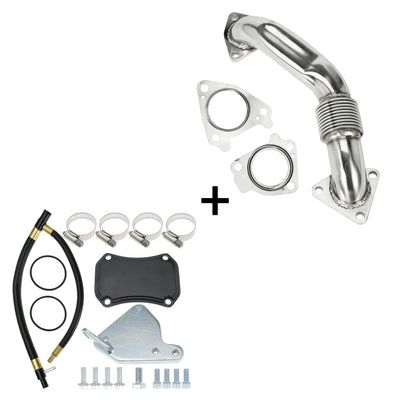
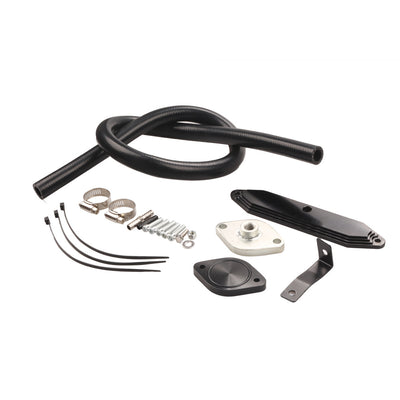
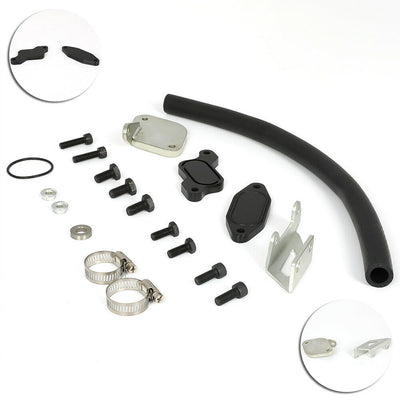
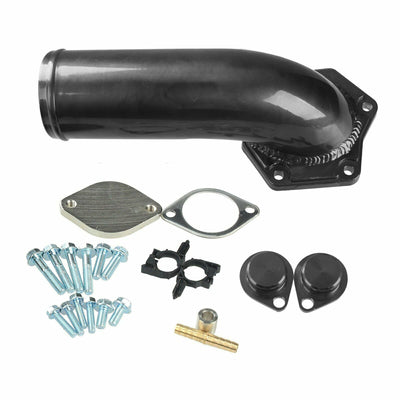

General EGR Delete Pros and Cons Key Takeaways
A comprehensive engineering evaluation of the benefits of removing EGR cooler, operational trade-offs, and legal/tuning considerations of removing a diesel EGR system:
- Core Pros (Performance & Reliability): Completely eliminates abrasive carbon and soot buildup in the intake manifold, lowers intake air temperatures, prevents internal cooler cracking or coolant leaks, and improves fuel efficiency and throttle response.
- Core Cons (Trade-offs & Restrictions): Results in higher raw NOx emissions, causes slower cabin warm-up times in freezing climates, requires strict custom ECM tuning to avoid limp mode, and is generally restricted to off-road or competition use depending on local regulations.
- Long-Term Value: For owners operating heavy-duty trucks in severe towing conditions, removing the thermal and chemical stress of recirculated exhaust gases significantly extends engine life and minimizes unexpected roadside breakdowns.
When you have a diesel truck throwing EGR valves that clog your intake with carbon, you have almost certainly heard someone say, "Just delete it."
An EGR delete improves power and cuts maintenance for off-road vehicles. Yet it is illegal for street use in many places and raises emissions. We recommend it only when legal and with proper tune to avoid risks.
But if it is done the wrong way, or on the wrong vehicle, you might end up with a check engine light that never goes away, fail an emissions test, lose your warranty, or even face a fine in some places.
Let's walk through the real EGR valve removal pros and cons so you can decide whether it makes sense for your vehicle and how you use it.
Caution: In the US, the UK, and most other countries, EGR deletion is illegal on any road-registered vehicle. Always check your local laws beforehand before touching anything.
Table of Contents
- What Does an EGR Delete Do?
- Pros of an EGR Delete
- Cons of an EGR Delete
- Is an EGR Delete Bad for the Engine?
- When Is an EGR Delete Commonly Considered
- What Alternatives Can You Choose Instead of EGR Delete?
- What Key Factors Should You Check Before an EGR Delete?
- Step-by-Step Overview: What an EGR Delete Typically Involves
- Frequently Asked Questions
- Summary: Is an EGR Delete Right for You
What Does an EGR Delete Do?
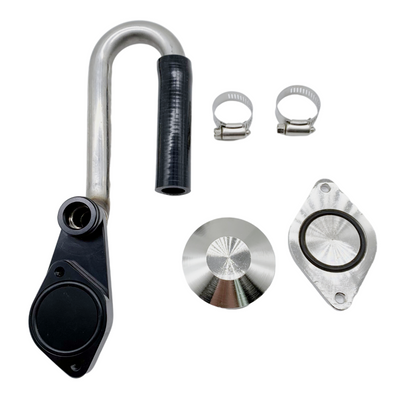
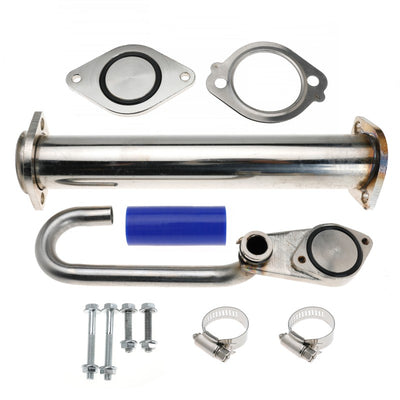
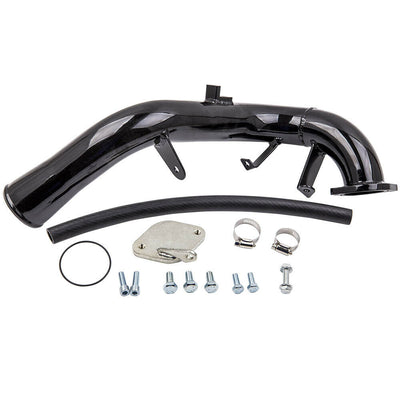
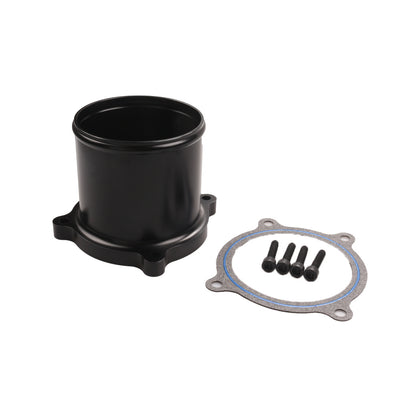
An EGR (Exhaust Gas Recirculation) delete is a modification designed to disable or entirely bypass a vehicle's factory EGR system. This process involves removing physical components—such as the EGR valve, cooler, and interconnecting pipework—or sealing off the pathways using solid blocking plates. To prevent error codes, check engine lights, or limp mode, this hardware change is almost always paired with custom ECU tuning.
Standard EGR Operation Explained
- Core Function: Under normal operation, the system redirects a portion of spent exhaust gas back into the intake manifold. Introducing this inert gas dilutes the oxygen mixture and lowers peak combustion chamber temperatures, significantly reducing harmful Nitrogen Oxide (NOx) emissions.
- Inherent Drawbacks: Over time, recycled exhaust gases deposit soot and oily carbon sludge onto intake valves and manifold walls. This buildup restricts airflow, reduces fuel efficiency, and can cause premature mechanical failure of the EGR valve or cooler.
Key Impact and Performance Effects
- Eliminating Carbon Contamination: By shutting off the exhaust loop, you keep carbon soot out of the intake tract, keeping the engine clean internally.
- Unrestricted Fresh Air Intake: The engine draws in 100% clean, oxygen-dense air instead of diluted exhaust fumes. This can sharpen throttle response and restore horsepower lost to prior carbon restriction.
- Elevated Thermal & Emission Levels: Without inert exhaust gas to absorb excess heat, internal combustion temperatures rise, resulting in a direct increase in tailpipe NOx output.
- Mandatory ECU Remapping: Modern Engine Control Units closely monitor EGR airflow and pressure differentials. Disabling the hardware without reprogramming the computer will trigger diagnostic trouble codes and degrade engine driveability.
Legal Compliance & Regulatory Considerations
- Street Driving Prohibitions: Tampering with or removing factory emissions controls violates federal and regional environmental standards (including U.S. EPA regulations).
- Strictly Off-Road / Competition Use: EGR delete kits are legally designated solely for non-registered track, marine, or off-road competition vehicles. Modified street-driven vehicles will fail official emissions tests and inspection standards.
Executing an EGR bypass physically removes or seals off the heat exchanger core, preventing recirculated exhaust gas from mixing with incoming fresh air. To explore complete hardware kit components, intake elbow geometry, and coolant reroute plumbing, consult our foundational guide on what is an EGR delete.
Pros of an EGR Delete
Your EGR system mixes exhaust back into the engine. This builds up soot and hurts performance. An EGR delete stops the mix and gives clean power.
The main EGR Delete advantages are more reliability, better throttle, cleaner oil, and good fuel economy in some cases. With a tune, you can gain 5 to 15 percent power.
We see big benefits when we do EGR deletes the right way.
Protect Your Engine. Boost Your Efficiency.
Stop feeding your engine abrasive soot and extreme heat. Our durable EGR delete kits are designed to eliminate failure-prone coolers and carbon buildup for good. Whether you're looking to prevent a blown head gasket or just want better MPG, give your diesel the clean airflow it needs to last a lifetime.
Shop EGR Delete Kits→Higher Reliability and Minimal Maintenance
EGR forces the oily dirt, soot-laden exhaust through your intake manifold. Do that 100,000 miles, and you have a caked-up manifold, sluggish airflow.
In some diesel engines, an EGR cooler that would crack open and spew coolant out where it has no business being. It became known with the Ford 6.0 Powerstroke, and that is not the only engine with that reputation.
Remove the EGR system, and you stop that whole process. No soot recirculation means no manifold caking. No EGR cooler means cutting the risk of sticking EGR valves and no EGR cooler failure. Owners of high-mileage problem diesels describe it as the last EGR repair they ever had to do.
So owners spend less on repairs over the vehicle's life. In our experience, we helped a truck owner who had an EGR cooler fail three times in two years. After deleting, the truck ran clean for over 50,000 miles with no more issues like that.
Improved Performance and Throttle Response
When exhaust gas loops back into the intake, it reduces oxygen, heats things up, and slows the engine down a bit.
Removing the EGR valve and throttle lets the engine respond faster when you press the gas, and most people notice it right away. Engines perform best with fresh air.
With the right ECU tune, trucks can see around 5 to 15 percent more power and torque. When carrying heavy loads or towing, the engine feels smoother and more controlled.
These are real EGR delete pros, but it only works well if the tuning is done correctly after EGR/DPF Delete.

Cleaner Engine Oil & Potential Longevity Gains
Soot from recirculated exhaust makes its way past the rings and into the crankcase. It is one of the main reasons diesel oil goes black fast.
After the EGR is deleted, there will be less soot through the intake. It means the oil stays cleaner and holds its viscosity longer between changes. That being said, keep doing your oil changes on schedule. This helps oil keep its protective properties longer.
The EGR delete also reduces wear on internal parts when temperatures stay under control.
Fuel Economy Improvement in Some Cases
Fuel economy can improve in some cases. The combustion cycle runs cleaner without the diluted intake charge, and the engine runs more efficiently without recirculated exhaust gases。
Some owners see real MPG gains, mostly on highway driving and during towing. But results depend on engine design, driving style, and tune quality.
To see it clearly, here is a simple table.
Benefit |
How It Helps |
Typical Result |
|---|---|---|
Reliability |
No carbon clog or EGR valve failure
|
Fewer repairs |
Performance |
Sharper throttle response |
5–15% power gain |
Oil Clean |
Less soot contamination |
Longer oil life |
Fuel Economy |
Improved efficiency |
Higher MPG on highway |
We always pair the EGR delete with the right monitoring so gains last long and stay safe for your diesel.
By supplying pure, oxygen-dense air to the combustion chambers, fuel burns more completely and efficiently, which directly boosts low-end throttle response and torque output. To examine real-world fuel economy gains, dyno efficiency numbers, and highway mileage improvements, read our detailed analysis on whether does EGR delete increase MPG.
Cons of an EGR Delete
The pros and cons of EGR removal are not balanced. It breaks emission laws and can hurt your warranty. This leads to big fines and engine stress.
The EGR delete cons are big for road vehicles. It is illegal to raise NOx voids warranty raises temps and needs tuning. Inspections fail, too.

The disadvantages of an EGR delete are big and often outweigh the benefits for daily on-road vehicles.
Illegal on Public Roads in Most Regions
The US Clean Air Act treats EGR removal as emissions tampering. Fines start in the thousands and enforcement has increased in recent years. The UK fails the MOT on it. Australia considers it an illegal modification in most states.
If you drive on public roads, this is not a gray area — it is a violation. This can bring fines, failed inspections, and registration issues.
An EGR delete is often limited to off-road racing or competition use only. We always tell owners to check local rules first.
Higher NOx Emissions
The EGR system lowers combustion temperatures specifically to reduce nitrogen oxide output. Remove it, and NOx goes up. NOx contributes to smog and has documented respiratory health effects.
Deleting EGR increases NOx and worsens local air quality. This goes against modern emissions standards.
Warranty, Insurance, and Resale Problems
Dealers and inspectors with a scan tool can see the missed EGR parts easily. Insurance claims on vehicles with significant modifications have gotten complicated in some cases.
And when you try to sell, buyers in states with emissions testing know they cannot register it without restoring the stock hardware — that costs you on the sale price.
Higher Combustion Temperatures and Engine Stress
The EGR cools the combustion charge by diluting it. Take that away with a bad tune or no monitoring, and peak combustion temps climb. That extra heat goes somewhere— into the turbo, the pistons, the valves, the head gasket.
On a properly tuned and monitored setup, this is manageable. On a sloppy tune or an engine pushed hard without an EGT gauge, it accelerates wear faster than most people expect. Poor or aggressive tuning can lead to premature engine damage.
Check Engine Light, Limp Mode, and Tuning Costs
The ECU looks for EGR flow on every drive cycle. When it detects missing EGR flow, it will set fault codes. On most modern engines, that means a check engine light almost immediately, and depending on the tune state, the truck can go into limp mode and cut power.
You need professional ECU tuning to delete the EGR monitors and recalibrate fueling. That is several hundred dollars besides the kit and labor. Budget for it up front, or the job is not finished.
Failed Inspections and Smog Tests
Cleared codes do not hide missing hardware from a visual inspection. And OBD readiness monitors that are incomplete flag the vehicle on OBD-based smog tests even without an active fault code.
In states or countries with annual testing (MOT), this becomes a recurring problem and leads drivers to forced repairs to restore stock hardware.
Here is a table of the main risks. We see these issues often, so we urge caution for street trucks.
Risk |
What Happens |
Real Impact |
|---|---|---|
Legal |
Fines and failed tests |
Large penalties |
Emissions |
Increased NOx output |
Worse air pollution |
Warranty |
Voided coverage |
Costly repairs |
Engine Stress |
Higher temperatures |
Accelerated wear |
Tuning |
Requires professional calibration |
Additional expense |
Inspection |
Fails emissions/smog checks |
Vehicle not road-legal |
Is an EGR Delete Bad for the Engine?
An Exhaust Gas Recirculation (EGR) delete can bring significant risks to an engine, presenting a complex trade-off between eliminating certain maintenance headaches and introducing higher mechanical stress and regulatory liabilities.
Potential Risks and Damage to the Engine
- Higher Combustion Temperatures: The factory EGR system acts as a thermal buffer by recycling inert gas to lower peak combustion temperatures. Removing it increases cylinder temperatures and pressures, raising the long-term risk of piston wear, cracked cylinder heads, and turbocharger damage.
- Improper Calibration and Engine Knock: Modern engines depend on precise data sent to the Engine Control Unit (ECU) for air-fuel management. Removing the EGR without a specialized re-tune can cause the engine to run lean, potentially leading to harmful engine knock, detonation, or internal component failure.
- Exhaust Aftertreatment Damage: Elevated thermal loads and modified exhaust chemistry can overwork or prematurely ruin downstream components, such as Diesel Particulate Filters (DPF), Selective Catalytic Reduction (SCR) systems, and standard catalytic converters.
- Legal and Warranty Consequences: Tampering with emission control devices violates federal and local environmental laws (such as U.S. EPA regulations) in many jurisdictions, and it will typically void any remaining factory vehicle warranties.
Potential "Benefits" That Attract Owners
- No Carbon Buildup: Proponents note that eliminating the system prevents exhaust soot and carbon from caking the intake manifold and choking airflow.
- Elimination of EGR Failures: Deleting the hardware removes common, expensive failure points like stuck EGR valves or leaking EGR coolers that can cause coolant loss, white smoke, or rough idling.
- The Trade-Offs: Discussions on enthusiast platforms (such as TDIClub Forums) point out that while a delete cuts down on intake clogging, it trades those specific issues for higher thermal stress, increased emissions, and altered oil contamination profiles.
While removing recirculated exhaust gases promotes cleaner combustion under steady acceleration, aggressive recalibration or improper air-to-fuel ratios can produce visible soot during heavy throttle bursts. To understand how injection timing and turbo boost curve tuning impact tailpipe clarity, check out our guide on does an EGR delete make black smoke.
When Is an EGR Delete Commonly Considered
After exploring whether EGR delete is good or bad, it is time to know when the EGR should be deleted.
People consider deleting off-road racing high-mileage engines with EGR problems or areas with lax checks. But laws can change, so stay alert.

We see EGR delete used in specific cases.
Off-Road Racing and Competition Vehicles
This is the use case where a delete actually makes clean sense. A dedicated drag car, track car, or sled puller is not subject to emissions testing. Nobody is protecting a warranty on it.
The reliability and performance gains from an EGR delete are real, and the legal risks that apply to street vehicles simply do not. The same goes for farm and forestry machinery that never touches a public road.
Here, maximum reliability and power can come first over emissions. In our work, we tuned a sled pull truck, and the owner gained reliable power without stock EGR limits.
High Mileage or Problem-Prone Engines
If you have already replaced an EGR cooler twice and you are staring at a quote for a third, the math on a delete starts to make financial sense.
That is not the same as it being legally safe, and you should be clear-eyed about that distinction. But for an out-of-warranty diesel with documented EGR problems, it is at least an honest calculation rather than just a performance mod.
We help distinguish cost-saving moves from legally safe ones. One high-mileage Cummins owner saved thousands after the delete, but only because the truck stayed off-road. <Explore EGR delete kits for 6.7 Cummins>
Regions With Less Strict Enforcement
Some areas have inspections that are less thorough or less consistent. People in those areas do sometimes run deleted vehicles without scrutiny.
Regulations tighten, though, programs get updated, and a modification that slips through today may not in two years. Build your decision around what the law says, not what you think you can currently get away with.
Here is a table of common cases. This helps you see if your situation fits.
Use Case |
Why Consider Delete |
Key Caution |
|---|---|---|
Off-Road Race |
Maximum power and performance required |
Legal for off-road use only |
High Mileage |
Avoid repeated emissions-related repairs |
Best when out of warranty |
Lax Regions |
Fewer immediate restrictions |
Regulations may change over time |
What Alternatives Can You Choose Instead of EGR Delete?
When looking at EGR delete pros and cons, it is also worth considering the alternatives that can fix EGR-related problems without removing the system entirely.
Alternatives like cleaning OEM replacements, software tuning without delete, or pairing with other deletes for diesel work well for many.

Delete is not the only fix. You can clean the EGR or replace parts. This keeps things legal and safe.
EGR Cleaning and Maintenance
If the system is dirty but not failed, a proper cleaning of the EGR valve and intake manifold can restore normal function and buy significant mileage. On some engines, this is just a scheduled maintenance item every 60,000 to 80,000 miles to avoid big issues.
This cuts buildup without removal and stays legal, and the performance hit from a gunked-up intake is real.
Replacing Faulty EGR Components With Better Parts
Upgraded aftermarket EGR coolers exist for most problem-prone diesels, and they outlast the stock units significantly. If your cooler has failed once, a better replacement is a legitimate fix that keeps the system compliant. More money upfront, no legal exposure.
New valves, coolers, or sensors fix problems directly. Upgraded parts last longer and keep emissions in check. We saw a Duramax owner replace the cooler and regain smooth running without delete risks.
Software Tuning Without a Full EGR Delete
Some tuners can adjust EGR flow or timing to cut buildup and add mild power through ECU calibration alone, without removing any hardware.
It is not available on every platform, and the results are not as dramatic as a full delete, but it can reduce carbon buildup and improve response while keeping everything street legal. Ask your tuner if this is an option on your specific engine.
Pairing EGR Delete With DPF or SCR Deletes on Diesels
On diesel applications, the EGR, DPF, and SCR systems interact. Deleting one without addressing the others can create calibration complications and unintended fault codes.
Some owners delete all three together with a full emission delete kit for that reason. Be aware that this significantly increases legal exposure. It fits race or farm use but needs full tuning and monitoring.
Here is a table to compare. We recommend these first for street trucks to stay safe and legal.
Alternative |
Pros |
Cons |
|---|---|---|
Cleaning |
Low cost, remains legal |
Requires repeated maintenance |
OEM Replace |
Maintains warranty and compliance |
Still retains EGR-related issues |
Soft Tune |
No hardware changes needed |
Limited performance gains |
Full Combo Delete |
Maximum performance gains |
Off-road use only, not road-legal |
What Key Factors Should You Check Before an EGR Delete?
Before you decide, consider the pros and cons of EGR delete. What seems like a quick fix can still lead to engine issues, legal problems, or more maintenance later.
Think about the legality, vehicle use age, and warranty, plus your budget and risk level. This helps you decide smart.

Laws differ by area. Your vehicle use matters too. So check these before you act.
Legality in Your Country, State, or Province
Look this up before you buy any parts. The answer varies by location, and the legal consequences vary, too. Some states actively enforce emissions tampering, while others are laxer. Do not guess.
How You Use Your Vehicle
Off-road or competition vehicles are a different situation. But if your truck is a daily driver that has to pass an emissions test every year, the downsides are not just a one-time risk. They become an ongoing problem you will deal with every year.
Street daily drive needs a stock setup for inspections. Off-road or race use lets you prioritize power and reliability. Towing or heavy work may see gains, but risks rise too.
Vehicle Age Value and Warranty Status
A new truck under warranty is a very different situation from a 15-year-old diesel with 250k on it. The warranty alone should stop most people from buying newer vehicles.
New trucks under warranty lose coverage fast. Older high-value vehicles may drop resale if modified. Out-of-warranty trucks give more freedom for changes.
Your Budget and Risk Tolerance
The kit is not the whole cost. Add professional tuning. Add potential restoration costs if you ever need to go back to stock. Add the resale hit. That is the real number. We had one owner skip delete because resale mattered more than power gains.
Disconnecting factory sensor harnesses and changing intake airflow velocity instantly causes the engine control module to log diagnostic fault codes and illuminate the dashboard warning light. To learn how software calibration overrides active sensor loops and prevents limp mode, review our breakdown on whether an EGR delete cause check engine light.
Here is a quick table. This list keeps your decision clear and smart.
Factor |
What to Check |
Our Tip |
|---|---|---|
Legality |
Local emissions laws and regulations |
Research requirements before modifying |
Vehicle Use |
Street-driven or off-road use |
Choose setup based on actual usage |
Age Warranty |
Current warranty status |
Avoid modifications on newer vehicles |
Budget Risk |
Total cost vs. risk tolerance |
Plan for both parts and potential repairs |
Step-by-Step Overview: What an EGR Delete Typically Involves
The process involves mechanical work and tuning. We do not advise DIY for safety.
It involves removing EGR parts, adding block plates, ECU tuning, and then monitoring temps and oil.
We outline the steps so you know what happens.
Mechanical Changes
This means removal or blocking of the EGR valve and cooler.
Techs install block-off plates, new piping, or bypasses. Any coolant lines that run through the EGR cooler need to be properly rerouted or capped. This clears the path and stops exhaust flow back.
The intake manifold usually needs cleaning first — doing a delete on a manifold already caked with carbon is a wasted opportunity.
ECU Tuning and Calibration
Once the hardware is gone. The computer needs new settings to ignore the missing EGR. A professional tune turns off the EGR fault monitors and recalibrates fueling and timing for the new intake conditions.
It removes codes and ensures a smooth run. A bad one raises them to a level that does damage over time. Without these lights and limp mode hit fast. A good tune also keeps EGTs in a safe range.
This step is not optional, and the quality of the tuner matters a lot.
Post Delete Monitoring
After the job, fit an EGT gauge if you do not already have one. Monitor coolant temps under load and keep an eye on EGTs.
Run oil analysis a couple of times and check for abnormal wear in the first year to confirm the engine is not running hotter or dirtier than expected.
We suggest logs and checks every 5,000 miles to catch issues early. Address any fault codes that show up promptly — do not let small issues sit.
This process takes shop time, and costs vary by truck. We never call it simple DIY because tune mistakes cause real damage.
Here is a step table. We guide owners through this for the best results.
Step |
Action |
Why It Matters |
|---|---|---|
Mechanical |
Remove and block components |
Stops exhaust/coolant flow through EGR system |
Tuning |
Recalibrate ECU |
Prevents fault codes and limp mode |
Monitor |
Check temperatures and oil condition |
Ensures safe operation after modification |
Frequently Asked Questions
Can I do an EGR delete myself?
The mechanical side is doable if you know your way around an engine. The tuning is where most people should not go it alone. Get a shop that does both together.
Can an EGR delete damage my engine?
Yes, if the tune is bad or you are not monitoring EGTs. Higher combustion temps without correction accelerate wear on pistons, valves, and the turbo.
Can an EGR delete cause overheating?
Not usually in the traditional sense, but combustion temperatures can rise and add more heat to the system overall. Monitor coolant temps after any delete, especially under load.
Can an EGR delete cause a misfire?
Not as a direct cause, but a poorly sealed block-off plate can introduce an air leak, and a miscalibrated tune can create fueling inconsistencies under certain load conditions.
Either one can show up as rough running or a misfire code. If you see misfire symptoms post-delete, start by checking the block-off plates for leaks before chasing anything else.
Can the EGR delete be reversed?
Yes. The original EGR components can be reinstalled, and the ECU can be reflashed to the stock calibration. How clean that process is depends on whether you kept the original parts and whether the mounting points were modified during the delete.
In most cases, it is straightforward enough, but do not throw the old parts away, thinking you will never need them.
Can EGR delete cause white smoke?
White smoke after a delete usually points to a coolant line that was not properly capped when the EGR cooler was removed, or a preexisting head gasket issue that the cooler failure was masking.
The delete itself does not cause white smoke, but it can expose problems that were already there. Investigate immediately rather than waiting to see if it clears up on its own.
Do I need a tune after an EGR delete?
Almost without exception, yes. The ECU is actively monitoring EGR flow, and when it does not find a fault, codes follow. On most engines, that means a check engine light and possible limp mode within the first drive cycle.
A proper tune disables those monitors and recalibrates fueling to match the changed intake conditions. Skipping the tune is not a shortcut; it just means the job is not done.
How much horsepower can an EGR delete add?
On its own, the delete is not a big power move. With a quality ECU tune calibrated for the change, most builds land somewhere in the 5 to 15 percent range for power and torque.
The more noticeable gain tends to be in throttle response and smoother delivery under load rather than outright peak numbers on a dyno sheet.
Can I just unplug the EGR valve instead of deleting it properly?
You can, but it does not work the way people hope. The ECU detects a missing signal or a missing flow almost immediately and throws codes. On most modern engines, that triggers a check engine light and limp mode. The cooler is still in the cooling circuit, doing nothing useful. Unplugging the valve is not a substitute for a proper mechanical delete backed by a tune.
Are there emissions-compliant performance options instead of deleting EGR?
Yes, a few. A skilled tuner can often reduce EGR duty cycle within legal limits as part of a broader performance calibration. Upgraded replacement coolers and valves from reputable aftermarket suppliers can dramatically improve reliability over the stock hardware without removing anything.
Regular intake cleaning services also help with carbon buildup — it is not as dramatic as a delete, but it keeps the vehicle legal and running cleaner.

Summary: Is an EGR Delete Right for You
An EGR delete gives clear performance benefits but carries regulatory risks. For most street applications, maintaining stock compliance is the recommended path.
EGR delete kits reduce carbon buildup, improve engine reliability, sharpen throttle response, and can help boost fuel economy, especially on hard-working diesel platforms.
However, deleting the system increases NOx emissions—making it illegal for street use in many jurisdictions—and can void factory warranties or increase combustion temps if improperly calibrated.
For daily-driven street vehicles, the safer choice is maintaining or repairing the OEM EGR system. An EGR delete is best reserved for dedicated off-road or race-only applications where it is legal and supported by custom calibration files.
This is where EGR Performance shines as an industry leader. Our heavy-duty EGR delete kits and performance tuning solutions deliver maximum reliability for competition builds. We ensure your hardware is matched precisely to your platform.
For more information on diesel tuning, heavy-duty hardware, and platform-specific upgrades, explore our complete EGR delete kit collection or consult with a qualified diesel specialist before starting your project.