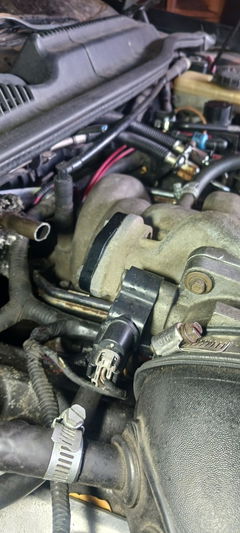
6.0 & 7.3 Ford Powerstroke/IDI Glow Plug Harness
Low-Resistance Glow Plug Harnesses for Ford Powerstroke Diesel Engines
Eliminate cold-start issues with our heavy-duty, heat-resistant Glow Plug Harness. Engineered for low-resistance electrical flow and signal-stable operation, this direct-fit upgrade utilizes oil-resistant insulation to withstand extreme engine bay conditions. Replace your brittle, aging stock harness with this corrosion-proof solution, ensuring high-conductivity power delivery and reliable cold-weather starting for your Powerstroke engine.
Heavy-Duty Wiring Solutions for Reliable Cold Starts
Every glow plug harness in this collection is engineered to deliver consistent electrical current from your glow plug control module or relay directly to each cylinder. Built with heat-resistant, oil-proof wiring and OEM-grade connectors, these harnesses withstand the extreme under-hood temperatures and oil exposure that cause factory wiring to crack, short, or fail over time. Whether you drive a 6.0L Powerstroke, a 7.3L Powerstroke, or a 7.3 IDI, you will find the exact harness, valve cover gasket, and glow plug combination your truck needs right here.
When Your Truck Struggles to Start, the Harness Is Often the Culprit
If your Ford diesel is hard to start on cold mornings, cranking longer than usual, or puffing white smoke at startup, a damaged glow plug harness is one of the most common, and most overlooked, causes. On the 7.3L Powerstroke, the under-valve-cover harness (UVCH) sits inside the valve cover where engine oil constantly bathes the wiring, degrading the insulation over tens of thousands of miles. On the 6.0L Powerstroke, the glow plug harness routes through a high-heat zone near the turbo and exhaust manifold, where brittle connectors snap or corrode. Replacing a failed harness restores full glow plug operation, giving each cylinder the preheat it needs for clean, fast cold starts. Our kits include everything from standalone harness sets to complete bundles with valve cover gaskets, glow plugs, relay solenoids, and GPCM controllers, so you can tackle the full repair in one job.
Why Thousands of Diesel Owners Trust EGR Performance
EGR Performance: Engineered for Power. Backed for Life.
Max efficiency, restored horsepower, and prolonged engine life for your EGR, DPF, and CCV systems on Powerstroke, Cummins, Duramax engines, etc.
- Free Shipping: Fast & free delivery to get you back on the road sooner.
- 45-Day Returns: Shop risk-free with our generous 45-day return policy.
- 1-Year Warranty: Tested under extreme conditions. Guaranteed to perform.
- 24/7 Live Support: Real-time tech help from fitment to post-install tuning.
Product |
Engine |
Vehicle Model |
Year Range |
|---|---|---|---|
Glow Plug Harness Kit with Removal Tool |
6.0L Powerstroke |
Ford F250, F350, Excursion |
2004-2010 |
Glow Plug Harness & 8 Glow Plugs |
6.0L Powerstroke |
Ford F250, F350, Excursion |
2004-2010 |
Glow Plugs Harnesses & GPCM Controller |
6.0L Powerstroke |
Ford F250, F350, Excursion |
2004-2010 |
Glow Plugs Set (8 pcs) |
6.0L Powerstroke |
Ford F250, F350, E350, E450, Excursion |
2004-2010 |
Valve Cover Gaskets, Harnesses & Glow Plugs |
7.3L Powerstroke |
Ford F250, F350 |
1998-2003 |
Injector Glow Plug Harnesses & Valve Cover Gaskets & Relay Solenoid |
7.3L Powerstroke |
Ford F250, F350 |
1998-2003 |
Injector Glow Plug Harnesses & Valve Cover Gaskets & Relay & Controller |
7.3L Powerstroke |
Ford F250, F350 |
1998-2003 |
Valve Cover Gaskets, Harnesses & Glow Plugs |
7.3L Powerstroke |
Ford F250, F350 |
1994-1997 |
Injector Glow Plug Harnesses & Valve Cover Gaskets & Relay & Controller |
7.3L Powerstroke |
Ford F250, F350 |
1994-1997 |
Glow Plug Harness Wiring Kit |
7.3L IDI Non Turbo |
Ford F250, F350 |
1988-1994 |
Shop Powerstroke Glow Plug Harness Now.


EGR Performance: EGR, DPF, CCV & Diesel Tuning Solutions for Powerstroke, Cummins, and Duramax


Let customers speak for us

Have to say that I like the quality of the product and ease of installation. I’ve had it in for a little over a week now and I’ve driven several hundred miles with no issues whatsoever. Certainly worth it!

Works great. Exactly what I hoped it would be.

Decent quality, saw some cheaper options but this one did the job just fine. No more worrying about carbon build up!
Was easy to install, works a stated,more horsepower ,better gas mileage

This item solves a big problem perfectly. The quality of this item is 5 star for sure. Great seller as well.

Good product. Quick shipping. Would buy from again!

Extremely satisfied with this order. Will def use this company for future orders

I fit it and it made a lot of different in my car thank u

Plate looks good. The provided hardware are the wrong thread pitch however. Shipping took a long time was close to 3 weeks.
Really happy with item took 2 and a half weeks to get but worth the wait
Company is great, received the wrong item and correct item sent. No hassle
I'd love to review it but I haven't got it yet
part fit perfectly
EGR Delete for 1986-1995 Ford F150 F250 2.8L 4.9L 5.0L 5.8L 7.5L Bronco EGR Simulator Eliminator Delete
6.0L Powerstroke Diesel Complete EGR Bypass and Valve Delete Kit for 2003-2010 6.0L Ford Powerstroke F250 F350 F450 F550