Deep-Dive Technical Diagnostics: The Realities of Owning an LB7 Platform in 2026
Owning a 22-plus-year-old classic 2001-2004 6.6L Duramax LB7 in 2026 is a badge of honor for heavy-duty diesel enthusiasts—but it also means managing very specific, age-advanced mechanical issues. Unlike later generations, the LB7 is a pure mechanical powerhouse free from factory DPF soot filters or DEF fluid tanks.
However, its first-generation engineering introduces strict liabilities in fluid management, airflow efficiency, and thermal longevity. Below, we break down the most urgent technical questions long-haul owners ask, and explain exactly how our 10 core performance upgrades solve these problems for good.
Why is my truck losing throttle response and blowing dark smoke under heavy towing?
The Root Cause: Over decades of hard service, the factory rubber or thin plastic intercooler connections naturally degrade, soften, and micro-crack under thermal stress. When you command high turbo boost while hauling a heavy trailer, these factory pipes swell, balloon, and eventually experience complete roadside blowouts or hairline splits. This creates a massive air drop right before the intake manifold. Simultaneously, the factory cast intake inlet horn features a pinched internal neck restriction engineered solely to reduce cabin engine noise. This restriction chokes off incoming air volume, forcing the engine to run incredibly rich, spiking Exhaust Gas Temperatures (EGTs), causing sluggish throttle lag, and pouring unburnt black smoke out the tailpipe.
How This Selection Solves It: Upgrading to our heavy-duty aluminum or stainless steel intercooler pipe kit entirely eliminates the risk of hose expansion or pressure leaks under heavy acceleration. These rigid, thick-walled pipes handle extreme boost pressures without expanding or splitting.
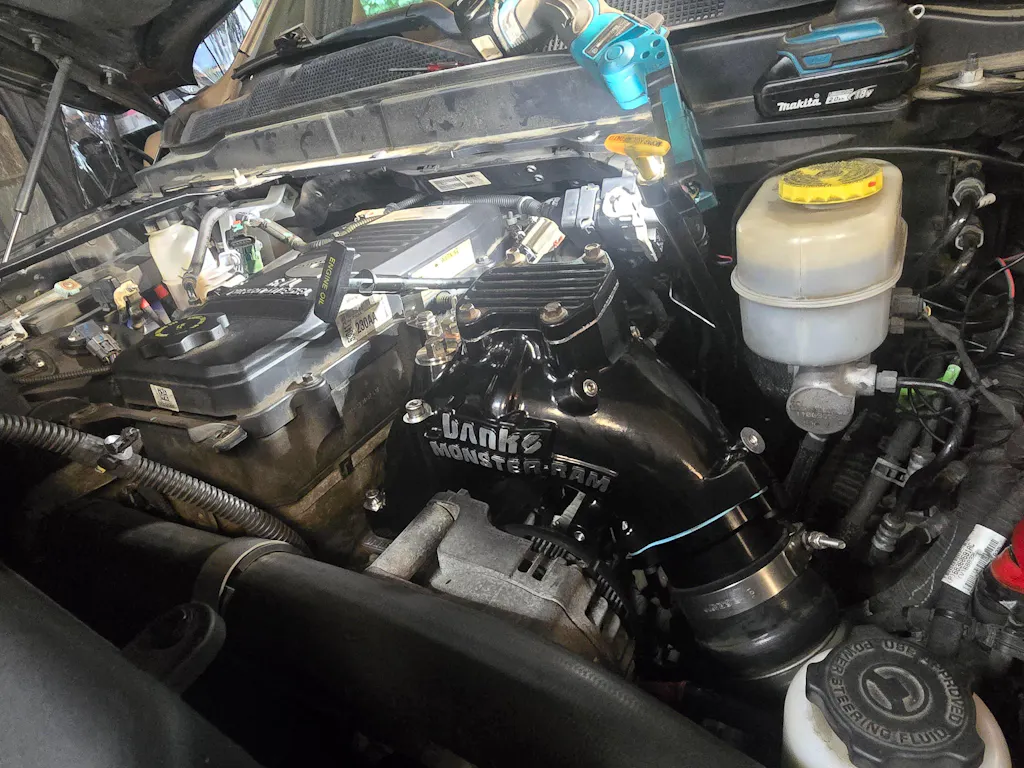
To permanently fix the intake bottleneck, installing an oversized LB7 Duramax intake horn or a smooth-bore LB7 intake elbow unchokes the compressor wheel inlet. By replacing the stock piece with a wider-diameter lb7 high flow intake horn using a fresh lb7 intake horn gasket, you remove the sharp, turbulent factory bends. This allows fresh air to hit the turbocharger at maximum velocity, dropping intake air temperatures (IAT), increasing volumetric efficiency, and restoring crisp, immediate throttle response.
Why do the factory up pipes constantly fail, and why am I losing turbo boost pressure?
The Root Cause: The factory LB7 exhaust up pipes are constructed with thin-walled metal bellows that are forced to endure thousands of extreme thermal expansion and contraction cycles. As these trucks age into 2026, these brittle factory bellows inevitably crack, warp, or split open completely.
This creates a severe exhaust leak directly behind the cylinder heads. Because the kinetic energy of the exhaust gas escapes into the atmosphere before it can ever reach the turbocharger, the turbine wheel loses its drive pressure. This causes a massive loss of boost pressure, lazy turbo spooling, and forces the engine to work twice as hard—skyrocketing EGTs to dangerous levels that risk structural warping.
How This Selection Solves It: Upgrading to a set of our heavy-duty stainless steel LB7 Duramax up pipes replaces those fragile factory bellows with reinforced, heavy-gauge interlocked inner liners engineered to withstand intense heat cycles without bowing or cracking.
To complete the exhaust path overhaul, running a premium, smooth-radius downpipe install replaces the restrictive, crimped factory downpipe tubing. This drastically lowers exhaust backpressure right at the turbine outlet, allowing the turbocharger to spool much faster and shed heat effortlessly.
When combined with an ultra-thick, high-performance cast-iron manifold header array, you achieve superior exhaust scavenging. These heavy-duty manifolds resist cracking under intense towing or track racing, ensuring all exhaust energy is trapped and delivered directly to the turbo for maximum efficiency.
How do modern ultra-low sulfur fuels threaten my injection pressure, and how can I adjust power safety?
The Root Cause: The 2001-2004 Bosch high-pressure fuel system was engineered to run on old-school, highly lubricated diesel fuel. Today's modern Ultra-Low Sulfur Diesel (ULSD) and heavy B20 biodiesel blends are much "drier" and lack natural lubrication, putting immense frictional strain on the fuel pump.
If you are running a chassis-mounted aftermarket lift pump (like a FASS or AirDog) to supply fuel, forcing that fuel through the cramped, redundant, under-hood factory fuel filter housing creates a massive flow restriction. This restriction causes unexpected pressure drops, choking out your fuel injection pressure under heavy load. Furthermore, vintage programmers require you to pull over and wait ten minutes to flash the computer every time you need to change your power level for a hill climb, which is highly inefficient.
How This Selection Solves It: Our under-hood fuel filter delete & bypass kit is the absolute cure for fuel line restriction on lift-pump-equipped trucks. Because your chassis pump already provides superior multi-stage fuel filtration, this bypass kit safely removes the redundant factory under-hood filter housing, clearing engine bay clutter and optimizing clean fuel injection pressure directly to the high-pressure pump.
To manage this optimized fuel volume safely from the driver’s seat, a multi-position SOTF (Switch On The Fly) switch connects a rotary dial directly to your tuned ECU. This allows the driver to toggle between completely different pre-set power levels (such as Eco, Heavy Tow, Street, or Race) instantly while driving. This adjustments versatility allows you to instantly dial down torque before a steep grade to protect your aging transmission clutch packs from unexpected slip or limp-mode faults.
Why am I seeing oil drops under my truck, and how can I protect my vintage cooling loop?
The Root Cause: The front and rear crankshaft mating surfaces endure non-stop rotational friction and relentless engine bay heat. Over 20 years of service, the factory rubber seals dry out, harden, and crack. This causes sudden engine oil leaks that compromise oil pressure integrity and allow harsh environmental road salt, rain, and mud to seep into the lower engine block. At the same time, older cast-iron cooling passages naturally collect loose contaminants, casting sand, and scale over time. This loose debris flows continuously through your engine, clogging the tight heat-exchanger paths of your oil cooler and wearing down water pump seals until they experience premature failure.
How This Selection Solves It: Installing a premium, heavy-duty replacement crankshaft seal during any front-end service or transmission pull ensures a perfectly tight, leak-free oil boundary that keeps your lower block completely dry and maintains vital oil pressure.
To safeguard the liquid track, a dedicated coolant filtration system continuously captures and isolates suspended rust particles, casting sand, and scale before they can accumulate. This proactive system keeps your secondary cooling lines free of debris, maintaining stable thermal regulation and shielding your water pump from abrasive wear, maximizing your overall duramax lb7 reliability.
Dedicated 2001-2004 Hardware Selection & Buying Guide
Upgrading a high-mileage 2500HD or 3500HD truck requires picking the right hardware combinations to match your real-world usage. Review our professional product breakdown below to select the ideal components for your budget and performance goals:
1. Induction, Airflow & Cooling
Focus: Maximizing air volume, maintaining boost pressure, and protecting the cooling system.
Intake Horn / Air Intake Elbow
Function: Replaces the restrictive factory intake inlet. Designed with a larger internal diameter and smooth, mandrel-bent curves, it eliminates the sharp bends of the stock piece to increase air velocity directly into the manifold, improving throttle response.
Intercooler Pipe
Function: Upgrades the brittle factory plastic or rubber pipes that are prone to splitting or blowing out under heavy acceleration. These heavy-duty aluminum or stainless steel pipes handle extreme boost pressures without expanding or leaking.
Boost Increase Valve
Function: A mechanical valve designed to work with wastegated turbos (popular on platforms like the early Duramax). It safely bleeds off a small amount of pressure seen by the wastegate actuator, allowing the turbo to build higher, more efficient boost levels before opening.
Coolant Filtration System
Function: Continually filters out suspended contaminants such as casting sand, rust, and scale from the engine's cooling system. This prevents debris from clogging the tight passages of your oil cooler and protects the water pump from premature failure.
2. Emissions & Exhaust Performance
Focus: Lowering exhaust backpressure and reducing thermal stress.
Up Pipe
Function: Channels exhaust gases from the manifold to the turbocharger. Upgraded up pipes feature reinforced bellows to withstand extreme thermal expansion, eliminating the common cracks and exhaust leaks that cause lost boost pressure and high Exhaust Gas Temperatures (EGTs).
Down Pipe
Function: The primary exhaust exit route from the turbo. A high-flow Down Pipe replaces the restrictive, crimped factory tubing, drastically reducing backpressure right at the turbine outlet so the turbo can spool faster and shed heat more effectively.
Manifold Header
Function: Heavy-duty, high-performance exhaust manifolds engineered for superior exhaust scavenging. Built with ultra-thick flanges, they resist warping and cracking under the intense heat generated during heavy towing or racing.
3. Tuning & Fuel Management
Focus: Power adjustments on the fly and stabilizing fuel system delivery.
SOTF (Switch On The Fly) Switch
Function: A multi-position rotary dial that connects directly to your tuned ECU. It allows the driver to change between different power levels (e.g., Eco, Tow, Street, Race) instantly while driving, without needing to stop and re-flash the computer.
Fuel Injection Pressure / Fuel Filter Delete & Bypass Kit
Function: Specifically engineered for trucks running high-performance chassis-mounted lift pumps (like FASS or AirDog). Since the aftermarket pump provides superior filtration, this fuel injection pressure regulator relief valve plug kit removes the redundant under-hood factory filter housing, cleaning up the engine bay and removing a significant fuel flow restriction to optimize injection pressure.
4. Engine Hardware
Focus: Preventing critical fluid leaks.
Crankshaft Seal
Function: A premium, heavy-duty replacement seal designed to prevent oil leaks at the front or rear of the crankshaft. Essential for maintaining oil pressure integrity and preventing environmental contaminants from entering the lower end of the engine.
Buying Strategy Tip: If you are building a dedicated towing rig, prioritize the LB7 Duramax up pipes, cast manifold header, and a premium LB7 high flow intake horn first. This specific combination focuses entirely on expanding airflow volume, relieving backpressure, and dropping towing EGTs.
For daily drivers looking to optimize efficiency and maximize longevity on a tight budget, combining a mechanical boost increase valve with a comprehensive coolant filtration system and a heavy-duty crankshaft seal will secure your core architecture against unexpected breakdowns without requiring deep shop modifications.
Why Choose EGR Performance? 20 Years of Specialized Diesel Authority
At EGR Performance, we do not operate like a generic online auto parts clearinghouse, and we do not use unverified international drop-shipping networks. We are a team composed of active heavy-duty technical editors, diesel mechanics, and classic truck restorers who have spent over two decades wrenching on the 6.6L Duramax LB7 platform. We know the exact physical dimensions, structural bolt clearances, and wiring harness variations that separate the original LB7 block from later generations.
Every single item listed in our inventory, from our precision-cut lb7 coolant block off plate configurations to our high-flow exhaust headers, is fully stocked inside our own domestic, US-based warehouses. This allows us to guarantee rapid, tracked transit straight to your shop door, ensuring minimal downtime for your work truck. When you buy from EGR Performance, you are investing in premium, track-tested metallurgy and gaining direct access to our live, professional technical support line. Put your trust in the grounded industry veterans who know exactly how to transform vintage diesel iron into an unstoppable, million-mile beast.
⚠️ Legal Performance Disclaimer: All high-performance 2001-2004 Duramax LB7 performance modifications, high-flow manifold headers, underbody downpipes, up-pipes, electronic SOTF calibration controllers, and fuel bypass kits are engineered strictly for off-road use, closed-course drag racing, or sanctioned competition track applications. Please thoroughly review your specific local state environmental regulations and federal guidelines before executing any mechanical vehicle alterations.