Dodge Oil Catch Can

Premium Oil Catch Cans for Dodge 5.7L and 6.4L HEMI Engines

Precision Engineered Crankcase Ventilation for HEMI V8 Powerplants

Every Dodge HEMI engine, from the 5.7L Eagle to the 6.4L Apache, generates crankcase blow-by gases under load. These gases carry atomized oil vapor straight through the factory PCV system and back into the intake manifold. Over time, that oil condenses on intake runner walls, coats throttle body plates, and bakes into hard carbon deposits on intake valve stems. Our oil catch cans are CNC-machined from 6061-T6 billet aluminum with internal baffling and a fine-mesh stainless steel filtration system that separates oil particles from crankcase gases before they reach the intake tract. Each can features precision TIG-welded fittings, high-temperature Viton O-ring seals, and a serviceable filter element that traps up to 90% of blow-by oil vapor on every pass through the PCV circuit.

Built for Hard Driving, Heavy Throttle, and Real-World HEMI Abuse

Whether you are running a 5.7L Charger RT through canyon passes, launching a 6.4L Challenger Scat Pack at the strip, or daily driving a Chrysler 300 with the Eagle HEMI under the hood, crankcase pressure spikes every time you mat the throttle. The factory PCV system was designed to meet emissions standards, not to protect your intake from oil contamination. These catch cans install inline between the PCV valve and the intake manifold, intercepting blow-by oil before it becomes intake sludge. Performance shop owners and HEMI builders have documented significant oil accumulation in catch cans after just 3,000 to 5,000 miles of aggressive driving, proving the factory system alone cannot keep up with HEMI crankcase ventilation demands.

Why Thousands of Diesel Owners Trust EGR Performance

EGR Performance: Engineered for Power. Backed for Life.

Max efficiency, restored horsepower, and prolonged engine life for your EGR, DPF, and CCV systems on Powerstroke, Duramax, Cummins engines, etc.

  • Free Shipping: Fast & free delivery to get you back on the road sooner.
  • 45-Day Returns: Shop risk-free with our generous 45-day return policy.
  • 1-Year Warranty: Tested under extreme conditions. Guaranteed to perform.
  • 24/7 Live Support: Real-time tech help from fitment to post-install tuning.
Product Engine Vehicle Model Year Range
Premium Oil Catch Can 5.7L Eagle HEMI V8 Dodge Charger, Challenger, Chrysler 300 2011-2021
Premium Oil Catch Can 6.4L Apache HEMI V8 Dodge Charger, Challenger, Chrysler 300 2011-2021
Z-Bracket Oil Catch Can 5.7L Eagle HEMI V8 Dodge Charger, Challenger, Chrysler 300 2011-2021
Z-Bracket Oil Catch Can 6.4L Apache HEMI V8 Dodge Charger, Challenger, Chrysler 300 2011-2021

Shop Dodge Oil Catch Can Now!

EGR Performance: EGR, DPF, CCV & Diesel Tuning Solutions for Powerstroke, Cummins, and Duramax

EGR DELETE KITS

View More

CCV PCV REROUTE KIT

View More

DPF DELETE KITS

View More

DIESEL TUNERS

View More

Why Does Your Dodge HEMI Need an Oil Catch Can?

PCV Blow-by Oil Contamination

The 5.7L Eagle HEMI and 6.4L Apache HEMI both use a positive crankcase ventilation system that routes crankcase gases back into the intake manifold for emissions compliance. Under hard acceleration, high RPM, or heavy load, cylinder pressure forces blow-by gases past the piston rings and into the crankcase. These gases carry atomized oil vapor that the factory PCV system was never designed to filter. Without an oil catch can, that blow-by oil coats every surface inside your intake tract, from the throttle body blade to the intake valve stems, gradually degrading airflow efficiency and engine response.

Intake Manifold Carbon Sludge

When blow-by oil vapor enters the intake manifold, it condenses on the cooler walls of the intake runners and builds up layer after layer of sticky sludge. On the 5.7L HEMI with its multi-point fuel injection, fuel washes over the intake valves to some degree, but oil residue still accumulates over tens of thousands of miles. On the 6.4L HEMI, the higher compression ratio and increased cylinder pressure generate even more blow-by volume, accelerating sludge formation. Left unchecked, this carbon sludge restricts airflow, disrupts fuel atomization, and can cause rough idle, hesitation, and reduced throttle response across the entire RPM band.

Throttle Body and Valve Gunk from Recirculated Oil

The throttle body is the first component downstream of the PCV inlet, making it the primary target for oil contamination. Blow-by oil coats the throttle plate and bore, creating a gummy residue that prevents the blade from seating properly at idle. This leads to surging idle, stalling, and erratic cruise control behavior. Further downstream, oil vapor bakes onto the back of intake valves, forming hard carbon deposits that restrict valve flow and can eventually cause misfire codes. A properly baffled oil catch can intercepts this contamination at the source, trapping oil particles in its internal filter media before they ever reach the throttle body or intake valves.

What Can an Oil Catch Can Solve?

Clean Intake System and Restored Airflow

By trapping blow-by oil before it enters the intake manifold, an oil catch can keeps the throttle body, intake runners, and intake valves clean and free of oil sludge. This maintains the airflow volume and velocity that your HEMI was designed to move, preserving throttle response and engine efficiency over the life of the vehicle.

Consistent Crankcase Pressure Management

A baffled catch can regulates crankcase ventilation pressure more effectively than the factory PCV system alone. The internal baffle design slows and condenses the oil vapor, allowing clean air to pass through to the intake while collecting liquid oil in the reservoir. This prevents crankcase over-pressurization, reduces the risk of gasket leaks, and maintains proper PCV system function under all driving conditions.

Long-term Engine Protection for Daily Drivers and Performance Builds

Whether you commute in a Charger RT, track a Challenger Scat Pack, or road-trip a Chrysler 300, consistent oil contamination protection extends engine service life. Catch cans reduce the rate of carbon deposit formation, protect sensitive sensors like the MAP and O2 sensors from oil fouling, and keep the PCV system flowing freely mile after mile.

Shop Oil Catch Can by Dodge Engine & Fitment Guide

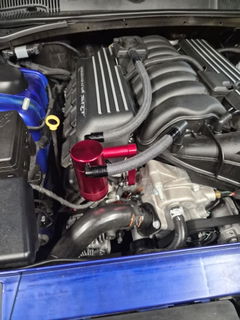
  • Oil Catch Can for 5.7L/6.4L HEMI - Fits 5.7L Eagle HEMI V8 in Dodge Charger RT and SXT (2011-2021). CNC-machined 6061-T6 billet aluminum can body with internal baffling traps blow-by oil vapor from the PCV system before it enters the intake manifold.
  • Oil Catch Can for 5.7L/6.4L HEMI - Fits 5.7L Eagle HEMI V8 in Dodge Challenger RT (2011-2021). Baffled internal filtration separates oil particles from crankcase gases, keeping the throttle body and intake runners clean under aggressive driving.
  • Oil Catch Can for 5.7L/6.4L HEMI - Fits 5.7L Eagle HEMI V8 in Chrysler 300 and 300S (2011-2021). Precision TIG-welded aluminum fittings with Viton O-ring seals ensure leak-free operation under elevated crankcase pressure.
  • Oil Catch Can for 5.7L/6.4L HEMI - Fits 6.4L Apache HEMI V8 in Dodge Charger Scat Pack and SRT 392 (2011-2021). Handles the higher blow-by volume produced by the 6.4L engine's increased compression ratio and cylinder pressure.
  • Oil Catch Can for 5.7L/6.4L HEMI - Fits 6.4L Apache HEMI V8 in Dodge Challenger Scat Pack and SRT 392 (2011-2021). Fine-mesh stainless steel filter media captures up to 90% of oil vapor on each pass through the PCV circuit.
  • 6.4L Oil Catch Can with Z-Bracket Technology - Fits 5.7L and 6.4L HEMI in Dodge Charger, Challenger, Chrysler 300 (2011-2021). Z-Bracket mounting system provides a secure, vibration-resistant installation with no drilling or permanent modification required.

Why Choose EGR Performance?

The industry standard for high-performance diesel reliability.

Premium Quality & Rigorous Testing

Our EGR, DPF, and CCV delete kits are engineered from premium-grade materials and subjected to brutal quality control and field testing. Unlike generic alternatives, our products are built to withstand extreme heat and pressure, delivering unmatched durability and long-term stability when your rig needs it most.

20 Years of Proven Diesel Expertise

We aren't just selling parts. We live in this industry. With two decades of hands-on experience providing specialized modification solutions for heavy-duty truck owners, our upgrades have been extensively proven across every driving environment, from daily towing to high-performance tracks.

Industry-Leading Standards

We work hand-in-hand with top-tier industry partners and reputable organizations. Every product we design, test, and ship meets or exceeds strict industry standards, ensuring your Powerstroke, Cummins, or Duramax gets the exact precision it deserves.

Real Results, Proven Track Record

Thousands of diesel owners trust us to unlock their engine's true potential. Our massive library of positive customer feedback and successful build case studies proves one thing: our kits deliver real horsepower, lower EGTs, and flawless reliability in the real world.

What does an oil catch can do for a Dodge HEMI engine?

An oil catch can installs inline between the PCV valve and the intake manifold on your Dodge HEMI engine.
It intercepts crankcase blow-by gases that carry atomized oil vapor, trapping the oil in a baffled reservoir before the gases re-enter the intake tract.
Without a catch can, that blow-by oil coats the throttle body, intake runners, and intake valves with sticky sludge that degrades airflow and throttle response over time.
The CNC-machined 6061-T6 billet aluminum housing and internal fine-mesh filter media capture up to 90% of oil vapor on each pass through the PCV circuit.

Is an oil catch can worth it for a 5.7L or 6.4L HEMI?

Yes. The 5.7L Eagle HEMI and 6.4L Apache HEMI both produce significant crankcase blow-by, especially under hard acceleration, high RPM, and heavy load.
Owners consistently report collecting measurable amounts of oil in their catch cans after just 3,000 to 5,000 miles of driving.
That is oil that would have otherwise ended up coating the inside of your intake manifold, throttle body, and intake valves.
For the cost of a catch can, you get long-term intake system protection that keeps your HEMI running cleaner and more responsive for the life of the engine.

How does blow-by oil affect the intake system on a Dodge Charger or Challenger?

Blow-by gases are produced when combustion pressure forces past the piston rings into the crankcase on every firing stroke.
These gases carry atomized oil vapor that the factory PCV system routes directly back into the intake manifold without filtering it.
As the oil vapor contacts the cooler surfaces inside the intake tract, it condenses and forms a sticky sludge on throttle body plates, intake runner walls, and intake valve stems.
Over tens of thousands of miles, this sludge bakes into hard carbon deposits that restrict airflow, disrupt fuel atomization, and cause rough idle, hesitation, and reduced throttle response.

How often should I empty the oil catch can on my Dodge HEMI?

Most Dodge HEMI owners find that emptying the catch can every 3,000 to 5,000 miles, or roughly at every oil change interval, keeps the system working properly.
Drivers who run their HEMI hard at the track, tow heavy loads, or spend extended periods at high RPM may need to check and empty the can more frequently, around every 1,500 to 2,000 miles.
The baffled reservoir is easy to remove and drain, and the amount of oil collected gives you a direct read on how much blow-by your engine is generating.
Regular maintenance ensures the filter media stays clean and the PCV system continues to flow without restriction.

Will installing an oil catch can void my Dodge factory warranty?

Under the Magnuson-Moss Warranty Act, a manufacturer cannot void your warranty simply because an aftermarket part is installed.
The dealer must prove that the catch can itself caused the specific failure in question before they can deny a warranty claim for that repair.
An oil catch can is one of the least invasive modifications you can make to a HEMI engine, as it does not alter any factory ECU mapping, fuel delivery, or emissions control systems.
That said, dealership attitudes vary, so if you are concerned, check with your service advisor or consider removing the catch can before major dealership service visits.

Do I need a catch can on both sides of my 6.4L HEMI?

The PCV system on the 5.7L and 6.4L HEMI operates primarily on the passenger side, where the majority of blow-by gases are routed through the PCV valve and into the intake manifold.
Most owners install a single catch can on the passenger side and see significant oil collection, making it the most impactful location for intake protection.
Some performance builders add a second catch can on the driver side for maximum crankcase ventilation control, especially on supercharged or high-compression builds that generate elevated blow-by volume.
For naturally aspirated daily drivers, a single passenger-side catch can is generally sufficient to keep the intake system clean.

What materials make the best oil catch can for a Dodge HEMI?

Look for a catch can machined from 6061-T6 billet aluminum with precision TIG-welded fittings and high-temperature Viton O-ring seals throughout.
The internal baffling should use a multi-stage design with fine-mesh stainless steel filter media that separates oil particles from crankcase gases without restricting PCV flow.
Avoid generic catch cans with thin stamped steel bodies or rubber seals that degrade under engine bay heat and oil exposure.
Precision CNC machining ensures consistent wall thickness, proper thread engagement on drain fittings, and a leak-free seal that holds up to sustained crankcase pressure over years of service.

Can an oil catch can improve performance on a Dodge Challenger or Charger?

An oil catch can is not a power adder in the traditional sense, but it preserves the performance your HEMI was designed to deliver from the factory.
By preventing oil sludge from accumulating on the throttle body, intake runners, and intake valves, the catch can maintains clean airflow paths that support proper fuel atomization and combustion efficiency.
Owners who run catch cans consistently report more stable idle, sharper throttle response, and cleaner sensor readings on MAP and O2 sensors over time.
The real performance benefit shows up in long-term consistency: your engine makes the same power at 80,000 miles that it did at 8,000, because the intake tract stays clean instead of gradually choking on carbon deposits.

How hard is it to install an oil catch can on a Dodge HEMI?

Installation is straightforward and typically takes 30 to 45 minutes with basic hand tools in a home garage.
The catch can mounts using a dedicated bracket that bolts to an existing factory location on the engine bay, with no drilling or permanent modifications required.
You simply route the PCV hose from the valve cover to the catch can inlet, then from the catch can outlet to the intake manifold fitting.
All necessary hardware, including precision-machined aluminum fittings, high-temp silicone hoses, and the mounting bracket, comes included in the kit for a complete bolt-on installation.

Are oil catch cans legal for street-driven Dodge vehicles?

Oil catch cans are emissions-compatible components that do not remove, bypass, or alter any factory emissions control systems on your Dodge vehicle.
They install inline with the existing PCV system and simply filter blow-by oil vapor before it re-enters the intake, which is the same function that many factory oil separators serve on modern engines.
Catch cans are widely used and accepted on street-driven vehicles across all 50 states without affecting emissions compliance or smog testing results.
Some of our products are intended for competition and closed-course off-road use only; check local regulations and product-specific fitment notes before purchasing.