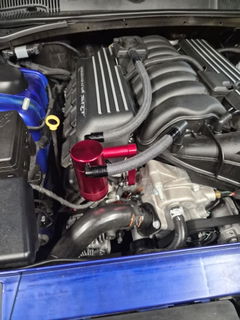
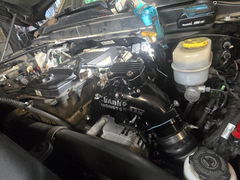
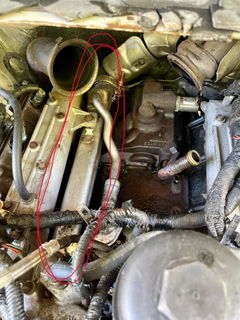
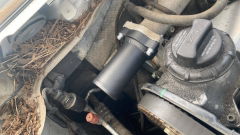
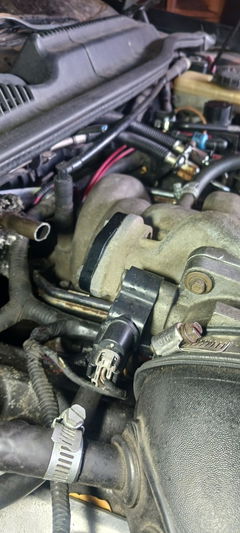
Ford Oil Catch Can

Contaminant-Trapping Ford Oil Catch Can: Crankcase Ventilation Protection for Powerstroke & EcoBoost

Safeguard your Ford engine with our high-efficiency Oil Catch Can. Engineered as a precision-engineered, direct-fit solution, this kit is specifically designed for contaminant-trapping performance, effectively preventing harmful oil vapors and sludge-building buildup in your intake system. This engine-protecting upgrade ensures combustion-optimized performance and long-term reliability for your truck. Featuring a hassle-free drain design and industrial-grade durability, it's the ultimate way to maintain your Ford's power and keep your internals clean.

Precision-Engineered Oil-Air Separation for Ford Trucks and SUVs

Every Ford oil catch can in this collection is built from CNC-machined 6061-T6 billet aluminum housings with precision TIG-welded fittings and high-temperature Viton O-ring seals. The internal baffled design forces crankcase vapors through a multi-stage separation path, trapping oil mist, unburned fuel condensate, and water vapor before they reach your intake manifold. Unlike generic catch cans that rely on cheap stamped steel and thin rubber gaskets, these units use T304 stainless steel inlet and outlet fittings that will not corrode or degrade under sustained high-heat operation. Each canister features a serviceable filter element and a drain valve for easy maintenance at oil change intervals. Whether you are searching for an oil separator for your 3.5L EcoBoost F-150 or a heavy-duty CCV oil separator for your 6.7L Powerstroke, these kits deliver the material quality and engineering precision your engine demands.

Built for Heavy Towing, Daily Driving, and High-Performance Applications

If you are running a 6.7L Powerstroke with a loaded gooseneck trailer through the Rockies or pushing a twin-turbo 3.5L EcoBoost on the highway with a full bed, crankcase blow-by increases dramatically under load. The factory CCV system was not designed to handle the volume of oil vapor that heavy-duty use generates. Over time, that oil mist coats your intercooler fins, saturates charge pipes, and bakes into carbon deposits on intake valves. From the 2015 F-150 2.7L EcoBoost to the 2024 F-250 6.7L Powerstroke, Ford direct-injected engines are especially vulnerable to intake valve carbon accumulation because fuel never washes over the valve stems. A properly sized baffled oil catch can intercepts that contamination at the source, keeping your intake tract clean, your turbo compressor wheel balanced, and your engine breathing efficiently for the long haul.

Why Thousands of Diesel Owners Trust EGR Performance

EGR Performance: Engineered for Power. Backed for Life.

Max efficiency, restored horsepower, and prolonged engine life for your EGR, DPF, and CCV systems on Powerstroke, Cummins, Duramax engines, etc.

  • Free Shipping: Fast & free delivery to get you back on the road sooner.
  • 45-Day Returns: Shop risk-free with our generous 45-day return policy.
  • 1-Year Warranty: Tested under extreme conditions. Guaranteed to perform.
  • 24/7 Live Support: Real-time tech help from fitment to post-install tuning.
Product Engine Vehicle Model Year Range
Oil Catch Can Oil Separator 2.7L EcoBoost, 3.5L EcoBoost Ford F-150 2011-2021
Oil Catch Can Air Oil Separator 3OZ 3.5L EcoBoost, 5.0L Coyote V8 Ford F-150, Raptor, Expedition 2011-2023
6.7L Powerstroke Oil Catch Can 6.7L Powerstroke Ford F-250, F-350, F-450, F-550 2017-2024
6.7L Powerstroke Oil Catch Can 6.7L Powerstroke Ford F-250, F-350, F-450, F-550 2011-2016

Shop Ford Oil Catch Can Now!

EGR Performance: EGR, DPF, CCV & Diesel Tuning Solutions for Powerstroke, Cummins, and Duramax

EGR DELETE KITS

View More

CCV PCV REROUTE KIT

View More

DPF DELETE KITS

View More

DIESEL TUNERS

View More

Why Does Your Ford Need an Oil Catch Can?

Carbon Buildup on Intake Valves and Ports

Direct-injected Ford engines like the 2.7L EcoBoost, 3.5L EcoBoost, and 6.7L Powerstroke do not spray fuel over the intake valves. Without that washing effect, oil vapors from the PCV and CCV systems bake onto valve stems and port walls, forming hardened carbon deposits that restrict airflow and kill throttle response. Over tens of thousands of miles, this carbon layer chokes your engine's ability to breathe, leading to rough idle, hesitation under acceleration, and reduced fuel economy. If you own a 2015 to 2021 F-150 EcoBoost and have noticed a gradual loss of throttle snap, carbon fouling from unfiltered crankcase vapors is a likely culprit. A baffled oil separator removes those vapors before they ever reach the intake tract.

Intercooler and Charge Pipe Contamination

On turbocharged Ford platforms, the factory crankcase ventilation routing sends oil-laden air directly into the turbo compressor inlet and through the intercooler core. That oil film coats the intercooler fins, reducing their ability to shed heat, and pools inside charge pipes, degrading rubber couplers and causing boost leaks. If you have ever pulled your intercooler boots on a 2017 F-150 3.5L EcoBoost or a 2019 F-150 oil separator service and found a slick mess inside, you are seeing the result of unmanaged crankcase blow-by. An oil catch can intercepts that oil mist upstream, preserving your intercooler efficiency and keeping your charge piping dry.

Turbocharger Seal Degradation from Oil Saturation

Sustained oil vapor circulation through the turbo compressor housing accelerates carbon formation on the compressor wheel and can compromise turbo seal integrity over time. On high-mileage 6.7L Powerstroke engines under heavy towing loads, this manifests as increased oil consumption, smoking at startup, and premature turbo bearing wear. Installing a catch can between the crankcase vent and the intake reduces the oil volume reaching the turbo by up to 90 percent, extending turbocharger service life and maintaining consistent boost pressure under load. For 6.7L Powerstroke owners running CCV reroute kits, adding an inline oil separator is the most effective way to eliminate the oil smell and residue that rerouting alone cannot address.

What Can an Oil Catch Can Solve?

Component-Level Protection for Your Ford Engine

A properly engineered baffled oil catch can addresses multiple failure points simultaneously. It eliminates the root cause of intake valve carbon accumulation on direct-injection EcoBoost and Powerstroke engines. It protects your VGT turbocharger from oil-induced carbon fouling on the compressor side. It preserves intercooler thermal efficiency by keeping the core and end tanks free of oil film. It reduces the rate of oil consumption by capturing blow-by mist that would otherwise burn in the combustion chamber. It extends the service life of rubber charge pipe couplers and intake manifold gaskets by preventing oil saturation and softening. Whether you run a 2014 F-150 EcoBoost catch can setup or a 2022 F-150 oil separator, the underlying protection is the same: cleaner intake, cooler charge air, longer engine life.

Shop Oil Catch Can by Ford Engine & Fitment Guide

  • Oil Catch Can Oil Separator for F-150 2.7L and 3.5L EcoBoost - Fits 2.7L EcoBoost and 3.5L EcoBoost engines in Ford F-150 (2011-2021). CNC-machined 6061-T6 billet aluminum housing with baffled internal design traps oil mist and blow-by condensate before it enters the intake manifold. Direct-fit installation covers 2015 F-150 2.7L EcoBoost catch can, 2016 F-150 3.5L EcoBoost oil separator, and 2017-2021 F-150 EcoBoost catch can applications.
  • Oil Catch Can Air Oil Separator 3OZ for F-150, Raptor, and Expedition - Fits 3.5L EcoBoost and 5.0L Coyote V8 in Ford F-150 (2011-2023), F-150 Raptor (2017-2023), and Expedition (2018-2021). Compact 3-ounce capacity with T304 stainless steel fittings and Viton O-ring seals for reliable oil-air separation under high-boost conditions. Works as a 2018 F-150 5.0 oil catch can or a 2021 F-150 5.0 oil catch can with no modification required.
  • 6.7L Powerstroke Oil Catch Can (2017-2024) - Fits 6.7L Powerstroke in Ford F-250, F-350, F-450, and F-550 Super Duty (2017-2024). Designed for the second-generation 6.7L with updated CCV routing, featuring a high-flow baffled canister that handles the increased crankcase pressure from heavy towing and high-output operation. Serves as both a standalone catch can and an inline CCV oil separator for 6.7L Powerstroke reroute configurations.
  • 6.7L Powerstroke Oil Catch Can (2011-2016) - Fits 6.7L Powerstroke in Ford F-250, F-350, F-450, and F-550 Super Duty (2011-2016). Engineered for the first-generation 6.7L CCV system geometry, with a precision-machined mounting bracket and drain valve for straightforward installation and maintenance at oil change intervals. Covers 2011-2014 and 2015-2016 model year Super Duty trucks.

Why Choose EGR Performance?

The industry standard for high-performance diesel reliability.

Premium Quality & Rigorous Testing

Our EGR, DPF, and CCV delete kits are engineered from premium-grade materials and subjected to brutal quality control and field testing. Unlike generic alternatives, our products are built to withstand extreme heat and pressure, delivering unmatched durability and long-term stability when your rig needs it most.

20 Years of Proven Diesel Expertise

We aren't just selling parts. We live in this industry. With two decades of hands-on experience providing specialized modification solutions for heavy-duty truck owners, our upgrades have been extensively proven across every driving environment, from daily towing to high-performance tracks.

Industry-Leading Standards

We work hand-in-hand with top-tier industry partners and reputable organizations. Every product we design, test, and ship meets or exceeds strict industry standards, ensuring your Powerstroke, Cummins, or Duramax gets the exact precision it deserves.

Real Results, Proven Track Record

Thousands of diesel owners trust us to unlock their engine's true potential. Our massive library of positive customer feedback and successful build case studies proves one thing: our kits deliver real horsepower, lower EGTs, and flawless reliability in the real world.

Frequently Asked Questions

What does an oil catch can do for a Ford engine?

An oil catch can is a crankcase ventilation filter that intercepts oil mist, unburned fuel vapor, and moisture from the PCV or CCV system before those contaminants re-enter your engine's intake manifold. On direct-injected Ford engines like the 2.7L EcoBoost, 3.5L EcoBoost, and 6.7L Powerstroke, this is critical because fuel never washes over the intake valves.
Without a catch can, those vapors bake into carbon deposits on valve stems, coat the intercooler core, and saturate charge pipe couplers. A baffled catch can with a CNC-machined 6061-T6 aluminum housing and internal baffle forces the vapors through a multi-stage separation path, trapping contaminants in a serviceable reservoir while allowing clean air to continue through the intake system.
This is why oil separators for Ford F-150 EcoBoost engines have become one of the most popular preventive upgrades among truck owners who want to protect long-term engine performance.

Do I need an oil catch can on my Ford F-150 EcoBoost?

If your F-150 has a 2.7L or 3.5L EcoBoost, an oil catch can is one of the most effective preventive upgrades you can install. Both engines use direct injection and forced induction, which means intake valves receive no fuel wash to keep them clean.
Over time, oil vapor from the PCV system coats the intake ports and valves, forming carbon buildup that degrades throttle response and fuel economy. Our EcoBoost catch cans are built with T304 stainless steel fittings and high-temperature Viton O-ring seals, designed to handle sustained boost pressure without leaking or degrading.
Installation is straightforward, typically completed in under 30 minutes with basic hand tools, using factory-style plug-and-play fittings that require no permanent modification to your truck. Whether you drive a 2015 F-150 2.7L EcoBoost or a 2021 F-150 3.5L EcoBoost, the same baffled oil separator design applies across model years.

Will an oil catch can fit my 6.7L Powerstroke Super Duty?

Yes. We offer dedicated catch can kits for both generations of the 6.7L Powerstroke. The 2011-2016 kit is engineered for the first-generation CCV system routing and factory mounting points on the F-250, F-350, F-450, and F-550 Super Duty.
The 2017-2024 kit accommodates the updated CCV geometry on the second-generation 6.7L, including the high-output variant found in F-350 and F-450 models. Both kits include CNC-machined billet aluminum brackets, T304 stainless steel drain valves, and precision TIG-welded inlet and outlet fittings.
Each kit is a direct bolt-on installation with no drilling or permanent modifications required, and includes all necessary hardware and step-by-step instructions specific to your model year.

How much oil does a Ford catch can actually collect?

The volume of oil collected depends on your engine, driving conditions, and mileage. On a 6.7L Powerstroke that regularly tows heavy loads, you can expect to see 2 to 4 ounces of trapped oil and condensate between oil change intervals.
On a 3.5L EcoBoost F-150 used for daily commuting with occasional highway pulls, the catch can typically collects 1 to 3 ounces over the same period. Higher boost pressures, sustained hill climbs, and high-altitude operation all increase blow-by volume.
The serviceable reservoir design on our catch cans lets you monitor accumulation and drain the canister at regular maintenance intervals, usually every 3,000 to 5,000 miles. Many owners of 2016 and 2017 F-150 EcoBoost catch can setups report being surprised at how much oil the canister captures in just one interval.

Can an oil catch can improve performance on a Ford truck?

A catch can does not add horsepower on its own, but it protects the performance you already have. By preventing carbon buildup on intake valves and keeping your intercooler core clean, it maintains optimal airflow and thermal efficiency over the life of your engine.
On turbocharged EcoBoost and Powerstroke platforms, a clean intake tract means your turbocharger operates at peak compressor efficiency, boost pressure stays consistent, and throttle response remains sharp. Engines with significant carbon accumulation can lose 5 to 15 horsepower as deposits restrict airflow and disrupt fuel atomization.
Think of an oil separator for your F-150 EcoBoost as an insurance policy for your engine's long-term performance rather than a bolt-on power adder.

How do I install an oil catch can on my Ford?

Most Ford oil catch can installations take 20 to 40 minutes with basic hand tools. The catch can mounts to a designated bracket location in the engine bay using the included CNC-machined billet aluminum bracket and stainless steel hardware.
You connect the catch can inline with the PCV or CCV hose routing, inserting the canister between the crankcase vent outlet and the intake manifold or turbo inlet. Our kits use factory-style push-on or clamp-on fittings with T304 stainless steel and high-temperature Viton O-ring seals for a leak-free connection.
No drilling, cutting, or permanent modifications are required. Every kit includes detailed instructions specific to your engine and model year, and our 24/7 live tech support team is available if you need help during installation.

What is the difference between a catch can and a CCV reroute?

A CCV reroute kit vents crankcase vapors out of the engine bay, usually through a downward-directed tube that releases blow-by gases and oil mist under the vehicle. This removes the oil from the intake system entirely but can produce an oil smell inside the cab and leave residue on underbody components.
A catch can keeps the crankcase ventilation system closed but intercepts the oil mist before it reaches the intake, storing it in a reservoir that you drain at service intervals. Many Ford owners combine both approaches: running a CCV reroute with a catch can inline to filter the vapors before they exit.
Our baffled catch cans work with both stock CCV systems and reroute kits, giving you flexibility in how you manage crankcase ventilation on your Powerstroke or EcoBoost engine.

How often should I empty my oil catch can?

We recommend checking and draining your catch can every 3,000 to 5,000 miles, which lines up with most oil change intervals. Under heavy towing conditions or sustained high-load operation, you may want to check it more frequently, around every 2,000 miles.
Our catch cans feature T304 stainless steel drain valves that make emptying the reservoir quick and mess-free. Simply position a container under the drain valve, open it, and let the collected oil and condensate drain out.
If you notice the canister filling faster than expected, it may indicate increased blow-by, which could signal worn piston rings or valve guide seals that warrant further inspection.

What are the signs that my Ford needs an oil catch can?

The most common indicators are oil residue inside your intercooler boots or charge pipes, a visible oil film on the throttle body blade, and a slow but steady drop in oil level between change intervals without any external leaks.
On EcoBoost engines, hesitation on tip-in, rough idle after cold start, and a loss of throttle response over time can all point to carbon accumulation on the intake valves caused by recirculated crankcase vapors. On the 6.7L Powerstroke, blue-gray smoke at startup or a persistent oil smell in the engine bay after a CCV reroute are strong signals.
If you have noticed any of these symptoms, a baffled oil catch can with a CNC-machined 6061-T6 aluminum housing and precision internal baffling is a cost-effective first step to protect your engine from further contamination.

Are oil catch can kits intended for competition and off-road use only?

Many of the oil catch can and CCV-related upgrades sold by EGR Performance are designed and marketed for competition and closed-course off-road use only. This includes catch cans paired with CCV reroute kits or used in conjunction with EGR and DPF delete systems on Powerstroke engines.
It is your responsibility to verify compliance with local, state, and federal emissions regulations before installing any catch can or ventilation modification on a vehicle that will be operated on public roads. EGR Performance provides detailed fitment guides for every product to help you select the correct kit for your specific engine generation and model year.
All orders include free shipping, a 45-day return policy for risk-free shopping, and a one-year warranty against manufacturing defects. Our 24/7 live support team is available to answer any fitment or compliance questions before you purchase.