



March, 2026 Updated
My truck's straight pipe roared through town. A cop pulled me over for noise. The $500 fine stung hard.
Are straight pipes legal? Straight pipe exhaust is illegal for on-road use in all 50 US states in 2026. It violates EPA emissions rules and state noise limits (80-95 dB). Fines range $100-$1,000+ per ticket. Off-road only.
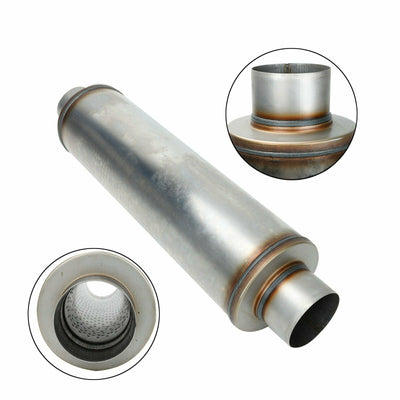
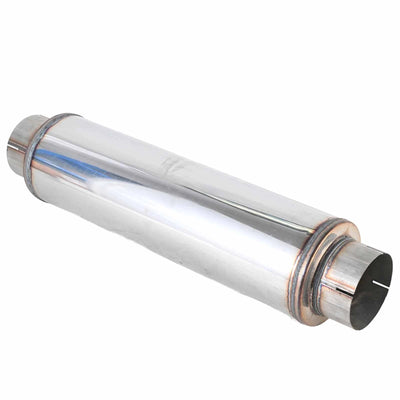
A straight pipe replaces your stock exhaust system, removing the muffler and sometimes the catalytic converter. Drivers install straight pipes for a louder sound, improved performance, and a sporty appearance.
This guide outlines the reasons a straight pipe may violate laws, the penalties, state differences, and legal alternatives for achieving performance and sound without risks.
Table of Contents
- What Is a Straight Pipe Exhaust?
- Is a Straight Pipe Legal? The Short Answer
- Federal Laws Affecting Straight Pipes (U.S.)
- State-by-State Legality Overview
- Noise Restrictions and Decibel Limits
- Emissions Compliance and Inspections
- Penalties for Running a Straight-Piped Vehicle
- When a Straight Pipe Is Legal
- Legal Alternatives to Straight-Piping a Car
- FAQs
- Final Thoughts: Should You Straight Pipe Your Car?
What Is a Straight Pipe Exhaust?
A straight pipe exhaust removes mufflers, resonators, and cats. It lets gases flow free. Differs from stock by no noise or emissions control. Drivers want roar, power, looks.

Simple Definition
Straight pipe means a direct metal tube from engine to tail. No bends or boxes. Gases rush out fast. My deleted diesel truck sounded like a beast after.
How It Differs from Stock Exhaust Systems
Stock has cats to cut pollution. Mufflers quiet sound. Resonators kill drone.
Straight pipe skips all. Flow 20% better but loud and dirty.
Why Drivers Want Straight Pipes
Sound raw and deep. Power up 5-10 HP from less backpressure. Looks simple and tough.
Feature |
Stock |
Straight Pipe |
|---|---|---|
Noise |
Quiet (70 dB) |
Loud (100+ dB) |
Emissions |
Low |
High NOx |
Power |
Restricted |
+5–10 HP |
Cost |
Factory |
$200 DIY |
My install cheap $150 pipe. Sound hooked me. But drone on highway annoyed.
Is a Straight Pipe Legal? The Short Answer
No, straight pipes illegal on public roads everywhere. On-road no, off-road yes.
A true, straight-pipe exhaust system cannot be legally used on the street in almost all U. S. states. No for streets. Yes tracks or farms.

Why Is Straight Piping a Car/Truck Illegal?
The primary reason straight pipes are illegal in most states is that they violate many noise and emissions laws. Straight pipe exhaust systems do not have the main components that help reduce harmful emissions and excessive sound levels.
The first area relates to removing catalytic converters. Catalytic converters reduce harmful gases such as carbon monoxide emissions. EPA bans cat removal.
Emissions Laws: Under the Clean Air Act, the U.S. EPA prohibits removing or modifying any part of an exhaust system (i.e., catalytic converters). Removing an exhaust system increases the amount of harmful gases released into the atmosphere.
These gases are carbon monoxide (CO) and nitrogen dioxide (NO2), both of which are regulated pollutants under the Clean Air Act.
Another area is in the removal of mufflers. Without a muffler exhaust system, the volume of sound created is excessively loud. States set dB caps.
Noise Laws: Removing the muffler from your vehicle will make it significantly louder. All states have limits on how much noise your vehicle may create. In states like California, specific noise laws are constantly evolving.
While 95 dB has been a commonly cited standard, California law now primarily mandates that a vehicle's exhaust noise level cannot exceed the noise standard established by the manufacturer for that specific model, which is often lower than 95 dB.
Exceeding this manufacturer-specified limit, or the state's decibel threshold, can result in significant penalties.
Combo kills straight pipes. It is illegal to use a straight pipe exhaust on public roads; otherwise, you risk being ticketed, cited, and failing an inspection.
Enforcement: Law enforcement officers can issue citations, tickets, and fines for operating a vehicle with a straight pipe on public roads. If you are caught driving with a straight pipe, you could be ticketed and fined.
My ticket proved it. Emissions federal override. Noise local varies. 2026 EPA scans OBD. My pull-over for 105 dB.
Use |
Legal? |
Reason |
|---|---|---|
On-Road |
No |
Emissions, noise |
Off-Road |
Yes |
No rules |
Track |
Yes |
Race exempt |
Federal Laws Affecting Straight Pipes (U.S.)
EPA Clean Air Act bans cat removal nationwide. DOT caps noise at 80 dB. Penalties $5,000+ civil, jail tampering.
Straight pipes are illegal on public roads mainly due to federal emissions laws and state-enforced noise regulations. The federal government (EPA), through the Clean Air Act, has banned removing or altering any emissions control devices, such as catalytic converters.
Using a straight pipe bypasses or removes emissions control devices. This increases harmful emissions such as carbon monoxide and nitrogen oxides. Vehicles without proper emissions equipment automatically fail federal and state inspections.
EPA Clean Air Act Rules
Act requires cats on all post-1975 cars. Straight pipe removes, violates.
Illegality of Removing the Catalytic Converter
Cat cuts 90% pollution. Deleting it is illegal. Feds enforce all states.
Federal Penalties for Emissions Tampering
The federal penalty for tampering with emissions control equipment (such as a catalytic converter) can be severe.
First $5,000 civil. Repeat $37,500. Jail 5 years extreme. Repair shops $100k+.
These actions are typically directed at businesses (e.g., repair shops). Individual drivers are more commonly cited and fined under state or local laws, where penalties are still significant.
DOT Noise Regulations
Federal agencies (like the EPA and DOT) primarily establish maximum noise standards for new vehicles sold in the U.S. However, enforcement against in-use vehicles on public roads is left to state and local laws.
DOT sets 80 dB highway. Straight pipe hits 110.
Although the federal guidelines set an environmental baseline, it is the specific state and municipal noise ordinances that law enforcement uses to issue citations.
When straight pipes are installed on vehicles, they produce a louder exhaust sound. This results in decibel levels that may exceed the state's maximum allowable levels of noise.
Law enforcement personnel and inspectors can issue citations to violators of state and federal laws. Repeated violations can lead to the impoundment of vehicles.
Law |
Rule |
Penalty |
|---|---|---|
Clean Air Act (Federal) |
Requires catalytic converter and emissions systems to remain intact |
Up to $5,000 per violation |
Cat / Emissions Removal |
Explicitly illegal on any road-legal vehicle |
Up to ~$37,500 per vehicle for repeated violations |
DOT Noise Regulations |
Many states enforce ~80 dB noise limits |
State-dependent fines or vehicle inspection failure |
Emissions Tampering |
No disabling, altering, or bypassing factory emissions controls |
Fines; in severe commercial cases, criminal penalties possible |
My near-miss $5k. Penalties scare. 2026 feds scan VINs. Ignore? Big bill.
Overall, federal law requires that vehicles comply with the environmental regulations for use on public roads. The only way for this type of exhaust system to be legal for street use is in specific applications (off-road use) or for exhibition or track-use vehicles.
State-by-State Legality Overview
Straight pipes are prohibited on public roads in almost all U.S. states.
Laws vary by state. Strict: CA, NY, MA (95 dB, $1k fines). Moderate: TX, FL. Lenient: MI, OH no test. Cities add noise rules.
Enforcement of this prohibition varies by state, with some states being stringent in their punishments while others will punish offenders rather more leniently.

Strict Enforcement States (CA, NY, MA)
Examples of states with strict enforcement include California, New York, and Massachusetts. These three states maintain stringent noise and emissions laws. In California, for example, most cars should not exceed 95 dB, and removal of a catalytic converter could result in severe punishment.
Therefore, the police will regularly write citations for vehicles with straight pipes. Any vehicle that fails inspection will not be eligible for registration.
Moderate Enforcement States: Texas, Florida, and Illinois
States with moderate enforcement include Texas, Florida, and Illinois. These states have some regulations regarding noise and emissions. However, before imposing penalties, an officer may issue a warning.
In addition, cities may also have their own stricter municipal ordinances even if the state as a whole only has moderate enforcement. Therefore, municipalities in these states may enforce their laws quite aggressively.
States Known for Lenient Exhaust Regulations (MI, OH)
Some rural states have minimal enforcement, especially in low-traffic areas. MI: No emissions test. OH: Rural loose.
However, straight pipes remain illegal, and drivers risk fines if stopped or inspected.
Exceptions and Nuances
Off-road use is generally allowed, such as on racetracks, farms, or private property. Certain aftermarket exhaust systems, called 'cat-backs', may remain legal if they contain catalytic converters.
Note on Local City/County Noise Ordinances
Cities cap 70 dB night. My Austin 85 dB limit.
State |
Enforcement |
dB Limit |
Typical Fine |
|---|---|---|---|
California (CA) |
Strict |
95 dB |
$1,000 |
New York (NY) |
Strict |
92 dB |
$1,000 |
Texas (TX) |
Moderate |
No statewide limit (local ordinances may apply) |
$200 |
Michigan (MI) |
Lenient |
90 dB |
$100 |
Ohio (OH) |
Lenient |
95 dB |
$150 |
Due to the differences in enforcement from area to area, having a legal exhaust does not guarantee you will not receive a citation.
Noise Restrictions and Decibel Limits
Due to the high level of noise produced by straight pipes, they are illegal for use on public roads in many states.
Straight pipes hit 100-120 dB, over 80-95 state caps. Tested 20 ft away, 45°angle. Cops ticket subjective loud.
Each state has set maximum allowable decibel ratings (dB) for vehicles, which can vary greatly. For instance, California has a maximum allowable level of 95 dB for passenger vehicles. While other states can range from 50-96 dB, depending on vehicle type and testing method.

Explanation of Decibel Testing
The Police and inspectors use hand-held devices that are specifically designed to measure the level of noise generated by an exhaust system. If a vehicle exceeds the maximum allowable level, citations can be issued.
Noise testing can happen during the course of a traffic stop, during an inspection, or during a vehicle show.
SAE J1169: 50 ft, 3,000 rpm. Accelerate pass. Cops use meters or ears.
When Police Can Issue a Noise Violation
Loud exhausts and drones with modified straight pipes result in violations.
Loud idle, rev, or pass. Subjective "excessive." My 105 dB ticket.
A repeat offender could receive a larger fine, have their car impounded, or have DMV registration denied.
Real-World Examples of Noise Thresholds
In California, a muscle car with a straight pipe can regularly exceed 95 dB. Although the straight pipe improves performance, it poses a significant legal risk.
CA 95 dB cars. NY 92. TX none but local 85. MA 84.
How Straight Pipes Typically Exceed Legal Noise Limits
No muffler means boom. Stock 75 dB, straight 110 full throttle.
Drivers of vehicles with straight pipes should know that they are nearly always louder than allowable noise limits.
Therefore, legal options to achieve better performance without violating noise laws would include the use of a high-flow muffler or removing the resonator.
State |
dB Limit |
Test Method |
Example Fine |
|---|---|---|---|
California (CA) |
95 dB |
SAE J1492 – 50 ft |
$1,000 |
New York (NY) |
92 dB |
20 ft stationary test |
$800 |
Texas (TX) |
Local 85 dB |
Subjective officer judgment |
$200 |
Massachusetts (MA) |
84 dB |
Accelerate test procedure |
$300 |
Emissions Compliance and Inspections
Straight fails all emissions. No cat triggers OBD codes. Visual checks spot delete. Illegal auto.
All vehicles need to meet government emissions standards in order to be approved for driving. If emissions equipment has been removed or altered, the vehicle cannot be legally driven.
Visual inspection: Inspectors will check to see if your vehicle has a functioning catalytic converter and other types of emissions control equipment. If an inspector finds the vehicle to have no catalytic converter or tampered with catalytic converters, it will automatically result in an inspection failure.
OBD-II readiness/fault codes: OBD-II monitoring and diagnostic trouble codes (DTCs) indicate that all modern vehicles utilize an OBD-II monitoring system. When a vehicle's catalytic converter is removed, it triggers the OBD-II monitors to record DTCs related to emissions. This prevents the vehicle from passing the emissions inspection.
Impact: Consequences of operating a vehicle with a straight pipe that has illegal emissions equipment removal include failed emissions inspections (fines) and denied registration.
Why Straight Pipes Fail Emissions Tests
No cat means high HC. Sniffer reads dirty.
How Catalytic Converter Removal Makes the Setup Automatically Illegal
Fed rule: Keep cat. Remove = tamper. All states enforce.
Test Type |
What Checks |
Straight Fail? |
|---|---|---|
Sniffer |
Gases |
Yes — high HC |
Visual |
Cat present |
Yes — missing |
OBD |
Codes |
Yes — P0420 |
Readiness |
Monitors |
Yes — incomplete |
Proper emissions compliance ensures your vehicle is environmentally safe and street-legal. Straight pipes, by removing essential emissions controls, violate these rules in every U.S. state.
Penalties for Running a Straight-Piped Vehicle
Tickets $100-$1,000 first. Repeat $500-$2,000, jail possible. Impound $300 tow. Inspect fail deny reg.
Driving with a straight-pipe exhaust system comes with heavy penalties.
Typical Ticket or Citation Cost
Fines for this type of violation typically range from $100 to $1,000, depending on the severity of the violation as well as the state.
Repeat Offender Penalties
Repeat offenses often lead to higher fines ranging from $500 to $2,000 and can result in vehicle impoundment.
Potential for Vehicle Impound
Extreme loud, $300+ day. Cali common.
Failed Emissions Inspections
Vehicles that do not have the required emissions systems or produce too much noise from their exhaust systems will fail mandatory safety inspections.
DMV Registration Denial
No pass, no plate. Sell hard.
You may have difficulty renewing your vehicle's registration with your local DMV. In some states, you may be permanently denied renewal of your registration for repeated failures of inspection.
Penalty |
First |
Repeat |
Example State |
|---|---|---|---|
Ticket |
$100–$500 |
$500–$2,000 |
TX $200 |
Impound |
$300 tow |
+$50/day |
CA |
Inspect Fail |
$50 fix |
Denial |
NY |
Reg Denial |
No plate |
Sell loss |
All |
Other Penalties
As an additional penalty, law enforcement agencies may issue fines for excessive noise, tampering with emissions systems, or either, violating local ordinances. If your vehicle has been modified illegally, it may also result in adverse effects on your insurance claims.
In states where there are strict enforcement laws, even a minor muffler delete or cat-back exhaust can trigger penalties against you. Therefore, you must know about the associated risks before you modify your vehicle.

When a Straight Pipe Is Legal
Legal off-road: ATVs, race, farm. Track builds exempt. Classics pre-1975 some states. Comp/show ok.
There are some exceptions to the rule that prohibits the use of straight pipes on common streets:
Off-Road Vehicles (ATVs, Race Cars, Farm Trucks)
In particular, vehicles built for off-road use (e.g., ATVs, dirt bikes, and farm trucks) may utilize straight pipes legally because they cannot be inspected for noise and emissions by the state.
Track-only Builds
Race cars and other vehicles designed specifically for track use may also utilize straight pipes without facing any penalties. Frequently, aftermarket exhaust systems are sold with an ‘off-road use only' designation to inform customers that they meet the requirements for legal use in racetracks or controlled environments.
Exhibition or Competition Vehicles
These vehicles may also legally use straight pipes, as they are typically only seen at car shows and/or used in motorsport events.
While each state has its own regulations, as long as they are not operated on public roads, the utilization of straight pipes will remain legal.
Classic Vehicles Exempt from Emissions Rules (Varies by State)
Vintage automobiles may qualify for an exemption from current emissions laws according to the laws of individual states. While they may not be required to adhere to the regulations as far as emissions are concerned, these exemptions do not affect the noise violations in areas that impose strict limits on sound.
Even in legal scenarios, proper labeling and keeping the vehicle off public roads are essential to avoid fines or legal issues.
If you want alternatives to a full straight pipe, explore our Up Pipe and Down Pipe categories to improve exhaust efficiency without violating street-legal rules.
Legal Alternatives to Straight-Piping a Car
Cat-back $500, high-flow muffler $300, resonator delete $200, axle-back $400. Legal loud pass inspect.
Cat-Back and Axle-Back Systems
You have many legal alternatives to enhance the sound or performance of your car, including cat-back exhaust systems, which are typically the most common choice. A cat-back exhaust system replaces the factory exhaust tubing after the catalytic converter.
This allows you to achieve a louder, deeper sound without violating any emissions laws.
Resonator Delete
Another legal option is to remove your vehicle's resonators, which will improve your vehicle's sound but still keep your emissions systems in place. However, if you live in a state that has very strict noise regulations, you should keep the vehicle within the state's allowable decibel limits.
High-Flow Mufflers
If you're looking for a less extreme choice, a performance muffler upgrade can be as simple as bolting on a different brand of muffler (such as Flowmaster or Borla), which will still provide a deeper-sounding note without violating noise regulations.
"Legal Loud" Options That Still Pass Inspections
For individuals looking for an adjustable system, electronically controlled valved exhaust systems allow users to toggle between quiet and loud sound levels. This feature enables compliance during vehicle inspections or to avoid fines in areas where there is sound regulation.
Using this option will provide consumers the ability to enhance their vehicle's sonic quality and horsepower, while also helping them to circumvent the penalties associated with straight pipes.
FAQs
Is straight piping illegal in Texas?
Yes. Texas requires a working muffler and bans loud or emissions-tampered exhausts, so straight pipes are illegal.
Is a straight pipe illegal in California?
Yes. California's emissions and noise laws make straight pipes fully illegal on public roads.
How much does it cost to straight-pipe a car?
Usually $150–$600, depending on labor and pipe size.
Is a muffler delete the same as a straight pipe?
No. A muffler delete removes only the muffler; a straight pipe removes the muffler and resonators, and often bypasses or deletes the catalytic converters.
Will insurance deny claims for straight-piped cars?
Yes, they can. Illegal modifications may affect coverage or claim approval.
Is it illegal to play loud music in a car in Texas?
Yes, if it's audible from 30 feet away, as it violates local noise ordinances.
Looking for a more focused emissions-delete option? Check out our DPF Pipe Delete Kits for a cleaner flow upgrade without going full straight pipe.

Final Thoughts: Should You Straight Pipe Your Car?
Straight pipes thrill but illegal on-road. Fines high, alternatives smart. Off-road roar, street mod legal.
A straight pipe provides increased sound levels, better performance, and a very simple design that many performance enthusiasts find appealing. On the other hand, straight piping offers disadvantages that have to do with tickets, droning noise, emissions-related failures, and decreased resale value of the vehicle.
A straight pipe is expected to be more of a hassle than a benefit for a daily driver, especially in states that have stringent noise and emission laws. Also check if a DPF delete is legal.
If you are looking for a way to enhance the sound of your vehicle with limited legal issues, performance mufflers and cat-back systems provide improved sound, as well as power, while also keeping your car reliable and street-legal. Check EGR Performance website to get these high quality performance parts.
About the Author- John Barrett

EGR Performance Writer and a 20-year veteran of the truck industry—whether it's diesel engines, or transmission systems, I've spent decades getting my hands dirty with every part of a truck.
I love tearing down worn components to trace exactly why they fail, and I firmly believe: if a truck part can't be fixed right, it's not worth keeping on the road.


