Frequently Asked Questions
What does an EGR delete kit do on a 6.6L Duramax LMM?
An EGR delete kit physically removes or bypasses the Exhaust Gas Recirculation system on your 6.6L Duramax LMM engine. The factory EGR valve routes hot, soot-filled exhaust gas back into the intake manifold, which causes carbon buildup on intake ports, intercooler fins, and EGR cooler passages over time. By installing a delete kit with CNC-machined 6061-T6 billet aluminum block-off plates and T304 stainless steel components, you seal off that exhaust recirculation circuit completely. The engine then breathes only clean, compressed intake air instead of a diluted mix of intake charge and exhaust gas.
This lowers exhaust gas temperatures, improves throttle response, and reduces soot contamination throughout the entire intake tract. The LMM Duramax, which covers the 2007.5 through 2010 model years in Chevy Silverado and GMC Sierra 2500/3500 HD trucks, shares the same EGR layout across its full production run, so a single kit design covers every model year without fitment changes.
How much horsepower does an LMM Duramax EGR delete add?
On its own, an LMM Duramax EGR delete kit typically yields a 20 to 30 horsepower gain by eliminating exhaust gas dilution in the intake charge and reducing pumping losses through the EGR circuit. When paired with EFI Live custom tuning, many LMM owners see gains of 50 horsepower or more, as the tuner can optimize fuel delivery and timing curves for the improved airflow. The horsepower increase comes from allowing the turbo to compress only clean, dense air rather than a contaminated mix that reduces volumetric efficiency.
The biggest seat-of-the-pants difference comes from improved turbo spool and throttle response, especially under heavy towing loads where the factory EGR system causes the most intake restriction. Real-world results vary based on your tune, supporting modifications, and the condition of your engine, but the consensus among LMM owners is that the EGR delete is one of the best bang-for-your-buck modifications available for the 2007.5 through 2010 Duramax platform.
Are EGR delete kits legal for on-road use on the Duramax LMM?
EGR delete kits are designed and sold for competition and closed-course off-road use only. Removing or modifying emissions control systems on vehicles registered for public road use violates federal EPA regulations and many state laws, with potential fines reaching tens of thousands of dollars per violation. Fitment of an EGR delete kit on a street-driven vehicle may also cause your truck to fail local emissions testing or inspections, depending on your jurisdiction.
Before purchasing or installing any EGR delete components, verify your local regulations and confirm that your truck will be used exclusively in off-road or competition settings. EGR Performance sells these kits strictly for off-road applications and encourages all customers to understand and comply with the laws in their area. All orders include free shipping, a one-year warranty against manufacturing defects, and a 45-day return policy.
What are the symptoms of a failing EGR system on the LMM Duramax?
Common failure signs on the 6.6L LMM EGR system include persistent check engine lights with P0401, P0402, or P0404 trouble codes, white smoke from the exhaust under acceleration, and coolant loss with no visible external leaks. You may also notice rough idle or stumbling at low RPM, increased exhaust gas temperatures during towing, and a general loss of throttle response that gets progressively worse over time. The EGR cooler is particularly vulnerable to cracking and internal coolant leaks on the LMM, which can introduce coolant directly into the intake manifold.
In severe cases, a failed EGR cooler can lead to hydrolock, which can destroy the engine. If you notice any combination of these symptoms on your 2008 or 2009 LMM Duramax, inspect the EGR cooler and valve assembly immediately. Many LMM owners choose to install a full EGR delete kit as a preventive measure after experiencing repeated EGR-related issues, rather than continuing to replace failed factory components.
What is included in an LMM Duramax EGR delete kit from EGR Performance?
The standard LMM EGR delete kit includes CNC-machined 6061-T6 billet aluminum block-off plates for both the intake and exhaust sides, a T304 stainless steel exhaust block-off plate, high-temperature Viton O-rings, all required mounting hardware and fasteners, and a precision TIG-welded EGR cooler bypass pipe. The high-flow intake elbow variant adds a mandrel-bent aluminum intake charge tube that replaces the restrictive factory plastic piping, giving your turbo a straighter, larger-diameter path to push air into the engine.
Every kit comes with detailed installation instructions and is covered by our one-year warranty against manufacturing defects. We include free shipping on all domestic orders and back every purchase with a 45-day return policy, so you can order with confidence knowing you have time to verify fitment on your specific 2007.5 through 2010 Chevy Silverado or GMC Sierra 2500/3500 HD.
Do I need a tuner after installing an LMM EGR delete kit?
Yes, you will need a tuner or custom ECM calibration after installing an EGR delete on your LMM Duramax. Without tuning, the engine control module will detect that the EGR valve is no longer functioning and trigger a check engine light, along with potential reduced power modes that limit engine output. The ECM expects to see specific EGR valve position data and flow readings, and when those signals are absent, it flags the system as malfunctioning.
Most LMM owners use EFI Live tuning with a single-tune or multi-tune flash to disable EGR-related trouble codes and optimize fuel mapping for the improved airflow. The tuner also allows you to take full advantage of the increased air volume for better power and efficiency. If you are planning a full LMM Duramax delete kit that includes DPF removal as well, you will need a tuning solution that addresses both systems simultaneously.
What vehicles use the 6.6L Duramax LMM engine?
The 6.6L Duramax LMM engine was installed in 2007.5 through 2010 model year Chevrolet Silverado 2500 HD and 3500 HD, GMC Sierra 2500 HD and 3500 HD, and Chevrolet Kodiak and GMC Topkick medium-duty trucks. The LMM is the successor to the LBZ and features updated emissions equipment including an EGR system and a diesel particulate filter, which were added to meet tightening federal emissions standards. All LMM engines share the same EGR valve, EGR cooler, and intake layout, so the delete kits in this collection fit every vehicle in the LMM family without any year-specific modifications.
If your truck is a 2007.5, 2008, 2009, or 2010 model year 2500 or 3500 series Chevy or GMC with the 6.6L Duramax, it uses the LMM engine code. The easiest way to confirm is to check the eighth digit of your VIN, which will be a 6 for LMM-equipped trucks. If you are unsure about fitment, our 24/7 live support team can help verify your engine code before you order.
Will an EGR delete improve fuel economy on my LMM Duramax?
Many LMM Duramax owners report a 1 to 3 MPG improvement after an EGR delete, particularly when combined with custom EFI Live tuning. The improvement comes from eliminating exhaust gas dilution in the combustion chamber, which allows the engine to run a cleaner, more efficient burn cycle with a higher oxygen content in each cylinder. You also reduce or eliminate DPF regeneration cycles that dump raw fuel into the exhaust to burn off trapped soot, which is a significant fuel penalty on the LMM platform.
Real-world gains depend on your driving habits, tune selection, and how heavily you load the truck. Owners who do a lot of highway towing tend to see the biggest improvements, since the EGR system is most active at cruise and light throttle positions where exhaust gas recirculation is highest. If your 2008 or 2009 LMM Duramax is currently getting poor fuel economy during towing, the EGR system and frequent DPF regens are likely contributing factors.
How do I know if my LMM Duramax already has an EGR delete installed?
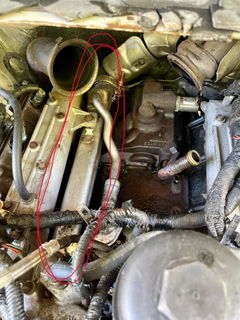
Look for a block-off plate bolted to the intake manifold where the EGR valve would normally sit, and check the passenger side of the engine for an EGR cooler bypass pipe or signs that the cooler has been removed. If the factory EGR cooler is still physically present with coolant lines connected, the truck has not been fully deleted. You can also check for aftermarket tuning by connecting an EFI Live scan tool or monitoring whether the truck throws EGR-related codes on cold start.
Some LMM trucks may have only a blocker plate installed behind the EGR valve, which is not visible without removing the valve itself. A full EGR delete kit will have the cooler removed and both intake and exhaust ports blocked off with dedicated plates and a bypass pipe. If you recently purchased a used 2007.5 through 2010 Duramax and are unsure of its modification history, a visual inspection of the EGR cooler area and a code scan are the two fastest ways to confirm.
What is the difference between an EGR block off plate and a full EGR delete kit?
An EGR block off plate is a single piece of CNC-machined metal, typically 6061-T6 billet aluminum or stainless steel, that physically blocks exhaust gas flow through the EGR valve while leaving the EGR cooler and its coolant lines in place. It is a quick, low-cost way to stop most exhaust gas recirculation without removing major components from the engine bay. However, the EGR cooler remains exposed to thermal cycling and can still crack or leak coolant into the intake.
A full EGR delete kit goes further by removing or bypassing the EGR cooler, valve, and associated coolant lines, then sealing both the intake and exhaust sides with dedicated block-off plates and a bypass pipe. The full delete eliminates the entire EGR circuit, reduces underhood complexity, and removes the risk of EGR cooler failure completely. For the LMM Duramax, where cooler cracking is a known issue, the full delete is the more thorough and permanent solution.