Ford 6.0L Powerstroke High Pressure Oil System Parts

Leak-Proof Complete High Pressure Oil System Parts for Ford 6.0L Powerstroke

Stabilize your 6.0 Powerstroke’s HEUI system with our pressure-certified High Pressure Oil components. Engineered to micro-tolerance standards, our leak-proof solutions provide a failure-eliminating upgrade for common system weak points like STC fittings. These flow-matched, hardened-surface parts ensure hydraulically-balanced performance, effectively acting as a hard-start-fixing remedy. Invest in seal-optimized reliability that restores your engine's internal pressure to peak efficiency.

Pressure-Certified Diagnostic and Repair Components for the 6.0 Powerstroke HEUI Injection System

The 6.0 Powerstroke uses a Hydraulically Actuated Electronically Controlled Unit Injector (HEUI) system that relies on high pressure engine oil to actuate the fuel injectors. The High Pressure Oil Pump (HPOP) pressurizes engine oil to between 500 and 4,000 PSI, delivering it through stand pipes and oil rails to each injector.

When any component in this system fails, whether the IPR valve, ICP sensor, stand pipes, dummy plugs, or the HPOP itself, your 6.0 Powerstroke can experience hard starting, no-start conditions (especially when hot), rough idle, stalling, and significant power loss.

This collection includes IPR valve and ICP sensor assemblies, HPOP repair kits, air test fitting tools, stand pipe and dummy plug kits, oil rail leak repair kits, and IPR valve sockets with oil rail adapters, all designed for 2003-2010 Ford 6.0L Powerstroke F250, F350, F450, F550, and Excursion models.

When Your 6.0 Powerstroke Won't Start Hot or Loses ICP Pressure

If your 6.0 Powerstroke starts cold but refuses to start once warmed up, or you notice the ICP pressure dropping below 500 PSI during cranking, the high pressure oil system is the most likely culprit. Common scenarios include failed stand pipe O-rings allowing high pressure oil to bypass, stuck IPR valves that cannot regulate oil pressure, cracked dummy plugs leaking pressure at the oil rail ends, or a worn HPOP that can no longer maintain adequate pressure under load. Diesel technicians and DIY owners use air test fitting tools to pressurize the HPO system and locate leaks before replacing components, saving time and preventing unnecessary parts replacement.

Why Thousands of Diesel Owners Trust EGR Performance

EGR Performance: Engineered for Power. Backed for Life.

Max efficiency, restored horsepower, and prolonged engine life for your EGR, DPF, and CCV systems on Powerstroke, Duramax, Cummins engines, etc.

  • Free Shipping: Fast & free delivery to get you back on the road sooner.
  • 45-Day Returns: Shop risk-free with our generous 45-day return policy.
  • 1-Year Warranty: Tested under extreme conditions. Guaranteed to perform.
  • 24/7 Live Support: Real-time tech help from fitment to post-install tuning.
Product Engine Vehicle Model Year Range
IPR Valve with ICP Sensor and Pigtail 6.0L Powerstroke Ford F250 / F350 / F450 / F550 2003-2010
High Pressure Oil Pump Repair Kit 6.0L Powerstroke Ford F250 / F350 / F450 / F550 2003-2010
Air Test Fitting Tool & Oil Rail Adapter Leak Test Kit 6.0L Powerstroke Ford F250 / F350 / F450 / F550 2003-2010
Fuel Stand Pipe Dummy Plug Kit 6.0L Powerstroke Ford F250 / F350 / F450 / F550 2004-2010
Oil Rail Leak Repair Kit 6.0L Powerstroke Ford F250 / F350 2003-2007
IPR Valve Socket and Oil Rail Adapters 6.0L Powerstroke Ford F250 / F350 / Excursion 2003-2010

Shop Now →

EGR Performance: EGR, DPF, CCV & Diesel Tuning Solutions for Powerstroke, Cummins, and Duramax

EGR DELETE KITS

View More

CCV PCV REROUTE KIT

View More

DPF DELETE KITS

View More

DIESEL TUNERS

View More

Why Does Your 6.0 Powerstroke Need High Pressure Oil System Repair?

Hot No-Start and Hard Starting Conditions

One of the most common and frustrating symptoms of a failing 6.0 Powerstroke high pressure oil system is the hot no-start condition. When engine oil heats up, it thins out and becomes less viscous. If your stand pipes have worn O-rings, your dummy plugs are cracked, or your IPR valve is sticking, hot thin oil will bypass these failing seals more easily than cold thick oil. The result is a truck that fires right up on a cold morning but leaves you stranded after stopping for fuel or at a job site.

Your scan tool will typically show ICP pressure below the 500 PSI minimum required for injector actuation during cranking, while the IPR duty cycle spikes to 85% or higher trying to compensate. This is the classic sign that your 6.0 high pressure oil system has internal leaks that need immediate attention.

High Pressure Oil Leaks at Injectors, Stand Pipes, and Dummy Plugs

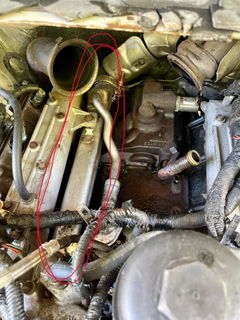
The 6.0 Powerstroke HPOP system routes oil through a complex path: from the HPOP located at the top rear of the engine, through stand pipes into the oil rails in each cylinder head, and finally to the injectors. Stand pipes are the connection tubes that deliver high pressure oil from the HPOP discharge to the oil rails in the cylinder heads. Dummy plugs seal the opposite ends of these oil rails.

Over time and repeated heat cycles, the O-rings on stand pipes and dummy plugs harden, crack, and lose their seal. When this happens, high pressure oil leaks internally, dropping system pressure and causing rough idle, lack of power, and stalling. The air test fitting tool is essential for diagnosing exactly where these leaks occur, allowing you to pressurize the system with shop air and listen for the leak source at each stand pipe, dummy plug, or injector port.

IPR Valve Failure and ICP Sensor Malfunction

The Injection Pressure Regulator (IPR) valve is the component that controls high pressure oil pressure in the 6.0 Powerstroke. Located on the HPOP, the IPR valve is a normally open solenoid that the ECM pulses to regulate oil pressure to the injectors. Common IPR failures include stuck valves (open or closed), contaminated screens that block oil flow, and electrical coil failures.

When the IPR valve fails, your 6.0 Powerstroke may exhibit surging idle, complete no-start, or erratic ICP pressure readings. The ICP (Injector Control Pressure) sensor works alongside the IPR valve, monitoring actual oil rail pressure and reporting it to the ECM. A failing ICP sensor can cause false pressure readings, leading the ECM to command incorrect IPR duty cycles. Replacing both the IPR valve and ICP sensor together is often recommended since they work as a paired system and similar mileage and heat exposure affect both components equally.

What Can High Pressure Oil System Parts and Tools Solve?

Air Test Fittings and Oil Rail Adapters for Accurate Leak Diagnosis

The air test fitting tool is the single most important diagnostic tool for the 6.0 Powerstroke high pressure oil system. By threading the air test fitting into the IPR port on the HPOP and applying regulated shop air (typically 100-150 PSI), you can pressurize the entire HPO system and listen for leaks. The oil rail adapters included in the test kit allow you to isolate individual sections of the system, checking each cylinder head's oil rail independently.

This method pinpoints exactly which stand pipe, dummy plug, or injector O-ring is leaking, eliminating guesswork and preventing unnecessary parts replacement. Without this diagnostic approach, many owners replace components randomly, spending hundreds on parts that were not the root cause of their 6.0 high pressure oil leak at injector connections or elsewhere in the system.

Stand Pipe and Dummy Plug Kits for Sealing Oil Rail Leaks

Upgraded 6.0 Powerstroke standpipe and dummy plug kits address the most common failure points in the 6.0 Powerstroke oil system. These replacement kits feature improved O-ring materials that resist hardening and cracking far better than the original Ford components. The 6.0 Powerstroke oil standpipe connects the HPOP discharge to the oil rails in each cylinder head, while dummy plugs seal the dead-end of each oil rail passage.

When you install fresh stand pipes and dummy plugs with new O-rings, you restore the sealed integrity of the high pressure oil circuit. This directly resolves hot no-start conditions, low ICP pressure readings, rough idle caused by pressure fluctuations, and the stalling that occurs when the IPR valve cannot maintain adequate pressure due to internal leaks.

HPOP Repair Kit, IPR Valve, and ICP Sensor for Complete System Restoration

The High Pressure Oil Pump repair kit addresses worn internal components in the HPOP itself. Located at the top rear of the 6.0 Powerstroke engine, the HPOP is driven by the camshaft gear and pressurizes engine oil to 500-4,000 PSI for injector actuation. Over hundreds of thousands of miles, internal gears and seals wear, reducing the pump's ability to build and maintain pressure. The HPOP repair kit includes the critical seals and gaskets needed to restore pump efficiency without replacing the entire pump assembly.

Paired with a new IPR valve to properly regulate that pressure and a fresh ICP sensor to accurately monitor it, these three components work together as the foundation of a healthy 6.0 Powerstroke high pressure oil system. The IPR valve socket included in the collection makes IPR removal and installation straightforward, even in the tight space at the 6.0 Powerstroke high pressure oil pump location where the HPOP sits beneath the turbocharger.

Shop 6.0 Powerstroke High Pressure Oil System Parts by Ford Engine & Fitment Guide

  • IPR Valve with ICP Sensor and Pigtail for 2003-2010 Ford 6.0L Powerstroke F250, F350, F450, F550 (Replaces CM-5126)
  • High Pressure Oil Pump Repair Kit for 2003-2010 Ford 6.0L Powerstroke F250, F350, F450, F550 (Replaces 4C3Z-9B246-F)
  • Air Test Fitting Tool & Oil Rail Adapter Leak Test Kit for 2003-2010 Ford 6.0L Powerstroke F250, F350, F450, F550
  • Fuel Stand Pipe Dummy Plug Kit for 2004-2010 Ford 6.0L Powerstroke F250, F350, F450, F550
  • Oil Rail Leak Repair Kit for 2003-2007 Ford 6.0L Powerstroke F250, F350
  • IPR Valve Socket and Oil Rail Adapters for 2003-2010 Ford 6.0L Powerstroke F250, F350, Excursion

Why Choose EGR Performance?

The industry standard for high-performance diesel reliability.

Premium Quality & Rigorous Testing

Our EGR, DPF, and CCV delete kits are engineered from premium-grade materials and subjected to brutal quality control and field testing. Unlike generic alternatives, our products are built to withstand extreme heat and pressure, delivering unmatched durability and long-term stability when your rig needs it most.

20 Years of Proven Diesel Expertise

We aren't just selling parts; we live this industry. With two decades of hands-on experience providing specialized modification solutions for heavy-duty truck owners, our upgrades have been extensively proven across every driving environment, from daily towing to high-performance tracks.

Industry-Leading Standards

We work hand-in-hand with top-tier industry partners and reputable organizations. Every product we design, test, and ship meets or exceeds strict industry standards, ensuring your Powerstroke, Cummins, or Duramax gets the exact precision it deserves.

Real Results, Proven Track Record

Thousands of diesel owners trust us to unlock their engine's true potential. Our massive library of positive customer feedback and successful build case studies proves one thing: our kits deliver real horsepower, lower EGTs, and flawless reliability in the real world.

Frequently Asked Questions

Q1: What is the 6.0 Powerstroke high pressure oil system and how does it work?

The 6.0 Powerstroke high pressure oil system is a Hydraulically Actuated Electronically Controlled Unit Injector (HEUI) system that uses pressurized engine oil to actuate the fuel injectors. The High Pressure Oil Pump (HPOP), driven by the camshaft gear, pressurizes engine oil to between 500 and 4,000 PSI and delivers it through stand pipes and oil rails to each of the eight fuel injectors.

The Injection Pressure Regulator (IPR) valve controls the pressure by regulating oil flow from the HPOP, while the Injector Control Pressure (ICP) sensor monitors actual rail pressure and reports it to the engine computer. The ECM uses ICP sensor data to adjust IPR duty cycle in real time, maintaining precise oil pressure for optimal fuel injection timing and volume.

Without adequate high pressure oil, the injectors cannot fire, which is why HPO system failures result in no-start conditions. This system is unique to the Ford 6.0 high pressure oil system and the earlier 7.3 Powerstroke, and understanding how it works is essential for diagnosing the hot no-start, rough idle, and stalling issues that plague many Ford 6.0L diesel trucks.

Q2: Where is the HPOP located on a 6.0 Powerstroke?

The HPOP on a 6.0 Powerstroke is located at the top rear of the engine, beneath the turbocharger and fuel filter housing. It is driven by the camshaft gear and sits in the engine valley area. To access the HPOP for inspection or repair, you typically need to remove the turbocharger, which is why HPOP-related repairs are considered labor-intensive on the 6.0 Powerstroke.

When searching for the 6.0 Powerstroke high pressure oil pump location, look for the pump body in the engine valley with two high pressure oil lines (stand pipes) extending from it to each cylinder head. The IPR valve threads directly into the HPOP housing, and the ICP sensor is located on the left valve cover. The HPOP 6.0 location is consistent across all 2003-2010 model years for the Ford F250, F350, F450, and F550.

Q3: How do I test for high pressure oil leaks on my 6.0 Powerstroke?

The most effective way to test for 6.0 high pressure oil leaks is using an air test fitting tool in combination with a scan tool that can command the IPR valve closed. You thread the air test fitting into the IPR port on the HPOP, apply regulated shop air (100-150 PSI), and listen for leaks throughout the system.

Before performing the 6.0 Powerstroke IPR air test, use your scan tool to command the IPR valve to 100% duty cycle (fully closed). This seals the system so pressurized air cannot escape through the IPR return circuit. With the system sealed, you can hear air hissing at the location of any leak, whether it is at a stand pipe O-ring, dummy plug seal, or injector bore.

The 6.0 Powerstroke IPR air test fitting and oil rail adapter kit from this collection gives you everything needed to perform this diagnostic procedure on any 2003-2010 Ford 6.0 Powerstroke, making it the essential first step before replacing any high pressure oil system components.

Q4: Why does my 6.0 Powerstroke start cold but not when hot?

A 6.0 Powerstroke that starts cold but will not restart when the engine is warm is almost always experiencing a high pressure oil system leak. When oil is cold, it is thicker and more viscous, which helps it seal through worn O-rings on stand pipes, dummy plugs, and injector seals. As the engine warms up, the oil thins out and can slip past these degraded seals, dropping ICP pressure below the 500 PSI minimum needed to actuate the injectors.

To confirm this diagnosis, monitor ICP pressure and IPR duty cycle with a scan tool during both cold cranking and hot cranking. If hot ICP pressure drops significantly below cold cranking pressure, and the IPR duty cycle spikes above 85% during hot cranking, you have confirmed a high pressure oil leak somewhere in the system.
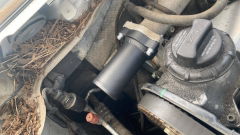
Common culprits include cracked stand pipe O-rings, failed dummy plug seals, leaking injector O-rings, and in some cases a worn HPOP that cannot build enough pressure with hot thin oil. Performing the Ford 6.0 IPR air test will pinpoint which specific component is leaking.
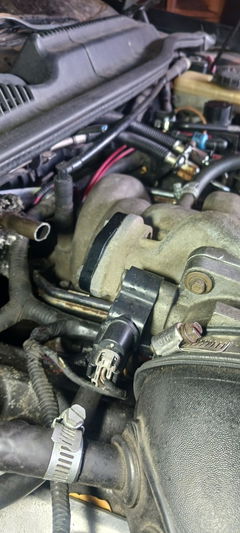
Q5: What are the symptoms of a failing IPR valve on a 6.0 Powerstroke?

The IPR (Injection Pressure Regulator) valve is the oil pressure regulator for the 6.0 Powerstroke, and when it fails, you will experience one or more of the following symptoms: hard starting or no-start condition (especially when hot), surging or erratic idle, significant loss of power under load, engine stalling at idle or low RPM, and ICP pressure readings that are abnormally low or fluctuate rapidly.

A stuck IPR valve (stuck open) will prevent the HPOP from building any pressure, resulting in a complete no-start condition with ICP pressure near zero during cranking. A contaminated IPR screen, often from debris in the oil system, can restrict oil flow through the valve and cause similar symptoms.

Normal IPR operation shows a duty cycle of 22-28% at warm idle and up to 65-85% under heavy load. If your scan tool shows the oil pressure regulator 6.0 Powerstroke IPR duty cycle maxed out at 85% or higher while ICP pressure remains low, the IPR valve may be failing, or there is a significant leak in the system.

Q6: What is the ICP sensor and how do I know if it is failing?

The ICP (Injector Control Pressure) sensor monitors high pressure oil rail pressure in the 6.0 Powerstroke and sends this data to the engine computer. The ECM uses ICP readings to adjust the IPR duty cycle and maintain proper injection pressure. On the Ford 6.0 Powerstroke, the ICP sensor is located on the left (driver) side valve cover and connects to the high pressure oil rail inside the cylinder head.

Symptoms of a failing ICP sensor include erratic or jumpy ICP pressure readings on your scan tool, rough idle that seems to have no mechanical cause, hard starting with no other identifiable HPO leaks, and in some cases a no-start condition if the sensor fails completely.

When replacing the ICP sensor, it is good practice to replace the IPR valve at the same time, since both components operate in the same harsh high pressure oil environment. The Ford 6.0 ICP air test fitting can be used alongside the ICP sensor to verify whether pressure readings are accurate. The IPR valve and ICP sensor kit in this collection includes both components plus the wiring pigtail for a complete repair.

Q7: What causes high pressure oil leaks at the injector on a 6.0 Powerstroke?

High pressure oil leaks at the injector on a 6.0 Powerstroke are typically caused by degraded or damaged O-ring seals on the injector body where it seats in the cylinder head. Each injector has multiple O-rings that seal the high pressure oil passage, and over time these O-rings harden, shrink, and crack from repeated heat cycling and oil exposure.

A 6.0 high pressure oil leak at the injector can also be caused by a cracked injector cup (the brass sleeve that houses the injector in the cylinder head), a damaged stand pipe O-ring that feeds oil to the rail, or a failed dummy plug at the end of the oil rail. When oil leaks at any of these points, system pressure drops and the IPR valve must work harder to compensate.

Diagnosing the exact location requires an air test using the air test fitting tool. After pressurizing the system through the IPR port, you remove the valve covers and listen for air hissing at each injector location. If air bubbles appear in the oil around a specific injector, that injector's O-rings or cup seal is the source of the 6.0 Powerstroke high pressure oil leak at injector connections.

Q8: When should I replace stand pipes and dummy plugs on my 6.0 Powerstroke?

You should replace the 6.0 Powerstroke oil standpipe and dummy plugs whenever you experience symptoms of high pressure oil system leaks, which include hot no-start conditions, ICP pressure dropping below 500 PSI during cranking, rough idle, stalling, and IPR duty cycle exceeding 85% under normal driving conditions.

As preventive maintenance, many diesel technicians recommend replacing stand pipes and dummy plugs anytime the valve covers are removed for other service, since the labor to access them is already done. The stand pipes connect the HPOP discharge to the oil rail in each cylinder head, and the dummy plugs seal the opposite end of each oil rail.

Stand pipe and dummy plug failure is so common on the 6.0 Powerstroke oil system that it is considered one of the top five problem areas on this engine. Upgraded kits feature improved elastomer compounds that resist hardening far better than original equipment, providing a longer lasting seal and preventing repeat failures.

Q9: What ICP pressure should my 6.0 Powerstroke read at idle and cranking?

On a healthy 6.0 Powerstroke, ICP pressure should read 500-600 PSI at warm idle with the IPR duty cycle at 22-28%. During cranking, the minimum ICP pressure required to start the engine is 500 PSI. If cranking ICP pressure is below 500 PSI, the ECM will not command the injectors to fire, resulting in a no-start condition.

Under load or acceleration, ICP pressure should reach 2,500-4,000 PSI depending on throttle position and engine demand. If your scan tool shows ICP pressure consistently below 500 PSI during cranking, or the IPR duty cycle is above 85% at idle trying to maintain even minimal pressure, your oil pump for 6.0 Powerstroke high pressure system has a leak or a weak HPOP.

Monitoring ICP pressure and IPR duty cycle together is the key to diagnosing 6.0 Powerstroke oil system problems. High IPR duty cycle with low ICP pressure indicates a leak. Normal IPR duty cycle with low ICP pressure suggests a bad ICP sensor. High IPR duty cycle with normal ICP pressure may indicate a sticking IPR valve.

Q10: Are these high pressure oil system parts covered by warranty?

Yes, all high pressure oil system parts in this collection are covered by EGR Performance's 1-year warranty and our generous 45-day return policy. Each component, from IPR valves and ICP sensors to stand pipe kits and air test fitting tools, has been tested under extreme conditions to ensure reliable performance on your 6.0 Powerstroke.

We also provide 24/7 live technical support to help you with fitment questions, installation guidance, and diagnostic troubleshooting. Whether you need help identifying which stand pipe kit fits your specific year model or guidance on performing the IPR air test procedure, our diesel experts are available around the clock.

EGR Performance offers a 45-day hassle-free return policy and a one-year warranty.

We stand behind every part we sell for the Ford 6.0L Powerstroke high pressure oil system, giving you the confidence to tackle your HPO repair with quality components and expert backing.