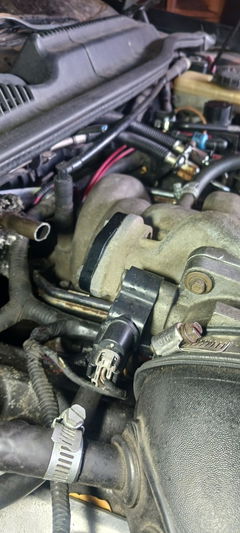
6.0 Powerstroke Wiring Harness for Ford F250 F350
Heat-Resistant Wiring Harness for 6.0L Powerstroke Ford Trucks
Restore your 6.0 Powerstroke's reliability with our industrial-grade, heat-resistant Wiring Harness. Engineered to factory-spec standards, this direct-fit solution replaces aging, brittle stock wiring with oil-impermeable and vibration-dampened materials. Featuring precision-terminated connections for signal-stable communication, our reinforced harness effectively eliminates persistent electrical gremlins and intermittent sensor failures. Choose this corrosion-proof upgrade for a comprehensive, permanent fix to your engine's electrical health.
Complete Engine, Injector, and Glow Plug Harness Solutions
The 6.0 Powerstroke wiring harness is the central nervous system of your Ford diesel engine, connecting the FICM, PCM, fuel injectors, glow plugs, and critical sensors into a unified electrical system. Over time, the factory harness degrades from heat exposure, oil contamination, and vibration, leading to chafed wires, corroded connectors, and brittle insulation that cause misfires, no-start conditions, and erratic electrical behavior.
Our collection includes complete engine wiring harnesses, fuel injector wiring harnesses, and glow plug harness kits for the 6.0L Powerstroke. Each harness matches OEM specifications and Ford part numbers including 3C3Z-12B637-BA, 4C3Z-12B637-AA, 4C3Z-12B637-CA, 5C3Z-12B637-BA, and 5C3Z-9D930-A. High-temperature resistant wiring and corrosion-resistant connectors ensure long-term reliability under the harsh conditions inside the engine bay.
When Does Your 6.0 Powerstroke Need a New Wiring Harness?
Wire chafing is a well-documented failure point on the 6.0L Powerstroke, particularly on the #6 injector plug branch near the FICM connectors. As the engine accumulates miles, vibration and heat cause the wiring insulation to rub through against engine components, creating intermittent shorts that trigger low voltage codes, rough running, and misfires that are often misdiagnosed as bad injectors.
If your 6.0 Powerstroke exhibits erratic idle, stalling with no diagnostic codes, crank-no-start conditions, or rough running under acceleration, the engine wiring harness or injector harness may be the root cause. Many owners spend thousands replacing injectors, FICM modules, and sensors before discovering that a degraded 6.0 powerstroke wiring harness was the problem all along. Replacing the harness early prevents cascading electrical failures and protects expensive components like the FICM from voltage irregularities.
Built for Ford 6.0L Powerstroke Reliability
Max efficiency, restored horsepower, and prolonged engine life for your EGR, DPF, and CCV systems on Powerstroke, Cummins, Duramax engines, etc.
- Free Shipping: Fast & free delivery to get you back on the road sooner.
- 45-Day Returns: Shop risk-free with our generous 45-day return policy.
- 1-Year Warranty: Tested under extreme conditions. Guaranteed to perform.
- 24/7 Live Support: Real-time tech help from fitment to post-install tuning.
Product |
Engine |
Vehicle Model |
Year Range |
|---|---|---|---|
Engine Wiring Harness (3C3Z-12B637-BA) |
6.0L Powerstroke |
F250 F350 F450 F550 Super Duty |
2003-2004 |
Engine Wiring Harness (4C3Z-12B637-AA) |
6.0L Powerstroke |
F250 F350 |
2003-2007 |
Engine Wiring Harness (4C3Z-12B637-CA) |
6.0L Powerstroke |
F250 F350 F450 F550 Excursion |
2004 |
Engine Wiring Harness (5C3Z-12B637-BA) |
6.0L Powerstroke |
F250 F350 |
2005-2007 |
Fuel Injector Wiring Harness (5C3Z-9D930-A) |
6.0L Powerstroke |
F250 F350 |
2003-2007 |
Glow Plug Harness & GPCM Controller |
6.0L Powerstroke |
F250 Excursion |
2004-2010 |
Glow Plug Harness & 8 Glow Plugs |
6.0L Powerstroke |
F250 Excursion |
2004-2010 |
Glow Plug Harness Kit With Removal Tool |
6.0L Powerstroke |
F250 Excursion |
2004-2010 |
Glow Plugs Set (8 pcs) |
6.0L Powerstroke |
E350 E450 Excursion F250 F350 |
2004-2010 |
Shop Now!


EGR Performance: EGR, DPF, CCV & Diesel Tuning Solutions for Powerstroke, Cummins, and Duramax


Let customers speak for us

Have to say that I like the quality of the product and ease of installation. I’ve had it in for a little over a week now and I’ve driven several hundred miles with no issues whatsoever. Certainly worth it!

Works great. Exactly what I hoped it would be.

Decent quality, saw some cheaper options but this one did the job just fine. No more worrying about carbon build up!
Was easy to install, works a stated,more horsepower ,better gas mileage

This item solves a big problem perfectly. The quality of this item is 5 star for sure. Great seller as well.

Good product. Quick shipping. Would buy from again!

Extremely satisfied with this order. Will def use this company for future orders

I fit it and it made a lot of different in my car thank u

Plate looks good. The provided hardware are the wrong thread pitch however. Shipping took a long time was close to 3 weeks.
Really happy with item took 2 and a half weeks to get but worth the wait
Company is great, received the wrong item and correct item sent. No hassle
I'd love to review it but I haven't got it yet
part fit perfectly
EGR Delete for 1986-1995 Ford F150 F250 2.8L 4.9L 5.0L 5.8L 7.5L Bronco EGR Simulator Eliminator Delete
6.0L Powerstroke Diesel Complete EGR Bypass and Valve Delete Kit for 2003-2010 6.0L Ford Powerstroke F250 F350 F450 F550