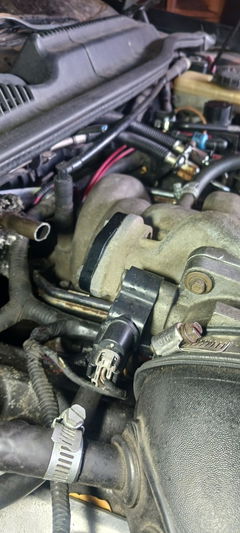
7.3 Powerstroke HPOP Lines
7.3 Powerstroke HPOP Lines, High Pressure Oil Pump Hoses & Crossover Kits
The 7.3L Powerstroke fires its HEUI fuel injectors off high pressure engine oil instead of a mechanical injection pump, which means every hose between the HPOP and the cylinder head oil rails is load-bearing hardware. Our 7.3 Powerstroke HPOP lines replace the worn factory rubber with purpose-built high pressure assemblies rated to hold the 500 to 3,000 psi the injection system demands at the rail. When the original lines give up, these are the direct-fit parts that put the high pressure oil circuit back to work.
Heavy-Duty Materials Built for Sustained Oil Pressure
Every hose in this lineup is built from wire-braided hydraulic hose jacketed in T304 stainless steel braid, terminated with CNC-machined brass crimp fittings and sealed with high-temperature Viton O-rings that resist heat hardening far longer than the original equipment rubber. Hard lines and crossover tubes are bent from cold-formed steel with precision TIG-welded fittings, so the assemblies hold ICP (Injection Control Pressure) steady under heavy throttle instead of bleeding pressure back at the crimps.
Real-World Duty: Towing, Plowing, and Hot No-Starts
These HPOP lines are the fix for the most common failure on a high-mileage 7.3, the hot no-start. When factory hoses age and the brass crimp fittings open up, the pump leaks down ICP pressure as soon as the oil thins at operating temperature, leaving you cranking a truck that ran fine an hour ago. Whether the rig pulls a gooseneck, runs a plow route, or hauls a loaded camper across the grades, these direct-fit lines restore the high pressure oil circuit so the engine fires fast hot or cold and holds rail pressure under full load.
Why Thousands of Diesel Owners Trust EGR Performance
EGR Performance: Engineered for Power. Backed for Life.
Max efficiency, restored horsepower, and prolonged engine life for your EGR, DPF, and CCV systems on Powerstroke, Cummins, and Duramax engines.
- Free Shipping: Fast & free delivery to get you back on the road sooner.
- 45-Day Returns: Shop risk-free with our generous 45-day return policy.
- 1-Year Warranty: Tested under extreme conditions. Guaranteed to perform.
- 24/7 Live Support: Real-time tech help from fitment to post-install tuning.
| Product | Engine | Vehicle Model | Year Range |
|---|---|---|---|
| High Pressure Oil Pump HPOP Lines Hoses | 7.3L Powerstroke | Ford F250, F350 Super Duty | 1999-2003 |
| HPOP High Pressure Oil Pump Kit & Base Gasket | 7.3L Powerstroke | Ford F250, F350, F450, F550 | 1994.5-2003 |
| Oil Pump Relief Valve Spring Plug & Seals Kit | 7.3L Powerstroke | Ford F250, F350, F450, F550 | 1994.5-2003 |
| HPOP Hoses Lines Kit & Crossover Line | 7.3L Powerstroke | Ford F250, F350, Excursion | 1999-2003 |
Shop 7.3 Powerstroke HPOP Lines Now! →


EGR Performance: EGR, DPF, CCV & Diesel Tuning Solutions for Powerstroke, Cummins, and Duramax


Let customers speak for us

Have to say that I like the quality of the product and ease of installation. I’ve had it in for a little over a week now and I’ve driven several hundred miles with no issues whatsoever. Certainly worth it!

Works great. Exactly what I hoped it would be.

Decent quality, saw some cheaper options but this one did the job just fine. No more worrying about carbon build up!
Was easy to install, works a stated,more horsepower ,better gas mileage

This item solves a big problem perfectly. The quality of this item is 5 star for sure. Great seller as well.

Good product. Quick shipping. Would buy from again!

Extremely satisfied with this order. Will def use this company for future orders

I fit it and it made a lot of different in my car thank u

Plate looks good. The provided hardware are the wrong thread pitch however. Shipping took a long time was close to 3 weeks.
Really happy with item took 2 and a half weeks to get but worth the wait
Company is great, received the wrong item and correct item sent. No hassle
I'd love to review it but I haven't got it yet
part fit perfectly
EGR Delete for 1986-1995 Ford F150 F250 2.8L 4.9L 5.0L 5.8L 7.5L Bronco EGR Simulator Eliminator Delete
6.0L Powerstroke Diesel Complete EGR Bypass and Valve Delete Kit for 2003-2010 6.0L Ford Powerstroke F250 F350 F450 F550