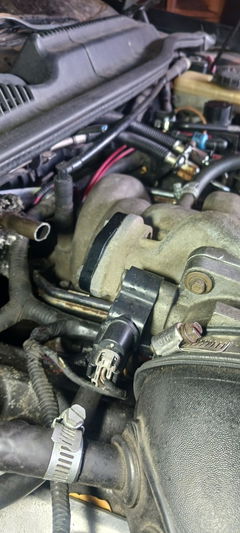
5.9L 6.7L Cummins Fuel Rail Components

Cummins Fuel Rail Pressure Regulators & Plug Valves

The Cummins fuel rail is the heart of the Bosch common rail injection system on 5.9L (2003-2007) and 6.7L (2007.5+) Cummins diesel engines. It stores pressurized fuel at up to 26,000-30,000 PSI and distributes it to each injector with precise timing for multiple injection events per combustion cycle. Our fuel rail 6.7 Cummins pressure regulator restores accurate rail pressure readings when the factory sensor degrades, preventing false error codes and erratic fuel delivery.

The 5.9 common rail Cummins fuel rail plug valve eliminates premature pressure relief valve (PRV) bleed-off on the 6.7L rail, maintaining commanded rail pressure under heavy load and tuned conditions. Both components are manufactured from high-grade materials and tested to OEM pressure specifications.

Application Scenarios

If your check engine light is illuminated with DTC codes like P0087 (fuel rail/system pressure too low), P0191 (fuel rail pressure sensor circuit), or P1011 (fuel rail pressure too low during cranking), these Cummins fuel rail components address the root cause. The pressure regulator is the direct fix for P0191 and erratic rail pressure readings across 2003-2016 Ram 2500/3500 trucks with 5.9L or 6.7L Cummins engines.

The plug valve solves P0087 and P1011 caused by a leaking stock PRV on 2007.5-2012 6.7L Cummins, where the factory relief valve opens prematurely and bleeds off rail pressure under acceleration. Both are essential for any common rail Cummins owner experiencing power loss, rough idle, hard starting, or limp mode triggered by fuel rail pressure issues. Whether you're running a stock daily driver or a tuned truck, maintaining proper rail pressure is critical to engine performance and longevity.

EGR Performance: Engineered for Power. Backed for Life.

Max efficiency, restored horsepower, and prolonged engine life for your EGR, DPF, and CCV systems on Powerstroke, Duramax, Cummins engines, etc.

  • Free Shipping: Fast & free delivery to get you back on the road sooner.
  • 45-Day Returns: Shop risk-free with our generous 45-day return policy.
  • 1-Year Warranty: Tested under extreme conditions. Guaranteed to perform.
  • 24/7 Live Support: Real-time tech help from fitment to post-install tuning.

Compatibility Table

Product Engine Vehicle Year Range Price
Fuel Rail Plug Valve 6.7L Cummins Dodge Ram 2500 3500 2007.5-2012 $25.99
Fuel Rail Pressure Regulator 5.9L / 6.7L Cummins Dodge Ram 2500 3500 2003-2016 $56.70

EGR Performance: EGR, DPF, CCV & Diesel Tuning Solutions for Powerstroke, Cummins, and Duramax

EGR DELETE KITS

View More

CCV PCV REROUTE KIT

View More

DPF DELETE KITS

View More

DIESEL TUNERS

View More

Why Does Your Cummins Need a Fuel Rail Component?

P0087, P0191, and P1011: The Three Most Common Fuel Rail Error Codes

The 6.7 Cummins P0087 is the most frequently reported fuel rail code on 2007.5+ trucks. It means the ECM detects actual rail pressure falling significantly below the commanded pressure. The truck enters limp mode, power drops dramatically, and throttle response becomes sluggish.

On the 6.7L Cummins, this code often traces back to a stock pressure relief valve (PRV) that opens prematurely under load, bleeding off rail pressure that the CP3 pump cannot recover fast enough.

The P0191 Cummins code indicates the fuel rail pressure sensor circuit is reading out of its expected range. On the Cummins 6.7 fuel rail, this typically means the pressure regulator (sensor) itself is failing, sending erratic voltage signals to the ECM. The engine may run rough, stall, or refuse to start, even though the mechanical fuel pressure is actually fine. On 5.9 common rail trucks (2003-2007), ageing pressure sensors produce the same code and symptoms.

The Cummins P1011 signals that rail pressure failed to reach the minimum threshold during cranking. This is especially common on high-mileage 6.7L engines where the CP3 pump has internal wear or the PRV is leaking down overnight. The engine cranks excessively before starting, or fails to start at all until the system re-primes.

Power Loss and Limp Mode Under Load

When the fuel rail 6.7 Cummins cannot maintain commanded pressure during acceleration, the ECM derates the engine to protect it from lean conditions. You feel this as a sudden power cut, flat throttle response, or the truck falling on its face when towing heavy or merging onto the highway. On the 5.9 Cummins fuel rail, the same symptom appears when the pressure sensor provides inaccurate readings — the ECM restricts fuel delivery based on false data, even though the mechanical system is healthy.

Hard Starting and Extended Crank Times

A failing fuel rail pressure regulator or leaking PRV causes the common rail Cummins system to lose residual pressure after shutdown. On the next startup, the CP3 pump must rebuild rail pressure from zero before the ECM allows injection. This manifests as 5-10 seconds of cranking before the engine fires, or no-start conditions in cold weather.

From 2003 to 2007, trucks with the 5.9 common rail Cummins system, the pressure regulator is a known wear item that degrades gradually over 100,000+ miles.

What Can a Fuel Rail Pressure Regulator & Plug Valve Solve?

Pressure Regulator: Restores Accurate Rail Pressure Readings

The fuel rail pressure regulator (sensor) is the ECM's primary input for managing the entire common rail injection system. When it fails, the ECM cannot accurately control fuel delivery, injection timing, or pressure targets. Our replacement regulator for the 5.9 Cummins fuel rail and 6.7 fuel rail provides precise pressure readings across the full operating range, from 0 PSI at key-on to 26,000+ PSI at wide-open throttle. This directly resolves P0191 codes, eliminates false limp mode triggers, and restores proper fuel mapping to the engine.

Plug Valve: Eliminates Premature Pressure Relief Valve Bleed-Off

The factory PRV on the 2007.5-2012 6.7 Cummins fuel rail is designed to open at approximately 24,000-26,000 PSI as a safety mechanism. However, on tuned trucks or high-mileage engines, this valve begins opening well below its rated pressure, causing the P0087 and P1011 codes that plague 4th-gen Ram owners. Our fuel rail plug valve securely seals the PRV port, preventing pressure bleed-off and maintaining full commanded rail pressure under all conditions. The M20x1.5 threaded design installs in minutes with basic hand tools.

Combined Solution for Persistent Fuel Rail Pressure Problems

For truck owners who have already replaced fuel filters, tested the lift pump, and verified CP3 output, yet still battle P0087 or P1011, the combination of a fresh pressure regulator and plug valve addresses the two most common remaining failure points on the common rail 5.9 and 6.7 systems. These components work together: the regulator ensures the ECM receives accurate pressure data, while the plug valve prevents mechanical pressure loss through the PRV. Together, they restore the entire fuel rail feedback loop to proper operation.

Shop Guide: Shop Cummins Fuel Rail Components by Engine & Fitment

Browse our selection of heavy-duty fuel rail upgrades tailored to your specific Cummins platform:

  • Fuel Rail Plug Valve (6.7L Cummins, 2007.5-2012 Ram 2500/3500) — M20x1.5 threads, direct replacement for the leak-prone factory PRV port.
  • Fuel Rail Pressure Regulator (5.9L / 6.7L Cummins, 2003-2016 Ram 2500/3500) — Direct fit FRP sensor designed to restore accurate high-pressure readings to the ECM.

Why Choose EGR Performance?

The industry standard for high-performance diesel reliability.

Premium Quality & Rigorous Testing

Our fuel system and engine components are engineered from premium-grade materials and subjected to brutal quality control and field testing. Unlike generic alternatives, our products are built to withstand extreme pressure and vibration, delivering unmatched durability and long-term stability when your rig needs it most.

20 Years of Proven Diesel Expertise

We aren't just selling parts—we live this industry. With two decades of hands-on experience providing specialized modification solutions for heavy-duty truck owners, our upgrades have been extensively proven across every driving environment, from daily towing to high-performance tracks.

Industry-Leading Standards

We work hand-in-hand with top-tier industry partners and reputable organizations. Every product we design, test, and ship meets or exceeds strict industry standards, ensuring your Powerstroke, Cummins, or Duramax gets the exact precision it deserves.

Real Results, Proven Track Record

Thousands of diesel owners trust us to unlock their engine's true potential. Our massive library of positive customer feedback and successful build case studies proves one thing: our kits deliver real performance, stable rail pressure, and flawless reliability in the real world.

Frequently Asked Questions About Cummins Fuel Rail Components

Q1: What does the P0087 code mean on a 6.7 Cummins?

P0087 means "Fuel Rail/System Pressure Too Low". The ECM detects that the actual 6.7 Cummins fuel rail pressure is significantly below the commanded pressure. Common causes include a clogged fuel filter, a weak lift pump, a failing CP3 pump, a leaking pressure relief valve (PRV), or excessive injector return flow.

On the 2007.5-2012 6.7L, the most frequent culprit is the stock PRV opening prematurely and bleeding off rail pressure. Start diagnostics by replacing the fuel filters, then test the lift pump output (should be 10-15 PSI at the supply), check the PRV for leakage, and perform an injector return flow test. A fuel rail plug valve can eliminate PRV-related pressure loss.

Q2: How do I fix the P0191 code on my Cummins?

P0191 means "Fuel Rail Pressure Sensor Circuit Range/Performance" - the P0191 Cummins code indicates the fuel rail pressure sensor signal is out of its expected range. On both the 5.9L and 6.7L, this most commonly means the pressure regulator (sensor) itself has failed. Inspect the wiring connector for corrosion or damage first. If the connector and wiring are intact, replace the fuel rail pressure regulator. Our direct-fit regulator covers 2003-2016 Ram 2500/3500 with 5.9L or 6.7L Cummins engines and restores accurate pressure readings to the ECM, resolving P0191 and the associated rough idle, stalling, and limp mode symptoms.

Q3: What is the difference between P0087 and P1011 on a Cummins?

Both codes relate to low fuel rail pressure, but they trigger under different conditions. P0087 (fuel rail pressure too low) sets when actual pressure drops below commanded pressure while the engine is running, typically under load or acceleration. P1011 (fuel rail pressure too low during cranking) sets when the rail pressure fails to reach the minimum threshold during engine startup.

Cummins P1011 often points to the CP3 pump losing prime overnight, a leaking PRV, or high injector return rates bleeding down rail pressure while parked. Both codes can be caused by the same underlying issue, a leaking PRV on the 6.7 Cummins fuel rail that a plug valve can resolve.

Q4: Will a fuel rail plug valve fix my limp mode problem?

If your limp mode is triggered by P0087 or P1011 caused by a leaking stock pressure relief valve, then yes, the fuel rail plug valve will fix the problem by sealing the PRV port and preventing rail pressure bleed-off. However, if limp mode is caused by a weak lift pump, clogged fuel filters, a failing CP3 pump, or bad injectors, the plug valve alone will not resolve it. Proper diagnosis is important: replace fuel filters first (most common and cheapest fix), then test lift pump pressure, check for injector return flow issues, and finally evaluate the PRV. The plug valve is specifically designed for 2007.5-2012 6.7L Cummins Ram 2500/3500 trucks with the M20x1.5 PRV port.

Q5: What is normal fuel rail pressure on a 5.9 and 6.7 Cummins at idle?

On both the 5.9 Cummins fuel rail and 6.7 fuel rail, normal idle pressure is approximately 4,500-6,000 PSI. At cruising speed, expect 10,000-16,000 PSI depending on load. At wide-open throttle, the common rail Cummins system commands 23,000-26,000+ PSI.

If you see idle pressure below 3,500 PSI, there is a problem in the system. Key-on engine-off (KOEO) pressure should read 0 PSI — any reading above 100 PSI with the engine off suggests a biased or failing fuel rail pressure regulator. You can monitor live rail pressure using an OBD2 scanner or an Edge monitoring device.

Q6: Is a fuel rail plug safe for a daily-driven truck?

A solid fuel rail plug eliminates the factory pressure relief valve's safety function. Most diesel performance shops and experienced forum members recommend a shim kit or modified PRV (like the Exergy upgraded relief valve) over a solid plug for street-driven trucks. The shim kit raises the PRV pop-off pressure while retaining the safety relief function. However, for competition-use trucks or builds where maximum rail pressure retention is critical, the solid plug is appropriate. Our fuel rail plug valve for the 2007.5-2012 6.7 Cummins fuel rail is designed for off-road and competition applications where the PRV has been identified as the cause of persistent pressure loss.

Q7: What does the fuel rail pressure regulator do on a Cummins?

A: The fuel rail pressure regulator (also called the fuel rail pressure sensor or FRPS) monitors actual fuel pressure inside the Cummins fuel rail and sends a voltage signal to the ECM. The ECM uses this data to control the Fuel Control Actuator (FCA) on the CP3 pump, adjusting fuel delivery to maintain target rail pressure in real time. When the regulator fails, the ECM receives inaccurate data, causing improper fuel metering, rough running, stalling, and DTC codes like P0191, P0192, and P0193. Our replacement regulator is a direct-fit component for 2003-2016 Ram 2500/3500 trucks equipped with 5.9L or 6.7L Cummins common rail engines.

Q8: What years did Cummins use the common rail fuel system?

The Cummins common rail fuel system was introduced on the 5.9 common rail Cummins in 2003 and continued through 2007 (replacing the VP44 system used from 1998.5-2002). The 6.7 Cummins fuel rail common rail system began in 2007.5 and continues to the present.

All common rail Cummins engines use the Bosch high-pressure fuel system with a CP3 pump (2003-2018) or CP4 pump (2019-2020, with some models switching back to CP3. The common rail system allows multiple injection events per combustion cycle for better power, efficiency, and emissions control compared to the earlier VP44 and P-pump systems.

Q9: How much does it cost to replace a Cummins fuel rail pressure sensor?

A replacement fuel rail pressure regulator for the 5.9 Cummins fuel rail or 6.7 Cummins fuel rail typically costs $50-120 for the part, depending on brand and quality. Our direct-fit regulator is priced at $56.70 and covers 2003-2016 applications.

Labor at a diesel shop usually runs $100-250 since the sensor is accessible on top of the fuel rail. Many Cummins owners complete this as a DIY job in 30-60 minutes with basic hand tools. Compared to the $8,000-15,000+ cost of ignoring fuel rail pressure issues (which can cascade into CP3 pump failure, injector damage, or complete fuel system contamination), replacing the pressure regulator early is an inexpensive preventative measure.

Q10: What is the warranty and return policy on EGR Performance fuel rail products?

EGR Performance provides a 1-year warranty on all fuel rail components, covering manufacturing defects and material failure under normal use. We also offer 45-day hassle-free returns if the part does not fit your application or you are not completely satisfied. All fuel rail products ship free within the continental US.

Our 24/7 live support team can assist with fitment verification before purchase and provide technical guidance during installation. Whether you need a fuel rail plug valve for your 2007.5-2012 6.7 Cummins fuel rail or a pressure regulator for your 2003-2016 Ram, EGR Performance stands behind every product we sell.