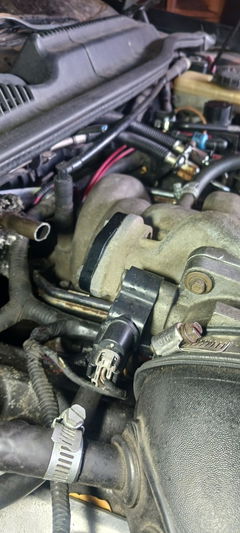
Cummins Intake Elbow & Horn

Cummins Intake Elbow & Horn Series

High-Flow Airflow Hardware Built for Hard-Working Cummins Rams

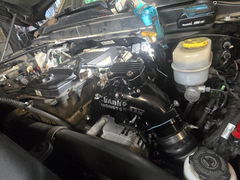
This Cummins intake elbow and intake horn lineup clears the choke point between your intercooler and the cylinder head. The 6.7L piece is an A356-T6 cast aluminum high-flow intake manifold horn paired with a mandrel-bent 3.5 inch T304 stainless steel tube, joined with precision TIG welds and sealed with a high-temperature Viton O-ring and a reinforced silicone coupler held down by stainless steel T-bolt clamps. The 5.9L versions keep the same mandrel-bent stainless flow path in a 3 inch high-flow intake elbow tube that bolts straight to the factory inlet. Every piece is built to move more charge air, distribute it evenly across all six cylinders, and hold boost under sustained load.

Real-World Duty: Towing, EGT Control, and OEM Weak Points

On the street and in the field, a free-flowing intake elbow and horn earn their keep when the trailer is heavy and the grade is long. The factory cast horn necks down and throws sharp internal transitions that heat up your charge air, and that heat shows up as climbing exhaust gas temperatures when you tow at the Gross Combined Weight Rating. A high-flow horn opens up the cross-section, evens out cylinder-to-cylinder distribution so you stop washing out the rear cylinders, and pulls EGTs back down. It also addresses the known 6.7L grid heater problem, where factory fasteners can work loose and drop hardware into the engine; the larger, better-built horn gives you a cleaner, safer airflow path whether you keep the grid heater for cold starts or remove it for a full race build.

Why Thousands of Diesel Owners Trust EGR Performance

EGR Performance: Engineered for Power. Backed for Life.

Max efficiency, restored horsepower, and prolonged engine life for your EGR, DPF, and CCV systems on Powerstroke, Duramax, Cummins engines, etc.

  • Free Shipping: Fast & free delivery to get you back on the road sooner.
  • 45-Day Returns: Shop risk-free with our generous 45-day return policy.
  • 1-Year Warranty: Tested under extreme conditions. Guaranteed to perform.
  • 24/7 Live Support: Real-time tech help from fitment to post-install tuning.
Product Engine Vehicle Model Year Range
6.7 High Flow Intake Manifold Elbow Tube Horn 3.5" 6.7L Cummins ISB Ram 2500 / 3500 2007.5-2018
High Flow Intake Elbow Tube 5.9L Cummins ISB (VP44) Dodge Ram 2500 / 3500 1998-2002
3" High Flow Intake Elbow Tube 5.9L Cummins ISB (Common Rail) Dodge Ram 2500 / 3500 2003-2007
Air Intake Elbow Cummins ISX 6.7L Commercial Duty 2007-2019

Shop Cummins Intake Elbow & Horn Now!

EGR Performance: EGR, DPF, CCV & Diesel Tuning Solutions for Powerstroke, Cummins, and Duramax

EGR DELETE KITS

View More
EGR Delete Kits Performance Parts

CCV PCV REROUTE KIT

View More
CCV PCV Reroute Kits

DPF DELETE KITS

View More
DPF Delete Kits

DIESEL TUNERS

View More
diesel tuners

Why Does Your Cummins Need a High-Flow Intake Elbow?

Factory Cast Horn Chokes Your Charge Air

The stock intake horn and elbow on a 5.9L or 6.7L Cummins is cast for cost, not flow. The internal runners neck down, the transitions are sharp, and turbulence builds right where the charge air has to make the turn onto the cylinder head. That restriction costs you usable volume and lets exhaust gas temperatures climb the moment you load the truck.

Soot, Oil Mist, and Carbon Buildup

Blow-by from the CCV system carries oil mist into the intake tract, and over tens of thousands of miles that film catches soot and hardens into carbon inside the factory elbow. The passage narrows, distribution to the rear cylinders goes lean, and you end up with a horn that flows worse at high mileage than it did new.

Thermal Fatigue and the 6.7L Grid Heater Problem

Heat cycling fatigues thin factory castings, and the 6.7L carries a second, more serious weak point in the grid heater bolts. Those factory fasteners are known to back out and drop the heater plate into the engine, which destroys cylinders and turbo alike. A properly built high-flow horn cleans up that airflow path and gives you a safer, better-supported layout.

What Can a High-Flow Intake Elbow Solve?

More Charge-Air Volume With Less Turbulence

A mandrel-bent 3.5 inch T304 stainless tube feeding an A356-T6 cast aluminum horn opens up the cross-section and smooths the turn onto the head. More air moves through with less restriction, distribution to all six cylinders evens out, and the charge stays denser and cooler.

Lower EGTs Under Tow and Load

Free up the inlet and exhaust gas temperatures come back down, especially when you are pulling heavy at altitude or holding a long grade. Cooler charge air is the foundation everything else, more fuel, more timing, and more turbo, is built on.

Better Boost Retention and Throttle Response

Reinforced silicone couplers, high-temperature Viton O-rings, and stainless steel T-bolt clamps seal the joint so built boost stays in the manifold instead of leaking past a soft factory boot. The truck spools sooner and answers the pedal faster.

Shop Cummins Intake Elbow & Horn by Ram Engine & Fitment Guide

  • 6.7 High Flow Intake Manifold Elbow Tube Horn 3.5" - Fits 6.7L Cummins ISB in Ram 2500 and 3500 (2007.5-2018). Opens up the 3.5 inch charge path onto the head, evens cylinder distribution, and pulls EGTs down under tow, with a mandrel-bent T304 stainless tube joined to an A356-T6 cast aluminum horn.
  • High Flow Intake Elbow Tube - Fits 5.9L Cummins ISB (VP44) in Dodge Ram 2500 and 3500 (1998-2002). Replaces the restrictive factory elbow with a smooth mandrel-bent high-flow tube that cleans up the inlet on the 24-valve VP44 truck.
  • 3" High Flow Intake Elbow Tube - Fits 5.9L Cummins ISB (Common Rail) in Dodge Ram 2500 and 3500 (2003-2007). Drops a 3 inch mandrel-bent high-flow elbow onto the HPCR common-rail truck to support tuning and heavier towing.
  • Air Intake Elbow - Fits the Cummins ISX 6.7L commercial-duty engine (2007-2019). A direct-fit intake elbow for heavy-duty ISX-series applications; confirm your ISX configuration before ordering.

Why Choose EGR Performance?

The industry standard for high-performance diesel reliability.

Premium Quality & Rigorous Testing

Our EGR, DPF, and CCV delete kits are engineered from premium-grade materials and subjected to brutal quality control and field testing. Unlike generic alternatives, our products are built to withstand extreme heat and pressure, delivering unmatched durability and long-term stability when your rig needs it most.

20 Years of Proven Diesel Expertise

We aren't just selling parts. We live in this industry. With two decades of hands-on experience providing specialized modification solutions for heavy-duty truck owners, our upgrades have been extensively proven across every driving environment, from daily towing to high-performance tracks.

Industry-Leading Standards

We work hand-in-hand with top-tier industry partners and reputable organizations. Every product we design, test, and ship meets or exceeds strict industry standards, ensuring your Powerstroke, Cummins, or Duramax gets the exact precision it deserves.

Real Results, Proven Track Record

Thousands of diesel owners trust us to unlock their engine's true potential. Our massive library of positive customer feedback and successful build case studies proves one thing: our kits deliver real horsepower, lower EGTs, and flawless reliability in the real world.

What does a Cummins intake elbow or intake horn actually do?

The intake elbow and intake horn sit between your intercooler and the cylinder head, and their only job is to deliver charge air into the engine with as little restriction as possible.
The factory piece is cast for low cost, so it necks down and throws sharp internal transitions right where the air has to turn onto the head.
A high-flow elbow and horn open up that cross-section, smooth the turn, and feed all six cylinders more evenly so the rear cylinders stop running lean. The result is denser charge air, lower exhaust gas temperatures, and a cleaner burn.

Is a 6.7 Cummins intake horn worth it?

For a stock or mildly tuned truck, the honest answer is that an intake horn is not where your biggest gains live, and you will feel less than the marketing suggests.
It earns its place when you tow heavy, run a bigger turbo or injectors, or push the truck above stock horsepower, because that is when the factory horn becomes the bottleneck.
Owners running deletes and tunes report the real payoff as lower EGTs on long grades, a safety margin against the 6.7L grid heater bolt failure, and a slightly snappier throttle. If your build is stock, porting the factory horn is the cheaper move; if you tow or run tuned, the high-flow horn is money well spent.

How much horsepower will a 6.7 Cummins intake horn add?

On a stock truck, an intake horn alone is worth a handful of horsepower, not the fifty that gets thrown around on forums, because the stock piece is not yet the limit.
The gains climb once you add supporting parts like a larger turbo, bigger injectors, and a tune, because the high-flow horn can finally move the extra air those parts are trying to feed.
Think of the horn as the intake that lets the rest of your build breathe rather than a standalone power adder, and you will have the right expectation.

Will an aftermarket intake horn lower my EGTs when towing?

Yes, and that is the main reason heavy towers install one.
A free-flowing horn and elbow pull exhaust gas temperatures back down by feeding denser, cooler charge air and evening out cylinder distribution.
That margin matters most at the Gross Combined Weight Rating on a long grade or at altitude, where EGT is what limits how hard you can pull. Lower EGTs also mean less thermal stress on the pistons, the turbo, and the head gasket over the life of the truck.

Can I run a 6.7 Cummins intake horn with the factory grid heater?

Many high-flow intake horns are built to keep the factory grid heater in place, because that heater is your cold-start aid and most street trucks want to keep it.
The catch on the 6.7L is that the factory grid heater bolts are known to back out and let the plate drop into the engine, which is catastrophic.
You have two honest paths: run a high-flow horn that retains the heater and inspect the fasteners, or pair the horn with a grid heater delete for maximum safety on a tuned truck in a warm climate. Check the specific kit before you order, because some are retention designs and some are delete designs.

Will a 6.7 Cummins intake horn fit a 5.9 Cummins?

This is a popular swap, and the 6.7 intake horn does flow better than the factory 5.9 piece, but it is not a clean bolt-on.
The 6.7 horn needs the matching intake boot and clamp kit to adapt onto the 5.9 inlet, and the grid heater arrangement differs between the two engines.
If you run a 6.7 horn on your 5.9, expect to source the correct boot and confirm the fitment before you tighten anything down. For a clean, direct-fit part on a 5.9, the dedicated 5.9L intake elbow tube in this collection is the simpler answer.

What is the best intake horn or intake elbow for a Cummins?

The best intake horn for a 6.7L Cummins is a 3.5 inch high-flow manifold horn that opens up the charge path and evens out cylinder distribution, which is exactly the 6.7 High Flow Intake Manifold Elbow Tube Horn in this collection.
For a 5.9L, the best intake elbow is the direct-fit high-flow tube matched to your injection era, the 1998-2002 VP44 truck or the 2003-2007 common-rail truck, both listed here.
Brand names like Banks are useful as a fitment and sizing reference, but the high-flow horn in this collection delivers the same airflow improvement; pick the part matched to your engine year, not the sticker.

Does an intake elbow replace the stock intake tube and air horn?

The terminology gets used loosely, but the intake elbow, intake tube, and intake horn on a Cummins all describe the same charge-air path between the intercooler and the head.
A high-flow kit typically replaces the stock cast horn and the factory elbow tube with a larger mandrel-bent stainless tube and a smoother cast or billet horn.
It does not replace the cold-air intake filter box on the clean side of the turbo; this collection covers the pressurized charge side only. If your goal is more filter airflow, look at a cold air intake separately.

What material and sizing should I look for in a high-flow intake elbow?

On the pressurized side you want mandrel-bent T304 stainless steel tubing for the elbow, because mandrel bends keep a constant diameter and do not crimp the flow.
The horn itself should be a smooth-cast A356-T6 aluminum or CNC-machined billet, with precision TIG welds and a high-temperature Viton O-ring or reinforced silicone coupler at the seal.
Sizing matters too: the 6.7L benefits from a 3.5 inch path, while the 5.9L high-flow elbows run a 3 inch tube. Hold it all together with stainless steel T-bolt clamps so boost does not blow the boot off.

Is a high-flow Cummins intake elbow or horn street legal?

A high-flow intake elbow and intake horn are 50-state street-legal airflow parts, because they do not remove or bypass any emissions device, and they are legal to run on a stock, daily-driven Ram 2500 or 3500.
The literal "competition and closed-course off-road use only" applies only when the intake is part of a fully deleted or competition-tuned truck that runs off-road, where local emissions laws still govern the build.
Always confirm your fitment before ordering, the 5.9L VP44 from 1998-2002, the 5.9L common rail from 2003-2007, the 6.7L ISB from 2007.5-2018, or the ISX 6.7L commercial engine, and confirm your jurisdiction.
Every Cummins intake elbow and horn in this collection ships with free shipping, is backed by a 1-year warranty, and comes with our 45-day return policy.