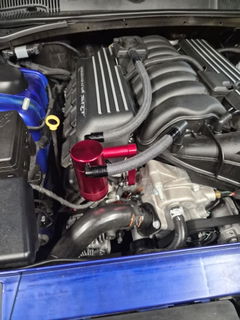
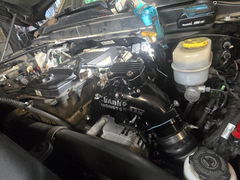
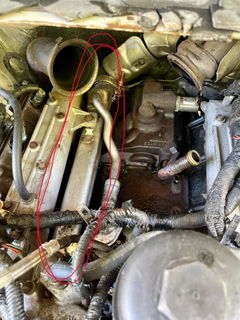
Ford F-150 Oil Catch Can

Multi-stage Filtration Oil Catch Cans & Oil Separators for Ford F-150 (2011–2023)

The Ford F-150 oil catch can is designed to intercept blow-by oil vapor, unburnt fuel condensate, and moisture from the PCV system before it re-enters your engine's intake manifold. Whether you drive a 3.5L EcoBoost, 2.7L EcoBoost, or 5.0L V8, these catch cans install inline on the PCV/CCV hose using precision-molded fittings and factory-style connectors, no cutting, no drilling, no permanent modifications.

Direct-Fit Oil Catch Cans for F-150 EcoBoost and 5.0L V8 Engines

Each unit features an internal baffled separation chamber with a multi-stage condensation path that captures oil mist mechanically while allowing clean crankcase gases to pass through. Available for all 2011–2023 Ford F-150 models, including F-150 Raptor and Expedition, these oil separators are one of the most cost-effective preventive upgrades you can install on your truck.

Protect Your EcoBoost Turbochargers, Intercooler, and Intake Valves from Oil Contamination

On the Ford F-150 EcoBoost engines, the PCV system recirculates crankcase gases, carrying atomized oil directly back into the intake tract. On the 3.5L EcoBoost and 2.7L EcoBoost, those oil vapors pass through the turbocharger compressor wheel, coat the air-to-air intercooler core, and deposit on intake valves that never get washed by fuel (direct injection means no fuel spray over the valve).

Over thousands of miles, this oil film hardens into carbon deposits that restrict airflow, reduce intercooler efficiency, raise intake air temperatures, and degrade throttle response. A dedicated f150 oil separator captures these contaminants at the source, keeping your intake tract clean and your EcoBoost turbos breathing efficiently.

On the naturally aspirated 5.0L V8, a catch can prevents oil from pooling in the intake manifold and accumulating on intake valve surfaces, particularly important on high-mileage trucks and those running ethanol-blended fuels.

EGR Performance: Engineered for Power. Backed for Life.

Max efficiency, restored horsepower, and prolonged engine life for your EGR, DPF, and CCV systems on Powerstroke, Cummins, Duramax engines, etc.

  • Free Shipping: Fast & free delivery to get you back on the road sooner.
  • 45-Day Returns: Shop risk-free with our generous 45-day return policy.
  • 1-Year Warranty: Tested under extreme conditions and guaranteed to perform.
  • 24/7 Live Support: Real-time tech help from fitment to post-install tuning.

Compatibility Table

Product Engine Vehicle Year Range Price
Oil Catch Can Oil Separator for F-150 2.7L EcoBoost / 3.5L EcoBoost / 5.0L V8 Ford F-150 2011–2021 $65.99
Air Oil Separator 3OZ for F-150 2.7L EcoBoost / 3.5L EcoBoost / 5.0L V8 Ford F-150 / Raptor / Expedition 2011–2023 $56.99

Shop Ford F150 Oil Catch Can EcoBoost Oil Separator 2011-2023 Now.

EGR Performance: EGR, DPF, CCV & Diesel Tuning Solutions for Powerstroke, Cummins, and Duramax

EGR DELETE KITS

View More

CCV PCV REROUTE KIT

View More

DPF DELETE KITS

View More

DIESEL TUNERS

View More

Why Does Your Ford F-150 Need an Oil Catch Can?

Direct Injection Means Your Intake Valves Never Get Cleaned

All Ford F-150 EcoBoost engines (2.7L and 3.5L) and the 5.0L V8 use direct fuel injection, which sprays fuel directly into the combustion chamber — not onto the back of the intake valves. In older port-injected engines, fuel washes over the valves, keeping carbon deposits at bay.

Without that cleaning action, any oil vapor that enters the intake through the PCV system bakes onto the intake valve stems and ports as hard carbon buildup. Over 30,000–60,000 miles, this carbon layer restricts airflow, causes a rough idle, reduces fuel economy, and triggers check engine lights for misfire codes. A f150 oil catch can eliminates the oil source, preventing carbon formation before it starts.

EcoBoost Turbos Push More Blow-By Into the Intake Tract

The 3.5L EcoBoost and 2.7L EcoBoost produce significant boost pressure under load, up to 15–20 PSI on stock tuning and higher on tuned trucks. Higher cylinder pressure means more blow-by gases past the piston rings into the crankcase. The PCV system vents these crankcase gases back through the intake, but the volume of oil vapor carried along increases proportionally with boost.

On a tuned or worked F-150 EcoBoost, a catch can fills noticeably faster than on a stock truck. Without a f150 ecoboost catch can in line, that extra oil volume coats the intercooler, turbo compressor blades, and charge-air plumbing — silently undermining the performance you paid for.

Oil-Saturated Intercoolers Lose Cooling Efficiency

The F-150 EcoBoost's air-to-air intercooler is the backbone of its forced-induction system; it's what keeps intake air temperatures (IATs) low enough to maintain safe timing advance and power output under load. When oil vapor condenses on the intercooler's internal fins, it acts as an insulating barrier that reduces the core's ability to reject heat.

Testing has shown that an oil-contaminated intercooler can run 15–30°F hotter than a clean one under sustained boost, costing you measurable power and increasing the risk of knock retard. A f150 3.5 ecoboost oil separator prevents oil from reaching the intercooler in the first place, preserving thermal efficiency and consistent power delivery across the entire RPM range.

What Can an F-150 Oil Catch Can Solve?

Baffled Mechanical Separation: No Filters to Replace

Each f150 oil separator uses an internal baffled chamber that forces crankcase gases through a series of directional changes. The heavier oil droplets impact the baffle walls, coalesce into larger droplets, and drain into the collection reservoir at the bottom. The cleaned air continues to the intake.

This is a purely mechanical separation process; there are no filter elements to clog, replace, or maintain. Simply drain the collected oil at regular intervals and reinstall. The system works passively using the engine's natural PCV vacuum differential, requiring no electrical connections or moving parts.

Cleaner Intake Tract: Consistent Power, Better Fuel Economy, and Longer Engine Life

By preventing oil from entering the intake manifold, turbocharger, and intercooler, a Ford F150 oil catch can helps maintain the thermal and aerodynamic efficiency of your entire induction system. Clean intake valves maintain proper airflow to each cylinder, preserving volumetric efficiency and fuel atomization.

A clean intercooler rejects heat effectively, keeping IATs low even when towing heavy in summer heat. Clean turbo compressor blades maintain their aerodynamic profile for consistent boost pressure. The combined effect is measurable: better throttle response, more consistent power output, improved fuel economy over the life of the truck, and reduced risk of carbon-related misfire codes.

Prevents Boost Leaks from Oil-Soaked PCV Hoses

On high-mileage F-150s, the factory PCV hoses and charge-air cooler boots can become soft and degraded from prolonged oil exposure. Soft boots under boost pressure are prone to blowing off or leaking, a common cause of sudden power loss and turbo over-speed conditions.

An oil separator removes the oil at the source, keeping rubber components dry and sealing properly for the life of the vehicle. This is especially important on tuned F-150s running higher boost targets, where the consequences of a boost leak are more severe.

Shop F-150 Oil Catch Can by Engine & Fitment Guide

Find the right catch can for your Ford F-150 by selecting your engine and year range:

3.5L EcoBoost (Most Popular)

  • 2011–2014 F-150 3.5L EcoBoost: First-generation EcoBoost. High blow-by volume makes a catch can especially beneficial. 
  • 2015–2016 F-150 3.5L EcoBoost: Updated aluminum-body F-150. Same PCV routing, same oil contamination issue. 
  • 2017–2020 F-150 3.5L EcoBoost: Second-generation 3.5L with port fuel injection added (dual injection). Catch can still be critical for PCV oil control. 
  • 2021–2023 F-150 3.5L EcoBoost: Redesigned F-150 platform. Direct-fit catch can be available. 

2.7L EcoBoost

  • 2015–2023 F-150 2.7L EcoBoost: Compact twin-turbo V6 with the same direct-injection carbon buildup risk. A catch can be recommended for all model years. 

5.0L V8 (Coyote)

  • 2011–2023 F-150 5.0L V8: Naturally aspirated but still direct-injected. An oil catch can prevents intake manifold pooling and valve carbon deposits. Especially beneficial on high-mileage and flex-fuel trucks. 

F-150 Raptor & Expedition

  • 2017–2023 F-150 Raptor 3.5L EcoBoost: High-output twin-turbo with increased boost and blow-by. 
  • 2018–2021 Expedition 3.5L EcoBoost: Same EcoBoost platform, same PCV oil concerns. 

Why Choose EGR Performance?

The industry standard for high-performance diesel reliability.

Premium Quality & Rigorous Testing

Our EGR, DPF, and CCV delete kits are engineered from premium-grade materials and subjected to brutal quality control and field testing. Unlike generic alternatives, our products are built to withstand extreme heat and pressure, delivering unmatched durability and long-term stability when your rig needs it most.

20 Years of Proven Diesel Expertise

We aren't just selling parts—we live this industry. With two decades of hands-on experience providing specialized modification solutions for heavy-duty truck owners, our upgrades have been extensively proven across every driving environment, from daily towing to high-performance tracks.

Industry-Leading Standards

We work hand-in-hand with top-tier industry partners and reputable organizations. Every product we design, test, and ship meets or exceeds strict industry standards, ensuring your Powerstroke, Cummins, or Duramax gets the exact precision it deserves.

Real Results, Proven Track Record

Thousands of diesel owners trust us to unlock their engine's true potential. Our massive library of positive customer feedback and successful build case studies proves one thing: our kits deliver real horsepower, lower EGTs, and flawless reliability in the real world.

Frequently Asked Questions: Ford F-150 Oil Catch Cans & Separators

Q1: Does the Ford F-150 EcoBoost need an oil catch can?

Yes, the F-150 EcoBoost engines (both 2.7L and 3.5L) are direct-injected, which means fuel never washes over the intake valves. The PCV system recirculates crankcase blow-by gases, carrying atomized oil, back into the intake tract, where the oil bakes onto the intake valves, turbo compressor wheels, and intercooler core as hard carbon deposits.

A f150 ecoboost catch can intercepts this oil vapor before it enters the intake, preventing carbon buildup and keeping your forced-induction system operating at peak efficiency. It is one of the most recommended preventive modifications for any EcoBoost F-150 owner, regardless of model year.

Q2: What is the best catch can for the F-150 EcoBoost?

The best f150 ecoboost catch can offers direct-fit installation with factory-style connectors, a baffled internal separation chamber for effective oil capture, and sufficient reservoir capacity for your driving style.

EGR Performance's F-150 catch cans feature precision-molded PCV hose fittings that connect directly to your engine's factory PCV routing, no cutting, no universal adapters, no drilling. The baffled design captures oil mechanically without disposable filters, and the drain plug allows easy maintenance at every oil change interval.

Q3: Is an oil catch can the same as an oil separator for the F-150?

Yes, "oil catch can," "oil separator," and "air-oil separator" all refer to the same type of device on the Ford F-150 platform. These terms are used interchangeably in the F-150 community and by manufacturers.

Whether you see it listed as a f150 oil catch can, f150 oil separator, or f150 ecoboost oil separator, the function is the same: mechanically separate oil vapor from crankcase gases before they re-enter the intake manifold. The terminology varies by brand and community preference, but the underlying technology is identical.

Q4: How often should I drain the catch can on my F-150?

On a stock F-150 EcoBoost used for daily driving, checking and draining the catch can every 3,000–5,000 miles, roughly at every oil change interval, is a good habit. On tuned trucks, trucks that tow regularly, or high-mileage engines with increased blow-by, the catch can will fill faster and should be checked every 1,500–2,500 miles.

In cold-weather climates, check more frequently in winter months when condensation levels in the crankcase are higher. The drain plug at the bottom of the unit makes draining quick and mess-free.

Q5: Will an oil catch can void my F-150 warranty?

An oil catch can is a non-destructive, fully reversible modification. It does not permanently alter any factory components; it installs inline on the existing PCV hose system and can be removed in minutes, restoring the factory PCV routing.

The Magnuson-Moss Warranty Act protects consumers from blanket warranty denials for aftermarket parts: the dealer must prove the catch can cause a specific failure to deny warranty coverage for that component. For complete peace of mind, the catch can be removed before any dealership service visit.

Q6: Does the 5.0L V8 F-150 also need a catch can?

Yes, the Ford F-150 5.0L V8 (Coyote) uses direct fuel injection, which means intake valves are not washed by fuel spray. Oil vapor from the PCV system enters the intake manifold and can deposit on intake valve surfaces, especially on high-mileage trucks and those running E85 or ethanol blends.

A f150 5.0 oil catch can prevents oil from reaching the intake manifold, reducing carbon buildup on intake valves and preventing oil pooling in the manifold itself. While the 5.0L V8 doesn't have turbochargers to protect (unlike the EcoBoost), the carbon buildup risk on direct-injected valves is the same.

Q7: How difficult is it to install a catch can on an F-150?

Installation is straightforward and takes 15–30 minutes with basic hand tools. The catch can connects inline on the PCV hose between the crankcase vent and the intake manifold. Our F-150 catch cans use precision-molded fittings that mate directly to the factory PCV hose connections, no cutting, splicing, or drilling required.

The can mounts to an existing bracket location in the engine bay using the supplied hardware. Detailed instructions are included with every kit, and our 24/7 live support team is available to assist with any fitment questions for your specific year and engine combination.

Q8: Can a catch can improve fuel economy on the F-150 EcoBoost?

Indirectly, yes. By preventing oil contamination of the intercooler and intake tract, a f150 3.5 ecoboost oil separator helps maintain the charge-air system's thermal efficiency. A clean intercooler produces cooler, denser intake air, which the ECU can use to optimize timing and fuel delivery.

While the improvement is typically 0.3–1.0 MPG on a truck that was previously running with a contaminated intake system, the fuel savings compound over tens of thousands of miles. More noticeably, you'll see improved and more consistent throttle response, especially under boost and when towing heavy.

Q9: Does the 2.7L EcoBoost F-150 need a catch can?

Yes, the 2.7L EcoBoost has the same direct-injection architecture and PCV system design as the 3.5L EcoBoost, which means it faces the same oil contamination and carbon buildup risks.

The 2.7L's twin-turbo setup generates boost pressure that increases crankcase blow-by volume, sending more oil vapor through the PCV system and into the intake. A f150 2.7 ecoboost catch can captures this oil before it coats the turbos, intercooler, and intake valves. Whether you drive a 2015, 2017, 2019, or newer 2.7L EcoBoost F-150, a catch can is a recommended preventive upgrade.

Q10: Does EGR Performance offer a warranty and return policy on F-150 catch cans?

Yes. EGR Performance provides a 1-year warranty on all F-150 oil catch cans, covering manufacturing defects and material failures under normal use. We also offer a 45-day hassle-free return policy.

If the catch can does not fit your specific F-150 year and engine configuration, or you are not satisfied for any reason, return it within 45 days for a full refund. All orders ship free from our U.S. warehouses in California, Texas, Ohio, and New Jersey.