





The difference between the 5.9 Cummins and the 6.7 Cummins is the difference between a legend and a workhorse: the 5.9, especially the 2003-to-2007 common rail, is the simplicity benchmark that ran past 300,000 miles without asking questions, and the 6.7 is the stronger, cleaner, more complicated successor that tows harder and pays for it in emissions hardware. The community's consensus crowns the 5.9 for pure reliability and the 2013-and-later trucks for real-world towing, and both verdicts are correct.
This guide runs the generation-by-generation comparison, the reliability record, the towing and power split, the emissions burden that explains most of the argument, and the honest buying verdict, with the 6.7 Cummins hardware for whichever side you land on.
Table of Contents
Key Takeaways
- [The reliability crown]: The 5.9, especially the 2003-2007 common rail, is the community's reliability benchmark: simpler design, minimal electronics, and in most years no DPF, no DEF, and no EGR problems, with high-mileage examples past 300,000 miles that never opened a warranty claim.
- [The emissions tax]: The 6.7's reliability complaints trace overwhelmingly to its emissions equipment, DPF clogging, EGR failures, and variable-geometry turbo soot on the 2007.5-2012 trucks, not to the iron beneath it. Maintained or off-road, owners describe it as great and reliable.
- [The split verdict]: The 5.9 wins pure simplicity and cheap modification; the newer engine wins towing, torque, and refinement, with the 2013-and-later SCR trucks the refined pick.
- [The numbers]: The 5.9's common rail era tops out around 610 pound-feet of torque from the factory; the newest Rams reach toward 1,000, with more displacement and a stronger turbo doing the arithmetic.
- [The shared DNA]: Both the 2003-2007 5.9 and every 6.7 runs high-pressure common rail fuel systems, which is why the comparison is generations of the same philosophy rather than two different engines.
- [The sweet spots]: The community's picks: the 2006-2007 5.9 common rail as the simplicity ideal, and the 2013-plus SCR trucks as the refined workhorse.
- [The maintenance reality]: A 6.7 kept healthy is a maintenance-literate ownership: the CCV filter schedule, the DPF regimen, and the DEF habits covered across this cluster's guides.
The Two Engines in One Paragraph Each
The 5.9-liter Cummins ran from 1989 through the 2007 model year in three major families: the 12-valve mechanical era that needs no introduction, the 24-valve years, and the 2003-2007 common rail that married electronic control to the platform's iron-block durability.
Its reputation is the earned kind, built on a decade and a half of mechanical simplicity that predates the emissions-equipment era, with the 2006-2007 common rail as the collector's favorite because it is the last of the line and the most refined of the simple trucks. The 12-quart sump and the million-mile examples on camera tell the rest of its story.
The 6.7-liter arrived in 2007.5 with more displacement, more torque, and the emissions equipment the era demanded: EGR from the start, the DPF from the start, and SCR with DEF joining in 2013. It is the engine that carried the Ram HD platform into the modern era, a stronger engine wearing more responsibility, and its story is the story of that responsibility: brilliant hardware, occasionally burdened by the systems bolted to it.
Whichever Side You Own
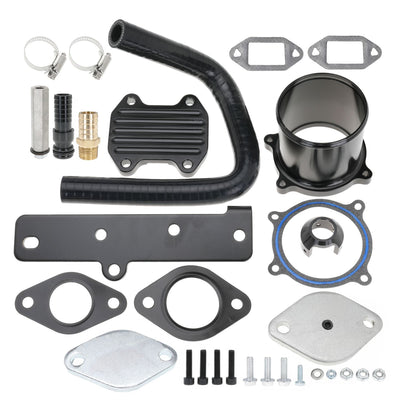
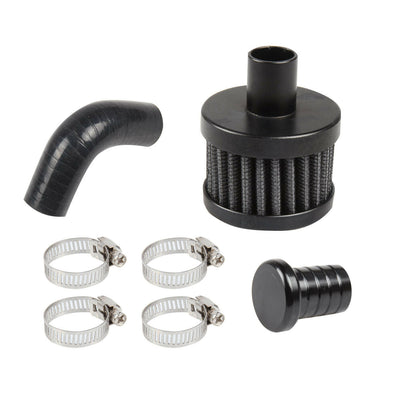
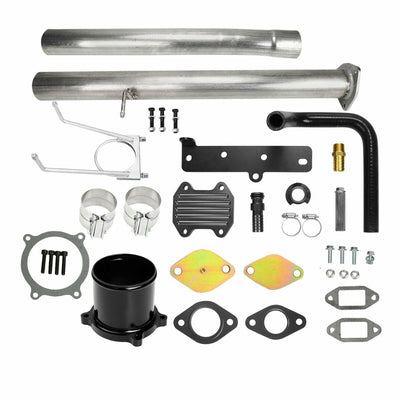
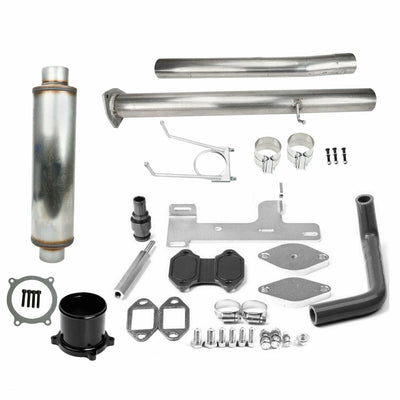
The parts shelf matches the family tree: performance parts for the simple-era trucks and 6.7 kits for everything from EGR and CCV to intake hardware on the modern platform.
Shop 6.7 Cummins PartsThe Reliability Record
The forums keep re-running this comparison because the data never changes direction:
- The 5.9's record: simpler design and no emissions equipment mean fewer failure points, and the common rail 5.9s running past 300,000 miles on original internals are ordinary rather than exceptional.
- The 6.7's early reputation: the 2007.5-2012 trucks earned their caution flags, DPF clogging on short-haul duty, EGR failures, and the variable-geometry turbo's soot sensitivity, the era's genuine pain points.
- The 6.7's redemption: the same forum threads that flag the early trucks describe well-maintained 6.7s as great and reliable, and the 2013-and-later SCR generation refined both the hardware and the experience.
- The community math: the 5.9 wins on what it never had; the 6.7 wins on how far it has come since, and both truths hold at the same time.
While comparing inline-six internal architectures highlights Cummins' heavy-duty heritage, evaluating how these Ram powerplants stack up against V8 competitors like the Ford Powerstroke and GM Duramax provides broader context for truck buyers. To compare displacement, injection systems, and towing capacities across all three major diesel manufacturers, explore our master guide on cummins vs duramax vs powerstroke.
The Emissions Burden: the Real Divider
Strip the argument to its chassis and one divider explains most of it: emissions equipment. The 5.9 predates the DPF entirely, and its EGR exposure varies by year in ways that mostly did not define the ownership experience. The 6.7 carries the full stack, EGR, DPF, and since 2013 the DEF system, every component of which is a maintenance conversation this site's emissions guides cover individually.
The honest framing for a buyer: the 6.7's reputation was taxed by its era's first attempts at compliance, the hardware improved every generation, and the maintenance literacy required to keep the stack healthy is documented, learnable, and cheaper than the alternative. The 5.9's advantage is not that it solved these problems; it is that it never had them.
Expanding engine displacement to 6.7 liters delivered massive low-end torque gains, but integrating EGR soot recirculation and active exhaust regeneration cycles added mechanical complexity. To analyze VGT nozzle sticking, head stud loads, and fuel system updates on 6.7L platforms, consult our comprehensive 6.7 cummins engine guide.
Towing and Power
Here the 6.7 does not argue; it counts:
- Displacement and torque: 6.7 liters against 5.9, and factory torque that climbed from the 5.9 common rail's roughly 610 pound-feet to figures approaching 1,000 on the newest Rams.
- The turbo story: the 6.7's variable-geometry turbo brought driveability and exhaust braking the 5.9 never offered, with the soot sensitivity on early trucks as its tax.
- Modern towing: heavier trailers, higher expectations, and cleaner margins belong to the 6.7, especially the 2013-plus trucks.
- The 5.9's answer: cheaper power for the modified crowd, with the common rail responding to tuning famously well, and fewer systems to work around.
While a stock 6.7L suffers from higher thermal stress than its 5.9L predecessor, addressing factory cooling bottlenecks and valvetrain limitations unlocks legendary durability alongside modern towing capacity. Discover essential head stud upgrades, thermal management hardware, and bypass filtration setups in our guide to 6.7 cummins reliability upgrades.
The Comparison Table
5.9 Cummins |
6.7 Cummins |
|
|---|---|---|
Years |
1989-2007 (common rail 2003-2007) |
2007.5-present |
Emissions gear |
None to minimal |
EGR + DPF from 2007.5; SCR/DEF from 2013 |
Factory torque |
Up to about 610 lb-ft |
Up to about 1,000 lb-ft |
Reliability reputation |
The benchmark, simplicity earned |
Strong when maintained; early emissions era taxed it |
Towing |
Capable, dated margins |
The modern standard |
Modification cost |
Cheapest of the two |
More hardware to consider |
The late 5.9L high-output common-rail variants represented the peak of mechanical simplicity paired with precise electronic fueling before factory exhaust treatment was introduced. For detailed fuel pressure ratings, camshaft profiles, and chassis fitments for 2003 to 2007 models, check out our master breakdown of 3rd gen cummins specs.
The Buying Verdict
The decision compresses into honest sentences:
- Maximum longevity, minimum complication: the 2006-2007 5.9 common rail, the community's sweet spot and the last of the simple era, with the 5.9 parts shelf still fully stocked.
- Modern towing, current refinement: the 2013-and-later 6.7, with the maintenance literacy its emissions stack expects.
- Budget modification: the 5.9 answers tuning with the enthusiasm of an engine that predates its own restraint.
- Off-road builds: the 6.7's delete conversation is the modern platform's territory, with the legality line this site draws everywhere.
FAQ
Which is more reliable, the 5.9 or 6.7 Cummins?
The 5.9, on the strength of simplicity: no DPF, no DEF, minimal EGR exposure, and a long record of 300,000-mile-plus service. The 6.7 is reliable when maintained, with its early emissions years the tax on that reputation.
Is the newer engine a bad one?
No. The iron is excellent and the 2013-plus generation is refined. Its reputation was earned by 2007.5-2012 emissions hardware, not the engine beneath it.
Which tows better?
The 6.7, decisively: more displacement, up to about 1,000 pound-feet of torque, a stronger turbo, and the exhaust braking and margins modern trailers expect.
Which years carry the caution flags?
The 2007.5-2012 trucks carry the early emissions-era caution flags, DPF clogging, EGR failures, turbo soot. They reward maintenance-literate owners; the 2013-plus trucks are the refined choice, and the CCV filter schedule is the cheapest habit that protects the most.
What is the best 5.9 Cummins year?
The community's pick is the 2006-2007 common rail: electronic refinement on the simple platform, the last of the line, with the P7100-injected 12-valves as the mechanical purist's alternative and the 12-quart oil habits documented across the cluster.
Do both engines use common rail?
The 2003-2007 5.9 and every 6.7 do, which is why the comparison is generations of one philosophy. The earlier 5.9s ran mechanical injection.
Is the 5.9 or 6.7 cheaper to modify?
The 5.9: fewer systems, cheaper parts, and a tuning response that made its reputation. The 6.7's modifications carry more hardware decisions with them.
Which one holds its value better?
Clean 5.9 common rail trucks have become collector-adjacent, holding strong money for their age. The 6.7 depreciates like a modern truck and earns it back in capability.
The Verdict
The 5.9 versus 6.7 comparison is not an argument with a loser: the 5.9 is the simplicity legend that ended at exactly the right moment, and the 6.7 is the stronger engine that inherited an era's worth of emissions responsibility and carried it forward.
Choose the 2006–2007 common rail for the purest ownership experience in diesel pickup history, or a 2013-plus SCR truck for the future of towing. Both are built on legendary Cummins iron: and if you choose the 6.7, you can unlock its full towing and efficiency potential with our 6.7 Cummins performance kits.


