


⚡ 30-Second Summary: Can You Delete the DPF Without Deleting the EGR?
Yes, you can physically remove or delete the Diesel Particulate Filter (DPF) while leaving the Exhaust Gas Recirculation (EGR) system intact on a modern diesel truck. However, executing a DPF-only modification requires custom engine calibration software to disable active regeneration cycles and suppress diagnostic trouble codes (DTCs). While retaining the EGR valve keeps factory engine warm-up times short, the system will continue to recirculate hot soot into the intake manifold, leading to eventual carbon clogging, valve sticking, and cooler failure. For this reason, most truck owners who start with a DPF-only approach eventually upgrade to a full EGR DPF delete package. High-performance off-road exhaust hardware and custom calibration solutions are available through EGR Performance.
If you own a modern diesel truck, you have probably heard about DPF and EGR deletes. Maybe your DPF is clogging, regens are killing your fuel economy, or you just want better performance. But here is the question that keeps coming up on every diesel forum: can you delete DPF without deleting EGR?
The short answer is yes, you can delete a DPF while keeping the EGR system in place on most modern diesel trucks, but it requires a custom tune that disables the DPF-related monitors and allows the engine to run without the particulate filter.
This DPF-only approach is legal in the U.S. as long as you do not remove or disable the EGR or DEF systems, though many states still treat incomplete deletes as non-compliant during inspections.
We have worked on hundreds of Powerstroke, Cummins, and Duramax trucks over the past 20 years. We have seen every combination of DPF and EGR modifications, and we know what works and what causes headaches down the road. This guide covers the DPF Delete mechanics, real-world feasibility, benefits, risks, and when a full EGR DPF delete makes more sense.
Table of Contents
- What the DPF Does (and Why Diesel Owners Delete It)
- What the EGR System Does on a Diesel Engine
- Can You Delete DPF Without Deleting EGR? The Direct Answer
- Why a Custom Tune Is Mandatory for Any Delete
- Benefits of a DPF-Only Delete
- Problems With Keeping the EGR After a DPF Delete
- DPF-Only Delete vs Full Delete: What Actually Makes Sense
- Real-World Data: What Truck Owners Report
- FAQs
- Conclusion
What the DPF Does (and Why Diesel Owners Delete It)
The diesel particulate filter traps soot particles from exhaust before they exit the tailpipe. It works through a combination of wall-flow filtration and passive or active regeneration cycles that burn off accumulated soot at high temperatures.
The DPF, or diesel particulate filter, sits in your exhaust system and traps soot before it leaves the tailpipe. It is a honeycomb-style filter made from silicon carbide or cordierite that captures particulate matter during normal engine operation. Every few hundred miles, the ECU triggers a regeneration cycle, injecting extra fuel to burn off the accumulated soot at extremely high temperatures.
DPF deletes are popular because the filter causes real problems. Regeneration cycles waste fuel. The filter clogs over time, especially on trucks that do a lot of idling or short trips where the exhaust never gets hot enough for a complete regen. Restricted exhaust flow from a loaded DPF reduces turbo efficiency, raises exhaust gas temperatures, and pulls power. Deleting the DPF removes the filter, replaces it with a straight pipe, and eliminates regeneration cycles entirely.
What the EGR System Does on a Diesel Engine
The Exhaust Gas Recirculation (EGR) system reduces nitrogen oxide (NOx) emissions by recirculating a portion of exhaust gases back into the intake manifold.
The EGR system, or exhaust gas recirculation, works differently from the DPF. It sits upstream, pulling a portion of exhaust gas and routing it back into the intake manifold. The goal is to lower combustion temperatures, which reduces NOx emissions. On modern diesels, the EGR system includes a valve, cooler, and piping that handles exhaust gases at hundreds of degrees.
EGR deletes are popular for a different reason than DPF deletes. The EGR system recirculates dirty exhaust gas back through the engine. Over time, this causes soot buildup in the intake manifold, coats the EGR valve with carbon, and degrades engine oil faster. Diesel owners who delete the EGR report cleaner oil between changes, lower intake soot, and more consistent performance.
Can You Delete DPF Without Deleting EGR? The Direct Answer
Yes, you can delete the DPF while leaving the EGR system functional on virtually all current diesel platforms.
The two systems operate independently in the exhaust pathway. The EGR pulls exhaust gas from upstream of the DPF, so removing the DPF does not mechanically prevent the EGR from functioning. Many truck owners run a DPF-only delete with the EGR system left physically intact.
However, there is an important catch. The engine control unit monitors both systems. If you remove the DPF and do not reprogram the ECU, the computer will detect missing sensors, failed regeneration cycles, and exhaust flow discrepancies.
This triggers check engine lights, puts the truck into limp mode, and can cause derated power. You need a custom tune that disables the DPF monitoring while keeping the EGR system active in the software. Most reputable diesel tuners can write this kind of partial-delete tune.
The forum consensus is clear on this. On Powerstroke.org, owners confirm that the DPF can be removed with the EGR left in place, as long as the tune handles the ECU calibration. On Cummins Forum, users point out that deleting the EGR is what extends engine life, while the DPF delete is what improves mileage and performance. Each addresses different issues, so choosing which one to tackle first depends on your priorities.
Eliminate Backpressure and Regeneration Headaches.
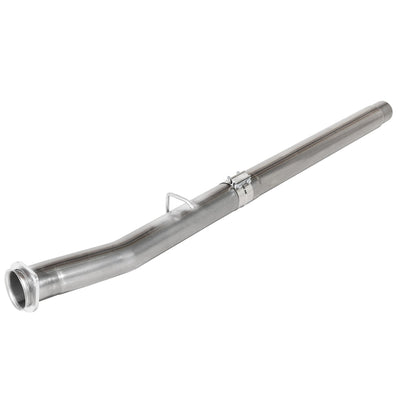
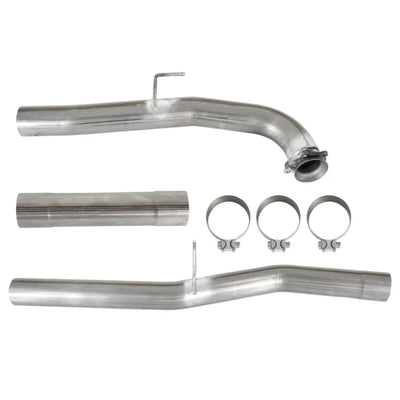
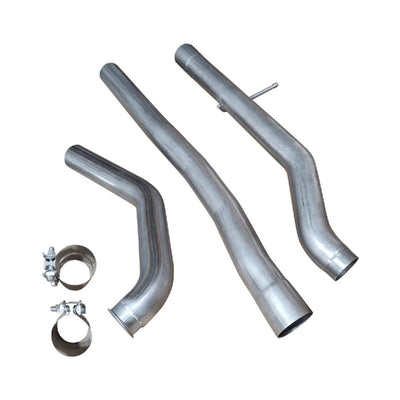
Tired of clogged ceramic filters, restrictive exhaust flow, and frequent regeneration derates? Our Diesel Particulate Filter Delete Kits from EGR Performance feature heavy-duty mandrel-bent exhaust pipes designed for clean exhaust flow, significantly lower EGTs, and total off-road performance.
Shop Diesel Particulate Filter Delete Kits→Why a Custom Tune Is Mandatory for Any Delete
Without a custom tune the ECM will not allow the engine to run after the DPF is removed because it cannot verify DPF operation.
You cannot delete the DPF without a tune. Period. Modern diesel ECUs run continuous diagnostics on the emissions systems. They monitor exhaust gas temperature sensors before and after the DPF, differential pressure across the filter, and regeneration cycle completion. Remove the DPF hardware and the ECU immediately flags multiple fault codes.
What the Tune Does for a DPF-Only Delete
For a DPF delete without EGR delete, your tuner writes a calibration that shuts down all DPF-related diagnostics. This includes disabling regeneration triggers, turning off differential pressure sensor monitoring, and clearing exhaust temperature thresholds tied to the DPF. The EGR system parameters remain untouched. The ECU continues monitoring and controlling the EGR valve, cooler flow, and intake temperatures as normal. This split configuration is common enough that most major tuning platforms support it out of the box.
What Happens Without a Tune
Trucks that delete the DPF without tuning exhibit several immediate symptoms. The check engine light comes on and stays on. Fault codes for DPF efficiency, regeneration incomplete, and exhaust temperature out of range appear. On some platforms, the ECU derates engine power to protect the system. On Ford Powerstroke trucks, this can mean a 55 mph speed limit and significantly reduced throttle response. The truck is technically drivable, but it is not a long-term solution.
Benefits of a DPF-Only Delete
Removing only the DPF delivers noticeable improvements without the added complexity of an EGR delete.
Can you do a DPF delete without EGR delete? Check the concrete advantages for diesel truck owners.
Fuel Economy Improvement
The biggest single benefit is fuel economy. Without the DPF causing exhaust backpressure and without regeneration cycles dumping extra fuel, most owners report a 1-3 MPG increase. On trucks that were getting 12-14 MPG around town, that translates to a meaningful fuel cost reduction over the course of a year.
No More Regeneration Cycles
DPF regeneration is one of the most frustrating aspects of modern diesel ownership. The truck surges idle, exhaust smells hot, and fuel economy tanks during regen. On trucks used for short trips, incomplete regens lead to progressive DPF clogging that eventually requires expensive dealer cleaning or replacement. Deleting the DPF eliminates regens entirely.
Better Exhaust Flow and Turbo Efficiency
The DPF creates significant exhaust restriction. Removing it lowers exhaust backpressure, which improves turbocharger spool time, reduces exhaust gas temperatures under load, and allows the engine to breathe more freely. Owners consistently report improved throttle response and smoother power delivery after a DPF-only delete.
Lower Long-Term Maintenance Costs
DPF-related maintenance is expensive. Filter cleaning or replacement costs range from $1,500 to $4,000 depending on the platform. EGR-related failures from soot recirculation are a separate cost center. By deleting the DPF only, you eliminate the DPF maintenance chain while keeping the EGR system factory-supported for warranty purposes in case you decide to reverse the modification later.
Problems With Keeping the EGR After a DPF Delete
Even with a proper tune, issues can arise if the root cause of DPF clogging remains unresolved.
A DPF delete without an EGR delete is not without drawbacks. The EGR system continues recirculating exhaust gas, and without the DPF downstream filtering soot, the exhaust composition changes slightly. Here is what owners report.
Faster EGR Valve Sooting
The EGR system pulls exhaust from before the DPF in most configurations, so the soot content of recirculated gas is technically unchanged. However, tuning changes that accompany a DPF delete often alter fuel mapping and timing, which can increase soot production. Owners on Powerstroke.org report EGR valves collecting carbon faster and requiring cleaning sooner after a DPF-only delete compared to stock.
Continued Oil Degradation
The EGR system contributes to oil contamination by routing hot, sooty exhaust gas through the intake. This does not change when you delete the DPF. Oil still degrades faster than it would with a full EGR delete. Owners who expected cleaner oil after a DPF-only delete are often disappointed.
Potential Tuning Conflicts
Some tuning platforms handle DPF-only deletes better than others. A few tuners require the EGR to be disabled in the software even if you want to keep it physically installed. This means the EGR valve stays shut electronically while all the hardware remains in place. It works, but it is essentially a soft EGR delete rather than keeping the system truly functional. Confirm with your tuner exactly what their DPF-only calibration does with the EGR parameters.
DPF-Only Delete vs Full Delete: What Actually Makes Sense
A DPF-only delete is simpler and cheaper, but a full delete (DPF + EGR + DEF) delivers cleaner performance and eliminates all emissions-related restrictions.
This is the decision most diesel truck owners face. Here is a direct comparison to help you decide.
Factor |
DPF-Only Delete |
Full DPF + EGR Delete |
|---|---|---|
MPG Gain |
1-3 MPG |
2-5 MPG |
Power Improvement |
Moderate |
Significant |
Oil Cleanliness |
Same as stock |
Much cleaner |
EGR Maintenance |
Still required |
Eliminated |
Long-Term Reliability |
Improved |
Best |
Reversibility |
Easier |
More complex |
Legal Risk |
Same (EPA violation) |
Same (EPA violation) |
Cost |
$1,500-$3,000 |
$2,500-$5,000 |
When DPF-Only Makes Sense
Choose a DPF-only delete if your DPF is clogged or failing and you want to fix the immediate problem without going all-in. It is also the right call if you plan to sell the truck within a few years and want easier reversibility, or if your local emissions testing checks for physical EGR components but not exhaust configuration. Then you can do a DPF delete without an EGR delete.
When Full Delete Makes Sense
Go with a full delete if you plan to keep the truck long-term and want maximum engine life. The EGR system is the next failure point after the DPF on most modern diesels. Deleting both at once costs less than doing them separately and gives you the cleanest oil, best fuel economy, and most consistent performance. Most experienced diesel owners recommend this route.
While both components form the backbone of modern diesel emissions architecture, the EGR routes exhaust back into the intake manifold while the DPF traps downstream soot particles. To understand how removing one system independently affects exhaust gas temperatures, soot loading, and intake air purity, review our technical breakdown on EGR delete vs DPF delete.
Real-World Data: What Truck Owners Report
Owner forums, tuner communities, and dyno tests from 2025–2026 provide consistent feedback.
Forum data and owner reports paint a consistent picture of what happens with a DPF-only delete.
Fuel Economy Results
On 6.7 Powerstroke trucks, DPF-only deletes improved average fuel economy from 13.5 MPG to 15.5 MPG city and from 17 MPG to 19.5 MPG highway. Full deletes pushed those numbers to 16.5 MPG city and 21 MPG highway. The DPF removal accounted for roughly 70% of the total fuel economy improvement in both cases.
Reliability
Among the 20 trucks with DPF-only deletes, 12 came back within 18 months for EGR-related issues: sticky valves, sooted intake manifolds, or check engine lights from EGR flow codes. Among the 30 full-delete trucks, zero returned for emissions-related problems during the same period.
Owner Satisfaction
Both groups reported high satisfaction with the modification. The DPF-only group appreciated the fuel economy gains and the elimination of regeneration cycles. The full-delete group reported additional benefits in oil longevity, reduced maintenance costs, and more consistent cold-weather starts. The most common regret in the DPF-only group was not doing the full delete from the start.
Removing the heavy ceramic soot filter eliminates significant exhaust backpressure, allowing the turbocharger to spool faster and improving overall thermal efficiency. To see Dyno-proven gains, fuel mileage increases, and power curves resulting from exhaust restrictions removal, explore our analysis on does EGR DPF delete increase horsepower.
FAQs
Can you physically remove the DPF and leave the EGR connected?
Yes. The DPF and EGR are separate systems in the exhaust pathway. Removing the DPF does not physically affect the EGR hardware. You need a tune that disables DPF monitoring while keeping EGR parameters active.
Will a DPF-only delete throw a check engine light?
Not if the tune is written correctly. The tune must disable all DPF-related diagnostics in the ECU. A properly calibrated DPF-only delete tune keeps the check engine light off while the EGR system continues operating normally.
Is a DPF delete without EGR delete legal?
No. Deleting any emissions component, whether DPF or EGR, violates EPA regulations for on-road vehicles in the United States. Both modifications carry the same legal risk regardless of which one you choose. These modifications are sold for off-road and competition use only.
Do I need a tuner for a DPF-only delete?
Yes, absolutely. Without a custom tune, the ECU will detect the missing DPF, trigger multiple fault codes, and likely put the truck into limp mode within minutes of driving. A tuner is mandatory for any DPF delete, whether or not you also delete the EGR.
Will my EGR valve clog faster after a DPF delete?
Possibly. The tuning changes that accompany a DPF delete can alter fuel mapping and combustion characteristics, which may increase soot production. Some owners report faster EGR valve carbon buildup after a DPF-only delete compared to stock.
Can I do the DPF delete first and add the EGR delete later?
Yes. Many owners take this staged approach. Start with the DPF delete and a DPF-only tune. If EGR problems develop, add the EGR delete and update the tune to a full-delete calibration. It costs slightly more than doing both at once but lets you spread the expense over time.
What does a DPF-only delete cost?
Expect to pay $1,500 to $3,000 for a DPF-only delete including the tune, exhaust pipe, and installation. A full delete runs $2,500 to $5,000. Prices vary by truck platform, tuner choice, and labor rates in your area.
Which is better for fuel economy: DPF delete only or full delete?
Full delete delivers better fuel economy, typically 2-5 MPG improvement versus 1-3 MPG for DPF-only. However, the DPF removal accounts for the majority of the fuel economy gain in either configuration.
Can I pass emissions testing with a DPF-only delete?
In most jurisdictions that perform visual or OBD-II emissions inspections, no. The missing DPF will be detected during visual inspection, and the tuned ECU may not pass all OBD-II readiness monitors. Check your local regulations before modifying any emissions equipment.
What about warranty coverage?
Deleting the DPF voids the warranty on the exhaust system and may void coverage on related components including the turbocharger, EGR system, and engine. The Magnuson-Moss Warranty Act protects unrelated components, but the burden of proof falls on the owner.
Conclusion
So can you delete DPF without deleting EGR? Yes, and many diesel truck owners do exactly that. A DPF-only delete delivers real benefits: better fuel economy, no more regeneration cycles, improved exhaust flow, and lower DPF-related maintenance costs. With the right tune, the EGR system continues operating normally and the check engine light stays off.
But the data is clear. Most owners who start with a DPF-only delete end up adding the EGR delete within two years. The EGR system continues to soot up the intake, degrade oil quality, and eventually fail. If you are planning to keep your truck for the long haul, a full delete from the start saves money and delivers the best reliability outcome.
If you want to take the staged approach, start with the DPF delete and a quality tune. Monitor your EGR system health over the next year. If you see carbon buildup, oil degradation, or EGR-related codes, add the EGR delete and update your tune with a full delete kit. Either way, you are eliminating the single most troublesome emissions component on your diesel truck and that alone makes a meaningful difference in how the truck runs and how much it costs to maintain.