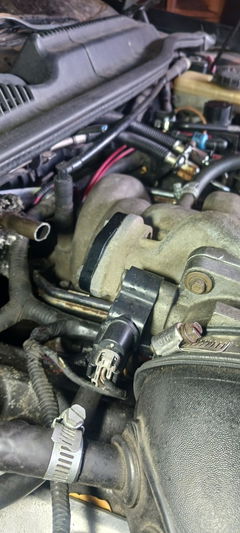
Why Does Your 6.7L Cummins Need a DPF Differential Pressure Sensor?
A Drifting Signal Triggers Phantom Regen
The ECM uses the dpf differential pressure sensor to tell a loaded filter from a clean one. When the element ages and the reading drifts, the truck starts a regen it does not need, burns extra fuel, and shortens the life of the diesel particulate filter. A fresh exhaust gas differential pressure sensor puts the delta-P back where the calibration expects it.
Clogged Ports Feed the ECM Bad Data
Soot loads the small sense tubes that run from the DPF to the sensor. Once those passages plug, the pressure reading flatlines or spikes, and the aftertreatment logic goes blind. A direct-fit dpf pressure exhaust differential sensor restores the signal path without cutting or re-flaring the factory lines.
One Bad Reading Can Derate the Whole Truck
A 6.7 Cummins will drop into reduced power the moment it loses confidence in the particulate filter differential pressure sensor. That means a loaded trailer, a grade, and a truck that will not pull. Replacing the sensor before the derate sets in keeps the rig in its power band instead of limp mode.
What Can a DPF Differential Pressure Sensor Solve?
Restore the Real Delta-P Across the DPF
A calibrated diesel particulate filter differential pressure sensor reopens the feedback loop the ECM relies on. With an honest pressure drop in front of it, the controller regenerates at the right soot load instead of guessing, and fuel economy on long hauls settles back down.
Clear False Codes and Stop Unwanted Regen
Most P2452, P2453, and P2454 faults trace back to the sensing element or its connector, not the filter itself. Swapping in a known-good cummins dpf differential pressure sensor clears the phantom codes and ends the constant regen cycle that was cooking the DPF from the inside.
Hold Calibration Through Heat and Vibration
The sensor lives next to the exhaust, so it has to survive heat soak and frame shake. A sealed housing with a stainless port and a locked connector keeps the signal stable mile after mile, which is what a working aftertreatment dpf differential pressure sensor is supposed to do.
Shop DPF Differential Pressure Sensor by Cummins Engine & Fitment Guide
1. 6.7L Cummins RAM 2500 3500 (2007-2010)
Focus: This category focuses on the early 6.7L Cummins pickups that run the first-generation exhaust gas differential pressure sensor.
Solves: It solves false regen, P245x codes, and derate events caused by a drifting or clogged factory sensor on 2007-2010 RAM 2500 and 3500 trucks.
- Exhaust Gas Differential Pressure Sensor - Fits 6.7L Cummins in RAM 2500 and 3500 (2007-2010). Direct-fit replacement that restores the factory delta-P reading with a sealed connector and a stainless pressure port.
2. 6.7L Cummins Dodge Ram 2500-5500 (2007.5-2012)
Focus: This category focuses on the 2007.5-2012 chassis-cab and pickup platforms that share the later DPF pressure exhaust differential sensor.
Solves: It solves phantom derate and limp-mode faults caused by a failed sensing element across the wider 2500 through 5500 Ram range.
- DPF Pressure Exhaust Differential Sensor - Fits 6.7L Cummins in Dodge Ram 2500, 3500, 4500, and 5500 (2007.5-2012). Plug-and-play sensor that matches OEM electrical spec for the pickup and cab-chassis platforms.
Why Choose EGR Performance?
The industry standard for high-performance diesel reliability.
Premium Quality & Rigorous Testing
Our EGR, DPF, and CCV delete kits are engineered from premium-grade materials and subjected to brutal quality control and field testing. Unlike generic alternatives, our products are built to withstand extreme heat and pressure, delivering unmatched durability and long-term stability when your rig needs it most.
20 Years of Proven Diesel Expertise
We aren't just selling parts. We live in this industry. With two decades of hands-on experience providing specialized modification solutions for heavy-duty truck owners, our upgrades have been extensively proven across every driving environment, from daily towing to high-performance tracks.
Industry-Leading Standards
We work hand-in-hand with top-tier industry partners and reputable organizations. Every product we design, test, and ship meets or exceeds strict industry standards, ensuring your Powerstroke, Cummins, or Duramax gets the exact precision it deserves.
Real Results, Proven Track Record
Thousands of diesel owners trust us to unlock their engine's true potential. Our massive library of positive customer feedback and successful build case studies proves one thing: our kits deliver real horsepower, lower EGTs, and flawless reliability in the real world.
Engine Architecture Notes Behind DPF Differential Pressure Sensor
The 6.7L Cummins aftertreatment stacks a diesel oxidation catalyst, the DPF, and the selective catalytic reduction unit in one can. The dpf differential pressure sensor reads pressure before and after the DPF through two sense tubes tapped into the exhaust, and the ECM turns that delta-P into a soot-load estimate. Because the sensor sees raw exhaust heat and pulsation, the element and the connector are the two parts that wear first, which is why a replacement has to match the factory calibration instead of a generic pressure switch.
Generation matters for fitment. The 2007-2010 RAM 2500 and 3500 use the early exhaust gas differential pressure sensor, while the 2007.5-2012 Dodge Ram 2500 through 5500 range moved to the later dpf pressure exhaust differential sensor with a different harness and port geometry. Chassis-cab trucks (4500 and 5500) share the same 6.7L Cummins but route the sense tubes differently than the pickup, so the correct SKU depends on both the year and the cab configuration, not just the engine.
This sensor exists to keep the factory aftertreatment honest, so trucks that take the emissions hardware off are shopping for something else entirely. An egr valve delete kit handles the EGR valve and cooler side of that work, and like the filter delete hardware it is competition and closed-course off-road hardware rather than a street service part.
Maintenance Tips for DPF Differential Pressure Sensor
These sensors are built to last, but a few habits keep the delta-P signal honest between replacements.
- Inspect the sense tubes - Check the small lines running from the DPF to the sensor for soot packing or heat cracking every service, since a blocked tube reads like a failed element.
- Verify the connector seat - Push the weatherproof plug fully home and confirm the latch locks, because a loose pin drifts the voltage and throws P245x codes.
- Clean around the port - Keep the stainless pressure port free of packed ash so the reading tracks flow instead of a plugged passage.
- Recheck after regen - Scan for a steady delta-P a few drive cycles after a forced regen, and note any reading that will not settle.
- Match the year exactly - Confirm 2007-2010 versus 2007.5-2012 fitment before ordering, because the early and late sensors are not interchangeable.
Important Notice for DPF Differential Pressure Sensor
These are direct-fit OEM-spec replacement sensors for the factory DPF aftertreatment on street-registered 6.7L Cummins trucks, built to restore the original delta-P signal without modifying the emissions system. Verify your exact year and cab configuration against the fitment guide before ordering, and have a qualified technician confirm the install if you are unsure. Defeating, removing, or bypassing the DPF, EGR, or any emissions control device is tampering under federal law and is intended for competition and closed-course off-road use only; the owner accepts that responsibility, and such use is not approved for street registration, inspection, or daily on-road driving.
Owners who do decide to go that route usually buy the whole job in one order rather than one piece at a time. A full delete kit bundles the exhaust, EGR, and crankcase hardware together with the delete-capable tuning the ECM needs once those components stop reporting.