

⚡ 30-Second Summary: P2453 DPF Differential Pressure Sensor Circuit Range/Performance
Diagnostic trouble code P2453 indicates a range/performance issue within the Diesel Particulate Filter (DPF) differential pressure sensor circuit. Live diagnostic data typically shows flatlined, out-of-spec, or erratic pressure readings that fail to scale logically with engine speed and load. Proper diagnosis starts with inspecting and clearing soot blockages from the rubber sensing hoses and testing reference voltage before replacing hardware. This diagnosis-first approach resolves up to 70% of cases without touching the filter assembly itself. If severe ash loading or a cracked filter matrix is present, professional cleaning or filter replacement costs between $1,500 and $4,500. For dedicated off-road and competition builds, EGR Performance provides complete DPF delete systems to bypass failure-prone emissions hardware entirely.
Table of Contents
- What Does the DPF Differential Pressure Sensor Do?
- P2453 Symptoms: What Drivers May Notice
- Common Causes of the Fault Code P2453
- How to Diagnose P2453 Code: Step-by-Step Guide
- How to Fix DTC P2453 and The Costs to Repair/Delete
- Can You Drive With a P2453 Code?
- P2453 vs. Related DPF Fault Codes
- How to Prevent P2453 Code From Returning
- FAQs
- Final Thoughts on OBD Code P2453
If your diesel vehicle or SUV shows the P2453 fault code, it means the engine control module receives an implausible pressure reading from the differential pressure sensor. The code stands for Diesel Particulate Filter Pressure Sensor "A" Circuit Range/Performance.
P2453 indicates a signal plausibility issue within the monitoring circuit rather than automatic proof that the DPF assembly has failed or requires replacement. The causes of the P2453 code include blocked pressure lines, faulty wiring, a clogged DPF, or exhaust leaks. Real-world fixes depend on identifying whether the sensor, hoses, wiring, or actual soot/ash restriction caused the fault.
Owners of heavy-duty diesels track every code because limp mode can strand them far from home. The sections below walk through the sensor function, exact symptoms, step-by-step diagnosis, repair options with real costs, and how to keep the code from returning.
What Does the DPF Differential Pressure Sensor Do?
The DPF differential pressure sensor measures the pressure drop across the filter matrix by sampling upstream and downstream exhaust. The ECM uses this delta, combined with temperature and air-mass data, to compute soot loading and trigger active regenerations.

How the Sensor Works
The DPF pressure sensor checks pressure on both sides of the DPF filter. Two lines run to it, one before the filter, one after. The computer uses that difference to track soot buildup and manage the DPF regeneration process.
Soot builds up in the filter over time. Pressure rises because of it.
The sensor delta normally ranges from 0 psi at idle to 2-3 psi under high load. The sensor sends that pressure difference to the engine computer, which factors in exhaust temperature and airflow to figure out roughly how much soot has collected and whether regeneration needs to run.
ECU Utilization in Real Time
The ECM samples pressure every 10-100 milliseconds and watches for a 0.5-1 psi rise during passive regeneration. Active regeneration forces the system hotter and at higher pressure to burn off accumulated soot.
A bad reading throws this off. The same thing happens with a pinched hose or a cracked line. If the signal stays flat during a long trip or jumps unexpectedly, the code sets a fault. Any mismatch triggers P2453 and may drop the vehicle into limp-home mode that limits power to keep exhaust temperatures safe.
So when you're working on a P2453 code, check the sensor and both lines, not just the filter.
P2453 Symptoms: What Drivers May Notice
Drivers typically see the MIL light and may experience reduced engine power, frequent or incomplete regenerations, and slightly poorer fuel economy with visible exhaust smoke.

A P2453 code can cause a few changes in the way your diesel runs. Some drivers notice the warning light first. Others may notice poor fuel mileage or a drop in engine power.
- The first sign of a P2453 code is often the Check Engine Light. Some vehicles may also show a DPF or emissions warning.
- You may notice a drop in engine power too. The ECU can put the vehicle into limp mode to protect the DPF and other exhaust parts.
- Regeneration can also become a problem. The vehicle may try to regenerate more often, or the process may stop before it finishes because the pressure reading is wrong.
- Fuel mileage can drop as well. You may also see more smoke from the exhaust if the engine is not managing regeneration properly or the exhaust flow is restricted.
Common Causes of the Fault Code P2453
Soot-blocked sensor hoses or ports, damaged pressure hoses, sensor drift, wiring faults, exhaust leaks near the ports, and genuine high soot or ash restriction are the leading causes. Diagnosing the root cause first is essential.
Confirmed Cause | Appropriate Repair Direction |
|---|---|
Soot-blocked tubes/ports | Clean or replace affected pressure lines and ports per OEM service guidelines; verify clear airflow. |
Damaged pressure hoses | Replace heat-damaged, cracked, or loose hoses; inspect and secure nearby heat shielding. |
Faulty differential pressure sensor | Verify circuit voltage and reference ground first; replace the sensor only when confirmed faulty. |
Wiring or connector fault | Repair damaged harness sections, clean terminal corrosion, or repair open/short circuits. |
Exhaust leak near ports | Repair exhaust leaks or damaged gaskets to ensure accurate pressure sampling. |
High soot restriction | Identify and fix the root cause of regen failure (e.g., thermostat, EGR, glow plugs), then execute OEM-approved forced regen. |
High ash accumulation | Perform professional off-vehicle DPF cleaning or replace the unit if ash capacity exceeds manufacturer limits. |
Several problems can trigger a P2453 fault code. The pressure sensor may be bad, but the small hoses and wiring around it can cause trouble too.
Soot-Blocked Sensor Hoses or Ports
Carbon can build up inside the small pressure lines or ports that connect to the sensor. When that happens, the sensor may not get the correct exhaust pressure reading.
Damaged Hoses
The pressure hoses can crack, melt, collapse, or come loose. They can also be connected to the wrong ports after a repair. Any of these problems can give the engine computer a bad pressure reading.
Sensor Drift or Failure
The DPF pressure sensor can fail internally or lose its correct calibration over time. When that happens, the signal sent to the engine computer may no longer match the actual exhaust pressure.
Wiring Harness Faults
A wiring problem can also cause P2453. Corroded connectors, damaged wires, a poor sensor ground, or a missing 5V reference can affect the signal from the sensor.
Exhaust Leaks
An exhaust leak near the pressure ports can change the pressure reaching the sensor. Even a small leak can make the readings look wrong.
Genuinely Restricted DPF
The DPF itself can become restricted due to excessive soot build-up, as a result of regeneration failure. Ash can also accumulate in the filter over time, especially on a high-mileage vehicle.
Because the powertrain control module relies on plausible delta pressure data to calculate soot mass, active code P2453 will automatically inhibit both active and passive exhaust cleanout routines. To troubleshoot interrupted thermal cycles and forced station regens, explore our guide on DPF regeneration failure.
How to Diagnose P2453 Code: Step-by-Step Guide
Scan DTCs first, inspect hoses visually, test wiring continuity, monitor live sensor data, then verify physical backpressure before deciding on repair.

Finding the cause of a P2453 code starts with the pressure sensor, its lines, and the wiring. You want to find out if the sensor is giving a bad reading or if the DPF really has a pressure problem.
Scan DTCs & Freeze-Frame Data
Start by scanning the vehicle for stored codes and freeze-frame data. Check for P2453 along with related codes such as P2452, P2454, or P2455. Temperature sensor faults can also help point to the cause.
Inspect Pressure Lines & Ports
Check both pressure lines that run to the DPF pressure sensor. Look for soot buildup, cracks, melted sections, collapsed hoses, or incorrect routing. The ports should also be clear.
Verify Connector & Wiring Integrity
Look closely at the sensor connector and wiring. Check for corrosion, loose pins, damaged wires, and a good ground. The sensor should also have a steady 5V reference and a proper signal connection back to the ECM.
Evaluate Live Sensor Data
Check the sensor readings with the engine off, at idle, and around 2,500 RPM. The pressure reading should change smoothly as exhaust flow increases. A reading that stays flat or jumps around can point to a sensor or circuit problem.
Verify Physical Backpressure & Ash Load
If the sensor and hoses look good, check the actual exhaust backpressure. A scan tool may also show the ECM's calculated ash load. This helps determine if the DPF is truly restricted before you clean or replace it.
Normal operating backpressure sits around 1-2 psi with a working sensor and clear hoses. When the ECM calculates ash load above 15-20%, the filter usually needs professional off-vehicle cleaning.
Diagnostic Distinction
P2453 can come from any of these problems. A bad sensor or blocked hose can make a healthy DPF look restricted. A heavily loaded DPF, on the other hand, creates real excess backpressure.
If diagnostic multi-meter testing reveals erratic voltage output or internal sensor diaphragm failure, replacing the sensor with an OEM-spec pressure transducer restores accurate backpressure readings to your ECM. Find direct-fit replacement hardware and high-temperature silicone pressure hoses in our dedicated DPF Differential Pressure Sensor collection.
Rule Out First
Do not replace the DPF pressure sensor without checking the hoses first. The same goes for the DPF itself. Check the live sensor data before spending money on a new filter.
How to Fix DTC P2453 and The Costs to Repair/Delete
The confirmed causes and targeted repairs shows tube cleaning as the cheapest first step. Forced regeneration clears P2453 only when the filter is actually loaded and the sensor circuit is sound.
Tired of Sensor Failures and Regeneration Headaches?
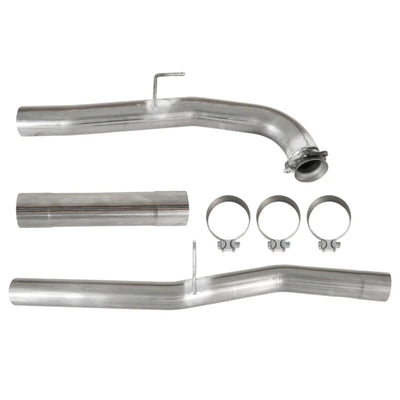
Stop chasing persistent DPF pressure codes, clogged lines, and restrictive factory emissions components. Our DPF Delete Kits from EGR Performance completely eliminate the particulate filter and sensor bottlenecks, delivering maximum exhaust flow, lower EGTs, and total off-road reliability.
Shop DPF Delete Kits→The correct procedure for repairing P2453 code depends on the reason why it has occurred. It is essential to identify an underlying issue in order to make sure that the course of action taken addresses the problem.
Fix P2453 Based on the Cause
- Soot-blocked tubes or ports: Clean out or replace the blocked lines and ports. Air needs to move through them freely.
- Damaged pressure hoses: Cracked, melted, collapsed, loose, any of that means replace the hose. Check the heat shielding nearby too, or the new one just fails the same way.
- Faulty differential pressure sensor: Test the voltage and reference ground before you touch anything else. Only swap the sensor once you've actually confirmed it's bad.
- Wiring or connector fault: Repair the wiring, clean off corroded terminals, sort out any open or short circuits in the sensor circuit.
- Exhaust leak near the pressure ports: Fix the leak or replace whatever gasket's damaged. The sensor can't give accurate readings without clean pressure on both sides of the DPF.
- High soot restriction: This usually means regeneration isn't happening properly, so dig into why. A bad thermostat, EGR system, or glow plugs can all cause excess soot. Fix whatever's actually causing it, then run an OEM-approved forced regeneration.
- High ash accumulation: Too much ash and the DPF probably needs professional off-vehicle cleaning. Past the manufacturer's limit, though, you're likely looking at a replacement filter.
Will a Forced Regen Fix P2453?
Sometimes, but it depends on the cause. A forced regeneration can help when the DPF is loaded with soot and the pressure sensor and hoses are working correctly.
A forced regen will not repair a damaged hose, bad sensor circuit, exhaust leak, or ash buildup. If the pressure reading is wrong, running another regeneration will not solve the sensor problem.
Closed-Course & Off-Road Competition Notice
Some dedicated off-road or competition diesel vehicles may use DPF delete hardware as part of a custom build. These modifications are intended for closed-course or off-road applications, so you should check local laws and competition rules before making any changes.
Some builds may also use EGR delete kits when modifying emissions equipment for closed-course applications.
For a street-driven vehicle, use the manufacturer's approved repair procedures. Emissions-control modifications can be prohibited on public roads and highways. The DPF, pressure sensor, and related emissions equipment should be repaired rather than removed.
Cost to Fix P2453
The cost of fixing P2453 can vary a lot depending on the problem. Cleaning a blocked pressure tube is much cheaper than replacing the entire DPF.
Confirming the root cause before touching the filter resolves P2453 in up to 70% of cases, avoiding premature DPF replacement that can run $1,500-$4,500+.
For standard OEM repairs, the outline gives a range from $20 to $100 for cleaning pressure tubes and $1,500 to $4,500+ for a complete factory DPF replacement. A differential pressure sensor can cost around $150 to $400, while professional DPF cleaning can run about $400 to $900.
Solution Type |
Repair / Component |
Estimated Cost |
Key Factors & Notes |
|---|---|---|---|
OEM Maintenance |
Clean/Unclog Pressure Tubes |
$20-$100 |
Basic cleaning or minor shop labor. |
OEM Maintenance |
Replace Pressure Hoses |
$50-$200 |
For cracked, melted, or collapsed lines. |
OEM Maintenance |
Differential Pressure Sensor |
$150-$400 |
New sensor plus diagnostic validation. |
OEM Maintenance |
Forced DPF Regeneration |
$100-$250 |
Used to burn off high soot loads when the system is working correctly. |
OEM Maintenance |
Professional DPF Cleaning |
$400-$900 |
Off-vehicle thermal or ultrasonic cleaning. |
OEM Replacement |
Complete Factory DPF Unit |
$1,500-$4,500+ |
May be required if the filter matrix is cracked or melted. |
Off-Road Delete |
DPF Delete Pipe |
$200-$800 |
For dedicated off-road or competition vehicles only. |
Off-Road Delete |
ECM Tuner & Custom Software |
$500-$2,000+ |
Cost depends on the vehicle and ECM requirements. |
Off-Road Delete |
Optional EGR Delete Kit |
$300-$600 |
Listed for off-road applications. |
Off-Road Delete |
Full Bundle |
$1,200-$4,200+ |
Combined hardware and tuning costs. |
For dedicated off-road and farm competition vehicles tired of replacing delicate exhaust sensors and expensive filter canisters, converting to a pass-through exhaust layout eliminates emission sensor faults permanently. Competition off-road delete bundles cost $1,200–$4,200+ depending on platform.
For off-road builds that require tuning, diesel tuners are another part of the setup to consider. The actual cost depends on the vehicle and the tuning work required. Review hardware expenses, race piping, and tuning options in our cost breakdown on DPF delete costs.
Can You Drive With a P2453 Code?
Short-distance driving may be possible if severe limp mode is not active, but immediate diagnosis is required. Extended operation with incorrect pressure data leads to aborted regenerations, accelerated soot loading, turbocharger backpressure stress, and potential permanent DPF damage.

Short answer, yes, you can drive a short distance if the vehicle still runs normally. But don't put off getting it checked.
Here's the actual issue. If the sensor's sending bad pressure data, the DPF might not regenerate the way it should, and soot starts piling up inside the filter while backpressure climbs.
Keep driving on it for too long and you're putting real stress on the turbocharger, plus you risk damaging the DPF itself. And if the vehicle's already dropped into severe limp mode, don't push it, just get it to a shop.
P2453 vs. Related DPF Fault Codes
P2452 indicates a general electrical circuit fault, while P2453 specifically shows range or performance issues. P2454 and P2455 point to low or high voltage signals. P2002 signals actual filter efficiency degradation rather than a sensor range problem.
Several DPF codes can look similar, but they point to different problems. P2453 is about the pressure sensor signal being outside the expected range.
- P2452: This code points to a general electrical problem in the DPF pressure sensor "A" circuit.
- P2454: This means the pressure sensor circuit is reading too low. A short to ground or low signal voltage can cause it.
- P2455: This means the pressure sensor circuit is reading too high. A short to voltage or an open circuit can cause it.
- P2002: This code points to low DPF efficiency. It is more related to filter damage or soot passing through the filter than a pressure sensor range problem.
Erratic pressure voltage signals often trigger secondary fault codes, causing the engine controller to falsely flag a degraded ceramic substrate. To understand how inaccurate differential readings lead to premature DPF efficiency fault alerts, check out our diagnostic breakdown of the p2002 code.
How to Prevent P2453 Code From Returning
Complete regeneration cycles, low-ash CJ-4 or CK-4 oil, and prompt repair of boost or intake leaks stop soot production and keep the DPF pressure sensor reading clean.
A few simple maintenance habits can help prevent P2453 from coming back. The main goal is to keep DPF regeneration working and avoid excess soot buildup.
- Complete Regeneration Cycles: Frequent short trips can stop the DPF from reaching the temperature it needs. Give the vehicle enough time to complete its regeneration cycle.
- Use Low-SAPS Engine Oil: Use the manufacturer-specified low-ash engine oil. The right oil helps reduce ash buildup inside the DPF.
- Maintain Engine Health: Fix air intake problems, boost leaks, and worn fuel injectors as soon as possible. These problems can increase soot production and put more load on the DPF.
Drive long enough for exhaust to reach 700-800 F so the system can burn off accumulated soot. Always use low-ash CJ-4 or CK-4 diesel oil to minimize ash deposits on the sensor and filter matrix.
FAQs
What causes a P2453 code?
A P2453 code can have several causes. A blocked pressure hose, damaged line, faulty DPF pressure sensor, wiring problem, exhaust leak, or restricted DPF can all trigger the code.
Is a DPF Delete a Fix for P2453?
A DPF delete is not the repair method for a street-driven vehicle. The cause of P2453 should be found and repaired using the vehicle manufacturer's approved procedures.
Can an Exhaust Leak Cause P2453?
Yes. An exhaust leak near the pressure ports can change the readings reaching the DPF pressure sensor. This can make the pressure signal look wrong to the engine computer.
How Much Does It Cost to Fix P2453?
It really depends on what actually failed. If it's just blocked pressure tubes, cleaning them out runs about $20 to $100. A replacement differential pressure sensor is more like $150 to $400. Worst case, a full factory DPF, and you're looking at $1,500 to $4,500 or more.
Can I Clear P2453 With an OBD-II Scanner?
Sure, the scanner will clear the stored code. That's not the same as fixing whatever caused it though. Drive it a bit with the problem still there and the code just comes right back.
Where Is the DPF Pressure Sensor Located?
That changes vehicle to vehicle. Broadly speaking, it hooks up to pressure lines pulling readings from before and after the DPF in the exhaust system.
Why Does P2453 Return After Installing a New Sensor?
A new sensor alone won't cut it if the pressure lines are still blocked or damaged. Wiring problems, exhaust leaks, or a restricted DPF, any of those can bring P2453 right back.
Can a Bad DPF Pressure Sensor Cause Limp Mode?
It can, yeah. A bad pressure signal makes the ECU cut engine power and push the vehicle into limp-home mode, mainly to protect the DPF and the rest of the aftertreatment system.
Should I Replace the DPF Pressure Sensor First?
Not right away, no. Work through the hoses, ports, wiring, and live sensor readings before you replace anything. A blocked hose can produce a reading that looks exactly like a failed sensor.
What Is the Difference Between P2452 and P2453?
P2452 is more of a general electrical fault in the sensor's "A" circuit. P2453 is different, it means the signal itself is outside where it should be.
Can Clogged DPF Pressure Hoses Cause P2453?
Yes, definitely. Soot gets into those small hoses and clogs them up over time, and once that happens, the sensor just isn't getting an accurate reading anymore.
Does P2453 Mean My DPF Is Permanently Damaged?
Not necessarily. Sometimes it's really just a blocked hose, some bad wiring, or a sensor that's failed- nothing to do with the DPF itself. Get it checked before assuming you need a new one.
Final Thoughts on OBD Code P2453
A P2453 code needs a proper check before you start replacing parts. The problem can come from the pressure sensor, blocked hoses, damaged wiring, an exhaust leak, or a restricted DPF.
Start with the basics. Check the pressure hoses, sensor wiring, and live pressure readings. This helps you find the real cause and avoid replacing a DPF that may still be in good shape.
For street-driven vehicles, follow the manufacturer's repair procedures. If you are working on a dedicated off-road or competition vehicle, an EGR Performance DPF Delete Kit may be positioned as an off-road-only alternative, with a clear compliance warning and fitment/tuning guidance.