
⚡ 30-Second Summary: L5P Duramax CAN Bus Plug Installation
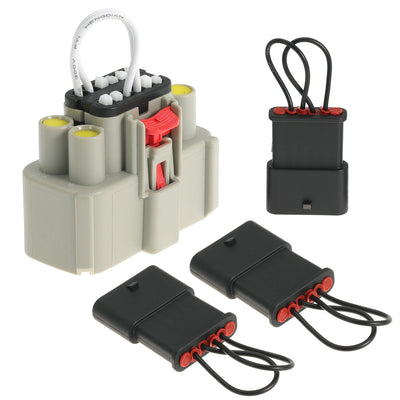
Installing L5P CAN bus plugs is a crucial hardware step when modifying or upgrading the exhaust on a 6.6L Duramax engine. When factory NOx sensors and DEF modules are disconnected, these OEM-style terminator plugs snap directly into the open vehicle harness connectors. They contain internal resistor loops that maintain signal continuity across the truck's Controller Area Network (CAN bus), preventing communication fault codes (U-codes) and keeping the ECM running smoothly alongside custom ECU calibrations. The installation is 100% plug-and-play, taking 15 to 30 minutes with basic hand tools.
If you're deleting the emissions system on an L5P Duramax, the CAN bus plug install is one of the most important steps in the process. Skip it, and your ECM throws fault codes, the dashboard lights up like a Christmas tree, and the truck may not run correctly. But most guides gloss over exactly where these plugs go, how to install them, and why they matter.
This article covers everything: what L5P CAN bus plugs do, where they are located by model year, the step-by-step install process, common problems, and which kit to buy.
Table of Contents
- What Are L5P CAN Bus Plugs and Why Do You Need Them?
- L5P CAN Bus Plug Location by Model Year
- Tools and Parts Needed Before You Start
- Step-by-Step: L5P CAN Bus Plug Install (2017-2019)
- Step-by-Step: L5P CAN Bus Plug Install (2020-2023)
- 2024-2025 L5P CAN Bus Plug Differences
- Common Installation Problems and Fixes
- CAN Bus Plug Kit Brand Comparison
- FAQs
- Conclusion
What Are L5P CAN Bus Plugs and Why Do You Need Them?
L5P CAN bus plugs are connector adapters featuring internal wiring loops that simulate the presence of removed factory emissions modules, such as NOx sensors and DEF dosing modules, by closing open circuits on the Controller Area Network.
Because physically deleting emissions systems leaves wiring harnesses unplugged, the ECM would otherwise detect missing modules and trigger fault codes that tuning alone cannot suppress; these plugs maintain network integrity, prevent error codes, and install cleanly using OEM-style connectors without requiring any wire cutting or splicing.
The L5P Duramax (2017+ Chevy Silverado and GMC Sierra 6.6L) uses a Controller Area Network, or CAN bus, to let the engine control module communicate with every sensor and module on the truck. This includes the emissions system components: the NOx sensors, the DEF (diesel exhaust fluid) dosing module, the DPF (diesel particulate filter) pressure sensors, and the EGR system. These components are physically wired into the CAN network with specific connectors.
When you delete the DPF, DEF, and EGR systems, you physically remove those components from the truck. But the connectors that used to plug into them are still hanging in the harness. If you just leave them unplugged, the CAN network sees open circuits. The ECM detects missing modules, throws multiple fault codes, and the truck may not run properly even with delete tuning.
To diagnose communication faults and sensor errors on your truck, check out our troubleshooting breakdown of common duramax l5p problems.
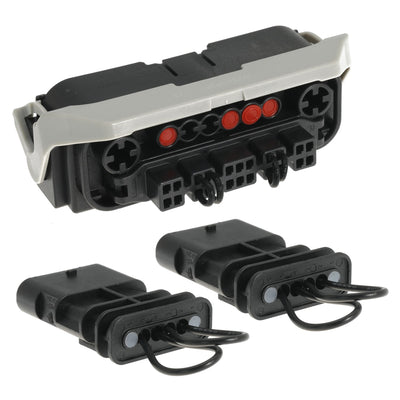
L5P CAN bus plugs are small connector adapters that plug into the factory harness in place of the removed emissions components. They contain internal wiring loops that simulate the presence of the original modules. Quality kits use OEM-style connectors and pins, so they seat exactly like the factory plugs. No wire cutting, no splicing, no permanent modification to the truck's harness.
L5P CAN Bus Plug Location by Model Year
You must buy a CAN bus plug kit that matches your specific model year. The connectors changed between 2017-2019, 2020-2023, and 2024-2025. A 2019 kit will not fit a 2020 truck. Always verify the kit covers your year before ordering.
The plug locations on the L5P Duramax changed between model years. Using the wrong guide for your year leads to frustration because the connectors are not where you expect them.
Locating the primary chassis harness connector near the rear frame rail or DEF tank housing requires identifying year-specific wire routing changes. To gain a complete overview of factory wiring harnesses, ECM module pinouts, and chassis layouts across generations, review our detailed 15p duramax guide.
Here is the breakdown.
Model Year |
Connector Style |
Number of Plugs |
General Location |
|---|---|---|---|
2017-2019 |
Older rectangular style |
2-3 plugs |
Driver side frame rail, near DEF module |
2020-2023 |
Updated connector style |
2-3 plugs |
Similar area, different connector latch |
2024-2025 |
New revised connectors |
2-3 plugs |
Same general area, updated pin configuration |
2017-2019 L5P CAN Bus Plug Locations
On the 2017 through 2019 L5P Duramax, the CAN bus connectors you need to plug are located along the driver side frame rail. The NOx sensor connectors are accessible from underneath the truck near where the DPF and SCR canisters were mounted before removal. The DEF module connector is in the same general area, typically on the inside of the frame rail. Look for the harness that used to route to the DEF tank and dosing injector.
2020-2023 L5P CAN Bus Plug Locations
On the 2020 through 2023 L5P, the connector locations are in the same general area along the driver side frame rail, but the connector design changed. The latch mechanism is different, and the pin configuration inside the connector is updated. The NOx sensor connectors and DEF module connector are still the primary targets. Most install videos for the 2020-2023 models show the process from underneath the truck with the front end lifted for access.
Tools and Parts Needed Before You Start
Installing L5P CAN bus plugs requires basic hand tools, a jack and jack stands for under-truck access, and a model-year-specific plug kit ($50–$150), while using dielectric grease, zip ties, and shop towels is strongly recommended to ensure secure, corrosion-resistant connections and protect the harness from heat and debris.
Secure Your L5P Communication Network.
Prevent data packet corruption, dropped signals, and frustrating communication codes on your modified build. Our L5P CAN Bus Plugs from EGR Performance are engineered with weather-sealed housings and precision-matched resistance to ensure stable, interference-free network integrity for custom harnesses and performance setups.
Shop L5P CAN Bus Plugs→The CAN bus plug install on the L5P Duramax is straightforward, but having the right tools makes it significantly easier.
Required
- L5P CAN bus plug kit: Matched to your model year (2017-2019, 2020-2023, or 2024-2025)
- Flashlight or work light: Connector locations are underneath the truck with limited visibility
- Jack and jack stands or lift: You need under-truck access
- Basic hand tools: Small flathead screwdriver for connector latch release
Recommended
- Dielectric grease: Apply to plug terminals before insertion for corrosion resistance
- Zip ties: Secure the plugged harness connectors away from heat and moving parts
- Shop towels: Clean connectors before plugging in, especially if the truck has been driven in salt or mud
- Phone or camera: Take photos of connector locations before disconnecting anything for reference
Step-by-Step: L5P CAN Bus Plug Install (2017-2019)
Installing CAN bus plugs on 2017–2019 L5P Duramax trucks involves lifting the vehicle to access harness connectors along the driver-side frame rail, cleaning and applying dielectric grease to the terminals, snapping the keyed plugs firmly into place, securing the wiring with zip ties away from heat sources, and verifying system communication with a diagnostic scanner.
This section covers the CAN bus plug installation on 2017, 2018, and 2019 L5P Duramax trucks. If you have a 2020 or newer, skip to the next section.
Step 1: Lift the Truck and Locate the Connectors
Raise the front of the truck on jack stands or a lift so you can comfortably work underneath. Locate the driver side frame rail area where the emissions components were mounted. You are looking for the factory harness connectors that used to plug into the NOx sensors and the DEF module. These are typically gray or black plastic connectors with wire leads running into the main harness.
Step 2: Identify Each Connector
There are typically two or three connectors that need plugs. The NOx sensor connectors are usually the smaller ones near where the SCR catalyst was located. The DEF module connector is larger and routes toward the area where the DEF tank was mounted. Take a photo of each connector before proceeding so you have a reference.
Step 3: Clean the Connectors
Inspect each connector for dirt, corrosion, or debris. Wipe them clean with a shop towel. If you have dielectric grease, apply a thin coat to the terminals inside the CAN bus plugs. This prevents moisture intrusion and ensures a solid connection.
Step 4: Insert the CAN Bus Plugs

Take the first CAN bus plug from your kit and align it with the corresponding factory connector. The OEM-style plugs are keyed, meaning they only fit one way. Push the plug in until it clicks and the latch engages. You should feel a positive seat. Repeat for each connector. Most kits include two or three plugs.
Step 5: Secure the Harness
Once all plugs are installed, use zip ties to secure the harness connectors to a fixed point on the frame or body. Do not let them hang loose where they can contact the exhaust, driveshaft, or hot surfaces. Route them away from moving parts and high-heat areas.
Step 6: Verify the Installation
Lower the truck, connect the batteries if they were disconnected, and turn the key to the on position without starting the engine. Check the dashboard for any new warning lights or fault messages. If you have a diagnostic scanner, check for CAN bus communication faults. Start the engine and let it idle for a few minutes, monitoring for any warning lights.
Step-by-Step: L5P CAN Bus Plug Install (2020-2023)
Installing CAN bus plugs on 2020–2023 L5P Duramax trucks follows a process similar to earlier models, but requires accounting for revised connector designs, updated locking tabs, and different harness routing tucked inside the frame rail. Proper cleaning, securing with zip ties, and diagnostic verification are essential to ensure a reliable, fault-free installation.
The installation process on the 2020 through 2023 L5P Duramax follows the same general steps, but the connector locations and styles are different from the earlier trucks.
Key Differences From 2017-2019
- Connector design: The latch mechanism changed. The 2020+ connectors use a different locking tab that requires a slightly different insertion angle.
- Pin configuration: The internal pin layout is updated. A 2017-2019 plug kit will physically not fit into a 2020+ connector.
- Harness routing: The wiring harness routing changed slightly between these years. The connectors may be tucked further into the frame rail.
Install Steps
Follow the same six-step process outlined in the previous section: lift the truck, locate the connectors, clean them, insert the CAN bus plugs, secure the harness, and verify the installation.

The main thing to watch for on the 2020-2023 trucks is the connector latch. These connectors have a more positive lock than the earlier style, which is good for reliability but means you need to make sure the plug is fully engaged before the latch catches.
When working underneath the truck and servicing engine bay electrical connectors, bundling your work with intake system maintenance maximizes garage efficiency. If you are protecting engine bay components from oily blow-by accumulation at the same time, follow our step-by-step installation instructions on the l5p ccv reroute guide.
2024-2025 L5P CAN Bus Plug Differences
If you have a 2024 or 2025 L5P Duramax, do not assume a 2020-2023 CAN bus plug kit will fit. The connectors changed again. Buy a kit that explicitly lists your model year. Check the product description carefully before ordering.
The 2024 and 2025 L5P Duramax received updated emissions hardware and a revised CAN network configuration. The connector design changed again, and not all CAN bus plug kits on the market cover these newer trucks. If you have a 2024 or 2025 L5P, you need a kit that specifically lists your model year.
What Changed
The 2024+ L5P trucks use a revised connector pin configuration and a different latch design compared to the 2020-2023 models. The general location of the connectors remains the same on the driver side frame rail, but the physical plug that goes into the connector is different. Several brands now offer dedicated 2024-2025 kits, including Great White North Diesel, John C Garage PA, and Blessed Performance.
Common Installation Problems and Fixes
Troubleshooting L5P CAN bus plug installations involves resolving common issues such as unseated plugs caused by debris or incorrect model-year kits, clearing persistent fault codes by verifying proper connector engagement and matching, and securing broken or brittle factory latch tabs using zip ties to maintain continuous circuit contact.
The L5P CAN bus plug install is not complicated, but problems do come up. Here are the issues we see most frequently and how to fix them.
Plug Will Not Seat Fully
This is the number one problem. The plug feels like it is in but the latch is not engaged. The cause is usually debris in the connector, a bent pin in the factory connector, or the wrong kit for your model year. Clean the connector with electrical contact cleaner, inspect the pins, and verify your kit matches your truck year. Push firmly and deliberately until you feel the positive click.
Fault Codes After Installation
If you still get CAN bus fault codes after installing the plugs, the most common cause is a partially seated connector. Go back and verify every plug is fully engaged. Also check that you plugged the correct connectors. Some trucks have multiple similar-looking connectors in the same area, and it is possible to plug into the wrong one. Compare your plug locations against a reference video for your specific year.
Connector Latch Broken or Missing
On trucks with high mileage or trucks that have been in harsh environments, the factory connector latch tabs can become brittle and break. If the latch on the factory connector is damaged, the CAN bus plug will not stay seated. In this case, you can use a small zip tie around the connector body to hold the plug in place as a permanent fix.
Wrong Kit for Model Year
This happens more often than you would think. A 2019 L5P owner buys a kit listed as "2017-2023" only to find the connectors do not match. Some kits genuinely cover the full range, while others are split into 2017-2019 and 2020-2023 sub-kits. Read the product description carefully and check customer reviews before buying.
CAN Bus Plug Kit Brand Comparison
Key Takeaway: Spend the extra money on a kit that uses OEM connectors and pins. The cheaper aftermarket connectors sometimes have fitment issues that cause intermittent faults. Blessed Performance and John C Garage PA consistently get the best reviews for connector quality and fitment accuracy.
Several companies manufacture L5P CAN bus plug kits. Here is how the major brands compare.
Brand |
Years Covered |
Connector Type |
Price Range |
|---|---|---|---|
John C Garage PA |
2017-2025 |
OEM-style, USA made |
$75 - $130 |
Blessed Performance |
2017-2025 |
OEM connectors and pins |
$80 - $140 |
SPE Tuner |
2017-2024 |
OEM-style |
$60 - $120 |
SPELAB |
2017-2023 |
Aftermarket |
$50 - $100 |
Great White North Diesel |
2025+ |
100% sealed, Canada made |
$90 - $140 |
JAT Supply Co |
2020-2025 |
Plug-and-play |
$60 - $100 |
Equipping your chassis harness with waterproofed, precision-molded CAN bypass plugs protects factory pin connections from moisture ingress and road salt corrosion. Once your vehicle network communication is stabilized, discover top-rated intake horns, transmission pans, and thermal upgrades in our round-up of the best l5p upgrades.
FAQs
What does a CAN bus plug do on an L5P Duramax?
It replaces the connectors for removed NOx sensors and the DEF module after a DPF/DEF delete. The plugs contain looped wires that close the circuit, keeping the CAN network functional and preventing ECM fault codes.
Do I need CAN bus plugs if I am getting a delete tune?
Yes. The delete tune handles the software side by telling the ECM to stop monitoring the removed systems. But the physical CAN network still needs closed circuits at the connector level. CAN bus plugs provide those closed circuits. Without them, you may get communication fault codes that the tune cannot suppress.
Are L5P CAN bus plugs the same for all model years?
No. The connector design changed between 2017-2019, 2020-2023, and 2024-2025. You must buy a kit matched to your specific model year. A kit for a 2019 will not fit a 2020.
How long does it take to install L5P CAN bus plugs?
Most installs take 15 to 30 minutes. The process is straightforward: locate the connectors, clean them, push the plugs in until they click, and secure the harness. The most time-consuming part is getting under the truck and locating the connectors for the first time.
Do I need to cut or splice wires for CAN bus plug installation?
No. Quality CAN bus plug kits use OEM-style connectors that plug directly into the factory harness. No wire cutting, splicing, or permanent modifications are required.
Can I drive without CAN bus plugs after a delete?
You can, but you will likely see check engine lights, reduced power mode, and CAN communication fault codes. The truck may run, but it will not run correctly. Install the plugs before driving the truck after any emissions removal.
What happens if a CAN bus plug is not fully seated?
An incompletely seated plug causes intermittent CAN faults that are difficult to diagnose. The truck may run fine one moment and throw codes the next. Always push firmly until you feel and hear the positive click of the latch engaging.
Are CAN bus plugs legal?
CAN bus plugs themselves are connector adapters and are not illegal. However, they are used in conjunction with DPF/DEF/EGR delete modifications, which are illegal for on-road use in the United States under EPA regulations. These products are sold for off-road and competition use only.
Where are the CAN bus plug connectors on a 2020 L5P?
On the 2020-2023 L5P Duramax, the connectors are located on the driver side frame rail, in the same general area where the emissions components were mounted. You may need to remove a wiring loom cover for access. The connectors are gray or black plastic with wire leads running into the main harness.
Do 2024 and 2025 L5P trucks need different CAN bus plugs?
Yes. The 2024-2025 L5P Duramax has revised connectors with a different pin configuration and latch design. You need a kit that specifically lists 2024 or 2025 coverage. Great White North Diesel, John C Garage PA, and Blessed Performance offer dedicated 2024-2025 kits.
Conclusion
The L5P CAN bus plug install is one of the simplest but most important steps in any L5P Duramax delete. The plugs keep the CAN network intact after emissions components are removed, preventing fault codes and communication errors that the delete tune cannot handle on its own. The process takes 15 to 30 minutes, requires no wire cutting, and can be done with basic tools in your driveway.
The key points to remember: buy a kit matched to your specific model year, seat every plug fully until you feel the click, secure the harness away from heat and moving parts, and verify the installation with a scan tool before driving. Get any one of those wrong and you will be chasing intermittent faults that waste hours of diagnostic time.
Spend the money on a quality kit with OEM connectors. It is a small part of the overall delete cost, but it has an outsized impact on whether the truck runs right after the modification. Do it once, do it correctly, and move on to enjoying the truck.
Buy the right kit for your year, push each plug until it clicks, zip tie the harness, and verify with a scanner. The CAN bus plug install is simple but critical. Get it right and the rest of the delete process goes smoothly.