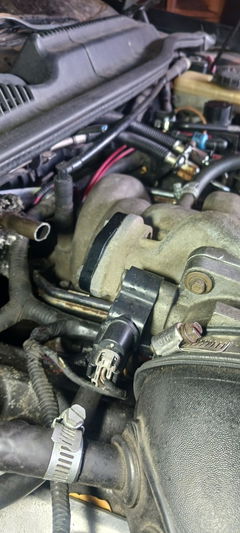
BMW 335i 135i 328i 228i Oil Catch Can

BMW 335i, 135i, 328i and 228i Oil Catch Cans for N54 and N20 Engines

CNC Billet Catch Cans Built to Starve Carbon Buildup at the Source

The N54 and N20 under the hood of your 335i, 135i, 328i or 228i are turbocharged, direct-injected engines, and that combination is exactly what bakes hard carbon onto the intake valves.
Factory PCV routing vents crankcase blow-by vapor, loaded with fine oil mist, straight back into the intake charge, and on a direct-injected motor no fuel ever washes across the valves to clean it off.
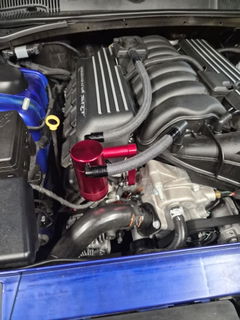
Our oil catch cans plumb inline on that PCV line and intercept the vapor before it ever reaches the intake.
Each unit is built around a CNC-machined 6061-T6 billet aluminum canister with a true internal baffle and a serviceable bronze mesh filter that condenses the oil out of the airstream and holds it in a drainable reservoir.
Precision TIG welds, high-temperature Viton O-ring seals, and reinforced silicone or braided inlet hoses keep the system sealed under sustained boost instead of leaking vapor back into the bay.

Real-World Protection for Aggressive Street, Tuned and Track Driven BMWs

Shop owners know the call: an N54 335i or 135i rolls in with cold-start misfires, a lumpy idle, and throttle response that fell off a cliff.
Pull the charge pipe and the intercooler piping is pooled with oil, the intake valves are caked, and the customer is staring at a walnut-blasting bill they did not budget for.
A baffled catch can pulls that oil out of the stream at the source, protecting the turbocharger compressor, the intercooler efficiency, and the intake tract from oil contamination.
It will not dissolve carbon that is already there, but it slows new buildup hard and stretches the miles between expensive cleanings, which is exactly the kind of cheap insurance a tuned N54 or N20 owner should have bolted on from day one.

Why Thousands of Diesel Owners Trust EGR Performance

EGR Performance: Engineered for Power. Backed for Life.

Max efficiency, restored horsepower, and prolonged engine life for your EGR, DPF, and CCV systems on Powerstroke, Duramax, Cummins engines, etc.

  • Free Shipping: Fast & free delivery to get you back on the road sooner.
  • 45-Day Returns: Shop risk-free with our generous 45-day return policy.
  • 1-Year Warranty: Tested under extreme conditions. Guaranteed to perform.
  • 24/7 Live Support: Real-time tech help from fitment to post-install tuning.
Product Engine Vehicle Model Year Range
Oil Catch Can Tank for BMW N54 N54 3.0L Turbo 335i, 135i (E90, E92, E82) 2006-2010
Reservoir Oil Catch Can with Silicone Hose N54 3.0L Turbo 335i, 135i (E90, E92, E82) 2006-2010
Oil Catch Can for N20/N26 BMW N20, N26 2.0L Turbo 328i, 228i, 1/2/3/4 Series (F30, F22) 2011-2016

Shop BMW 335i 135i 328i 228i Oil Catch Can Now!

EGR Performance: EGR, DPF, CCV & Diesel Tuning Solutions for Powerstroke, Cummins, and Duramax

EGR DELETE KITS

View More
EGR Delete Kits Performance Parts

CCV PCV REROUTE KIT

View More
CCV PCV Reroute Kits

DPF DELETE KITS

View More
DPF Delete Kits

DIESEL TUNERS

View More
diesel tuners

Why Does Your BMW Need an Oil Catch Can?

Oily PCV Blow-By Feeding the Intake Charge

Your N54 or N20 is direct-injected and turbocharged, which is the worst pairing for clean intake valves.
The factory positive crankcase ventilation system vents pressurized blow-by vapor from the crankcase back into the intake, and that vapor carries a fine mist of engine oil with it.
Because the fuel injectors sit inside the combustion chamber on a direct-injected motor, no gasoline ever sprays over the intake valves to wash them clean.
Every mile, that oil mist bakes onto the hot valve stems and hardens into stubborn carbon.

Thermal Fatigue on the Factory PCV and Oil Separator

The stock PCV valve and oil separator live in one of the hottest zones of the engine, sandwiched near the turbo and exhaust manifold.
Years of heat cycling harden the rubber and plastic, crack the housings, and weep oil vapor into the intake tract and vacuum lines.
A weakened separator passes more oil, not less, which accelerates the carbon problem and starves the turbo of clean charge air.
The factory parts were never designed to handle the extra blow-by a tuned or higher-mileage N54 produces.

Stuck, Gunked-Up Intake Valves and Lost Response

Once carbon loads onto the intake valves, the airflow into the cylinder gets choked off and turbulent.
The symptoms show up as cold-start misfires, a rough or hunting idle, soft throttle response, and a noticeable drop in fuel economy and power.
Left alone, the only real fix is a walnut-blasting service to physically scrape the valves clean.
A catch can does not reverse that damage, but it starves the buildup of fresh oil and pushes the next cleaning much further down the road.

What Can an Oil Catch Can Solve?

A Baffled Aluminum Canister That Pulls the Oil Out

The core of the fix is a CNC-machined 6061-T6 billet aluminum canister with a real internal baffle and a bronze mesh filter, not an empty jar.
As PCV vapor enters, the baffle slows and redirects the flow so the oil mist condenses against the mesh and walls, then drains into the reservoir below.
Cleaner air continues on to the intake while the captured oil sits in the drainable sump.
That is the difference between a catch can that actually separates oil and a cheap unbaffled can that passes most of it straight through.

A Cleaner Turbo, Intercooler and Intake Tract

By stripping the oil out of the blow-by before it re-enters the intake, you keep the turbocharger compressor wheel, the intercooler core, and all the charge piping free of oil film.
An oil-fouled intercooler loses thermal efficiency and raises intake air temperatures, which is the last thing a tuned N54 wants.
Cleaner charge air means more consistent timing, steadier boost, and a motor that stays crisp over tens of thousands of miles.
Sealed with high-temperature Viton O-rings and reinforced silicone hoses, the system holds boost without weeping.

Longer Service Intervals and a Brass Drain You Can Service Fast

A baffled catch can stretches the interval between expensive walnut-blast cleanings, which is where the real savings live for an N54 or N20 owner.
The integrated brass drain valve lets you empty the reservoir at every oil change without removing the canister from the car.
Fill rates climb with aggressive tuning, cold-weather condensation, and high mileage, so checking it regularly keeps the can from overflowing.
It is a set-and-forget upgrade that pays for itself the first time you skip a cleaning.

Shop Oil Catch Can by BMW Engine & Fitment Guide

  • Oil Catch Can Tank for 2006-2010 BMW N54 - Fits the N54 3.0L turbo in the BMW 335i and 135i (E90, E92, E82 chassis) (2006-2010). A compact CNC 6061-T6 billet tank with an internal baffle and bronze filter that intercepts PCV blow-by before it reaches the intake, cutting intake valve carbon and protecting the turbo and intercooler on a stock-to-mild street car.
  • Reservoir Oil Catch Can with Silicone Radiator Hose for 2006-2010 BMW N54 335i 135i - Fits the N54 3.0L turbo in the BMW 335i and 135i (E90, E92, E82 chassis) (2006-2010). A larger-capacity baffled reservoir with a reinforced high-temperature silicone hose and Viton seals that handles the heavier blow-by of a tuned, high-boost N54 without restricting the PCV.
  • Oil Catch Can for 2.0L N20/N26 BMW 1 2 3 4 SERIES (2011-2016) - Fits the N20 and N26 2.0L turbo in the BMW 328i, 228i and 1/2/3/4 Series (F30, F22) (2011-2016). A compact baffled 6061 aluminum canister sized for the factory N20 PCV routing that traps oil mist and fights intake valve carbon on the direct-injected 2.0L.

Why Choose EGR Performance?

The industry standard for high-performance diesel reliability.

Premium Quality & Rigorous Testing

Our EGR, DPF, and CCV delete kits are engineered from premium-grade materials and subjected to brutal quality control and field testing. Unlike generic alternatives, our products are built to withstand extreme heat and pressure, delivering unmatched durability and long-term stability when your rig needs it most.

20 Years of Proven Diesel Expertise

We aren't just selling parts. We live in this industry. With two decades of hands-on experience providing specialized modification solutions for heavy-duty truck owners, our upgrades have been extensively proven across every driving environment, from daily towing to high-performance tracks.

Industry-Leading Standards

We work hand-in-hand with top-tier industry partners and reputable organizations. Every product we design, test, and ship meets or exceeds strict industry standards, ensuring your Powerstroke, Cummins, or Duramax gets the exact precision it deserves.

Real Results, Proven Track Record

Thousands of diesel owners trust us to unlock their engine's true potential. Our massive library of positive customer feedback and successful build case studies proves one thing: our kits deliver real horsepower, lower EGTs, and flawless reliability in the real world.

What does an oil catch can actually do on a BMW N54?

An oil catch can plumbs inline between the PCV, or positive crankcase ventilation, system and the intake.
On a direct-injected turbo like the N54, the factory PCV vents crankcase blow-by vapor, loaded with fine oil mist, straight back into the intake charge.
The catch can intercepts that vapor inside a baffled 6061-T6 billet aluminum chamber, condenses the oil against a bronze mesh filter, and holds it in a drainable reservoir.
Cleaner air keeps reaching the cylinders while the oil stays out of your intake manifold, intercooler, and intake valves.

Does my BMW 335i really need an oil catch can?

If you drive an N54 or N20 powered 335i, 328i, or 228i, a catch can is one of the cheapest insurance policies you can bolt on.
These engines are turbocharged and direct-injected, which means fuel never washes over the intake valves, so any oil vapor that re-enters the intake bakes into hard carbon.
That carbon builds until you feel cold-start misfires, a lumpy idle, and throttle response that has fallen off.
A catch can will not reverse carbon that is already there, but it slows new buildup dramatically and stretches the miles between expensive walnut-blasting cleanings.

Will a catch can stop intake valve carbon buildup on the N54 and N55?

It slows it, it does not eliminate it.
Owners who run a baffled catch can from early miles report noticeably cleaner valves and far less oil pooled in the intercooler piping.
The N54, with its older ring pack design and heavier blow-by, benefits the most.
N55 owners typically collect less oil because the valve cover separator does more of the work, but the can still protects the charge piping and intake tract.
For valves already coated, pair the can with a walnut-blast service, then let the catch can hold the line.

Is an oil catch can worth it on the N20 in my 328i or 228i?

Yes, the direct-injected 2.0L N20 and N26 in the F30 328i and F22 228i suffer the same carbon-fouling problem as the bigger turbos.
The N20 PCV system routes oil vapor into the intake, where it coats the valves over tens of thousands of miles.
A properly baffled N20 catch can, sized for the factory PCV routing, pulls that oil out of the stream before it turns into carbon.
It is a low-cost way to protect a high-strung four-cylinder that is not cheap to walnut-blast.

How hard is it to install a BMW 335i oil catch can?

A mechanically inclined owner can handle it in the driveway in about an hour with basic hand tools.
You cut the can into the PCV line, mount the billet bracket to a chassis boss, and route the inlet and outlet hoses clear of the charge pipe and diverter valve.
Take your time on hose routing so nothing kinks or rubs, and never force fittings that thread tight, they are meant to seal under boost.
The reservoir and silicone hose kits we carry are pre-formed for the N54 and N20 bays so the plumbing lands clean.

How often should I empty or drain the catch can?

Check it at every oil change, and plan to drain it roughly every 3,000 to 5,000 miles.
Fill rate depends on how hard you drive, how aggressively the car is tuned, and the weather, because cold starts push more condensation and vapor through the system.
Some freshly installed cans look nearly empty for the first thousand miles, which is normal after a recent cleaning or fresh rings.
Open the brass drain valve or unscrew the billet reservoir, dump the collected oil, and you are back on the road.

Which catch can fits a 2007 to 2010 BMW 335i or 135i with the N54?

The N54 powered 335i and 135i built from 2006 through 2010, covering the E90 sedan, E92 coupe, E93 convertible, and E82 1 Series, are matched by our N54 tank and reservoir kits.
The baffled Oil Catch Can Tank is the clean, compact pick for a stock-to-mild street car.
The Reservoir Oil Catch Can with the reinforced silicone hose gives extra capacity for tuned and high-boost N54s that push more blow-by.
Both mount to the factory N54 PCV routing without any permanent modification to the car.

Will a catch can fit my 2011 to 2013 N55 powered 335i?

The N55 in the 2011 to 2013 335i and 135i integrates its oil separator into the valve cover, so it does not use the same external PCV routing as the N54.
Some owners still plumb a catch can inline to catch residual vapor, but the bolt-on fitment is not identical to the N54 kits in this collection.
If you run an N55, confirm your specific PCV layout and hose routing before ordering, or reach out to our tech line and we will point you to the right setup.
For the F30 328i and F22 228i on the N20, the N20/N26 canister is a direct match.

Does an oil catch can cause any problems or hurt the engine?

Installed correctly, a baffled catch can only help the engine run cleaner.
The problems people run into almost always come down to install quality, like a kinked hose that restricts the PCV, a cheap unbaffled can that passes oil straight through, or a forgotten drain that lets the can overflow.
Our cans use a true internal baffle and bronze filter, not an empty jar, so they actually separate oil instead of catching only a little of it.
Empty it on schedule and route the hoses clean, and it is set-and-forget protection.

Are these oil catch cans street legal, and what is your return policy?

An oil catch can is a direct-fit CCV accessory that does not remove, delete, or bypass any emissions device, so it is street-legal for daily-driven BMWs across all 50 states.
If the vehicle is built for competition and closed-course off-road use only, or has been emissions-deleted or heavily tuned, you are still responsible for checking your local and state emissions regulations before installing.
Confirm your engine code and chassis, N54 versus N20 or N26, so the fitment lands right the first time.
Every order includes free shipping, is backed by our 1-year warranty, and comes with a 45-day return policy.