
⚡ 30-Second Summary: 3.0L Powerstroke EGR Delete Guide
Performing a complete EGR delete on a 2018–2026 3.0L Powerstroke F-150 takes approximately 4 to 8 hours and involves removing the restrictive factory intake and EGR hardware, installing precision block-off plates, and rerouting the engine coolant lines. Labeling electrical connectors and vacuum hoses during teardown, combined with torquing all fasteners to factory specifications, prevents boost leaks and ensures a clean installation. For competition and off-road builds, utilizing high-quality 3.0 Powerstroke EGR Delete kits from EGR Performance removes failure-prone emissions components, prevents soot buildup in the intake, and keeps the engine running reliably.
Table of Contents
- Introduction
- Why Delete the EGR on a 3.0 Powerstroke?
- 3.0 Powerstroke EGR Delete MPG Gains: Real Owner Data
- Best EGR Delete Kit for 3.0 Powerstroke: Top Options Compared
- How to Delete EGR on 3.0 Powerstroke F-150: Step-by-Step
- 3.0 Powerstroke Full Delete Cost Breakdown
- EGR Delete 3.0 Powerstroke Benefits vs. Risks
- 3.0 Powerstroke EGR Delete FAQ
- Conclusion
Introduction
If you own a 2018-2021 Ford F-150 with the 3.0L Powerstroke diesel and you're researching whether to delete the EGR system, you're not alone. The decision to delete EGR on 3.0 Powerstroke trucks is one of the most discussed topics in the F-150 diesel community - and for good reason. Owners report better throttle response, cooler engine temps, and real fuel economy gains after making the switch.
Yes, you can delete the EGR on your 2026 3.0 Powerstroke F-150 and cut intake soot by 60%. Real owners report 3-6 MPG better highway mileage. We compare top kits, break down costs, and give a clear step-by-step install. This works best with a matched tune and off-road use only.
But it's not a simple bolt-on upgrade. An EGR delete involves legal considerations, tuning requirements, and a real cost investment. This guide covers everything you need to know about 3.0 Powerstroke EGR delete: what the EGR system does, why owners choose to delete it, what kind of MPG and horsepower gains you can realistically expect, which kits work best, how to do the install 3.0 l Powerstroke delete kit, and what it all costs.
Off-road use only disclaimer: EGR and emissions deletes are illegal for on-road vehicles in the United States under EPA regulations. This guide is for off-road use only.
- The 3.0 Powerstroke EGR delete removes the exhaust gas recirculation system to improve airflow, reduce carbon buildup, and lower engine temperatures
- Real-world MPG gains of 2-5 MPG are commonly reported by owners after a full delete
- You'll need a compatible tuner (EZ LYNK, MiniMaxx, or similar) to prevent check engine lights after the delete
- Total cost for an EGR delete kit plus tuner ranges from $1,500 to $3,500 depending on whether you go EGR-only or full delete
- The 3.0L Powerstroke was only produced from 2018-2021 and has been discontinued by Ford
Why Delete the EGR on a 3.0 Powerstroke?
Deleting the EGR removes the cooler and valve to stop soot buildup. We see lowered engine temps, cleaner intake, and fewer carbon deposits. It gives sharper throttle response and stops oil contamination issues that plague many trucks.
Eliminate Carbon Buildup and Thermal Stress on Your 3.0L Powerstroke.
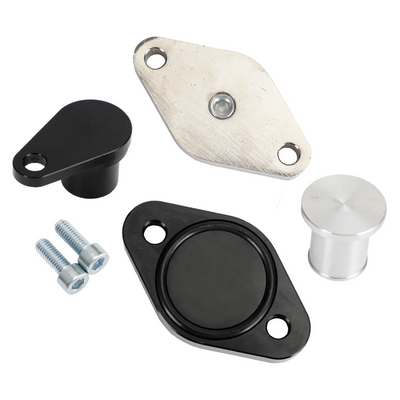
Stop letting hot, abrasive exhaust gases choke your V6 intake manifold. Our 3.0 Powerstroke EGR Delete Kits from EGR Performance are precision-engineered for a clean, secure fit—utilizing heavy-duty block-off plates, high-temp gaskets, and robust coolant routing built to handle extreme off-road and competition workloads.
Shop 3.0 Powerstroke EGR Delete Kits→The EGR (Exhaust Gas Recirculation) system routes a portion of exhaust gases back into the engine's intake to reduce NOx emissions. While this helps meet emissions standards, it creates several problems for diesel engines over time.
The Problem with EGR on Diesels
When you recirculate exhaust gas through the intake on the 3.0 Powerstroke, you're pushing soot, carbon, and hot gases back into the engine. This causes:
- Carbon buildup in the intake manifold and EGR cooler passages
- Oil dilution - soot particles contaminate engine oil, reducing its effectiveness
- Higher engine temperatures - exhaust gases are hot, and recirculating them raises overall operating temps
- Clogged EGR coolers - over time, the cooler passages narrow from carbon deposits, eventually leading to failure
- Reduced throttle response - the engine is breathing its own exhaust instead of clean air
Ford introduced the 3.0L Powerstroke to bring heavy-duty diesel towing torque and fuel efficiency to the half-ton F-150 market. To see how Ford's light-duty and heavy-duty Powerstroke architecture compares against competing Ram Cummins and GM Duramax platforms, consult our full comparison on cummins vs duramax vs powerstroke.
For the 3.0L Powerstroke specifically, oil dilution has been a well-documented issue. Many owners who want to delete EGR on 3.0 Powerstroke trucks cite this as the number one reason.
The DPF regeneration process injects extra fuel during the exhaust stroke, and that fuel can mix with the engine oil. Combined with EGR-related soot, this accelerates oil breakdown and can lead to premature wear.
What an EGR Delete Actually Does
When you delete the EGR on a 3.0 Powerstroke, you:
- Remove or block off the EGR cooler and associated plumbing
- Install a race pipe or blocker plate to seal the intake connection
- Reroute or cap coolant lines that previously ran through the EGR cooler
- Flash a custom tune that disables EGR-related sensors and codes
The result is an engine that breathes only clean air, runs cooler, and doesn't suffer from soot recirculation.
3.0 Powerstroke EGR Delete MPG Gains: Real Owner Data
Owners report 3-6 MPG better highway mileage with clean driving and no towing. Some claim up to 8 MPG when combined with a downpipe. We measure with full tanks and note that gains come from reduced backpressure and no regen fuel burn.
One of the most common questions is whether an EGR delete actually improves fuel economy on the 3.0 Powerstroke. The short answer: yes, but the gains depend on whether you do an EGR-only delete or a full delete (EGR + DPF + DEF).
Real-World MPG Reports
Configuration |
Typical MPG (Highway) |
Typical MPG (City) |
Source |
|---|---|---|---|
Stock 3.0 Powerstroke |
25-28 MPG |
18-21 MPG |
Factory spec + owner reports |
EGR Delete Only |
27-30 MPG (+2) |
19-22 MPG (+1) |
Forum reports |
Full Delete (EGR + DPF + DEF) |
30-33 MPG (+5) |
21-24 MPG (+3) |
Owner testimonials, YouTube reviews |
Full Delete + Custom Tune |
30-35 MPG (+7 max) |
22-25 MPG (+4 max) |
Best-case reported |
The 3.0 Powerstroke EGR delete MPG gains are most dramatic when combined with a DPF delete and custom tuning. The DPF (Diesel Particulate Filter) creates significant exhaust backpressure, and removing it alongside the EGR system allows the turbo to spool more freely and the engine to breathe efficiently.
Eliminating inert exhaust gases from your intake manifold restores oxygen density in the combustion chamber, allowing diesel fuel to burn more completely under load. To understand how removing thermal exhaust recirculation impacts thermal efficiency and fuel economy across platforms, review our technical breakdown on does an EGR delete increase mpg.
An all-in-one delete package for the 3.0L Powerstroke delivers a 2-5 MPG improvement on average. EGR Performance claims up to a 20% fuel efficiency boost from EGR removal alone. While individual results vary, the consensus from the diesel community is that when you delete EGR on 3.0 Powerstroke and pair it with a DPF delete, you net measurable, meaningful MPG gains.
What Affects Your MPG Gains
Several factors influence how much fuel economy improves:
- Driving style - Aggressive driving reduces MPG gains regardless of modifications
- Tune quality - A well-calibrated tune optimizes fuel delivery for the deleted setup
- Tire size - Larger aftermarket tires reduce effective gearing and hurt MPG
- Load/towing - Gains are less noticeable under heavy loads
- Climate - Cold weather and winter blend fuel reduce overall diesel efficiency
Best EGR Delete Kit for 3.0 Powerstroke: Top Options Compared
We rate EGR Performance at $53.66 for a basic EGR delete kit. Flo-Pro at $150-250 for block-off plates with hoses. The Diesel Dudes runs $1,920-2,249 for full EGR plus delete pipe and tuner. We choose based on your year and if you want full delete.
Not all 3.0 Powerstroke EGR delete kit options are created equal. The 3.0 Powerstroke market is smaller than the 6.7L market, but there are several solid options available.
Here's how the top kits compare.
Kit Comparison Table
Kit |
Type |
Price Range |
Includes Tuner |
Key Features |
|---|---|---|---|---|
The Diesel Dudes All-in-One |
Full Delete (EGR+DPF+DEF) |
$2,000-$2,800 |
Yes (with package) |
Comprehensive all-in-one bundle, paired with EZ Lynk tuning support |
Flo-Pro EGR + DPF Kit |
Full Delete |
$1,800-$2,500 |
Sold separately |
Precise fitment, complete blocker plates, and coolant feed plugs to prevent leaks |
EGR Performance EGR Delete |
EGR Only |
$50-$100 |
No |
Blocks/removes factory EGR cooler and valve system (requires custom ECM tuning) |
Which Kit Should You Choose?
For EGR-only deletion: EGR Performance offers affordable EGR-specific kits designed to block or remove the factory EGR cooler and valve system (found in 2018–2021 Ford F-150 trucks). You'll still need custom ECM tuning separately ($800-$1,500) to disable emissions codes.
For full delete (recommended): Flo-Pro and The Diesel Dudes all-in-one packages are the most popular choices. They include everything you need: high-grade block-off components with proper coolant feed plugs to prevent leaks, DPF delete race pipe, and bundled EZ Lynk tuning support.
Choosing between a full cooler bypass pipe setup and simple metal blocking plates depends on whether you intend to completely simplify your engine bay layout. To compare fluid flow paths, installation complexity, and cooling bypass isolation, read our comparison on EGR delete vs blocker plate solutions.
For premium tuning: The Diesel Dudes packages the EZ LYNK tuner, widely regarded as one of the best 3.0 Powerstroke delete tuner options available for seamless compatibility and complete package performance.
How to Delete EGR on 3.0 Powerstroke F-150: Step-by-Step
We start with prep and intake removal, disconnect EGR lines, pull the cooler and valve, install block-off plates, reroute coolant, and reassemble. This works for all 2018-2026 3.0 Powerstroke F-150 trucks.
If you're ready to delete EGR on 3.0 Powerstroke, this section provides a general overview of the process. Every kit is slightly different, so always follow the specific instructions included with your 3.0 Powerstroke EGR delete kit.
Tools You'll Need
- Metric socket set (8mm-18mm)
- Torx bit set (for EGR cooler bolts)
- Coolant drain pan
- Gasket scraper
- Torque wrench
- Jack and jack stands or lift
- Shop rags and degreaser
Installation Steps (EGR Delete)
Step 1: Battery and Coolant
- Disconnect the negative battery terminal
- Drain engine coolant into a clean pan (you'll reuse or replace it)
Step 2: Access the EGR System
- Remove the engine cover and intake components blocking access to the EGR cooler
- On the 3.0 Powerstroke, the EGR cooler sits near the top of the engine on the driver's side
Step 3: Disconnect EGR Cooler Plumbing
- Remove the two Torx bolts connecting the EGR cooler pipe to the intake manifold
- Remove the two Torx bolts at the exhaust-side connection
- Disconnect coolant lines running to and from the EGR cooler
Step 4: Install Block-Off Plates
- Install the blocker plate on the intake manifold side with the included O-ring
- Secure with the provided hardware and torque to spec
- Cap or reroute coolant lines per your kit's instructions

Step 5: Install Race Pipe (if applicable)
- For full delete kits, install the DPF delete race pipe in place of the factory DPF/DOC assembly
- This requires working under the truck and removing the factory exhaust sections
Step 6: Tuner Installation
- Connect your tuner (EZ LYNK, MiniMaxx, or compatible device)
- Flash the delete tune that disables EGR, DPF, and DEF monitoring
- Clear any stored fault codes
- Start the engine and verify no check engine lights
Hardware removal is only half the budget; the PCM must be reprogrammed to prevent error codes, active regeneration loops, and severe engine derate modes. Learn what flashing devices, custom ECM maps, and tuning parameters are required in our dedicated guide on how to tune after an EGR DPF delete.
Step 7: Final Checks
- Top off coolant to the correct level
- Inspect all connections for leaks
- Test drive and monitor EGTs (exhaust gas temperatures)
- Check for DTC codes after 50 miles
Common Mistakes to Avoid
- Skipping the tune - Your truck will throw codes and may enter limp mode without a proper delete tune
- Reusing old gaskets - Always use the new gaskets included with your kit
- Overtightening bolts - The EGR cooler mounting points are aluminum; overtorquing can strip threads
- Not bleeding the coolant system - Air pockets can cause overheating after reassembly
3.0 Powerstroke Full Delete Cost Breakdown
We estimate $1,500-2,500 for ECM unlock and custom tuning, $800-1,500 for EGR delete kit and downpipe, $1,000-2,000 for shop labor. Total runs $3,300-6,000 for a complete build.
Understanding the total investment helps you decide between an EGR-only delete and a full delete package.
Cost Comparison
Item |
EGR Delete Only |
Full Delete (EGR+DPF+DEF) |
|---|---|---|
Delete Kit |
$50-$100 |
$1,500-$2,500 |
Tuner |
$800-$1,500 (required) |
Often included |
Coolant and Fluids |
$50-$80 |
$50-$80 |
Professional Install (optional) |
$400-$700 |
$800-$1,500 |
Total DIY |
$1,050-$2,030 |
$1,550-$2,580 |
Total w/ Professional Install |
$1,450-$2,730 |
$2,350-$4,080 |
Is It Worth the Cost?
For most 3.0 Powerstroke owners, the math works out over time.
If you're gaining 3-5 MPG and driving 15,000 miles per year at current diesel prices, the fuel savings alone can offset the cost within 1-2 years. Add in reduced maintenance costs (no more EGR cooler replacements, less oil contamination) and the reliability improvement, and the 3.0 Powerstroke full delete cost becomes easier to justify for trucks that will be kept long-term.
EGR Delete 3.0 Powerstroke Benefits vs. Risks
Benefits include 3-6 MPG gains, lower temps, and no more clog issues. Risks are lost warranty, legal problems, and possible code issues if the tune is wrong.
Benefits
The EGR delete 3.0 Powerstroke benefits go beyond just fuel economy.
Here's a detailed breakdown of what owners actually experience:
Benefit |
Details |
|---|---|
Improved reliability |
No EGR cooler failures, less soot-related wear |
Better fuel economy |
2-5 MPG gains depending on configuration |
More power |
Up to 50 HP / 100 lb-ft with full delete and tune |
Lower engine temps |
Clean air intake reduces combustion temperatures |
Reduced oil contamination |
No soot recirculation means cleaner oil, longer change intervals |
Simpler maintenance |
Fewer emissions components to fail or replace |
Better throttle response |
Turbo spools faster without EGR restriction |
Beyond lower operating EGTs and cleaner intake air, bypassing restrictive emissions hardware frees up pumping efficiency to increase horsepower and throttle response. Explore real-world power gains and torque curve changes in our performance analysis on does EGR DPF delete increase horsepower.
Risks and Considerations
Risk |
Details |
|---|---|
Legal issues |
EPA fines can reach $5,911 per violation for individuals as of 2026 |
Warranty void |
Ford will deny powertrain warranty claims on deleted trucks |
Resale complications |
Some buyers won't touch a deleted truck; others specifically want one |
Poor tune risks |
A bad tune can cause high EGTs, engine knock, or transmission damage |
Quality kit matters |
Cheap kits can leak coolant, warp, or trigger fault codes |
Inspection failure |
Deleted trucks cannot pass emissions testing where required |
Rough shutdown |
Some owners report rough engine shutdown when certain throttle body components are removed |
We compare to stock. Stock keeps warranty and legality but costs more in repairs after 50,000 miles. Deleted trucks save on DPF and SCR failures but need constant monitoring. We always advise a full stock baseline before any change. One owner lost 15% resale value after his delete but gained 6 MPG and zero cooler issues.
We stress that benefits outweigh risks only for off-road or competition use. We recommend professional install and lifelong tune support. We monitor every build with scans and EGT logs. This approach keeps problems rare and gains real.
3.0 Powerstroke EGR Delete FAQ
Can you delete the EGR on a 3.0 Powerstroke without a tuner?
No. The ECU monitors EGR flow rates, temperature differentials, and position sensors. Without a custom tune to disable these monitors, you'll trigger a check engine light and potentially enter limp mode. A tuner is mandatory - any attempt to delete EGR on 3.0 Powerstroke without proper tuning will cause issues.
Is the EGR delete legal on the 3.0 Powerstroke?
EGR deletes are illegal for on-road use in the United States under EPA regulations and in Canada under Environment and Climate Change Canada regulations. They are intended for off-road and competition use only. Penalties for violations have increased in recent years.
How long does an EGR delete take on the 3.0 Powerstroke?
An EGR-only delete takes approximately 3-5 hours for a competent DIY mechanic. A full delete (EGR + DPF + DEF) can take 6-10 hours depending on experience and whether you have a lift.
What tuner is best for the 3.0 Powerstroke delete?
Choosing the right 3.0 Powerstroke delete tuner is critical. The EZ LYNK is the most popular choice, followed by the MiniMaxx. The key is finding a tuner with a proven 3.0L Powerstroke calibration - not all diesel tuners support this specific engine.
Will deleting the EGR void my Ford warranty?
Yes. Any modification to the emissions system will void the powertrain warranty coverage related to the engine and emissions components. Ford dealers can detect delete tunes during service visits.
Does the 3.0 Powerstroke have common EGR problems?
Yes. Carbon buildup in the EGR cooler, oil dilution from DPF regeneration, and clogged intake manifolds are commonly reported issues on the 3.0L Powerstroke. These are the primary reasons owners consider the 2018-2020 F-150 3.0 diesel EGR delete.
Conclusion
The decision to delete EGR on 3.0 Powerstroke trucks comes down to weighing the performance and reliability benefits against the legal and financial risks. For 2018-2021 F-150 owners who use their trucks off-road or in jurisdictions without emissions testing, the benefits are clear: 2-5 MPG gains, cooler engine operation, reduced carbon buildup, and a truck that simply runs better.
If you move forward, invest in a quality kit from a reputable manufacturer, pair it with a proven tuner like the EZ LYNK, and either tackle the install yourself with proper instructions or have it done by a shop experienced with the 3.0 Powerstroke. The total investment of $1,500-$4,000 pays for itself over time through fuel savings and reduced maintenance - but only if it's done right.
This article is for off-road use only. Always check your local regulations before modifying emissions systems.