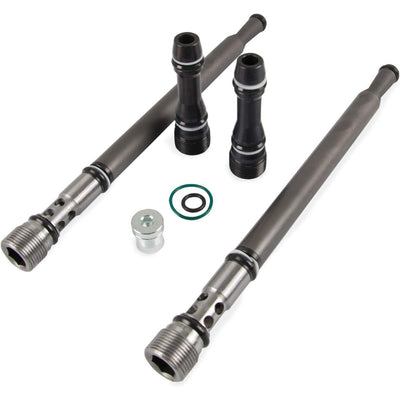

🔧 30-Second Summary: Stand Pipe & Dummy Plug Fix
Replacing stand pipes and dummy plugs is a 4-6 hour driveway job that permanently solves common hot no-start issues. We recommend using EGR Performance updated 6.0 standpipe and dummy plug kits, which feature high-temp white Teflon backup washers to prevent O-ring blowouts. Budgeting $150-300 for parts and replacing both passenger and driver sides simultaneously ensures balanced oil pressure and restores long-term high-pressure oil system reliability.
Table of Contents
- Introduction
- What Stand Pipes and Dummy Plugs Do on a 6.0 Powerstroke (Why Repair)
- Symptoms of Bad Stand Pipes and Dummy Plugs on a 6.0 Powerstroke
- Best Replacement Kit for 6.0 Stand Pipe and Dummy Plug Repair
- Tools and Parts Needed for 6.0 Stand Pipe and Dummy Plug Replacement
- How to Replace 6.0 Stand Pipes and Dummy Plugs: Step-by-Step
- Torque Specs and Common Mistakes During Replacement
- Should You DIY or Use a Diesel Shop?
- Related Parts to Inspect at the Same Time
- FAQs
- Summary: Is This Replacement Worth Doing?
Introduction
We see many 6.0 Powerstroke owners deal with hot no-starts that leave them stuck. Standpipes and dummy plugs failure cause this common 6.0 Powerstroke issue in the high-pressure oil system.
Yes, replacing the stand pipes and dummy plugs with the updated Ford 6E7Z-9A332-B kit fixes hot no-starts and long cranks on 2004.5-2010 models. This job restores proper oil pressure to the injectors and prevents failures. We recommend it as preventive maintenance for reliable performance.
6.0 stand pipe and dummy plug replacement is necessary to restore the proper operation of high oil flow to the 6.0L Ford engines. If these components fail, they cause problems with the hot no-start and also long crank scenarios.
The replacement is a must-do repair for the 2004.5 - 2010 model years using an upgraded kit. This guide walks us through everything we need to know. 6.0 powerstroke standpipe and dummy plug replacement is a technical top-end job that requires careful handling of the oil rails, seals, and internal components so that you can have a solid, long-term fix with a good quality repair.
We cover 6.0 powerstroke standpipe and dummy plugs symptoms, the best kits, tools, and step-by-step instructions. Keep reading to learn how we handle this repair the right way.
What Do Stand Pipes and Dummy Plugs Do on a 6.0 Powerstroke?
We often get asked why these small parts matter so much. They keep high-pressure oil where it needs to go for the injectors to fire correctly.
Stand pipes carry high-pressure oil from the pump to the rails. Dummy plugs seal the ends. They fail when D-rings wear out and cause pressure loss. The updated kit with better seals fixes this and lasts longer.
Don't Let a Warm Engine Leave You Stranded.
The factory seals on your 6.0L dummy plugs and stand pipes are a guaranteed failure point, blowing out under pressure and killing your hot starts. Our Stand Pipe and Dummy Plug Kits from EGR Performance feature upgraded Teflon backup washers and reinforced Viton D-rings built to survive extreme pressure cycles. Lock in your HPOP pressure, eliminate cranking delays, and get the peace of mind your 6.0 Powerstroke needs.
Shop 6.0L Stand Pipe Kits→Check how the high-pressure oil system works and why these parts fail.
The high-pressure oil system powers the injectors. The HPOP pump sends oil through standpipes into the rails. Dummy plugs close off the front of those rails.
Without good seals, oil leaks and pressure drops. This stops the injectors from working properly. The result is a loss of fuel rail oil pressure, causing engine hiccuping and poor performance.

The 6.0 powerstroke standpipe and dummy plugs location is inside the valve covers. They are small in size but necessary for engine function.
Worn D-rings, along with seals breaking down due to heat and pressure, are frequent causes of internal oil leak failures. We see failures start around 100,000 miles, but sometimes earlier. Heat makes the rubber hard and cracked. Once a leak starts, it gets worse fast when the engine is hot.
The 6.0 stand pipe and dummy plug replacement restores seals within the high-pressure oil circuit (HPOC) to hold oil pressure for fuel rail injector(s). The stand pipes and dummy plugs 6.0 Powerstroke engines are usually replaced as part of preventative maintenance.
The upgraded Ford 6E7Z-9A332-B utilize Teflon washers and better materials to provide an improved sealing capability, thus offering a longer service life. These changes reduce leaks by a large amount compared to old designs.
These parts fit into the system between the pump and injectors. Good ones keep ICP pressure steady at 500+ psi during cranking and higher when running.
What Are the Common Symptoms of Bad Stand Pipes and Dummy Plugs?
Hot no-start is the top symptom. The engine runs fine when cold, but fails to start once warm. We also see long cranks, rough idle, stalling, and ICP pressure drops on scans.

The 6.0 standpipe and dummy plug replacement is often needed when hot no-start issues appear. Understand these symptoms and how they affect your truck:
- Hot No-Start Condition: The engine starts when cold but won't restart when warm.
- Hard Starting: Extended cranking before the engine fires.
- Rough Running: The engine experiences misfires, stalls, and has an unstable idle.
- Pressure Loss: High-pressure oil drops/gains, as well as inconsistent ICP.
- Long Crank Time: Probably the first and most common indication of a pending failure.
We hear the same stories many times. A driver stops for fuel on a hot day. The truck cranks but does not fire. It starts fine in the morning when cold. This pattern points straight to high-pressure oil leaks from stand pipes or dummy plugs.
Drivability problems come next. We see hard starts, misfires under load, and sudden stalling. The engine may run rough because one bank loses pressure. ICP readings drop below 500 psi during cranks when they should build quickly.
Long crank times frustrate us. Instead of firing in a few seconds, the starter spins for 10-20 seconds or more. This happens because the system loses oil pressure overnight or after sitting.
We check for codes like P2284, P2290, or P2291. These relate to injection control pressure issues. Sometimes no codes appear, but symptoms stay clear.
Pressure loss feels like fuel starvation but comes from oil. Injectors need high-pressure oil to open. Low pressure means weak or no injection events.
We advise scanning for ICP and IPR data. If ICP stays low during cranking despite high IPR duty, leaks in the rails are likely. We test by monitoring live data before and after repairs.
One truck we fixed had intermittent power loss on the highway. After replacement, it pulled strongly again. Catching these early saves injectors and other expensive parts from damage due to poor lubrication.
Also, we remember one truck that had repeated hot no-starts. After we installed the updated kit, it started every time. The owner saved money on towing and shop visits.
Which Is the Best Replacement Kit for 6.0 Stand Pipe and Dummy Plug Repair?
We recommend the Ford 6E7Z-9A332-B updated kit. It includes two stand pipes, two dummy plugs, and improved seals with white Teflon washers. Add the M12 fuel rail plug and green O-ring for complete leak repair.
We compare kits, so we pick the right one the first time. Many options exist, but not all perform the same.
The Ford 6E7Z-9A332 6.0 Powerstroke standpipe and dummy plug replacement is best done using an O.E.M. upgrade kit. The 6.0 power stroke standpipe and dummy plug replacement is more reliable than they may experience using old-style parts (O.E.M).
Core components include:
- Two 6E7Z-9A332-A stand pipes
- Two W302908 dummy plugs
Seals and hardware upgrades help prevent leaks:
- W302675 PCV O-ring
- 3C3Z-9K042-A / AA fuel rail end plug with bonded seal

The OEM kit Ford 6E7Z 9A332-B includes better D-rings and Teflon backups that hold up to heat. It is designed to give superior long-term sealing ability over basic aftermarket kits.
We always replace both sides even if only one fails. Wear happens on both over time. The kit also pairs with the 3C3Z-9K042-AA M12 plug that has a bonded seal to stop front leaks. Ford parts match factory specs exactly.
Some aftermarket kits, such as Diesel Site, cost more and offer greater durability for a high-pressure oil system. They fit a 2004.5 through 2010 Ford 6.0L engine, both F-Series and E-Series trucks.
We compare OEM and aftermarket options. Ford's kit gives reliable results. We choose Ford for most stock trucks
Brands like DieselSite offer upgraded versions with extra features for even better durability. We choose these upgraded DieselSite standpipes for heavy towing.
We pick based on budget and how hard we use the truck. For most owners, the Ford updated kit works great and brings peace of mind.
What Tools and Parts Do We Need for 6.0 Stand Pipe and Dummy Plug Replacement?
To switch out dummy plugs and stand pipes from a 6.0 PowerStroke, you should have basic diesel tools, but also be precise with them. We gather everything before we start, so we do not stop halfway.
We need 10mm and 12mm Allen sockets, T30 Torx, an 8mm socket, and a torque wrench. Get the updated kit, clean engine oil, and new valve cover gaskets if needed.

Tools Needed
- 10 mm or 12 mm Allen socket. Must be high-quality to avoid stripping
- T30 Torx bit
- Swivel extensions, long socket, and a flashlight.
- Trustworthy torque wrench. We need one accurate in the 10-60 ft-lbs range.
- Shop rags and a drain pan to catch oil spills.
Parts Needed
- Updated standpipe and dummy plug 6E7Z-9A332-B kit.
- Fresh 15W-40 oil for for O-ring lubrication on the engine.
- New valve cover gaskets (if needed). It save time if the old ones leak.
- IPR screen and the ICP sensor (if needed)
Using the upgrade kits to prevent future leaks. Proper tools reduce frustration and prevent broken parts.
We prepare the work area with good lighting. Batteries need a charger because we disconnect them. We remove the FICM, air box, and degas bottle for clear access.
Cleanliness matters most in high-pressure systems. We cover open ports to keep dirt out. One small piece of debris can cause big problems later.
From 2004.5 to 2010, this kit is a must. Early 2004 models may need different parts, so we always check build dates. Wave rail and log rail designs both use similar components, but access differs slightly.
The driver's side needs more work because of the oil filter housing. The passenger side has tighter space near the firewall or heater box.
How Do We Replace Stand Pipes and Dummy Plugs Step by Step?
Start by disconnecting batteries. Remove FICM, air box, and degas bottle. Take off valve covers and oil rails. Remove old plugs and pipes, clean everything, install new parts with oil on seals, and torque correctly.

To effectively replace standpipes and dummy plugs in 6.0 Powerstroke engines, you will need to completely disassemble the engine oil rail hardware.
You will also require full top-end access to install the new hardware properly. Always replace them with properly torqued connections.
We follow clear steps to do the job right. Careful work prevents new problems after the repair.
Step 1: Preparation
Disconnect the batteries. This protects electronics. In order to gain access to the engine, you have to remove the FICM by unplugging connectors and lifting it out. Then remove the airbox and degas bottle for space.
Step 2: Access the Rails
Remove the valve covers with 8mm bolts. We label everything. Then use T30 Torx to loose high-pressure oil rail bolts.
Step 3: Removal
Lift the oil rail out carefully. Remove the stand pipes and the dummy plugs from both sides.
The 6.0 powerstroke standpipe and dummy plugs location is inside the valve covers, between the oil rails. Stand pipes sit at the rear of each head. Dummy plugs are at the front.
Driver's side access may require the removal of the oil filter housing for better reach.
Step 4: Inspection
Check the seals and the surfaces of the rail for scoring or debris. We clean with brake cleaner and lint-free cloths.
Old parts often show cracked O-rings or worn Teflon. Replace any damaged parts without delay.
Step 5: Installation
Installation needs lubrication. Use new engine oil to lube all o-rings. Dry seals fail fast.
Gently install new parts without forcing or bending any seals into place. We install the lower standpipe section first, then the upper.
We hand-start threads to avoid cross-threading. This step supports the proper installation of the 6.0 Powerstroke standpipe upgrade and produces a better seal.
Step 6: Reassembly
Reinstall both dummy plugs and the oil rail and torque them to the right specs using the 6.0 PowerStroke standpipe and dummy plugs torque specification.
We torque stand pipes and dummy plugs to 60 ft-lbs. Oil rail bolts go to 10 ft-lbs. We follow the correct sequence for even pressure.
Step 7: Startup
Reassembled all parts includes new gaskets and careful routing of harnesses. Double-check all connections. For the startup, expect extended cranking as air purges from the system. Run the engine and check for leaks.
We estimate 4-6 hours for a careful DIY job. First time takes longer. We break it into sections and take breaks to stay focused.
What Torque Specs is Required and Common Mistakes Should to Avoid?
We always use correct torque values. Wrong settings cause leaks or broken parts.
Stand pipes and dummy plugs torque to 60 ft-lbs. Oil rail bolts use 10 ft-lbs. We avoid nicking seals, letting dirt in, and doing only one side.

Correct torque is very important when doing a 6.0 stand pipe and dummy plug replacement. Improper torque can create leaks of high-pressure oil immediately after the replacement has been completed.
Torque Specs
The 6.0 Powerstroke standpipe and dummy plugs torque specifications must be followed throughout the assembly process:
- Standpipe Torque: 60 ft-lbs
- Oil Rail Bolt Torque: 10 ft-lbs
We rely on factory specs for this repair. Many older manuals list 33, but current data confirms 60 ft-lbs. Oil rail bolts stay light at 10 ft-lbs because they thread into aluminum.
Over-torquing strips threads. Under-torquing causes leaks. We use a beam or digital torque wrench and go slowly.
Common Installation Mistakes
- Damaging O-rings during insertion
- Installing seals without lubrication
- Allowing dirt into the high-pressure oil system
- Over-tightening 12mm Allen components
- Replacing only one side instead of both sideseplace both sides together for better reliability.
We once saw a truck where the owner nicked an O-ring during installation. It leaked right away. We fixed it by replacing the damaged seal. Attention to detail makes the difference between a one-time job and ongoing headaches.
Should We DIY or Take the Truck to a Diesel Shop?
We weigh time and skill level for every repair. Some jobs can be DIY at home, while others need pros.
We can complete this in 4-6 hours as a DIY with moderate mechanical skills. Shops charge for 6-8 hours of labor. DIY saves money but needs proper tools and patience.
Generally, the 6.0 standpipe and dummy plug replacement cost is usually lower with a DIY repair. However, repairing these two components requires some patience, the right tools, and being very careful when removing parts.
DIY Repair
- A good choice if you have experience repairing diesel engines yourself
- Requires the use of tools such as an Allen wrench set, Torx bit set, and a torque wrench
- The average repair time is between 4 and 6 hours
- First-timers should watch detailed videos and read guides fully
We clean up and test drive the same day. Pros finish faster, but we control quality when we do it.
We consider our tool collection and comfort with diesel work. Valve cover removal is straightforward, but tight spaces test patience on the driver's side.
Professional Diesel Shop
- The shop repairs the engine faster and more easily.
- Recommended for owners without prior experience repairing diesel engines.
- Mechanics have an easier time completing the repair than a DIYer.
- Many owners combine this repair with other 6.0 PowerStroke upgrades for better long-term reliability.
Cost Comparison
- DIY usually includes only the parts and fluids.
- A professional repair includes labor charges in addition to parts and fluids.
- Doing this repair early helps prevent costly high-pressure oil system failures in the future.
Shop labor runs $100-150 per hour. The total bill often reaches $800-1500, including parts. We save hundreds by doing it at home.
Preventive replacement costs less than breakdowns. Towing and lost work time add up fast. We factor that into our decision.
For complex builds, we use shops we trust. For standard maintenance, we handle it ourselves. Either way, we use the updated kit and proper procedures.
What Related Parts Should We Inspect at the Same Time?
During a 6.0 standpipe and dummy plug upgrade or replacement, inspect nearby high-pressure oil system components for leaks or wear. This prevents future issues.
We inspect the IPR valve, ICP sensor, STC fitting, and injector O-rings. These parts often need attention during the same job.

We pull the valve covers and gain great access.
The IPR Screen and the ICP Sensor
- Check the IPR screen for screen damage or contamination from any foreign debris in the connector. Clean or replace as needed.
- Check the feature of the ICP sensor for contamination with oil at the connection. Oil in the plug means wiring issues we address.
The STC Fitting
- A common failure point on any 2005 or later model. We upgrade to better designs when possible.
- Loose fittings can create a loss of pressure, causing hard starting.
O-Rings for Injectors
- Check where there is any oil leaking around the upper part of the injectors. We replace them if we see leaks or during major work.
- Injector O-rings can wear from high pressure. If a seal is worn, this may have an adverse effect on both the performance and pressure of an injector.
Oil Rails
- Look at oil rails for cracks and check all fittings. This complete approach gives the best long-term results.
We remember a truck where we fixed stand pipes but missed a bad IPR. Symptoms continued until we replaced it too. Full inspection saves time overall.
FAQs
Will bad stand pipes cause a hot no-start?
Yes. Failed stand pipes or dummy plugs can leak high-pressure oil when the engine is warm. This commonly causes hot no-start conditions and long cranking.
Is the driver's side harder than the passenger side?
Yes. The driver's side usually takes more time because the oil filter housing may need to be removed for access.
Why does the engine crank longer after replacement?
Yes. Longer cranking is normal after repair because air must purge from the high-pressure oil system. We crank in 15-second bursts with pauses until it fires. It may take several tries.
Should stand pipes and dummy plugs be replaced together?
Yes. Labor is the same, and both wear at similar rates. Replacing both parts together improves sealing and helps prevent future high-pressure oil leaks.
How do you know if a 6.0 high-pressure oil leak is from the stand pipes?
We use a scan tool for ICP data and visual inspection under the covers. Pressure testing helps, too.
What years of 6.0 Powerstroke use the updated stand pipe and dummy plug kit?
The updated kit fits most 2004.5–2010 Ford 6.0L Powerstroke applications with compatible oil rail designs. We confirm the exact application.
Can I replace stand pipes and dummy plugs without removing the valve covers?
No. The components are located under the valve covers inside the high-pressure oil rails. Full access is required for safe work.
Do I need to remove the oil rail to replace the stand pipes and dummy plugs?
Yes. The oil rail must be removed to access and replace both components correctly.
How long does it take to replace stand pipes and dummy plugs on a 6.0 Powerstroke?
Most DIY repairs take around 4–6 hours. Professional diesel shops may complete the job faster.
Do you need new seals when replacing stand pipes and dummy plugs?
Yes. New seals and O-rings are required to prevent leaks and ensure proper oil pressure.
✅ I'm ready to buy →
Featured Kit: 6.0L Powerstroke Upgraded Stand Pipe & Dummy Plug Kit
Is This Stand Pipe and Dummy Plug Replacement Worth Doing on Our 6.0 Powerstroke?
Yes! The 6.0 standpipe and dummy plug are one of the most important repairs to improve the reliability of your 6.0L Powerstroke. New kits improve sealing, which reduces your chances of having a hot no-start issue.
When installing, proper lubrication and torque are critical. If a seal is damaged or dry, it may result in a high-pressure oil leak immediately upon start-up.
EGR Performance offers the best choice for this repair with expert knowledge, quality parts, and support that ensures our truck runs strong for many more miles.
Many owners upgrade their 6.0 Powerstroke standpipes and dummy plugs to achieve a longer usable life. Replacing these parts early can save you money and possibly prevent a breakdown or costly repair later.