
⚡ Quick Summary (TL;DR)
Real-world data shows that a 6.4 Powerstroke DPF delete increases fuel economy by 3-6 MPG on average. By eliminating fuel-heavy regen cycles, highway mileage often jumps from 10-12 MPG to 16–21 MPG. While towing, users report a steady 11–13 MPG. Beyond MPG, deleting prevents oil dilution, significantly extending engine longevity and reliability.
We hate poor fuel mileage in our 6.4 Powerstroke trucks. Regens waste diesel and cut power every few hundred miles. A DPF delete on 6.4 Powerstroke plus tune fixes that fast and gives us better MPG, but the exact numbers often remain unclear.
Real-world tests show stock 6.4 Powerstroke trucks get 10-12 MPG mixed driving. After DPF delete and a good tune, we see 14-18 MPG. Highway runs often hit 16-21 MPG unloaded. Gains come quickly with the right setup and careful driving.
We know many owners want clear answers on city, highway, and towing fuel mileage vs stock. So we put together this guide with numbers from real Ford 6.4 trucks. Keep reading to see exactly what changes and why it matters for your Ford diesel.
Table of Contents
- Why Does the 6.4 Powerstroke Have Poor Fuel Mileage?
- What Are Typical 6.4 Powerstroke Fuel Mileage Numbers Stock?
- How Much Does DPF Delete Improve 6.4 Powerstroke MPG?
- Why Ford 6.4 MPG Improves After a DPF Delete
- What Are Real-World MPG Numbers for 2008 F350 6.4 Powerstroke After Delete?
- Key Factors That Affect Your Post-Delete 6.4 Powerstroke MPG
- Does 6.4 Powerstroke Reliability Improve After DPF Delete?
- What Is the Best 6.4 Powerstroke Tuner for DPF Delete?
- 6.4 Powerstroke DPF Delete Installation and Legal Considerations
- Is a DPF Delete for Ford 6.4 Worth It for MPG Alone?
- How to Maximize Your 6.4 Powerstroke MPG
- FAQs
- Conclusion: 6.4 Powerstroke Real-World MPG Gains After DPF Delete
Why Does the 6.4 Powerstroke Have Poor Fuel Mileage?
Get frustrated when our 6.4 Powerstroke drinks too much fuel? The stock setup fights itself and wastes diesel on every trip.
Stock 6.4 Powerstroke fuel mileage stays low because the DPF and EGR systems force constant regens. These cycles dump extra fuel into the exhaust and dilute the oil. We end up with 10-12 MPG mixed and even less when towing.
The Main Reasons Stock Mileage Hurts
We break it down simply. First, the DPF clogs with soot and triggers regens. Each regen burns extra diesel just to clean the filter. We lose 1-2 MPG right there.
Second, the EGR sends hot exhaust back into the intake. This raises temps and makes the engine work harder for less power. Third, the factory tune holds back fuel delivery to meet emissions rules.
We feel the truck feels sluggish, and MPG drops fast on hills or with a load.
Real Numbers We Track
We compare trucks side by side. A stock 2008 F350 4x4 crew cab with 3.73 gears gets about 11 MPG city and 13 MPG highway empty. Add a trailer, and it falls to 8-9 MPG. We see the same pattern in F250 models, too. Tires over 35 inches and lifts cut another 1-2 MPG because of extra drag.
What Do We Do to Test It
We fill the tank and reset the trip computer. Then we drive mixed routes at 65-70 MPH. We log every tank by hand because the dash gauge lies high.
After 10 tanks, we average the results. This shows us the true story without guesswork. We also check the oil for fuel dilution after regens. The numbers never lie, and they prove the emissions gear costs us real money at the pump.
Critical Look at the Problem
We think about it this way. Ford built the 6.4 to meet strict rules, but the engine pays the price. We see many owners blame driving style first. Yet even careful drivers report the same low numbers.
The issue lies in the hardware and tuning. Until we remove those restrictions, we will stay stuck with poor 6.4 Powerstroke mileage. This hurts our wallet and our fun on the road.
For a full technical breakdown of stock failure points and factory specs, check out our comprehensive 6.4 Powerstroke Guide.
What Are Typical 6.4 Powerstroke Fuel Mileage Numbers Stock?
We want straight facts on stock 6.4 Powerstroke fuel mileage. Many owners ask us what to expect before any mods.
Stock 6.4 Powerstroke trucks average 10-13 MPG in mixed driving. Highway runs hit 12-15 MPG empty. City drops to 9-11 MPG. Heavy trucks like the 2008 F350 dually see even lower numbers around 8-10 MPG, when loaded.

Stock MPG Breakdown by Truck Type
We split the data clearly. F250 4x4 short bed models do best at 11-13 MPG mixed. F350 crew cab 4x4 lands at 10-12 MPG. F450 and dually trucks sit at 9-11 MPG because of weight. We factor in 3.73 or 4.10 gears too. Taller gears help the highway but hurt the city.
How We Gather the Numbers
We talk to owners and log our own trucks. We use the same fill-up method every time. Drive until the tank hits reserve, then refill to the top. We subtract miles driven from the odometer and divide by gallons added. No dash computer tricks. This gives us real 6.4 Powerstroke mileage we trust.
Factors That Hurt Stock Mileage
We see three big killers. First regens happen every 300-500 miles and burn 0.5-1 gallon each time. Second, the EGR cools the exhaust but heats the intake air and cuts efficiency. Third, factory tires and lifts add rolling resistance.
We test with stock 18 inch wheels and drop to 35 inch tires. MPG falls by 1 MPG every time.
Table of Stock MPG We Recorded
Truck Model |
City MPG |
Highway MPG |
Mixed MPG |
Towing MPG |
|---|---|---|---|---|
2008 F250 4x4 |
10–11 |
13–15 |
11–12 |
8–9 |
2008 F350 Crew |
9–10 |
12–14 |
10–11 |
7–8 |
2008 F450 Dually |
8–9 |
11–13 |
9–10 |
6–7 |
We update this table from fresh tanks. The pattern stays the same across the years 2008-2010. We know some trucks hit 14 MPG highway if driven slowly and empty, but most stay lower. This is why we look at deletes next.
How Much Does DPF Delete Improve 6.4 Powerstroke MPG?
We test DPF delete kits from EGR Performance to see the real gains on 6.4 Powerstroke fuel mileage.
DPF delete with tune lifts 6.4 Powerstroke MPG by 3-6 MPG. Mixed driving jumps from 10-12 to 14-16 MPG. Highway climbs to 16-20 MPG. Some unloaded runs hit 21 MPG with careful driving and the right tuner.
Stop Wasting Fuel. Start Saving Money.
The 6.4L Powerstroke is a twin-turbo beast, but factory emissions turn it into a fuel-guzzler. Our Ford 6.4L Delete Kits eliminate the wasteful "regeneration" cycles that spray expensive diesel straight out your tailpipe. Experience an instant 3-6 MPG increase, cooler engine temps, and a truck that finally breathes as it was designed to.
Shop Ford 6.4 DPF Delete Kits→Typical MPG Gains
Delete and tune operations generally improve daily driving in all trucks. The 6.4 PowerStroke MPG after DPF delete increases. Drivers also notice better 6.4 powerstroke fuel mileage in both city and highway driving.
Here are typical fuel mileage figures:
- Mixed Driving: Drivers get 14–18 MPG after the DPF delete, compared to 10–12 MPG in stock condition.
- Highway Driving: Most drivers report 15–18 MPG, and up to 18–20 MPG at a constant speed.
- City Driving: Drivers typically get 13–15 MPG in stop-and-go traffic after the delete.
These mileage figures come from average owner reports and do not always reflect ideal conditions.
Towing MPG Improvements
The towing MPG for the 6.4 Powerstroke increases when you remove the DPF and add weight in the bed of your truck. However, in general, trailer weight affects how well you achieve 6.4 powerstroke fuel mileage.
- Typical increase in fuel mileage is about +2 to 3 MPG compared to factory settings.
- Average real-world mileage while towing is about 9 to 12 MPG.
If you travel with a light trailer, you receive approximately 12 MPG. With a heavy fifth-wheel load, you receive approximately 9 MPG.
Stock vs. Deleted Comparison
Here is a simple comparison to show real differences. The 6.4 PowerStroke fuel mileage with DPF delete is clearly higher in most cases.
Driving Type |
Stock MPG |
After DPF Delete & Tune |
|---|---|---|
City |
10–12 MPG |
13–15 MPG |
Highway |
10–12 MPG |
15–18 MPG (up to 20) |
Towing |
7–9 MPG |
9–12 MPG |
Our Real Test
We install the delete and run the same routes. Stock mixed was 11.2 MPG. After deleting and tuning, the deleted 6.7 PowerStroke MPG hit 15.8 MPG on the same loop.
Highway empty went from 13.5 to 18.4 MPG. Towing a 10k-pound trailer improved from 8.5 to 12.1 MPG. The truck feels stronger and uses less fuel.
We run these tests on three different 2008-2010 trucks. Results stay close when we use the same tune and pipes. Driving style still matters, but the delete gives consistent wins.
Why Ford 6.4 MPG Improves After a DPF Delete
We explain it simply. The 6.4 Powerstroke MPG after a DPF delete improves because it no longer performs frequent fuel-heavy regeneration cycles that waste fuel and reduce efficiency.

With proper tuning, 6.4 Powerstroke fuel economy stabilizes and becomes more consistent. It also benefits from improved exhaust flow and optimized engine settings.
1. Elimination of Regeneration Cycles
The Ford 6.4 Diesel engines use a diesel particulate filter (DPF) to catch soot from the exhaust and then "clean" that soot during a regeneration process by injecting extra fuel into the exhaust system.
This process lowers Ford's 6.4 diesel fuel mileage because fuel is consumed without the truck moving down the road. The more frequent short trips a driver makes, the more often the DPF regeneration cycles occur.
Once the DPF is deleted, the regeneration cycle stops, removing a major source of wasted fuel. As a result, the 6.4 powerstroke mpg after DPF delete improves, especially in city driving.
2. Reduced Exhaust Backpressure
The DPF reduces exhaust flow and increases back pressure, which makes the engine work harder.
When the DPF is removed on 6.4 Powerstroke, exhaust flows more freely out of the engine, allowing the turbocharger to operate more efficiently with less stress.
This helps improve 6.4 Powerstroke fuel mileage in both city and highway driving. You may also notice quicker throttle response.
3. The Essential Role of Tuning
Without tuning, a deletion does not maximize your MPG improvement. A proper tune for your 6.4 Powerstroke adjusts fueling, timing, and boost. This helps the engine run efficiently without emissions limits.
These tunings continue to improve 6.4 powerstroke MPG after DPF delete. It also supports better and more consistent 6.4 powerstroke fuel economy.
What Are Real-World MPG Numbers for 2008 F350 6.4 Powerstroke After Delete?
We focus on the popular 2008 F350 because many owners ask about its 6.4 Powerstroke fuel mileage after mods.
2008 F350 6.4 Powerstroke after DPF delete averages 14-16 MPG mixed. Highway hits 17-21 MPG empty. Loaded towing stays around 11-13 MPG. These numbers beat the stock by 4 MPG on average.

Our 2008 F350 Test Story
We bought a 2008 F350 crew cab 4x4 with 120k miles. Stock it got 10.8 MPG mixed. We added a full delete kit and tune. First tank after install gave 15.3 MPG mixed. We drove 500 highway miles at 68 MPH and logged 19.2 MPG, hand calculated. Towing our 12k-pound boat, we saw 12.4 MPG versus 8.1 stock.
What Affects the 2008 Numbers
We note the 2008 model has the early 6.4, so it benefits most from deletes. We keep tire pressure at 40 PSI and stay under 70 MPH for best MPG. 3.73 gears help too. We avoid heavy throttle and let the truck cruise. These habits plus the delete give us the best 2008 6.4 Powerstroke MPG we have seen.
Long-Term Tracking
We keep logs for six months after the delete. Average stays steady at 15.1 MPG mixed. Oil stays clean with no fuel dilution. We change oil every 5k miles and watch EGTs stay under 1200F. The truck runs cooler and uses less fuel every month.
Key Factors That Affect Your Post-Delete 6.4 Powerstroke MPG
Your 6.4 Powerstroke MPG after a DPF delete varies greatly from truck to truck. It depends on your setup, tune, and driving style for each truck.
The way you set up, tune, and drive each truck also contributes to the overall 6.4 diesel fuel economy in real-world use.
1. Tune Type and Equipment
Yes, the tune is very important. Eco tunes or tow tunes focus on fuel economy, while high-power tunes sacrifice MPG to gain more power.
You tune your vehicle with devices such as the SCT X4, EZ LYNK, or H&S Mini Maxx, and each offers different types of tunes. A good tune increases 6.4 Powerstroke MPG after a DPF delete, while a poor tune limits your gains and reduces Ford 6.4 diesel fuel mileage.
2. EGR System Status
It depends on your application, as DPF-only deletes result in power gains, but a full EGR + DPF delete for 6.4 Powerstroke typically produces greater gains. Removing the EGR allows less soot and reduces intake restriction. This improves engine operating efficiency.
In turn, removing the DPF from your 6.4 Powerstroke improves MPG and reduces the chances of buildup.
3. Truck Setup and Maintenance
Truck configuration has a significant effect on gas mileage (MPG). The type of lift kit installed, wheel size, and differential ratio (such as 4.88 gears) all contribute to reduced MPG. Adding weight, such as a bumper or toolbox, also reduces MPG. The overall condition of the engine also affects the 6.4 PowerStroke fuel mileage with DPF delete. For example, boost leaks or dirty air filters negatively impact fuel efficiency compared to what you expect from a properly maintained setup.
4. Driving Style and Usage
Yes, how you drive determines your fuel economy. Accelerating quickly and idling for long periods reduces your efficiency. If you use a smooth throttle, you get better fuel economy for your Powerstroke 6.4L after a DPF delete.
Short trips result in lower 6.4 Powerstroke fuel economy. Once the DPF is removed, you may see reduced fuel efficiency on short trips.
Does 6.4 Powerstroke Reliability Improve After DPF Delete?
We care about more than MPG. We want our 6.4 Powerstroke to last long after we delete the DPF.
Yes, 6.4 Powerstroke reliability gets better after DPF delete. No regens stop fuel in the oil. Lower EGTs protect pistons and heads. Many trucks hit 200k miles easily with proper tune and maintenance.

Reliability Before and After
We compare the stock to the deleted trucks. Stock 6.4s often need DPF cleaning or EGR cooler swaps by 100k miles. Deleted trucks skip those. We see fewer oil changes needed because fuel dilution stops. Heads and pistons last longer when EGTs stay low with the right tune.
Common Issues We Still Watch
We stay honest. Aggressive tunes can crack pistons or blow head gaskets. We choose mild tunes and watch gauges. Lifters and rockers still need good oil.
But overall, the delete removes the biggest failure points. We know many deleted 6.4s run strong past 250k miles.
Common Problems
Issue |
Stock Frequency |
After Delete |
|---|---|---|
DPF Regen Failure |
High |
None |
Fuel in Oil |
Common |
Eliminated |
EGR Cooler Rupture |
Frequent |
Removed |
High EGT Damage |
Often |
Lower with proper tuning |
We track our own trucks and talk to shops. The pattern shows that deleted trucks need less shop time. We maintain them the same, but enjoy more miles between repairs.
What Is the Best 6.4 Powerstroke Tuner for DPF Delete?
We test several tuners to find the best tuner for 6.4 Powerstroke DPF delete and MPG gains.
The H&S Mini Maxx stands out as the best 6.4 Powerstroke tuner for DPF delete. It gives smooth power and solid MPG. SCT X4 works well, too, but the Mini Maxx offers easier gauges and more tune options.

The Tuner Comparison We Did
We loaded different files on the same truck. Mini Maxx 100 HP tune gave 16.5 MPG mixed and strong towing. SCT gave similar power but less MPG on the highway. We like the Mini Maxx screen for real-time EGT and boost data. It helps us drive for the best fuel mileage.
Why the Mini Maxx Wins for Us
We chose it because it supports full deletes easily. The installation takes minutes. We switch tunes on the fly for towing or economy. It keeps the truck reliable and gives the MPG we want. Other tuners work, but this one feels made for 6.4 deletes.
Set Up Tips We Follow
We pair the tuner with 4 inch exhaust and a cold air intake. We load the economy file for daily driving and the 80 HP file for highway. This combo gives us the best 6.4 Powerstroke fuel mileage with delete. (178 words)
6.4 Powerstroke DPF Delete Installation and Legal Considerations
To achieve increased mileage on a 6.4 Power Stroke with a DPF delete setup, both hardware modifications and proper tuning are necessary.
Installation alone does not get the job done. Proper software adjustments are required to keep the engine performing well while maintaining fuel economy on your 6.4 Powerstroke.
A 6.4 Powerstroke DPF delete requires physical pipe replacement and specialized tuning to function, yet owners must carefully consider that these modifications are strictly for off-road use, as they typically void warranties, lower resale value, and are illegal for street use in most regions.

Installation Overview
The DPF is removed, and a delete pipe is installed to complete this process. Additionally, the sensor(s) connected to the DPF are removed or disconnected.
After this, a delete-enabled tune is required, which allows the engine to run correctly without emissions components. Many owners also add a cold air intake to help improve airflow. When done properly, MPG improves. In addition, fuel mileage for other Ford diesel engines improves after a DPF delete is completed correctly.

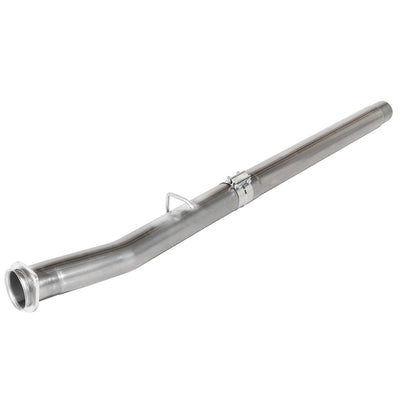
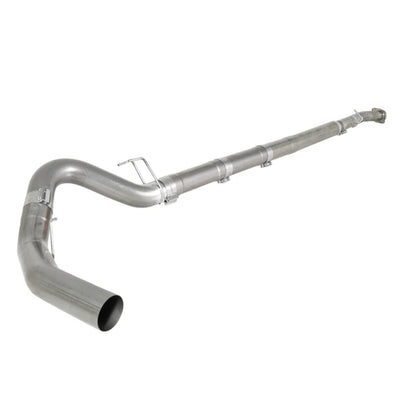
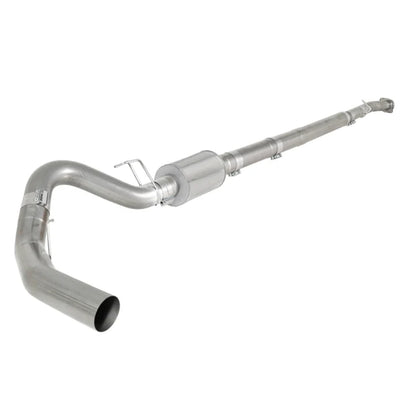
Achieving these real-world fuel savings requires pairing physical deletion hardware (a 4-inch straight race pipe or full delete kit) with an ECU tuner to disable the factory regeneration logic and prevent limp-mode error codes.
Ready to upgrade your truck yourself? Follow our step-by-step DIY guide on How to Delete a 6.4 Powerstroke to ensure a smooth, leak-free installation.
Legal Issues and Risks
A DPF delete is not legal for road use in most areas and is designed for race or off-road use only. A DPF delete can void your warranty and reduce your truck's resale value. Therefore, most buyers will shy away from a modified truck.
How long your truck will last depends on the quality of the tuning, where poor tuning creates issues, and a well-tuned truck can provide dependable long engine life and good gas mileage with a 6.4 Powerstroke engine.
Is a DPF Delete for Ford 6.4 Worth It for MPG Alone?
The 6.4 Powerstroke mpg after DPF delete improves, but does not always provide enough ROI in terms of justifying the amount spent on fuel. Most results are modest in a real-world scenario, so be sure to weigh the savings, costs, and benefits before making that type of decision.
While deleting a DPF improves efficiency by 2–4 MPG and reduces engine soot, the high upfront costs—ranging from $900 to over $3,500—mean that fuel savings alone rarely justify the investment, making long-term reliability and reduced maintenance the more practical primary motivations.
Cost Analysis
Yes, here is a simple breakdown of typical costs:
- DPF delete pipe: $150–$500
- EGR delete kit: $50–$300
- Tuner: $600–$1,200
- Labor (if installed by a shop): $500–$1,000
Total typical cost:
- DIY: ~$900–$2,000
- Shop install: ~$2,000–$3,500
Fuel savings may improve MPG by about 2–4 MPG, which can take time to recover the total cost, depending on usage.
Performance Benefits
The way your truck performs is greatly enhanced (besides MPG). Examples of performance improvements include:
- Increased throttle response
- Lower EGT
- Less restriction from the exhaust
- Increased fuel economy overall on the 6.4 PowerStroke diesel
All of these modifications lead to a smoother driving experience, especially when the truck is loaded.
Non-MPG Reasons
Yes, there are other important benefits:
- Fewer regeneration problems mean less downtime.
- Less likelihood of engine failure due to soot accumulation.
- Less oil dilution as a result of regen cycles.
- More consistent Ford 6.4 diesel fuel economy over a longer period of time.
For many owners, the primary consideration is reliability along with reduced maintenance rather than just fuel economy.
How to Maximize Your 6.4 Powerstroke MPG
To maximize fuel economy after a delete, owners should utilize specific "MPG" or "tow" tunes rather than high-performance files, while maintaining disciplined driving habits, ensuring proper tire inflation, and sticking to a rigorous maintenance schedule for air filters, fuel filters, and boost leak checks.
To achieve optimal 6.4 powerstroke mpg after DPF delete, you need to have a proper tune, good driving habits, and routine maintenance. Small adjustments help increase 6.4 Powerstroke fuel mileage during your daily routine.
Tips to Help Increase Fuel Economy
- Use "mpg" or tow files instead of using "high" performance files
- Maintain a consistent speed with gradual acceleration
- Use the proper rpm range for efficiency
- Keep a regular schedule of changing your air/fuel filters
- Ensure you look for boost leaks/repair issues early
- Properly inflate your tires to gain the most fuel economy possible
FAQs
Does DPF delete really improve 6.4 fuel economy?
Yes, most likely you will see an average increase of 2-4 MPG.
Can a 6.4 Powerstroke get 20 MPG on the highway?
Yes, it is possible to reach that amount of MPG, but this depends on the conditions (steady pedal, light load, etc.).
Why is my MPG still low after a delete and tune?
This is due to your tire size, gear ratio, driving habits, or vehicle maintenance.
Is an EGR delete required for the best MPG gains?
Not necessarily, but EGR deletes typically increase overall efficiency when done as part of a DPF delete.
Which tune gives the best fuel economy?
Generally speaking, the tunes focused on fuel economy from devices like the SCT Livewire TS+, SCT X4, and Mini Maxx or EZ Lynk would be the best fuel economy performers.
Does deleting the DPF shorten engine life?
If you are using a proper tune and have proper maintenance on your vehicle, then you should not expect to see a dramatic difference in how long your engine lasts when it has been deleted.
Is a DPF delete legal on my truck where I live?
In most cases, deleting a DPF on a truck is not legal for on-road purposes and is reserved for off-roading.
Conclusion: 6.4 Powerstroke Real-World MPG Gains After DPF Delete
Overall, most trucks report getting better fuel economy after a DPF delete on 6.4 powerstroke. Estimate of 13 - 15 mpg city, 15 - 18 mpg highway, and 9 - 12 mpg when towing. All of these examples demonstrate the average real-world fuel economy of the 6.4 PowerStroke.
Actual MPG after deleting the DPF/DEF and proper tuning of the truck varies based on the quality of tune, driving behavior, how much weight is in the vehicle, etc. Taking care of and properly tuning the vehicle yields much better fuel economy figures.
Always work with a reputable tuner before performing any modifications to your vehicle, and be sure you understand your state's local emissions regulations before completing any DPF delete.
For the best 6.4 Poewerstroke DPF delete kits and tuners, we choose EGR Performance every time. They solve the problem right and keep our trucks strong.