
⏱️ 30-Second Summary: 6.7 Powerstroke CP4 Guide
CP4 pumps frequently fail between 100k-200k miles, risking a $10,000 disaster. Upgrading to an S&S DCR pump offers near-zero failure rates, while a full replacement with a system flush runs under $4,000. To maximize protection, we highly recommend installing an EGR Performance CP4 Bypass Kit. This essential hardware isolates metal debris if a pump fails, redirecting contaminated fuel to save your expensive injectors and rails from destruction.
Table of Contents
- Introduction
- How the CP4 High-Pressure Fuel Pump Works
- Signs of a 6.7 PowerStroke CP4 Failure
- The Big Decision: Replacing CP4 on 6.7 PowerStroke or Upgrading?
- Can You Replace a CP4 Pump on a 6.7 PowerStroke Yourself?
- Tools, Parts, and Prep Checklist Before Replacing the CP4
- Step-by-Step Guide: How to Change the CP4 Pump on a 6.7 PowerStroke
- Do I Need to Flush or Replace the Entire Fuel System?
- How Much Does It Cost to Replace a CP4 on 6.7 PowerStroke?
- How to Prevent Another CP4 Failure After Replacement
- FAQs
- Conclusion
Introduction
Tired of worrying about your 6.7 Powerstroke CP4 pump failing and costing you thousands? The CP4 factory pump is notorious for failing internally without any warning. Replacing the CP4 pump on a 6.7 PowerStroke early can help prevent fuel system contamination and downtime.
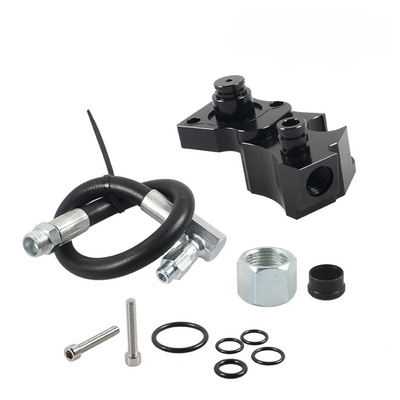
6.7 Powerstroke CP4 replacement on a 2011-2016 6.7L Powerstroke takes careful work but saves big money long term. A proactive swap or upgrade to an S&S Diesel DCR pump costs $2,000–$4,000 DIY or shop-installed. Alternatively, installing a 6.7 CP4 Disaster Prevention Kit is a highly effective, budget-friendly way to safeguard your fuel system from metal debris if the pump does fail.
Taking these steps beats a full fuel system failure that can easily run $10,000+. We put together this guide from our hands-on experience and owner reports. Read on to learn about CP4 fuel pump replacement steps, costs, and other best upgrade options, so you can decide the best path for your truck.
What Does the CP4 Pump Do on a 6.7 Powerstroke and Why Does It Fail?
You may be wondering, what is the CP4 pump, and how does it work?
The CP4 high-pressure fuel pump builds the pressure your common rail system needs to fire the injectors correctly. Since the CP4 is located in the engine valley under the intake components, this makes access tough.
The CP4 supplies up to 29,000 PSI to the fuel rails on 2011-2016 6.7L Power Stroke engines. It often fails due to insufficient lubrication from modern diesel and internal wear that sends metal shavings everywhere. 2011-2016 models saw the most problems before Ford made design changes.
Save Your Injectors from a $10,000 CP4 Nightmare
It's not a matter of if your factory CP4 pump fails, but when. Without protection, a mechanical failure will instantly send metal shards through your entire fuel system, destroying your rails and injectors. Our CP4 Disaster Prevention Bypass Kits from EGR Performance isolate the pump's failure point and reroute debris safely back to the tank filters. Protect your investment, bypass the catastrophic damage, and drive with total peace of mind.
Shop CP4 Disaster Prevention Kits→Why CP4 Failure Is Such a Serious Issue
The CP4 is a Bosch high-pressure pump that mounts in the front of the 6.7L Powerstroke valley between the cylinder heads. It takes low-pressure fuel from the lift pump and ramps it up to extreme levels for the common rail system. This high pressure lets the injectors deliver precise fuel shots for power, efficiency, and emissions control.
The pump uses a cam and roller design. Rollers press against a cam lobe to move pistons. Modern ULSD fuel has less lubricity than older diesel. This creates a low lubrication margin.
The CP4 relies extensively on fuel for lubrication and has very stringent tolerances. If the fuel quality is poor or there is water present in the fuel, the pump can be severely damaged very quickly.
When the internal parts fail, the pump damages the entire fuel system by sending metal debris throughout it. Small debris or water makes wear happen fast.
When it "grenades," metal shards travel through the entire fuel system: lines, rails, and all eight injectors. These are typical signs that the CP4 pumps are failing and typically require expensive repairs.

Which 6.7 PowerStroke Model Years Are Most Affected
The majority of CP4 problems affect F250/F350 PowerStroke vehicles manufactured between 2011 and 2016 that have OEM (factory) pumps. Early pumps had design sensitivities.
Ford updated some parts in later years, but the core issues stayed until newer DCR-style pumps arrived in some 2020+ models. Owners who tow heavy loads or drive in dusty areas report problems sooner.
Most owners now replace the original CP4 pump with a DCR or CP3-style upgrade for increased durability.
Key factors that speed up failure:
- Poor fuel quality from unknown stations
- Skipped fuel filter changes (we recommend every 10,000 miles)
- Water in the fuel that the sensor misses
- High mileage without additives
In our experience helping friends with these trucks, one failure at 150,000 miles sent metal everywhere. The truck lost power and showed low fuel pressure codes. We pulled the fuel filter and saw the glitter — tiny metal flakes that confirm catastrophic damage.
Critics say the CP4 works fine with perfect maintenance. But real-world data shows many trucks still fail. The roller-cam setup has tight tolerances. Any contamination leads to quick wear. This spreads debris fast because the pump shares fuel paths with the rest of the system.
We compare it to newer designs. The DCR pump uses a different radial piston setup with better durability. It handles lower-lubricity fuel without the same metal-on-metal risks. This is why we push upgrades during replacement.
Aspect |
CP4 Pump |
DCR Upgrade |
|---|---|---|
Design |
Roller-cam design, fuel-sensitive |
Radial piston design, more robust |
Failure Rate |
Higher failure rate on many 2011–2016 platforms |
Very low reported warranty rate (~0.16%) |
Cost to Replace |
$800–$1,200 pump only |
$1,990–$2,400 complete kit |
Debris Risk |
Potentially catastrophic system contamination |
Minimal debris risk |
Emissions |
Factory compliant |
CARB EO compliant |
We always tell owners to check fuel filters regularly with the glitter test. Shake the filter contents in clean fuel. Sparkly bits mean trouble started. Do not ignore hard starts or power loss. These signs often appear before total failure.
What Are the Common Signs of 6.7 Powerstroke CP4 Failure?
There are typically some warning signs before it completely fails. Hard starts and strange noises from your 6.7 can point to CP4 trouble. We hate when trucks act up on the road. Spot issues early to save money.
Watch for hard starts, loss of power, low fuel pressure codes, and metal in your fuel filter. The glitter test shows shiny flakes when the pump grenades. Act fast before debris ruins injectors.
Main signs of CP4 failure include:
- Long crank and difficult-to-start condition
- A sudden non-start condition
- Rough idle and an unusual ticking noise or sound
- The throttle response does not occur as expected
- A decrease in power while accelerating
- Diagnostic trouble codes indicating low fuel pressure
- Engine hesitating under load
The "Glitter" Test
Metal contamination within fuel filters is one of the easiest identifiable signs of failure.
- Remove the fuel filter and carefully inspect the filters.
- Watch for shiny metal particles or small glitter-like pieces.
Pour contents into a clear jar with clean diesel. Swirl it. Metal particles sparkle under light. This tells us the pump is shedding metal.
If you find any of these, it likely means your CP4 pump has suffered internal damage. Complete CP4 pump replacement may be required. We never skip this before any repair.
You might need to replace the complete 6.7 PowerStroke fuel pump, including all of the injectors, rails, and fuel lines, if contamination spreads throughout the system.
Mild symptoms (early wear)
- Slight ticking noise
- Minor power loss
- Occasional hard start
Severe symptoms (catastrophic failure)
- No-start condition
- Loud screech, then power loss
- Multiple fuel codes (P0087, P0088)
- Metal visible in the filter
Do the glitter test every filter change. We change filters at 10k miles. Use quality brands. Add lubricity additives every tank from reputable stations.
For stock trucks, these signs appear around 120k-180k miles. Towing speeds it up. We recommend logging fuel pressure data if you suspect issues. A mechanic with proper tools can confirm pump health.
If you see symptoms, stop driving far. Tow the truck to avoid more damage. We learned this the hard way with a buddy's truck that spread metal after he kept driving.
Should You Replace the CP4 on Your 6.7 Powerstroke or Upgrade Instead?
Sticking with stock or going for an upgrade changes everything for your truck's future. We face this choice often with our 6.7s.
Replace with OEM CP4 for the cheapest fix, but with the same risks. Upgrade to S&S DCR for $2,000-2,400 and solve the problem for good. Disaster prevention kits protect against failure. We pick DCR for long-term ownership.

Replacing with an OEM-style CP4
It is less expensive in the short term to replace it with an original equipment manufacturer (OEM) style CP4 pump.
- The factory setup remains unchanged.
- The original design flaw remains.
- There is a great chance of repeat failure.
Upgrading to an S&S Diesel DCR Pump
The S&S Diesel DCR pump is a "fix it once" solution.
- Fuel durability and stability are enhanced with an S&S Diesel DCR.
- It provides increased protection against internal wear as well.
- While the cost of this upgrade is higher than that of traditional pumps, it provides long-term reliability.
CP3 Conversion Option
- The CP3 conversion has strong reliability.
- The CP3 handles fuel stress better than the CP4.
- There may be emissions-related considerations for the conversion.
- It is common for long-term heavy use.
Disaster Prevention Kits
- Disaster prevention kits help protect injectors if the CP4 fails. <Check the best cp4 bypass kit review>
- This minimizes the chance of contamination of the entire fuel system.
- While disaster prevention kits do not eliminate CP4 weaknesses, they do provide an additional layer of protection.

Which Option Fits You Best
- Daily-driving use: OEM replacement parts or DCR
- Towing use: DCR for reliable pressure
- Long-term ownership: DPK first, and DCR next major service
- When focused on risk: CP4 Bypass Kit and monitoring
We compare options based on real costs and results. A straight OEM-style CP4 replacement costs less upfront but keeps the weak design. It works for the short term, but we see repeat failures.
The S&S Diesel DCR conversion uses a Denso-style radial pump. It plugs in with minimal changes. Price sits at $1,990-$2,400. It is emissions legal with CARB approval. Thousands of installs show very low failure rates: under 0.2%. We like the two-year unlimited-mile warranty.
CP3 conversions need more wiring and tuning changes. They work, but add complexity. We see them less now that DCR kits are available.
Disaster prevention kits add a bypass filter. They catch debris if the pump fails. Cost is $67.99 now. Great insurance, but not a full fix. Many owners run CP4 disaster prevention, then upgrade to DCR later.
We did a DCR swap on one truck at 140k miles as a precaution. It runs quieter with stable pressure. No issues after 20k more miles.
Friends who replaced with stock CP4 saw problems return. Full system kits after failure add injectors and lines. Costs jump fast.
The DCR pays for itself by avoiding one big failure. Or use a 6.7 powerstroke disaster prevention to avoid CP4 injection pump failure.
Can You Replace a CP4 Pump on a 6.7 Powerstroke Yourself?
DIY saves money, but this job tests your skills. We tackle many diesel repairs at home. Know your limits.
This is a high-complexity job. You need 8-12 hours and a full disassembly. Call a specialist if you lack torque tools or a clean workspace. We do it ourselves with care.

Complexity Level: High
Replacement of a 6.7 PowerStroke CP4 fuel pump can be one of your most challenging repairs. You need to take off various components, including the engine's intake, EGR cooler, the fan, and more to reach the valley.
Keep in mind that the 6.7 PowerStroke fuel pump location is way low in the engine's valley.
Risk Factors: Safety and Precision
Safety and precision are major concerns due to the risk associated with high-pressure fuel.
- Follow exact torque specifications when installing components.
- To prevent contamination, installation should be performed under surgical cleanliness standards.
- Any mistake can lead to another CP4 pump replacement failure, like the iming errors.
Decision: DIY or Diesel Specialist
- If you are an experienced diesel mechanic and have a clean garage, air tools, and a torque wrench set, then a DIY project is suitable.
- However, DIY is not recommended for the novice mechanic. For most Ford 6.7 CP4 pump replacements, finding a diesel mechanic is safer. Shop labor runs $1,500-3,000 plus parts.
We always disconnect batteries first. Drain coolant. Label every hose and connector. One missed vacuum line causes codes later.
Risks are real. High-pressure fuel needs safe handling. Debris in the new pump kills it fast. We use new high-pressure lines every time: they are one-time use.
When to call a pro: No lift, limited experience with timing, or modified truck. Specialists have the right pullers and experience.
We completed one in a weekend with two people. It felt good to save labor, but we double-checked every step.
What Tools, Parts, and Prep Do You Need Before Replacing the CP4?
Good prep makes the CP4 job go smoothly. We gather everything first to avoid trips to the store.
You need metric sockets, 27mm for gear nut, torque wrench, fan tools, and fuel disconnects. Parts include a new pump or DCR kit, lines, gaskets, and fluids. Prep by draining systems and labeling parts.

Necessary Tools
- Full 8-19mm metric socket set
- 27mm socket
- 47mm fan tool
- Torque wrench (up to 100 ft-lbs)
- Fuel line disconnect tools
- Mallet
- Punch
Parts List
- New pump for 6.7 PowerStroke CP4 replacement or S&S DCR ($2k range)
- High-pressure fuel line kit
- Intake and EGR gaskets
- Fresh coolant
- Fuel filters
- Additives
- Vacuum pump gasket for 2011-2016
Parts for a 6.7 PowerStroke fuel pump replacement may vary by damage level.
Preparation Steps
- Disconnect the batteries
- Drain all of the coolant out
- Remove air intake piping
- Label every electrical connector with tape
- Clean the area before beginning the installation to ensure no contamination happens
We clean the engine bay first. Cover open ports to block debris. Have shop towels and brake clean ready. New O-rings and seals come with kits.
Check your service manual for torque specs. We write them on a notepad. Have a second person help with the heavy parts.
How Do You Replace the CP4 Pump Step-by-Step on a 6.7 Powerstroke?
Follow the exact steps to swap the CP4 without mistakes. We break it down so you succeed.
The process includes disassembly, access, fuel line work, timing alignment, pump swap, and reassembly with proper torques. Take your time on alignment and cleanliness.

Step 1: Initial Disassembly
Remove the intake pipe and any upper half of the engine parts. We pull air boxes and tubes first.
Step 2: Gaining Front Access
Remove the fan clutch, belt, and tensioner with a special tool.
Step 3: EGR and Manifold Removal
Remove both the EGR and intake manifold for valley access. Block ports to stop debris.
Step 4: Disconnecting Fuel Lines
Disconnect the fuel control actuator from the high-pressure lines. Handle FCA carefully. Cap all lines.
Step 5: Alignment and Timing
Correctly rotate the engine to the timing marks. We use a crank bolt and marks on the gear.
Step 6: Pump Removal
Unbolt CP4, break loose from the gear with a mallet and punch, then carefully remove it from the gear.
Step 7: Inspection and Cleaning
Check for contamination, like the old debris; clean mounting surface. We inspect everything.
Step 8: Installation
Align gear pin. Install a new pump with lubricant on the O-ring.
Step 9: Torquing to Spec
Tighten bolts to specifications (usually 18-22 ft-lbs plus angle). Gear nut to 75-85 ft-lbs.
Step 10: Reassembly and Priming
Refill fluids. Prime system with key cycles. Start and check for leaks.
Common Mistakes to Avoid When Replacing a CP4 on a 6.7 PowerStroke
- Incorrect gear alignment/timing errors
- Reusing contaminated fuel systems
- Skipping filter/sensor inspections or services
We triple-check alignment. The whole job takes 8-12 hours for experienced hands.
Do You Need to Flush the Entire Fuel System After CP4 Replacement?
Yes, flush everything or risk a quick second failure. Debris hits injectors and rails. Full cleanup after failure costs more but prevents repeat problems.
Metal from a bad CP4 spreads fast. We never skip cleaning.
The Ripple Effect
When a CP4 fails, it can release metal fragments into the fuel system. It contaminates injectors, fuel rails, fuel lines, and even the fuel tank.
One failed pump sends thousands of metal particles. They lodge in injectors, causing rough running and expensive replacements ($400-600 each x8).
Rails and lines hold debris, too. The tank needs draining.
We saw a truck with a new pump, but the old lines failed again after 500 miles. Full flush includes new filters, lines, injector cleaning or replacement, and tank rinse.
Mandatory Remediation
It is mandatory to clean before installing a new pump to ensure no further failures occur. The remaining debris from the old fuel pump damages the newly installed fuel pump in a very short time.
Furthermore, the full flush of the system must be performed each time a CP4 pump replacement fails.
Cost Realities
The cost of a replacement fuel pump at a repair shop is about $2,000. It can exceed $10,000 if it is rebuilt from a fully contaminated system. You will have to pay more in the long run if you do not perform a flush.
Proactive swap before failure needs less flushing. Still change filters and lines. We contrast costs: $2,000-4,000 proactive DCR vs $10k+ overhaul. Always flush.
How Much Does It Cost to Replace a CP4 on a 6.7 Powerstroke?
Costs add up fast on these repairs. We track every dollar.
DIY parts $1,500-3,000. Shop install $4,000-6,000. Full failure with system repair hits $10,000+. DCR upgrade adds value.
DIY vs. Shop Costs
The overall CP4 fuel pump replacement cost varies depending on the damage and the labor rates.
- The average cost of a 6.7 PowerStroke CP4 replacement is between $1,500 and $3,000.
- Labor from the shop may add $4,000 to $6,000 to the total.
- Proactive DIY with DCR runs $2,500-3,500 total. Shop version $4,500-6,000.
OEM CP4 pump $800-1,200. DCR kit $1,990-2,400. Lines and gaskets $400. Labor 8-12 hours at $150/hr.
Full Fuel System Replacement Costs
- Catastrophic failures can contaminate entire fuel systems.
- Total repairs can be over $10,000 with the use of injectors and rails.
- Total damage increases the cost of replacing the CP4 pump on the 6.7 PowerStroke.
Catastrophic: Pump + 8 injectors + rails + lines + labor + downtime = $10k-15k. Additives and filters yearly $200.
Upgrade Option Costs
- CP3 is very expensive and has a higher up-front cost.
- Disaster prevention is a great and affordable option.
- Upgrades to an S&S DCR cost more right away but give you better reliability.
How Can You Prevent Another CP4 Failure After Replacement?
Good habits keep the new pump healthy. We follow routines.
Use quality fuel, change filters every 10,000 miles, add lubricity, and watch warnings. These steps extend life.

Fuel Quality
- Use fuel from high-quality sources only. Low-quality fuels cause an increase in wear on the internal components of the injection pump.
- Lubricity additives are often recommended for drivers concerned about how to prevent CP4 failure 6.7 Powerstroke problems.
Add products like Power Service or Hot Shot's Secret every fill-up.
Maintenance Intervals
- Change fuel filters every 10K miles. Dirty fuel filters do not offer proper protection to the fuel system.
- Drain the water separator often.
- Regular servicing also extends pump life after CP4 pump replacement.
Monitoring / Warnings
- Do not overlook "Water in Fuel" warnings. Water can quickly damage a new pump due to contamination.
- Monitor the WIF light.
- Scan for codes monthly.
- We log pressure data on longer trips.
Taking action early protects your investment in a 6.7 PowerStroke CP4 replacement. For DCR installs, maintenance drops. Still follow the basics.
Recommended Resources:
Shop Now: Browse 6.0 Powerstroke Performance Parts (2003-2007)
Deep Dive: How Long Does a 6.7 Powerstroke Last? Longevity Guide
Step-by-Step: 6.7 Powerstroke CCV Filter Replacement Tutorial
FAQs
What is CP4 pump, and why does it fail?
The CP4 is a high-pressure fuel pump. It builds high fuel pressure but wears from poor lubrication and sends metal debris.
How do I know if my CP4 pump is going bad?
Notice the signs of CP4 failure like hard starts, power loss, ticking noises, low fuel pressure codes, and metal in the filter.
What is a CP4 bypass kit, and is it worth it?
A bypass kit protects injectors from metal debris. It can reduce repair costs after pump failure. Worth it as insurance.
What years are affected by CP4 issues?
Most CP4 problems affect 2011–2016 6.7 PowerStroke trucks.
Can a CP4 failure contaminate the entire fuel system?
Yes. Metal debris can spread through injectors, rails, lines, and the fuel tank.
Where is the CP4 pump located on a 6.7 PowerStroke?
The 6.7 PowerStroke fuel pump location is inside the engine valley under intake components.
Do I have to replace injectors and fuel lines if my CP4 pump fails?
Yes, if metal contamination spreads through the fuel system.
How much does a CP4 replacement cost on a 6.7 PowerStroke?
CP4 fuel pump replacement costs $2k-6k proactive, much more after failure.
How long does it take to replace a CP4 on a 6.7 PowerStroke?
Most shops complete a 6.7 PowerStroke CP4 replacement within 8-12 hours.
What happens if I do not flush the fuel system after CP4 failure?
Leftover debris can quickly destroy the new pump and injectors. The new pump will fail soon.

Conclusion
The 6.7 PowerStroke CP4 replacement involves much more than just a simple swap of the pumps. It is a precision repair that requires proper timing alignment, correct torque specifications, and extreme cleanliness during installation.
In the case of the original CP4 failing internally, a complete flush of the entire fuel system is required to avoid future pump failure. Failure to properly clean up the contamination can result in serious damage to the new pump and injectors.
Many owners use this repair as an opportunity to upgrade their fuel systems to the more reliable DCR or CP3 style fuel systems for improved long-term durability.
If a full pump upgrade isn't in your immediate budget, we highly recommend installing a 6.7 CP4 Disaster Prevention Kit from EGR Performance to isolate the fuel system from catastrophic debris. Pairing this safeguard with optimized DCR or CP3 solutions ensures your entire engine remains protected, efficient, and ready for the long haul.