
⚠️ 30-Second Summary: DEF Delete Legality & Risks
Maintaining factory emissions hardware is critical on on-road diesels. Executing a DEF delete remains strictly illegal under federal law in 2026, voiding your powertrain warranty instantly, slashing resale valuations, and guaranteeing mandatory inspection failures. Prioritizing top-tier fluid, quick sensor swaps, and proactive soot scrubbing saves $2,000–$5,000 annually over non-compliant risks. For dedicated off-road equipment, utilizing specialized EGR Performance DEF delete kits with calibrated tuning provides safe, closed-course reliability while adhering to strict environmental boundaries.
Table of Contents
- Introduction
- What Is Diesel Exhaust Fluid (DEF) and What Does It Do?
- What Does It Mean to "Delete" a DEF System?
- Why Some Diesel Owners Consider Deleting DEF
- The Biggest Risks of a DEF Delete
- Does Deleting DEF Actually Improve Performance and Fuel Economy?
- Can a DEF Delete Hurt Reliability in the Long Run?
- When Might a DEF Delete Be "Reasonable"?
- Why Modern Diesel Trucks Are Better Than Older Generations
- The Smarter Alternative: How to Reduce DEF Problems Without Deleting
- Cost Comparison: DEF Maintenance vs DEF Delete
- Who Should Definitely Not Delete DEF?
- FAQs
- Conclusion
Introduction
Diesel Exhaust Fluid is essential for diesel trucks to operate clean and legally. Any owner can get tired of refills, sensor failures, and warning lights. So, you may be wondering, can I delete my DEF system and avoid all the trouble for good?
No, you should not delete DEF on any diesel truck used on public roads. DEF, or Diesel Exhaust Fluid, is a 32.5% urea and 67.5% deionized water solution injected into the SCR system to convert harmful NOx into nitrogen and water.
Tampering violates the Clean Air Act, triggers DTCs like P20E8 or P207F, voids warranties, damages resale value, and risks fines up to $45,000 per violation. Proper maintenance solves most problems without illegal shortcuts.
We break down exactly why owners think about DEF deletes, the full scope of risk involved, and proven alternatives that maintain your truck's reliability without breaking laws or budgets. Read on to make an informed decision based on facts.
What Is Diesel Exhaust Fluid (DEF) and What Does It Do?
DEF is a non-toxic aqueous urea solution (32.5% urea) stored in a separate tank that injects into the hot exhaust stream ahead of the SCR catalyst.
Engineered for Competition Performance.
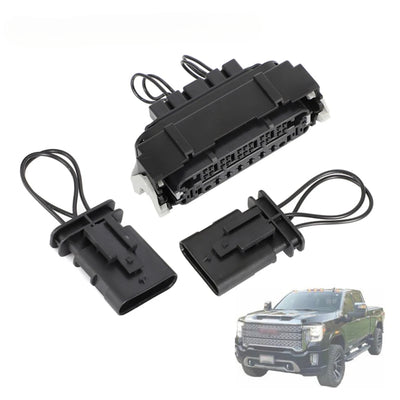
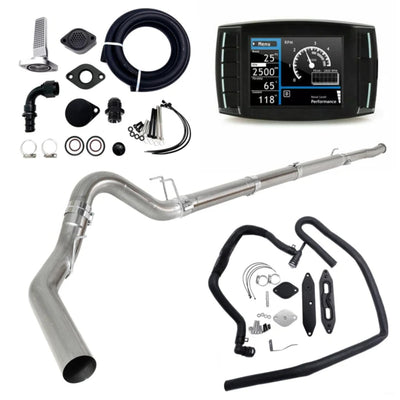
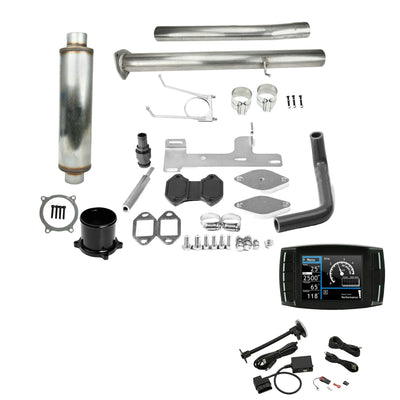
For dedicated off-road and racing platforms, our Competition Delete Kits from EGR Performance are designed to remove restrictive factory bottlenecks entirely. By optimizing exhaust flow and disabling fault-prone emissions hardware, you unlock the true power potential and cooling capacity of your engine. Note: These products are strictly intended for closed-course competition use only.
Explore Competition DEF Delete Kits→It breaks down into ammonia, which reacts with NOx over the catalyst to produce harmless nitrogen gas and water vapor, cutting NOx emissions by up to 90%. Modern diesels have required it to meet EPA standards since 2010.

The Diesel Exhaust Fluid is used in modern engines to comply with the stringent emission regulations. It is used in conjunction with the Selective Catalytic Reduction (SCR) system to reduce harmful gases.
The diesel exhaust fluid DEF system injects fluid into the hot exhaust stream. This reaction converts NOx to N2 and H2O. In simple terms, that's what does DEF do for a diesel engine.
Here are some quick facts about DEF:
- It is a combination of urea and purified water.
- It's stored in its own separate tank.
- Fluid level and quality are continuously monitored by sensors.
- This system is used in all 2011 and newer diesel trucks.
If you don't use DEF, your engine cannot regulate NOx emissions. That's why the system is there.
DEF Chemistry and SCR Operation
We see many owners underestimate how precisely the SCR system integrates with the entire aftertreatment setup.
DEF injection happens through a dosing module controlled by the ECU, which monitors exhaust temperature (ideally 392–572°F for optimal reaction), NOx levels via upstream and downstream sensors, and DEF quality through temperature and level sensors.
The chemical reaction is: (NH2)2CO + H2O → 2NH3 + CO2, followed by 4NH3 + 4NO + O2 → 4N2 + 6H2O. This selective catalytic reduction targets NOx specifically without affecting other emissions much.
Key Components of the SCR System
- DEF Tank and Heater: Prevents freezing at 12°F; includes level and quality sensors.
- Dosing Injector and Pump: Delivers precise mist (typically 1-5% of fuel consumption rate).
- SCR Catalyst: Vanadium or zeolite-based honeycomb that facilitates the reaction.
- NOx Sensors: Pre- and post-SCR units that report data to the ECU (common failures trigger P2200 series codes).
Component |
Common Failure Mode |
Typical Repair Cost |
Impact if Ignored |
|---|---|---|---|
NOx Sensor |
Contamination or wiring fault |
$250 - $600 each |
Limp mode, P229E code |
DEF Injector |
Crystallization from poor fluid |
$400 - $900 |
Poor NOx conversion, derate |
DEF Pump |
Heater or motor failure |
$800 - $1,500 |
No dosing, P20E8 code |
SCR Catalyst |
Poisoning from bad DEF |
$2,000 - $4,000 |
Permanent efficiency loss |
Consumption & Storage: DEF use runs about 2 - 4% of fuel volume. A 6.7L Cummins doing 15,000 miles a year at 7 mpg burns roughly 80 - 120 gallons of DEF annually at $4 - $6 per gallon.
We always recommend storing DEF at 50-77°F to maintain the shelf life of 12-18 months and using API-certified fluid to avoid crystallization that clogs injectors.
Newer 2017+ platforms feature improved tank heaters and more accurate quality sensors, reducing false "AdBlue quality low" warnings. Regular draining and refilling with fresh fluid prevents contamination that leads to 20-30% efficiency drops in the SCR.
Understanding these details helps owners avoid 80% of common derate events through proactive care rather than reactive fixes.
What Does It Mean to "Delete" a DEF System?
A DEF delete removes or bypasses the urea tank, dosing injector, NOx sensors, and SCR catalyst while reprogramming the ECU to ignore related monitors. It often pairs with DPF delete (removing the soot filter) and EGR delete (blocking exhaust recirculation) to eliminate backpressure and derates entirely.
A DEF delete will remove or bypass the urea tank, injectors, sensors, and sometimes the SCR catalyst. The engine then does not inject any fluid or NOx reduction.
This is often combined with a DPF delete, which eliminates the soot trap. An EGR delete eliminates the exhaust gas recirculation system, which recycles exhaust gas into the intake. If it is only the injection process that is blocked, mechanics refer to it as a DEF bypass.
Some shops do a complete DEF bypass, which is to turn off multiple sensors simultaneously. All three deletes are sold as a single solution. Owners want less repairs and maintenance. In fact, the dangers are far greater than the sales pitch implies.
Many kits are promoted as a quick way to start eliminating DEF costs totally. That promise often comes with a legal and financial risk. At its core, it's the question behind can i delete my DEF system entirely.
Delete Types and System Interactions
A standalone DEF/SCR delete leaves the DPF and EGR intact, which still causes faults because the ECU expects full aftertreatment function. Full deletes address all three for consistent operation - but at a cost in heat and emissions.
We analyze how these systems work together in heavy-duty platforms like the 6.7L Powerstroke or L5P Duramax.
EGR & DPF Specs: EGR recirculates 10 - 30% of exhaust gas into the intake at low loads to keep combustion below 2,500 F, cutting NOx formation 40 - 60%. Deleting an EGR requires intake blocking plates and tune adjustments to prevent excessive EGTs.
The DPF traps 95%+ of particulate matter under 2.5 microns; passive regen starts above 550 F and active regen fires when soot load hits 40 - 60%. DPF Delete kits replace it with a straight pipe, dropping backpressure 2 - 4 psi.
Delete Type |
Components Removed |
Typical Tune Adjustments |
Common Post-Delete Issues |
|---|---|---|---|
DEF/SCR Only |
Tank, injector, sensors, catalyst |
Disable dosing, NOx monitoring |
Residual DPF/EGR faults |
Full Emissions |
DEF + DPF + EGR |
Complete remap, delete all monitors |
Higher EGTs, potential NOx spikes |
EGR Only |
Valve, cooler, piping |
Block plates, fuel map changes |
Increased NOx, possible knock |
On Cummins ISB engines, deletes often trigger P0401 (EGR flow insufficient) if not fully tuned. Powerstroke 6.7L owners report smoother running after a full delete, but louder exhaust and visible smoke under load without proper tuning.
Installation runs 8 - 20 hours, depending on the model, and exhaust flow improves 15 - 25% only when every restriction is addressed at once.
Why Some Diesel Owners Consider Deleting DEF
Owners cite $300-600 yearly DEF refill costs, tank freezing in cold climates, frequent "DEF quality" or low-level warnings, NOx sensor failures every 50,000-80,000 miles, and perceived 1-3 mpg fuel gains plus 20-50 hp from reduced restrictions.

Owners typically think of deletion as a way to avoid costs and daily maintenance.
Many drivers are frustrated by high refill costs and tank freezing problems. The added pressure of fear of limp mode and sudden derate events. Over time, sensor and injector failures make things worse.
Regular DEF maintenance can be costly, particularly when sensors are frequently replaced. Others just want to turn off another dashboard warning light. Some also think that deletion may help with fuel economy or horsepower.
However, not performing DEF maintenance at all is a small issue for a large one.
Owner Pain Points and Perceived Benefits
We track common complaints across Powerstroke, Cummins, and Duramax communities.
The Real Costs: Owners cite $300 - 600 in yearly DEF refills, tank freezing below 12 F in cold climates, frequent "DEF quality" or low-level warnings, and NOx sensor failures every 50,000 - 80,000 miles. Hoped-for gains are usually 1 - 3 mpg and 20 - 50 hp from reduced restriction.
Under heavy towing, DEF consumption can spike to 5% of fuel rate - about $0.20 - 0.40 extra per mile on long hauls. NOx sensors typically fail around 60,000 miles due to exhaust contamination or harness chafing, and injectors crystallize if fluid dips below ISO 22241 quality. SCR catalyst poisoning from silicone or phosphorus in bad fuel adds $3,000+ repairs.
Typical Annual Maintenance (2018+ truck): DEF fluid $250 - 450; sensor replacements about $400 every 2 years; DPF cleaning $300 - 600 when needed. Total runs $800 - 1,500.
Perceived gains mostly come from killing regen cycles (each active regen burns 0.5 - 1 gallon of fuel) and reducing exhaust restriction. But advancing timing and fueling raises cylinder pressures and EGTs by 100 - 200 F if unmonitored, and the 2 mpg improvement many report tends to fade as the engine adapts.
The Biggest Risks of a DEF Delete
DEF deletes violate the Clean Air Act, risk $4,500-$45,000 EPA fines per violation, immediately void manufacturer powertrain warranties, lower resale value by 15-25%, fail state inspections, and make many shops refuse service due to liability.
It is illegal to remove your DEF system from any truck that is operated on public roads. The federal Clean Air Act is being violated by tampering with emissions equipment. That's why is it illegal to delete a DEF system is one of the most frequently asked questions by owners.
EPA has very strict DEF laws for deleted trucks, tuning shops and dealers. Fines are high and registration may be revoked for violators. Trucks that are deleted also fail state emissions tests nearly all of the time.
In addition to legal liability, deletion will immediately cancel your factory warranty. Manufacturers identify deletes by diagnostic codes and visual inspection. After voided, any turbo, engine or sensor failure is 100% out of pocket.
The resale value also declines significantly, as most dealers steer clear of deleted trucks. After that, financing and insurance are also difficult. Deletion also increases your environmental liability way beyond a single fine. Regulators can pursue repeat violations as continuing offenses, rather than one-time events. Plus, many independent shops and dealerships won't touch a deleted truck at all. Warranty claims, recalls and even routine service can be hard to schedule. Keeping up with DEF laws solves all of these headaches at once. Owners searching is it illegal to delete a DEF system often don't realize how broad these rules are.
Legal, Financial, and Operational Risks
Quantified Risk: DEF deletes violate the Clean Air Act, risk $4,500 - $45,000 EPA fines per violation, void powertrain warranties on detection, cut resale value 15 - 25%, fail state inspections, and push many shops to refuse service.
Enforcement is tightening, with more roadside checks and OBD scans at inspection. Tampering is caught through freeze-frame data, sensor plausibility checks, and physical evidence like missing components or straight pipes.
Ford, Ram, and GM all scan for non-stock calibrations and deny turbo or injector claims when delete evidence exists - even on unrelated failures. The Magnuson-Moss Act offers some protection, but proving causation takes a legal fight most owners lose.
Risk Category |
Potential Cost |
Frequency |
Mitigation Difficulty |
|---|---|---|---|
Federal/State Fines |
$5,000 - $45,000 per part |
Rising with enforcement |
High - hard to avoid detection |
Warranty Void |
$5,000 - $15,000 per major repair |
Immediate upon detection |
Very High |
Resale Loss |
$3,000 - $8,000 |
At trade-in |
Medium - dealers spot easily |
Service Refusal |
Delayed repairs, higher rates |
Common at dealers |
High |
Insurers increasingly deny claims on modified vehicles, and fleets ban deleted trucks outright. Roadside inspections in states like California and New York use opacity meters and OBD readers that flag a missing DEF system instantly - leading to registration hurdles and higher premiums long-term.
Does Deleting DEF Actually Improve Performance and Fuel Economy?
Some tuned deletes yield 30-80 hp and 50-120 lb-ft torque gains with full EGR/DPF removal, plus 0.5-2 mpg improvements, but results depend heavily on truck model, driving style, and tune quality. DEF delete alone offers minimal gains since SCR backpressure is low compared to DPF.

Gains tend to be modest and frequently exaggerated by the seller. Power gains are only realized when a tune changes all three of the DPF, EGR and SCR. Exhaust flow is seldom restricted by the DEF system alone. The improvements in fuel economy are generally small.
If the tune is not done well, it can actually be detrimental to fuel economy. Once fines and warranty losses are factored in, real savings can quickly disappear. The claims of massive power increases are not always realized in practice.
Take for example, a common 2019 half-ton diesel getting about 22 mpg stock. Owners report drops to 18 or 19 mpg after a rushed delete and generic tune. Others see a short term bump that goes away until sensors throw new codes. Tuning shops see this all the time. The lesson: results are too inconsistent to risk the legal risk.
Performance Metrics and Real-World Testing
The Numbers: Full EGR/DPF deletes with a tune can yield 30 - 80 hp and 50 - 120 lb-ft of torque, plus 0.5 - 2 mpg - but results hinge on truck model, driving style, and tune quality. A DEF delete alone offers minimal gains since SCR backpressure is low compared to the DPF.
Independent testing on a 6.7L Cummins showed peak gains of 65 hp at 3,200 rpm after a full delete and tune, with torque curves filling low-end holes - but EGTs climbed 150 - 250 F under load, stressing turbos and pistons. Controlled tests average a 1.2 mpg highway improvement, though towing negates much of it through richer tuning.
Can a DEF Delete Hurt Reliability in the Long Run?
Yes, improper deletes raise EGTs, cause poor combustion, and trigger undetected faults that stress components. ECU compensation without perfect tuning leads to limp modes or accelerated wear on turbos, injectors, and pistons.

A DEF delete can cause entirely new reliability issues in the future. Temporary solutions can result in permanent problems. The ECU can sense a failure in the SCR system and activate limp mode even if the system is not installed.
Excessive NOx output and higher exhaust temperatures can be caused by poor tunes. That's why people also wonder what happens if you delete DPF alongside their DEF.
The particulate filter removal affects the exhaust flow and heat patterns greatly. This, along with EGR problems, accelerates engine wear over time.
Understanding what happens if you delete DPF helps explain why full deletes carry serious risk. Owners who do not tune properly will experience the worst results.
Reliability Data and Failure Modes
Wear Acceleration: Deleted trucks show 20 - 40% higher turbo failure rates from elevated exhaust temperatures. Without EGR cooling, intake charge temps rise, reducing air density and demanding more fuel.
Long-term issues include piston ring wear from higher combustion temps, injector coking without proper regen cycles, and transmission stress from altered torque curves.
A comparison of 100k-mile reliability:
Setup |
Turbo Longevity |
Injector Life |
Overall Repair Frequency |
|---|---|---|---|
Stock |
150k - 250k miles |
200k+ |
Baseline |
Full Delete + Good Tune |
100k - 180k |
120k - 180k |
25% higher |
Poor Delete |
60k - 120k |
80k |
60%+ higher |
Good tuning mitigates some risk but cannot fully replicate the factory's emissions-optimized combustion efficiency.
When Might a DEF Delete Be "Reasonable"?
DEF deletes are only reasonable for strictly off-road equipment like farm tractors, construction machines, or mining rigs that never touch public roads. Owners must comply with local laws, accept full responsibility for warranty and service issues, and verify kit suitability.
A DEF delete might only be appropriate for equipment that never comes onto public roads.
It is not the same with construction, farming or mining equipment, which are used exclusively off-road. Changes are still allowed under local laws, lease agreements and insurance policies. Owners are responsible for no warranty and reduced resale value.
Many shops will also not service a deleted vehicle after. Before attempting to remove DEF from diesel truck equipment, ask yourself a few tough questions:
- Does the kit state that it is only for off-road use?
- Does it contain tanks, injectors, sensors and a corresponding tune?
- Who will back the tune if there are issues later?
- What is done with downtime and installation?
Each of these questions matters more than it appears. If the kit doesn't have a written off-road disclaimer, you have no legal protection. Missing hardware often means added cost for parts later. Vague answers to warranty questions usually mean no support once things go wrong. Long installation times can put your truck out of service for days. Owners skip these questions and are left with expensive surprises. A little research now can save you thousands in the future.
If anyone attempts to remove DEF from diesel truck setups used on-road, they will be subject to fines and failed inspections.
Off-Road Kit Evaluation
Lease agreements and insurance often prohibit modifications regardless of use. For pure off-road, the reliability gain comes from eliminating regen downtime - but noise, smell, and visible emissions all increase.
Why Modern Diesel Trucks Are Better Than Older Generations
2017+ diesels feature refined SCR calibration, better DEF heaters, more durable sensors, and software that minimizes derates. These trucks run cleaner and more efficiently with proper care than pre-emissions models.
Modern Diesel Trucks are better than older generations because of the following reasons:
- Emissions systems work much better on newer trucks than on older trucks.
- Newer trucks (2017 and newer) are equipped with new emissions equipment. Since then, there have been substantial advances in sensor, software and SCR calibration. These enhancements minimize false derate events and sensor failures.
- With proper care, a modern truck can last for years. This increased reliability reduces the need for deletion even more than before.
Diesel trucks pre-2017 are notorious for DPF clogging every 15,000-20,000 miles. Early SCR designs also had a much higher incidence of sensor failures. Many of the newer trucks push those same intervals much further out, often well beyond 30,000 miles. Software updates now catch little things before they lead to a derate. That difference alone makes deleting much less attractive on newer trucks.
Platform Evolution
Platform specifics: Cummins integrates the DPF and SCR; Powerstroke uses adaptive regen strategies that reuse exhaust energy; Duramax runs smarter dosing logic. Net result: 2018+ trucks average about 20% fewer emissions-related shop visits than 2011 - 2016 models when maintained correctly.
The Smarter Alternative: How to Reduce DEF Problems Without Deleting
Use API-certified DEF, address warnings immediately, replace failing sensors proactively, and schedule professional DPF/SCR cleanings. You cannot simply stop using DEF—the system detects low levels and forces derates within hours.

- Prevention is always cheaper and riskier than deletion.
- Fill with good DEF fluid and store it at the correct temperature. Do not miss or exceed manufacturer's recommended service intervals. Take action on warning lights, not waiting for a derate event.
- Don't wait until the last minute to replace broken sensors, as this can lead to larger and more expensive issues. If you maintain your DEF consistently, you will not have most of the problems that make owners want to delete their DEF.
- Legal performance restoration is also possible with professional DPF and SCR cleaning.
If owners are interested in eleminating DEF-related costs, they should consider maintenance first. Why not just stop using DEF altogether? No, your truck is watching the fluid level and quality very closely.
Even if the tank is emptied, it will eventually go into limp mode. It never removes the underlying problem.
If you remove the fluid entirely you just swap one cost for a bigger one. Consistent DEF maintenance is still the cheapest fix.
Maintenance Protocols and Repair Strategy
Check fluid at every oil change and run full system scans with professional tools. A NOx sensor replacement is roughly 30 - 60 minutes of labor, and injector cleaning handles most crystallization.
Issue |
DIY Option |
Pro Repair Cost |
When to Replace |
|---|---|---|---|
Low DEF Warning |
Refill + quality check |
$100 diag |
Persistent after refill |
NOx Fault |
Sensor clean |
$400 - 700 |
After 2 codes |
Injector Clog |
Flush |
$600 - 1,200 |
Severe crystallization |
Cost Comparison: DEF Maintenance vs DEF Delete
Stock maintenance runs $800-1,800 yearly, including DEF and occasional repairs. Deletes cost $2,000-5,000 upfront plus potential $10,000+ in fines, lost warranty, and resale hits, net loss over 5 years.
When all the costs are added up, deletion is more expensive than maintenance.
Over time, these costs are predictable and manageable, as they are routine refills and sensor repairs. The hidden costs of a DEF delete accumulate quickly. The fines for emissions violations can be in the thousands of dollars.
If the inspection fails, it means that the trip back to the shop is repeated. Void warranties make minor repairs into costly, unforeseen repairs. The cost of reinstalling factory emissions parts is even higher.
A healthy diesel exhaust fluid DEF system is a lot cheaper than a botched delete. Resale losses often outweigh whatever money owners think they saved.
5-Year Ownership Cost
We model a typical 2020 Cummins truck at 20k miles/year.
Year |
Stock Costs |
Delete Costs |
Notes |
|---|---|---|---|
1 |
$1,200 |
$3,500 + tune |
Initial kit |
3 |
$3,800 total |
$4,500 + potential fine |
Warranty claim denied |
5 |
$7,500 total |
$12,000+ |
Resale difference |
Hidden costs like higher insurance and shop-only service premiums tip the scale even further toward stock maintenance.
Who Should Definitely Not Delete DEF?
Daily drivers, fleet operators, warranty holders, and soon-to-sell owners should avoid deletes entirely due to legal exposure, service limitations, and value loss.
Several types of owners should never consider deletion:
- Owners of trucks who are driven daily and require reliable transportation.
- Commercial operators and fleets with strict compliance rules.
- Owners who have factory warranty coverage remaining.
- Anyone who wants to sell or trade in in the near future.
Still not sure about the safety of deleting your DEF system, then the answer remains the same. It just isn't worth the risk for on-road use.
Why These Owners Lose Most
Commercial fleets risk massive compliance fines and downtime, warranty vehicles lose coverage worth thousands, and resale data shows deleted trucks sit 30 - 60 days longer on dealer lots.
FAQs
Before diving into specifics, remember that can i delete my DEF system sits behind every question below.
Is it possible to sell a truck that's been modified with a DEF delete?
Not sure. Some private buyers will take it, but most dealers won't. Financing and trade-in discounts typically decrease, and disclosure laws might be in effect in your state.
Selling a deleted truck requires disclosure in many states, and buyer awareness of the legal risk drops values significantly.
Will a DEF cause my powertrain warranty to be voided?
Yes. Manufacturers can identify a delete by diagnostics or inspection. After being voided, all engine, turbo, and sensor repairs are at your own cost.
Can a DEF system be removed in the U.S.?
Yes. It is illegal for any on-road vehicle under the federal Clean Air Act. Fines are high, and deleted trucks don't pass emissions tests nearly ever.
Is a DEF delete better than cleaning the DPF or SCR?
No. Cleaning does not involve any legal or warranty risk and restores factory performance. A delete will only take away the symptom and leave larger long-term issues.
What are the risks of a bad DEF delete kit or tune?
Bad kits can lead to limp mode, rough idle, and high NOx emissions. Bad tunes can also harm sensors or drastically reduce the life of the engine.
What if I don't delete DEF, but simply stop using it?
No, this doesn't solve anything. Simply stopping DEF use (without deleting) forces a progressive derate that can limit speed to 5 - 20 mph.
Your truck is constantly checking the fluid level and quality. It will reduce power when the tank is low or empty.
Does a DEF delete increase horsepower, torque, or fuel economy?
Not sure. Gains are frequently small and are very dependent on the tune. Poorly matched tunes can even reduce fuel economy instead of improving it.
Can I delete DEF without a proper tune, and will my truck go into limp mode?
Yes. The ECU will usually identify the missing SCR system immediately. If not programmed properly, it can cause a decrease in power almost instantly.
Is there a legal way to get around a DEF delete for off-road equipment?
Yes. Under some local legislation, strictly off-road machines can be allowed. Check with your state and insurance company before.
If I remove DEF from a 6.7L Cummins, 7.3L Godzilla, or other engine, will it affect the engine?
No. These engines are only legally and properly operating when they are using SCR technology. Regardless of engine type, deletion still renders the vehicle unfit for use and in violation of federal law.
Conclusion
So, can I delete my DEF system and remain street legal? No, not any on-road truck. It is illegal, it voids your warranty, it reduces the resale value, and it makes service in the future more difficult.
Use a few important considerations to make your decision:
- Use on-road versus off-road only.
- Local DEF laws and lease/finance agreements.
Whether the actual problem can be solved with proper maintenance. Today's diesel systems are much more reliable than previous ones. Don't make an expensive and illegal decision without first diagnosing the true problem.
If you are purchasing a delete kit anyway, such as from a company like EGR Performance, ask these questions first:
- Does the kit have an off-road use only label and warning?
- Does it contain hardware and a correct tune for your specific model?
- Who offers support and warranty for the kit and tune?
- What does it do when you just want DEF removed, but not DPF and EGR?
- How long will it take to install, and how long will it take to down?
A reputable brand is honest about legal limits and technical information. It won't just lean on marketing claims to make the sale.