




An honest DPF replacement cost answer starts with a range, not a number: cleaning runs a few hundred dollars, an aftermarket filter lands around the low thousands, and a dealer-installed OEM unit/DPF filter on a diesel pickup can run from roughly $2,400 to $6,000.
This guide breaks the price ladder down rung by rung, shows when cleaning beats replacing (and when it does not), explains why two shops quote the same truck thousands apart, and covers the off-road DPF Delete that looks cheap until you read the fine print.
Table of Contents
Key Takeaways
- [The ranges]: Professional DPF cleaning runs roughly $300 to $700. Aftermarket replacement filters land between about $1,000 and $2,500 installed. OEM dealer replacement on a diesel pickup spans roughly $2,400 to $6,000 depending on model and labor.
- [The rule of thumb]: Owners and shops generally agree cleaning pays off up to roughly 120,000 miles; past 160,000, budget for replacement instead of a third cleaning.
- [The dividing line]: Ash-loaded but intact filters clean up well. Cracked, melted, or oil-soaked DPF filter substrates are done, and no cleaning quote changes that.
- [The quote spread]: Labor is where estimates diverge: sensor studs that break, hardware that fights back, and book hours that assume a clean removal.
- [The upstream tax]: A failing EGR system or ruptured cooler kills DPFs early. Paying for a new filter without fixing the cause buys the same bill again.
- [The delete math]: Delete pipes and tunes look cheap next to a $2,400+ quote, but deleting emissions equipment is street-illegal tampering; that path is for off-road trucks only.
- [The decision order]: Diagnose first, clean if the substrate is sound, replace when it is not, and fix whatever poisoned it before the new filter lights up.
What You Are Actually Paying For
The most-watched DPF shop video on YouTube, 1.4 million views and counting, is the context for every price in this guide: what ash does, why exchange programs cost what they cost, and the wash method shops prefer.
A diesel particulate filter is a ceramic honeycomb coated with precious metals, wrapped in a stainless can, monitored by pressure and temperature sensors, and managed by the engine computer. You are paying for three layers at once when it fails: the substrate itself (the expensive part), the precious-metal loading (part of why OEM units/DPF filter cost what they do), and the labor to reach a component tucked high in the exhaust chase.
Failures come in two flavors with two different bills. The slow flavor is ash accumulation: oil additives burned onto the cells, a filter that regenerations can no longer rescue, and a cleaning bill in the hundreds. The sudden flavor is physical: a cracked or melted substrate from an overheat event, or a filter drowned in oil or coolant from an upstream engine failure. That one is a replacement, full stop, which is why the diagnosis decides the cost of replacing DPF filter before any part number does.
Stop Dropping Thousands on Fragile Factory DPF Filters.
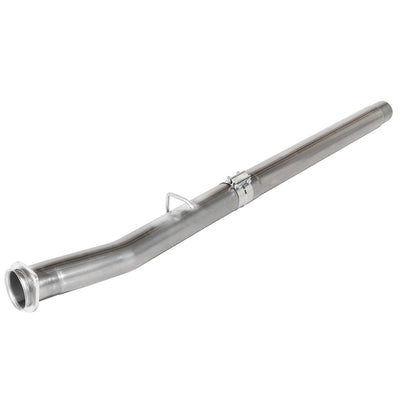
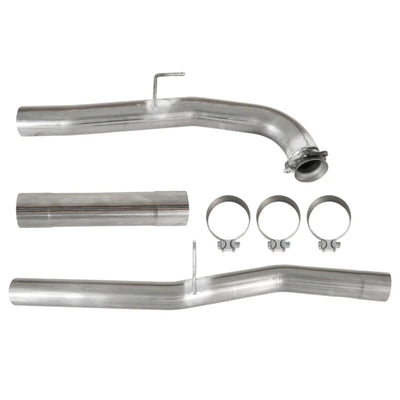
Why spend $4,000+ on a replacement factory filter that will just clog again? Our DPF Delete Kits from EGR Performance replace restrictive exhaust substrates with high-flow, heavy-duty stainless steel delete pipes—delivering maximum exhaust velocity, significantly lower EGTs, and total off-road reliability at a fraction of dealership repair prices.
Shop DPF Delete Kits at EGR Performance→The Price Ladder: Clean to OEM
Every DPF replacement cost comparison starts on this ladder, and knowing the rungs before you call shops is the difference between a fair quote and an anchor:
Option |
Typical Range |
Best For |
|---|---|---|
Professional cleaning |
About $300 to $700 |
Intact, ash-loaded filters with good substrate |
DIY backflush |
Water, air, and a weekend |
Hands-on owners comfortable removing the unit |
Aftermarket filter, installed |
About $1,000 to $2,500 |
Substrate damage on a budget, street-legal trucks |
OEM dealer replacement |
About $2,400 to $6,000 |
Warranty claims, newest trucks, factory spec |
Delete hardware plus tune |
Roughly $150 to $3,000 |
Off-road and competition trucks ONLY |
Two notes on reading that table. Cleaning prices climb toward the top of their range when the DOC gets cleaned alongside, which it usually should. And the OEM range is wide because the filter is only part of it: sensors, gaskets, clamps, and labor hours stack on top, which is exactly how a parts price becomes an invoice price.
When Cleaning Beats Replacing
The dash moment that starts most DPF change cost research: an exhaust filter pegged at 100 percent and a regen that never seems to finish.
The cleaning-or-replacing call comes down to three checks:
- Substrate condition: a borescope or a shop's flow test tells you if the honeycomb is intact. Intact means cleanable; cracked or melted means the ladder starts one rung higher.
- Mileage history: the community rule of thumb holds that cleaning is worth it up to roughly 120,000 miles, and past 160,000 the ash cycles and heat history argue for budgeting replacement instead.
- Cause of death: a filter that died from an upstream fault, a ruptured EGR cooler or a failing EGR system, will hand its fate to the next filter unless the cause is fixed first.
Before committing thousands of dollars to a full filter replacement, confirm whether your DPF canister is physically cracked or simply suffering from interrupted active regeneration cycles. Address sensor faults, exhaust leaks, and thermal cycle interruptions by reading our diagnostic guide on DPF regeneration failure.
The Labor Half of the Bill
The filter gets the sticker shock, but labor decides which end of the range your invoice lands on. Removing a DPF filter on a modern diesel means unbolting a heavy, heat-cycled assembly from the top of the exhaust chase, often with sensors and studs that have been cooking for a decade:
- Book hours versus reality: labor guides assume fasteners come out clean. Rusted clamp bolts and seized sensor bungs add real hours real fast.
- Sensor casualties: exhaust pressure and temperature sensors frequently die on removal or test bad once out, adding parts to the bill neither you nor the shop quoted.
- Gaskets and clamps every time: the reinstallation hardware is single-use on most trucks, and it is on the invoice whether it was on the estimate or not.
- Reset and verification: a proper job finishes with a forced regeneration and a road test to confirm differential pressure, which is labor too, and the part that proves the repair.
This is also why two shops can quote the same truck thousands of dollars apart: one priced a clean removal, the other priced the rust it could see on the lift. Ask any quote you receive whether sensors and hardware are included, and the spread usually explains itself.
The Cheap Route That Is Not Cheap
Every cost of replacing DPF filter thread eventually finds the cheap exit: delete the filter, spend a fraction, never clean anything again. The honest version of that math has two columns. The hardware column is real: delete pipes and full kits with tuning genuinely cost a fraction of an OEM replacement, which is why the off-road world uses them. The other column is legal: removing emissions equipment from a street-registered vehicle is tampering under federal law, most states mirror it, inspections fail it, and a commercial vehicle can carry fines that dwarf any filter invoice.
So the fork is clean: registered street truck, the ladder in section 3 is your menu. Dedicated off-road, race, or farm truck that never sees public roads, and the best DPF delete kit guide covers that hardware for the trucks it legitimately applies to.
What Owners Report Paying
The forum receipts are consistent with the ladder above. A TDI owner documented on the TDIClub forums a dealer replacement quote of $2,350, found the same part online for around $980, and had local shops quote cleanings in the $450 to $550 range, three honest numbers that describe the entire market in one thread.
Diesel pickup owners report the same shape from the other end: five-figure dealer invoices are rare outliers, but $2,500 to $4,000 installed is the common OEM experience, with aftermarket installs routinely landing half that.
The pattern worth copying from those threads: owners who spent a diagnostic hour before spending a parts thousand. The ones who cleaned first and replaced only after a flow test confirmed the substrate was cracked consistently paid the least over the life of the truck, because they never bought a filter the diagnosis did not call for.
When weighing a factory DPF replacement against long-term maintenance overhead, dedicated off-road competition and agricultural truck owners often evaluate bypass racing pipes and ECM recalibrations. To compare total hardware expenditures, labor requirements, and fuel economy shifts, explore our breakdown on DPF delete cost.
FAQ
How much does a DPF replacement cost?
Installed, the DPF change cost runs roughly $2,400 to $6,000 at a dealer with OEM parts, and about $1,000 to $2,500 with a quality aftermarket filter. Cleaning, when the substrate is intact, runs $300 to $700 instead.
Is it cheaper to clean or replace a DPF filter?
DPF cleaning is dramatically cheaper when it applies. The test is substrate condition: ash-loaded but intact cleans well; cracked, melted, or oil-soaked filters do not, and cleaning money spent on one is wasted.
Can I replace a DPF myself?
Mechanically yes on many trucks, and buying the part online can cut the bill roughly in half versus dealer installed. Budget for the realities: single-use gaskets, fragile heat-cycled sensors, and a forced regeneration to verify the repair.
How many miles should a DPF filter last?
Well past 100,000 miles on a healthy engine with low-ash oil. Most cleaning-friendly failures cluster between 100,000 and 200,000 miles, and the community rule of thumb is clean up to about 120,000, budget replacement by 160,000.
Does insurance or warranty cover DPF replacement?
Powertrain warranties often cover it when the failure is a covered component defect rather than neglect or an upstream engine fault. Extended plans vary widely; the denial usually hinges on the cause, which is another reason the diagnosis comes first.
Why do DPF quotes vary so much between shops?
Labor assumptions. One shop prices book hours on a clean removal, another prices the rust it expects, and both may differ on whether sensors and hardware are in the number. Two honest DPF filter replacement cost quotes can still differ by a grand, so ask what each includes before comparing.
Will a bad DPF filter damage the engine?
Left alone, yes: rising backpressure derates power, and endless regens dilute engine oil with fuel. The filter rarely destroys an engine directly, but the conditions it creates do slow damage.
Is a delete really cheaper than replacing?
On hardware alone, yes. On a street truck, no: removing emissions equipment is illegal tampering with inspection and fine consequences that erase the savings. Deletes are the off-road option, not the budget option.
The Verdict
Treat DPF filter replacement cost as a ladder, not a price: diagnose the substrate, clean at $300 to $700 when it is intact, replace at $1,000 to $6,000 when it is not, and always repair whatever sent it to an early grave.
Compare quotes with sensors and hardware named, expect labor to move the number more than parts do, and let a flow test, not a hunch, decide between the rungs. The cheapest DPF job is still the one where the diagnosis came first, and the most expensive is always the second filter killed by the first unfixed fault.
Instead of sinking thousands of dollars into costly DPF replacements that are bound to clog again, upgrade to an EGR Performance diesel DPF delete kit for a permanent, budget-friendly solution that boosts your truck's power and fuel efficiency."


