






Regeneration burns the soot, but the ash stays: that is the whole story of diesel particulate filter maintenance, and it is why every 6.7 Cummins eventually needs DPF cleaning rather than just another regeneration.
This guide covers the signs of an ash-full filter, the upstream failures that plug DPFs early, the Cummins DPF cleaning methods compared honestly (including the shop trade's open secret that air cleaning leaves filters half plugged), and where the DPF delete kit 6.7 cummins fits for trucks that never see public roads.
Table of Contents
Key Takeaways
- [The core fact]: Regeneration burns collected soot into ash, and ash never leaves on its own. Cummins DPF cleaning means physically removing that ash once the filter's storage is spent.
- [The signs]: Regens arriving more often and taking longer, an exhaust filter reading pinned near full, lost power or derate, and soot-related codes are the ash-full pattern.
- [Upstream culprits]: A failing EGR system or ruptured EGR cooler dumps extra soot and coolant into the filter, plugging it long before its natural service life.
- [Method honesty]: Shop air cleaning was the old standard and leaves a large percentage of the filter plugged; manufacturers are moving to liquid processes, and the trade's own effective method is a heated-water backflush.
- [The DIY-adjacent method]: Pressure washing the filter from the clean side out, straight heated water with zero chemicals, alternating water and compressed air until it runs clear.
- [Ash prevention]: Low-ash oil is the single biggest lever, because the ash in a DPF is mostly oil additive that burned and got trapped.
- [The fork in the road]: Cummins DPF filter cleaning is the street-legal maintenance path. Deleting the DPF is emissions tampering for off-road and competition trucks only.
Soot Burns, Ash Stays
The most-watched Ram DPF filter cleaning video on YouTube, from a shop that cleans them for a living: what ash is, why exchange programs cost so much, and the wash method they actually use.
The diesel particulate filter is a honeycomb that traps soot from the exhaust stream. When soot loads up, the engine regenerates: it raises exhaust temperature and burns the soot off. What regeneration cannot touch is ash, the non-burnable residue left behind after the soot oxidizes, plus ash carried in from oil consumption. It accumulates in the honeycomb cells year after year until the filter's effective volume is gone. That is the difference that matters for maintenance: soot is a recurring load the truck handles itself, ash is a one-way accumulation that only 6.7 Cummins DPF filter cleaning removes.
Manufacturers plan for this. The standard response is a filter exchange program, trading your ash-full filter for a factory-cleaned one, which works but costs real money. The service manual path for shops used to be pneumatic air cleaning, and the shop in the video above is blunt about how that has aged: a lot of manufacturers no longer endorse it, because air cleaning still leaves a large percentage of the filter plugged.
Stop Cummins DPF Cleaning Fragile Filters. Eliminate DPF Restraints Permanently.
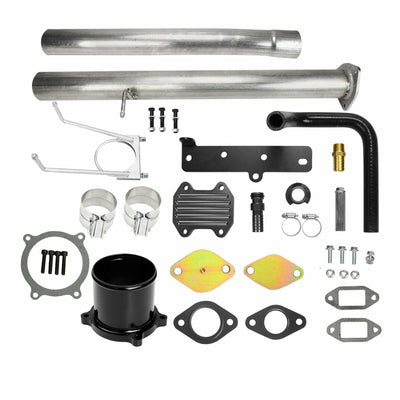
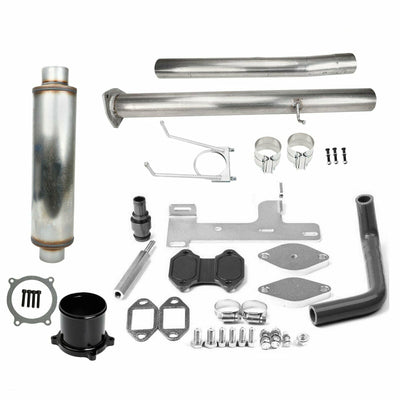
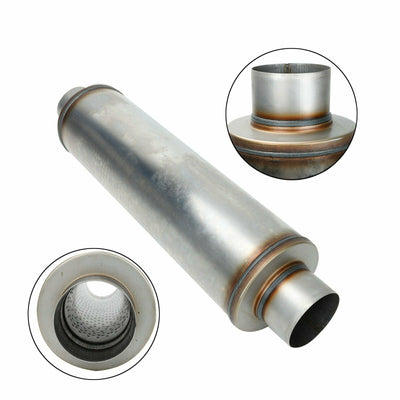
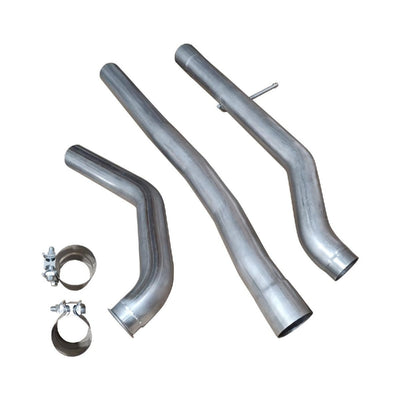
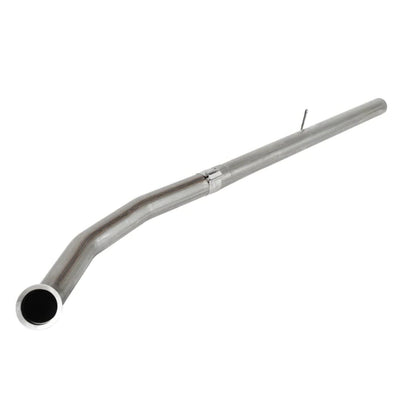
Tired of paying hundreds for temporary shop Cummins DPF cleanings and dealing with recurring regeneration derates? Our DPF Removal Systems from EGR Performance replace clogged factory exhaust canisters with heavy-duty mandrel-bent stainless steel pipes—delivering maximum exhaust flow, significantly lower EGTs, and total off-road reliability for your 6.7 Cummins.
Shop DPF Delete 6.7 Cummins →Signs Your DPF Needs Cleaning
The signs that Cummins DPF cleaning time has arrived all come from the regeneration system working harder and harder:
- Regens that stack up: the truck regenerates more often, each cycle runs longer, and highway drives that used to clear the filter no longer keep up.
- Filter readings pinned high: the overhead or scan tool shows the exhaust filter loading toward full despite completed regens, the dash-level version of an ash counter that will not come down.
- Power loss and derate: backpressure climbs until the engine protects itself, and the truck feels soft long before any light comes on.
- Soot and pressure codes: excessive soot loading and differential pressure faults, the codes that send trucks to shops for a cleaning verdict.
- Fuel in the oil: endless regens dump fuel past the rings during post-injection, and a rising oil level with a fuel smell is the hidden cost of a filter that never finishes Cummins DPF filter cleaning itself.
Then there are the early-death causes, which are not maintenance failures at all. A diesel oxidation catalyst packed with soot stops building the heat regeneration needs, so the DPF never fully burns down.
A failing EGR system feeds the exhaust extra soot until the filter drowns. And a ruptured EGR cooler pushes coolant through the whole aftertreatment stack, contaminating the substrate.
Cleaning Methods Compared
The 6.7 Cummins DPF cleaning menu is short, and the differences are practical:
Method |
What It Removes |
Honest Assessment |
|---|---|---|
Forced/on-truck regeneration |
Soot only |
Right answer for soot loading, useless against ash |
Shop air cleaning |
Some ash |
The legacy standard; leaves a large percentage plugged, manufacturers dropping it |
Liquid cleaning process |
Ash and contamination |
Manufacturer-endorsed and effective, at the top of the price ladder |
Heated-water backflush |
Ash, soot, coolant contamination |
The working shop method: cheap, effective, no chemicals |
Filter exchange program |
Everything, via swap |
Factory-clean result, factory-sized invoice |
That middle row deserves its own note, because plenty of owners pay for air cleaning without knowing its reputation. The shop behind the most-watched DPF cleaning video on the topic runs an air cleaning machine that, in their words, rarely gets used anymore, because washing works better.
The Backflush Method
The same shop's Cummins follow-up: a DPF and DOC combination that stopped regenerating after an upstream failure, washed out with the staggered water-and-air method.
The technique is almost insultingly simple, which is why it spread through the trade even though no engine maker will print it in a manual:
- Straight heated water only. No chemicals or DPF cleaning solutions of any kind; they attack the substrate and the precious-metal coatings.
- Spray against the flow. Backflush from the clean side so the ash and soot exit the way they came in, not deeper into the cells.
- Keep the nozzle back. High pressure too close to the face damages the substrate and can knock the plugs out of the cell ends; the honeycomb is ceramic.
- Cover the whole face. The outer edges hold a surprising share of the ash, so work the entire filter face until the water runs clear.
- Alternate water and air. The refinement from the Cummins video: wash with water, blow out with compressed air, and stagger back and forth; it cleans deeper than either alone.
- Dry it completely. Even after thorough air drying, moisture hides in the cells, and a wet filter on a cold morning announces itself with an impressive steam show. Dry fully before reinstall.
Two bonuses worth knowing: the backflush also clears contamination from a ruptured EGR cooler, washing coolant residue out of the substrate, and it works on the DOC ahead of the filter, restoring the heat that regeneration depends on.
The video's truck had stopped building temperature across a soot-packed DOC; the wash fixed the whole chain. For the failure signs that send coolant and soot downstream in the first place, the 6.7 Cummins bad EGR symptoms guide is the companion read.
Intervals and What Feeds the Ash
The calendar answer for 6.7 Cummins trucks is symptom-driven more than mileage-driven: clean when regens can no longer keep the filter reading down, not at a fixed hour. But what determines how soon that day comes is almost entirely what enters the exhaust, and the members of Cummins forums put it plainly: the DPF self-cleans soot forever, it is the ash from oil that accumulates, so low-ash oil is the one specification that directly buys filter life.
The practical ash math:
- Oil spec: the low-ash ratings on modern diesel oil exist for exactly this component; using them is the cheapest DPF maintenance there is.
- Oil consumption: every quart an engine burns sends its additive package into the filter as ash. A tired engine is a DPF killer.
- Duty cycle: long idles and short trips force more regens per mile driven, and every regen converts that day's soot into a little more permanent ash.
- Upstream health: a healthy EGR system and DOC keep soot burn complete; failing ones pack the filter early.
Clean, Replace, or Delete?
For a registered street truck, the decision has exactly one legal answer: maintain the aftertreatment system. Cummins DPF cleaning is the maintenance, a factory exchange or new filter is the replacement, and the truck stays compliant and inspection-ready.
The off-road question gets asked constantly, and the honest framing is that delete hardware exists for competition and closed-course trucks, where the DPF comes out as part of a full build; our best 6.7 Cummins delete kit guide covers that hardware for the trucks it legally applies to.
What it does not change is the rule: removing emissions equipment from a street-registered vehicle is tampering, and the fines and failed inspections that follow are part of that path's real cost.
FAQ
Can you clean a DPF yourself?
On-truck, no: regenerations are the only self-cleaning the system does, and they only clear soot. Off-truck, the backflush method with heated water is a straightforward job for anyone comfortable removing the filter and handling a ceramic substrate carefully.
How often does a 6.7 Cummins DPF need cleaning?
By symptom rather than schedule: Cummins 6.7 DPF cleaning is due when regens stack up, filter readings stay high, or soot codes appear. Trucks on low-ash oil with healthy engines and highway duty go far longer between DPF cleanings than short-trip, high-idle trucks.
What is the difference between regeneration and cleaning?
Regeneration burns soot into ash inside the filter. Cleaning DPF on 6.7 cummins removes the accumulated ash, which no amount of regeneration touches.
Does cleaning restore a DPF to new?
A thorough wash restores most of the flow, and it also clears coolant contamination from a ruptured cooler. Deeply heat-cracked or substrate-damaged filters are done regardless of how clean they get.
Why does my truck regenerate so often?
Either the duty cycle never lets regens finish, or something upstream is loading the filter: a soot-packed DOC that cannot build heat, or an EGR fault feeding extra soot. Diagnose upstream before blaming the filter.
Is shop air cleaning worth paying for?
It is the weakest option on the menu. Multiple manufacturers have dropped their endorsement because air cleaning leaves a large percentage of the filter still plugged, and working shops prefer the heated-water backflush.
Can I drive with a full DPF?
Short distances at low load, yes, but you are on borrowed time: backpressure climbs, the engine derates, and post-injection fuel keeps diluting the oil. It is a schedule-it-now repair.
Does deleting the DPF avoid all this?
It removes the hardware and the maintenance, on trucks that never use public roads. On a street-registered vehicle it is emissions tampering, with the legality and inspection consequences that follow.
The Verdict
Cummins diesel particulate filter cleaning is really two habits and one procedure: run low-ash oil, keep the EGR system healthy, and when the ash counter wins, backflush the filter with heated water and patience instead of paying twice for half-plugged air cleaning. Read the signs early, fix the upstream faults first, and the filter that costs the least is the one you maintain instead of replace.
While routine Cummins DPF cleaning offers a temporary fix, eliminating recurring clog issues altogether is easy by choosing EGR Performance for removing the DPF on your 6.7 Cummins for long-term reliability and peak performance.
Maintaining clean DPF channel passages on Ram heavy-duty trucks requires managing oil consumption, EGR soot loading, and injector spray patterns across the engine's operating lifecycle. For a complete technical breakdown covering emission controls, turbocharger geometries, and overall platform reliability, explore our detailed 6.7 cummins engine guide.


