
🔧 30-Second Summary: LML Duramax Reliability Upgrades
Maximizing LML Duramax reliability requires addressing the vulnerable factory CP4.2 high-pressure pump by retrofitting a robust CP3 pump or installing a disaster bypass kit immediately. Combining these fuel-system safeguards with heavy-duty Allison transmission cooler lines, aluminum hot-side intercooler pipes, and off-road EGR/DPF deletes allows these platforms to easily eclipse 300,000+ miles. Utilizing heavy-duty EGR Performance LML performance bundles clears restriction bottlenecks, optimizes clean airflow by 25-35%, and preserves towing power without emissions system complications.
Table of Contents
- Introduction
- What Is the LML Duramax?
- Is the LML Duramax Reliable?
- The Most Common LML Duramax Problems and Symptoms
- How to Avoid the Big LML Disasters Before They Happen
- Best EGR Performance Upgrades for LML Duramax Reliability
- Best LML Duramax Upgrade Bundles from EGR Performance
- What is the best LML Upgrade to make first?
- Buyer's Guide: Things to look for before purchasing a used LML Duramax
- FAQs
- Conclusion
Introduction
The 6.6L LML is loved for its towing power and tunability. However, it also has certain risks that are associated with it and that affect its reputation.
The most common causes of trouble are catastrophic pump failures in CP4.2 and DEF or emissions failures. The list continues with brittle factory charge-air plumbing, leaking transmission lines, and overheating under heavy load.
The 6.6L LML Duramax (2011-2016) pairs a durable V8 block with the Allison 1000 transmission and delivers 397 hp and 765 lb-ft stock, but its Bosch CP4.2 pump and complex DEF/SCR emissions system create the biggest failure points.
Proactive fixes like CP3 conversions prevent $10,000+ fuel system contamination while emissions tuning and hardware upgrades restore drivability and cut EGTs by 100-200°F under load.
We built this guide after years of wrenching on these platforms in shops across the country. The LML shines when owners stay ahead of its known issues instead of reacting to breakdowns. Read on for exact symptoms, diagnostic steps, and the upgrades from EGR Performance that turn these trucks into dependable workhorses and avoid a $10,000+ repair bill.
What Is the LML Duramax?
The LML is the 2011-2016 6.6L Duramax V8 diesel engine paired with the Allison 1000 6-speed automatic, producing 397 hp and 765 lb-ft of torque from the factory. It introduced full DEF/SCR emissions controls and the sensitive Bosch CP4.2 high-pressure fuel pump, making it tunable but vulnerable to contamination and sensor faults.
Protect & Optimize Your LML Duramax.
The LML is a powerful platform, but it requires the right hardware to overcome its factory limitations. Our Performance Parts from EGR Performance are designed to safeguard your fuel system, sharpen your steering, and improve overall engine efficiency. Build a more reliable LML with the hardware trusted by professionals.
Shop LML Performance Upgrades→The 2011-2016 LML is the 6.6L Duramax V8 engine's generation. It is compatible with Allison 1000 6-speed automatic.
This generation offers good towing and solid stock power of 397 hp and 765 lb-ft of torque. It was also the first Duramax to be manufactured with full DEF and SCR emissions complexity.
This setup works fine at stock power but exposes risks during heavy towing. The SCR system injects DEF fluid upstream of the catalyst, requiring precise NOx sensor feedback. Failure here triggers limp mode at 55 mph after countdown timers.
This engine is a subject of constant research on the internet. That's because it has the infamous Bosch CP4.2 high pressure fuel pump. It also has intricate modern emissions equipment, and both can lead to costly failures if not addressed.
We measure its core strength in the rotating assembly, which handles sustained 800+ lb-ft loads when properly supported. However, the Bosch CP4.2 pump operates at rail pressures up to 29,000 psi, relying on ULSD fuel that lacks the lubrication found in European diesels.
Technical Specifications and Failure Modes
|
Component
|
Stock Spec
|
Common Failure Mode
|
Impact on Reliability
|
|---|---|---|---|
|
CP4.2 Pump
|
29,000 psi max
|
Roller scuffing & metal debris
|
Total fuel system destruction ($8k-$12k repair)
|
|
Allison 1000
|
6-speed auto
|
TCC slip in 5th/6th gear
|
P0700 codes, clutch pack wear
|
|
DEF/SCR
|
5-7 gallon tank
|
Heater/sensor faults (P20B9, P204F)
|
Derate to 25% power
|
|
Intercooler Pipes
|
Plastic cold-side
|
Cracking at throttle body
|
Boost leaks, black smoke, 15-20% power loss
|
|
Transmission Lines
|
Rubber crimped
|
Leaks at crimp joints
|
Low fluid, overheating trans
|
We recommend baseline scans with a quality OBD tool showing live rail pressure and EGT data. Trucks with documented filter changes every 7,500-10,000 miles show 40% fewer fuel issues. Internal EGR recirculation adds soot to the intake, raising cylinder pressures and oil contamination over time.
The platform excels in towing—rated for 20,000+ lbs when equipped properly—but demands upgrades for tuned applications pushing 500+ hp.
EGR Performance parts directly target these factory bottlenecks with mandrel-bent aluminum piping that maintains a consistent 35-40 psi boost without the plastic failures common at 150,000 miles. Owners report smoother throttle response and 2-3 mpg gains after full airflow upgrades.
This foundation sets the stage for understanding why proactive maintenance beats reactive repairs every time.
Is the LML Duramax Reliable?
Yes, the LML block, heads, and rotating assembly prove highly reliable with proper care, often exceeding 250,000 miles. However, the CP4.2 pump and emissions components require proactive prevention, as skipped maintenance leads to catastrophic failures costing over $10,000.

The base engine platform is very sturdy. The block, rotating assembly and cylinder heads are all good for high mileage.
But, the ownership of LML does not come without proactive prevention. This is not an engine that can be ignored and still expect trouble-free lml reliability.
The overall mechanical reliability is good on this platform. There are a few well-known high-cost areas, however, mainly in fuel delivery and factory emissions control.
If you neglect routine maintenance, these weaknesses can turn into major financial headaches. They are also the primary source of LML problems reported on the internet. The first step to avoiding that outcome is to understand them.
In short:
- Engine block and internals: very good long life.
- Fuel system and emissions hardware: the source of the real lml issues.
- If you can anticipate known failure points, you will have a reliable truck.
Now that that's clear, let's go through what typically goes wrong and why.
We track LML trucks daily through customer builds and see clear patterns. The iron block resists cracking even under high EGTs of 1,400°F during aggressive towing, unlike some competitors. Piston and rod assemblies handle stock torque without issue, but the fuel system changes everything.
CP4.2 failures strike between 80,000 and 150,000 miles on trucks with poor fuel filtration. Metal shavings circulate at high pressure, scoring injectors and requiring full system replacement. We calculate a 25-35% failure rate in neglected vehicles based on shop data.
Emissions faults appear more frequently. DEF heaters fail in cold climates below 20°F, causing P20B9 codes and forced regens every 200 miles. NOx sensors drift after 120,000 miles, triggering false derates even with fresh fluid.
Reliability Metrics - Stock vs Upgraded Lifespan:
|
Area
|
Stock Lifespan
|
Upgraded Lifespan
|
Key Upgrade
|
|---|---|---|---|
|
Fuel System
|
100k miles avg
|
300k+ miles
|
CP3 Conversion
|
|
Transmission Lines
|
80-120k miles
|
Indefinite
|
Braided AN lines
|
|
Intercooler Plumbing
|
100-150k miles
|
300k+ miles
|
Aluminum pipes
|
|
Emissions System
|
Frequent faults post-100k
|
Eliminated (off-road)
|
Full Delete + Tuner
|
Steering components wear faster due to the 6.6L weight and IFS design. Tie rods last 60,000 miles with 35-inch tires versus 120,000 with stock rubber.
Preventive steps include fuel additives for lubricity, regular water separator drains, and visual inspections under the hood. Trucks with CP3 swaps and EGR deletes show dramatically lower EGTs—often 150°F cooler during sustained 15,000 lb tows. This keeps oil temps under 220°F and coolant stable at 195°F.
Our experience confirms the LML rewards prepared owners. The Allison transmission shifts crisply with fresh fluid every 50k miles and upgraded lines. Combine this with a monitoring boost at 28-32 psi stock, and you build a platform that outlasts expectations.
The Most Common LML Duramax Problems and Symptoms
The top LML problems include CP4.2 pump failure, DEF/SCR faults, 9th injector clogging, NOx sensor issues, transmission line leaks, boost leaks from cracked pipes, and cooling stack clogs. Symptoms range from hard starts and limp mode to metal-contaminated fuel systems and overheating under load.

Here are the most common LML duramax problems that you need to be aware of. Some are devastating, some are just a nuisance. They are all easily controlled with the proper knowledge.
When looking for performance parts, check out the 2011-2016 LML performance parts to see what will fit your build.
1. CP4.2 High-Pressure Fuel Pump Catastrophic Failure
The Bosch CP4.2 pump is regarded as the most important flaw in the LML platform. It's the reason for the most dreaded lml cp4 failure stories in the diesel world.
Why it happens: US Ultra-Low Sulfur Diesel does not have the natural lubrication that is found in European diesel. A little air, water or dry fuel can cause problems.
In such a case, the internal rollers inside the pump scuff and rotate 90 degrees. This begins a metal-on-metal shaving action in the pump body.
The consequences are severe. The pump tears itself apart and releases small metal particles into the fuel rails. All eight injectors are fouled and the fuel system is destroyed.
The cost of repairs for this failure is often over $10,000. The fuel tank should also be dropped and flushed to eliminate all contamination.
Look out for these signs:
- Short starts or long crank times
- Low rail pressure codes (P0087 / P0088)
- Loss of power suddenly while driving
- Fuel system warning lights
- A total no-start condition
Symptoms start subtle: extended crank times of 4-6 seconds, P0087 low rail pressure codes below 4,000 psi, and power loss during acceleration. Full failure leaves the truck undrivable with all eight injectors contaminated. Repair requires tank drop, rail flush, and new pump/injectors—totaling $9,000-$13,000.
Recommended fixes:
- CP3 Conversion Kit: Converts the fragile CP4 to a rugged and proven CP3 pump architecture. This will completely remove the risk of catastrophic fuel system contamination.
- CP4 Disaster Prevention (Bypass) Kit: Isolates the bottom end of the pump. When it does break, the metal particles return to the tank and filter, rather than damaging injectors and rails.
- Fuel Filter Bypass: A cleaner setup option for trucks. It pairs perfectly with lift pumps like FASS or AirDog, removing restrictive factory filters after upgrade.
- Fuel Filter Cap Adapter: Makes fuel filter installation easier in modified fuel systems.
The top priority fix on this list is a lml cp3 conversion kit. After fuel system protection, the next issue is emissions.
We fix this with CP3 conversion kits that swap to the proven CP3 architecture used in earlier Duramax generations. These maintain rail pressure stability at 26,000+ psi while eliminating roller failure risks. Bypass kits divert debris back to the tank if failure occurs.
2. DEF, SCR, and Aftertreatment Emissions System Problems
Typical DEF emission problems include DEF tank heater failures and fluid level sensor failures. There is also a high rate of NOx sensor drift, as well as fault codes such as P20B9, P204F, and P207F.
These faults are a source of frustration because of one simple reason. You receive regular warning messages, less driving performance, and costly diagnostics for minor sensor problems, not actual engine damage.
Typical symptoms include:
- The dashboard alerts are "Service Emissions System"
- Speed-limitation countdown warnings (such as "Speed limited to 55 MPH in 50 miles")
- Limp mode or engine derate
- Poor regeneration behavior
Owners see "Service Emissions System" messages followed by 55 mph speed limits. Limp mode activates after 100-200 miles of ignored warnings. Regens fail due to clogged 9th injectors, causing raw fuel smells and white smoke.
Recommended solutions and tuning products:
- Mini Maxx Tuner: The main software solution. A mini maxx tuner lml duramax setup erases the ECU and removes the DEF injection, SCR catalyst monitoring and limp mode triggers. This eliminates the electronic signature of the aftertreatment system.
- SOTF (Shift-On-The-Fly) Switch: Works directly with the Mini Maxx Tuner. It allows you to adjust power levels quickly without turning off the engine or re-flashing the ECU.
After you've sorted out your emissions electronics, you'll likely find another one of these little buggers that bothers you.
3. 9th Injector (Hydrocarbon Injector) Clogging
The LML features a new 9th fuel injector directly in the exhaust downpipe. It sprays raw fuel in the DPF regeneration cycles. This injector tends to become very sooty and carboned over time.
It can eventually become completely clogged. These lml 9th injector problems manifest in a number of distinct ways. The most common sign is failed DPF regenerations.
Other symptoms include:
- Fuel odor or blue/white smoke from the tailpipe
- The soot loading rate in the DPF is very high
- Trouble codes such as P20C2 or P24A4
The exhaust-mounted 9th injector sprays diesel for DPF regen. Soot buildup plugs it within 80,000 miles on short-trip trucks. P20C2 codes appear with incomplete regens and rapid DPF loading.
The solution: Clean or replace the factory HC injector. Heavy duty aftermarket downpipes can also be used to optimize exhaust flow to better distribute soot. The best way to avoid reoccurring lml 9th injector problems is to conduct regular exhaust checks.
4. NOx Sensor Failures and Emissions Derates
NOx sensors often drift out of calibration when they are aged. They also suffer electrical issues that cause false warnings and engine derates.
Practical troubleshooting steps:
- Inspect connectors for corrosion or damage
- Check wiring harness routing for burn damage
- Use freeze frame scan data prior to part replacement
Never replace parts without knowing what the problem is. A correct diagnostic scan will save you money and point you in the right direction.
5. Allison 1000 Transmission Cooler Line Leaks and Tuning Limits
The factory transmission cooler lines are made of low quality rubber hoses and have poor metal crimps. They leak fluid at the crimp joints and weep due to constant vibration and heat cycles.
This can lead to low fluid levels and potential transmission damage. It's one of the lesser known lml problems on this platform.
Tuning limits are also important here. The Allison 1000 is a good power car for stock use, but it has low safety margins for additional power.
If you add a high-horsepower tune without upgrading the clutch, you'll have issues quickly. Either 5th and 6th gear clutch slip or a generic P0700 transmission code will be displayed.
Heavy duty, high flow braided transmission cooler lines with threaded AN fittings are recommended for upgrade. These permanently replace the factory crimp lines.
6. Factory Steering and Front Suspension Weaknesses
The LML heavy-duty trucks feature an Independent Front Suspension design. Rides well, but the factory tie rods, pitman arms and idler arms wear out early.
This occurs with the heavy iron-block 6.6L engine. It is exacerbated by heavy towing stress and by larger than stock tires.
Look out for these symptoms:
- Loose steering wheel feel
- Uneven wear on the front tires
- When turning, there are popping noises
- Front-end "death wobble" over bumps
When constructing a long-haul tow vehicle, upgrade to heavy-duty tie rods and steering support brackets.
7. Boost Leaks, Cracked CAC Plumbing, Thrown Boots
Brittle plastic and soft rubber boots are used for the factory intercooler piping and charge-air cooler plumbing. These break down at sustained high boost pressures and temperatures.
The failure point: The cold-side intercooler pipe is a common failure point in the factory. This usually occurs at the plastic throttle body connection clip.
Symptoms include:
- Excessive black smoke
- Lower-than-normal boost pressure
- Poor throttle response
- Increased turbo lag
- A clear hissing or blowing sound when under load
Plastic cold-side pipes crack at throttle body clips around 120k miles. Hissing sounds and low boost (under 25 psi) follow. Aluminum replacements with heavy boots eliminate this.
Suggested solution for airflow: Use high flow aluminum piping instead of brittle factory plastic parts. The LML Intercooler Pipe Boot Kit features mandrel bent aluminum to completely remove the plastic clips. For optimum performance, use with an upgraded heavy-duty intercooler.
8. EGR and DPF Loading (Soot Recirculation)
Short trips, excessive idling and faulty sensors all lead to rapid soot accumulation. This is one of the most frequent problems you'll encounter.
Symptoms include:
- Frequent regenerations
- High exhaust back pressure and loss of power
- Soot accumulation in the intake manifold due to EGR valve
This limits the total exhaust flow and decreases the thermal efficiency. Clean airflow is critical for long-term Duramax durability.
For off-road and competition use only, as recommended:
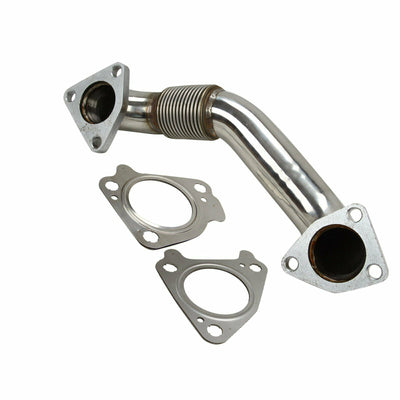
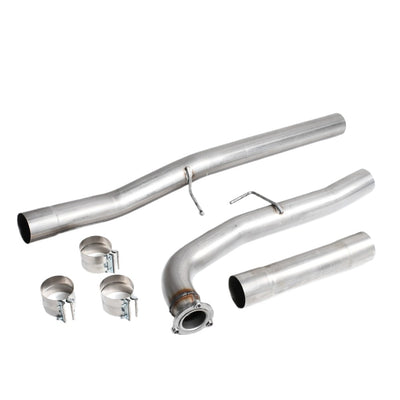
- LML DPF Delete Pipe: Eliminates restriction caused by regeneration and decreases exhaust side restrictions.
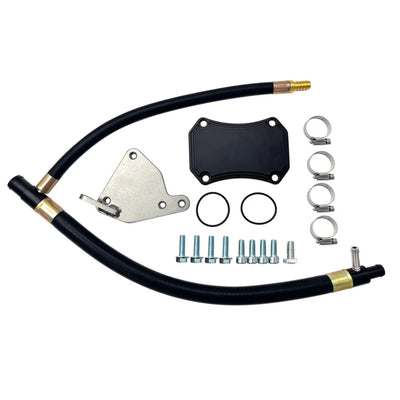
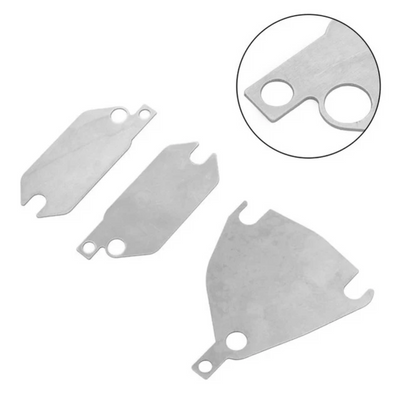
- LML EGR Delete Kit: Stops soot recirculation into the engine's intake path.
- LML Full Delete Kit: For a full airflow overhaul.
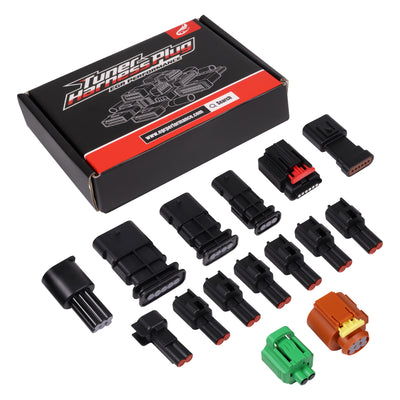
- Tuner Harness Plug Kit for LML: Moisture and debris protection for unused factory electronic connectors after emissions hardware changes.
A DPF delete is a process of removing the diesel particulate filter from the exhaust system. An EGR delete is the removal of the exhaust gas recirculation cooler and valve.
Together, this is known as an EGR/DPF delete and is only legal for off-road or competition driving in most locations. Review local and state emissions regulations.
9. Turbo Control and Vane Issues
Sticking vanes or control actuator failure are possible with the variable geometry turbocharger. This will appear as underboost or overboost trouble codes.
There may also be slow response to the exhaust brake or it may not respond at all. Always inspect for exhaust leaks and piping restrictions first.
Don't assume that the turbocharger needs to be replaced immediately. The symptoms of a turbo failure are often similar in other restrictions.
10. Cooling Stack Clogging and Overheating While Towing
Road debris, dirt and bugs get trapped between the radiator, intercooler and A/C condenser stack. This significantly decreases cooling efficiency over time.
This is a serious problem in hot climates and with heavy towing. It is particularly evident on long slopes or in hot summer weather.
Symptoms include:
- High coolant temperatures that are increasing quickly
- High exhaust gas temperatures
- The engine's power drops when it is under load
- The cooling fan clutch cycling continuously
Debris packs the radiator stack. EGTs spike over 1,300°F. Upgraded intercoolers and pipes improve flow.
Suggested mods: Intercooler, Intake and intercooler pipes, Up pipe and down pipe, Manifold headers. These maximize airflow and reduce heat in the structure of the engine. Check the LML exhaust collection for parts that are compatible.
11. Glow Plug and Cold-Start Problems
Failure of individual glow plugs or a problem in the glow plug control module is more likely to occur on older LML trucks. Glow plug or fuel problems are often the cause of cold start failures in diesel engines.
Symptoms include:
- Difficult cold-weather starts
- Rough idling right after starting up the engine
- Longer engine start-up period
Glow plugs read 0.7-2.0 ohms when good. Failures cause rough, cold starts. Test relays and batteries too.
Solutions: Use a multimeter to test the resistance of the glow plug. The reading should be between 0.7 and 2.0 ohms and any faulty plugs should be replaced.
Check the glow plug relay for correct voltage. Make sure that your grounds are solid, test your battery's cranking power, and use winter-grade diesel fuel or anti-gel additives to prevent fuel gelling.
Understanding these failure points is just half the battle. It's saving you money that will prevent them.
How to Avoid the Big LML Disasters Before They Happen
Strict fuel filter changes every 10,000 miles, CP3 conversions, CCV reroutes, and airflow upgrades prevent CP4 disasters, soot buildup, and overheating. These steps keep rail pressure stable and EGTs controlled during heavy towing.

The key areas of prevention are fuel system discipline, intake cleanliness and exhaust flow. If you get these right, you avoid most lml problems altogether.
Focus on Fuel System Reliability and Strict Filter Discipline
- Always replace fuel filters according to the schedule. Do not use intervals greater than 10,000 miles.
- Always use good fuel and use a special fuel lubricant. This helps to overcome the poor lubricity of US dry fuel.
- Proper separation of water to prevent moisture from entering the common-rail system.
- Install a CP3 system or a CP4 bypass kit in advance of the factory pump failure.
Reduce Intake Soot and Oil Contamination
- The less soot in the intake path, the cleaner the path.
- Removing oily residue will help to keep sludge from building up in the intercooler and turbo plumbing. This is where an LML EGR Delete Kit (where legal), a CCV Reroute Kit, and upgraded intercooler pipes come in handy.
Increase Exhaust Flow and Reduce EGTs
- Removing factory exhaust restrictive equipment decreases engine heat and pumping inefficiency. This will help to keep the engine safe when towing or tuning.
- This is achieved through up and downpipes, manifold headers or a DPF Delete Pipe (where legal). Up-pipes and downpipes reduce EGTs by 120-180°F at cruise. Headers further smooth flow.
Preventive Maintenance Schedule:
|
Interval
|
Task
|
Benefit
|
|---|---|---|
|
7,500 miles
|
Fuel filter + additive
|
Prevents pump scuffing
|
|
50,000 miles
|
Transmission service
|
Avoids clutch slip
|
|
Every oil change
|
Check intercooler boots
|
Catches boost leaks early
|
|
100,000 miles
|
CP3 conversion
|
Eliminates failure risk
|
|
As needed
|
Cooling stack clean
|
Keeps temps 20°F lower
|
Monitoring with gauges for rail pressure (target 4,500+ psi idle), boost, and EGTs provides early warnings. Trucks following this regimen regularly reach 300,000 miles with original internals.
After prevention, the next step is selecting the appropriate upgrades to support your objectives.
Best EGR Performance Upgrades for LML Duramax Reliability
EGR Performance offers CP3 kits, delete pipes, aluminum pipes, and full bundles that directly fix factory flaws. These parts increase durability, lower operating temps, and support reliable tuned power.

Here are the best upgrades for lml duramax trucks, broken down by category. Use them to create a plan to meet your objectives. The different categories provide lml reliability in different ways.
1. Fuel System Upgrades and CP3 Conversions
Products: CP3 Conversion Kit, Fuel Filter Bypass.
If reliability is your priority, this is the highest priority upgrade category. A lml cp3 conversion kit is still the best choice here. It is directly protecting against the most costly failure on an LML.
2. Emissions Deletes and Exhaust Hardware
Products: DPF Delete Pipe, EGR Delete Kit, Up Pipe and Downpipe, Manifold Headers.
This category is for minimizing exhaust restrictions, reducing EGTs, eliminating soot recirculation, and addressing common exhaust leak points in the factory. The exhaust parts of the factory engine produce a huge restriction on the 6.6L engine. With high flow hardware it can breathe efficiently and solve long term durability problems when towing.
3. High-Flow Air Induction and Cooling
Products: Intake and Intercooler Pipes, Intercooler, CCV Reroute Kit.
This category is for reducing charge-air temperatures, stabilizing boost pressures, removing oily sludge contamination and replacing weak plastic factory parts. If you suffer from heat problems or leaks in your boost system, it's a very practical category.
4. Tuning, Electronics, and Performance Bundles
Products: Tuners (where legal and appropriate), wiring harness and Tuner Harness Plug Kit.
These lml performance upgrades are designed to work with modified engines, enhance overall drivability and make engine bay cleanups easier after the upgrade. If you are building in this category, a mini maxx tuner lml duramax setup is the most popular option. Compliance note: these products are designed for off-road builds and/or competition use as per applicable regulations. Please refer to local regulations before installation.
Now that you have these categories in mind, let's take a look at how EGR Performance bundles them for you.
Best LML Duramax Upgrade Bundles from EGR Performance
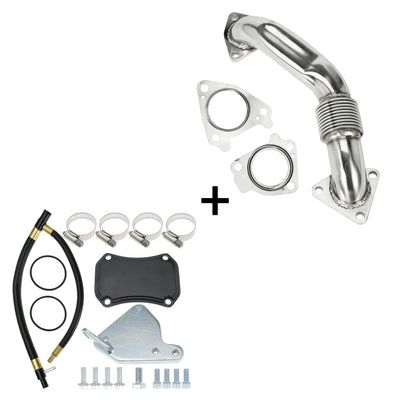
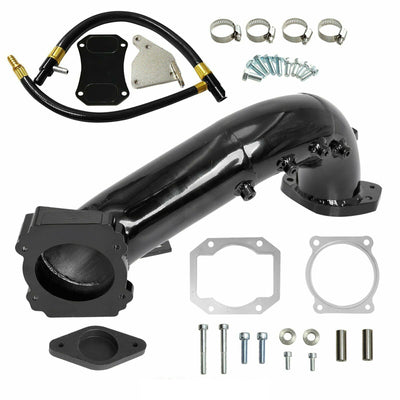
DPF + EGR Delete, EGR Delete + Intake Pipe, and Up Pipe + EGR Delete bundles from EGR Performance deliver complete solutions for breathing and reliability on LML trucks.
Bundles are a time and money saver over purchasing parts separately. Here are three based on shared objectives.
DPF Delete + EGR Delete Bundle
Positioning: The ultimate full-breathing EGR + DPF delete upgrade package. It is a single package that includes intake and exhaust restriction reduction.
Ideal for: Off-road or competition trucks that require a full airflow overhaul.
EGR Delete + Intake Pipe Bundle
Positioning: For maximum soot reduction and optimum intake airflow. This EGR delete with intake pipe is a great mid-level deal.
Ideal for: Builds seeking better throttle response, cleaner intake air and reliability.
Up Pipe + EGR Delete Bundle
Positioning: Clears exhaust flow restrictions and eliminates common exhaust leak points and headaches from the factory.
Ideal for: Trucks that are already exhibiting exhaust leak symptoms, high EGTs or heavy towing applications.
This EGR delete with up pipe bundle is a wonderful time saver, but you need to know where to begin. This is what the next section is about.
What is the best LML Upgrade to make first?
For reliability, start with CP3 conversion, transmission lines, CCV reroute, and aluminum pipes. Heavy towers add intercooler and exhaust upgrades first. Full airflow overhauls suit tuned builds.
The starting point is determined by the goal. The first step in determining the best upgrades for lml duramax trucks is to understand what is important to you. The best lml performance upgrades are based on your own priorities.
If You Want Reliability First
- CP3 Conversion Kit (or CP4 Bypass Kit)
- Heavy duty transmission cooler lines
- CCV Reroute Kit
- Mandrel-bent aluminum intercooler pipes
If You Tow Heavy
- Upgraded intercooler
- High flow up pipe and down pipe
- Manifold headers
- Steering and suspension tie rods are heavy duty
When you need a complete airflow upgrade
- DPF Delete + EGR Delete Bundle (where legal)
- Installed upgraded intercooler and pipes
- Tuning and electronic support hardware that are compatible
If you know your upgrade path, it is helpful to know what to look for when purchasing used. The next section discusses just that.
Upgrade Priority Matrix:
|
Goal
|
First Upgrade
|
Second
|
Expected Benefit
|
|---|---|---|---|
|
Reliability
|
CP3 Kit
|
Trans Lines
|
Zero contamination risk
|
|
Heavy Tow
|
Intercooler
|
Up/Downpipes
|
150°F lower EGTs
|
|
Full Build
|
Delete Bundle
|
Tuning
|
25%+ airflow gain
|
Scan codes and inspect lines before deciding. This order minimizes downtime and costs.
Buyer's Guide: Things to look for before purchasing a used LML Duramax
Always scan for codes like P0087, inspect fuel system history, check transmission lines for leaks, examine cold-side pipes for cracks, and review maintenance records before purchasing a used LML.

It is a risk to purchase a used LML without verifying these details. The majority of lml issues will be identified during a proper inspection, so check this list before you commit.
- Look for active and history codes. Always look for hidden emissions codes, sensor failure codes, or low fuel rail pressure codes such as P0087. Data is the king, so don't purchase blindly.
- Check fuel system history. Inquire whether the CP4 pump has been replaced or whether a CP3 conversion has been done. Ask if an aftermarket lift pump is installed. Check for metal flakes in the fuel filter manager if possible.
- Inspect transmission cooler lines. Check under the front bumper near the radiator. If the factory crimped lines are oily and grimy or leaking red fluid, plan for a repair.
- Check the cold side intercooler pipe. Check the plastic throttle body connection clip for cracks. Look for engine oil blow by leakage down the pipe as well.
- Review maintenance records. Check fuel filter and oil change intervals. This proves that the common-rail system was not abandoned. Trucks with deletes or CP3s often prove better long-term values.
Budget for immediate upgrades if issues appear. This prevents post-purchase surprises.
Now that you have your buying checklist, here are some quick answers to the questions you're most likely to have.
FAQs
What is the function of an EGR on an LML?
It prevents the return of soot-laden exhaust gas to the intake. This decreases the amount of intake sludge and enhances long-term air flow.
Should you convert a CP3 on an LML?
Yes, it eliminates the failure risk of the CP4 completely. It is generally regarded as the best reliability improvement for this platform.
Why is my LML Duramax overheating?
Not sure of one single cause, but a clogged cooling stack is a frequent occurrence. The most common cause is debris that gets stuck between the radiator and intercooler.
What is the first upgrade for an LML Duramax?
A CP3 conversion or CP4 bypass kit should be done first. The most costly failure is avoided by protecting the fuel system.
What can I do to get my LML to last 300,000 miles or more?
Strict fuel filter discipline and a CP3 conversion help most. Regular maintenance and clean air flow greatly prolong the life of the engine.
What are some of the most common DEF issues with the LML Duramax?
DEF tank heater failures and DEF fluid level sensor failures do happen. Frequent warning messages are also generated due to NOx sensor drift.
What does the "service emissions system" mean on my LML Duramax?
Your LML Duramax (2011-2016 models) throws this message when its Engine Control Module (ECM) detects a fault in the emissions equipment.
What causes reduced engine power on an LML Duramax?
Common triggers include failing exhaust or fuel rail pressure sensors, soot-clogged emissions components (DPF/EGR), major boost leaks, and electrical wiring or ground faults.
What are the symptoms of a boost leak on an LML?
Black smoke, weak boost, and poor throttle response. Another indicator is a hissing sound when the load is applied.
What is the worst thing about the LML Duramax?
The CP4.2 high pressure fuel pump is the one greatest risk. If it fails, it can pollute the entire fuel system.
How much does a CP4 failure cost on an LML?
The cost of a lml cp4 failure repair bill is often more than $10,000. This includes dropping and flushing the fuel tank.
What are the signs of a failed CP4 pump?
Look for hard starts, low rail pressure codes, and loss of power. No-start condition can also happen without warning.
Conclusion
The LML Duramax is still a very popular truck platform. It offers strong towing capabilities, strong power and a very durable engine block.
But when you look into these problems, you're almost always looking to address two risks. These are catastrophic CP4 pump failures and nuisance, sensor-triggered emissions faults.
The final ownership approach is based on four steps:
- Use a CP3 swap or disaster prevention kit to protect the fuel injection system.
- Improve engine breathing and use flexible plastic factory lines.
- Use heavy-duty upgraded transmission lines to repair leaking lines.
- Maintain operating temperatures with a clean cooling stack.
The LML Duramax delivers strong performance when its weak points receive proper attention. EGR Performance provides the most reliable upgrades to protect your investment and keep your truck on the road.
Shop EGR Performance LML Duramax upgrades today for CP3 kits, deletes, pipes, and bundles built for real-world durability. Fix common factory weak points, optimize engine airflow and create a completely reliable 2011-2016 Duramax truck.