
🔍 30-Second Summary: 7.3 Powerstroke P1316 Code
A P1316 code indicates the IDM has detected injector electrical faults, often caused by a failing Under Valve Cover Harness (UVCH). Before replacing expensive injectors or the IDM, perform a buzz test to pinpoint the specific circuit failure. We recommend EGR Performance 7.3 Powerstroke harness for their heavy-duty connectors and superior heat resistance, which prevent common signal loss. This diagnostic-first approach saves hundreds of dollars in guesswork and ensures a permanent fix for misfires.
When your 7.3 Powerstroke truck throws the P1316 code, you are stuck with rough-running or no-start issues. In the vast majority of cases, it is wiring, rather than a blown engine or costly injectors.
The Under Valve Cover Harness, or UVCH, and the valve cover gasket deal with heat, oil, and age every single day. When they break down, the injector circuits open up, and P1316 shows up on your scanner.
Understanding this upfront saves you from throwing expensive parts at a cheap wiring problem. We have been there with our own trucks and helped many friends fix the same code. Keep reading to learn the exact steps we use to solve P1316 quickly and correctly.
Table of Contents
- What Does P1316 Mean on a 7.3 Powerstroke?
- Most Common P1316 Code 7.3 Powerstroke Symptoms
- How to Diagnose a P1316 Code on a 7.3 Powerstroke: Step-by-Step Path
- Best Strategy to Fix P1316 on a 7.3 Powerstroke
- What is the Cost to Repair a P1316 Code on a 7.3 Powerstroke?
- Most Common Causes of P1316 on a 7.3 Powerstroke
- Can You Drive With a P1316 Code?
- How to Prevent P1316 From Coming Back
- FAQs
- Conclusion: The Fastest Way to Solve P1316
What Does P1316 Mean on a 7.3 Powerstroke?
We often see owners worry when the check engine light comes on with P1316.
P1316 is an IDM-stored injector electrical fault. Your fuel injectors are controlled by the IDM or Injector Driver Module. It records that fault, and the PCM raises P1316 to warn you about the issue with an injector circuit.
"High-to-Low Side Open" means the circuit that sends power to the injector solenoid has a break or open connection on the high side or low side wire.
Eliminate the Misfire. Restore the Power
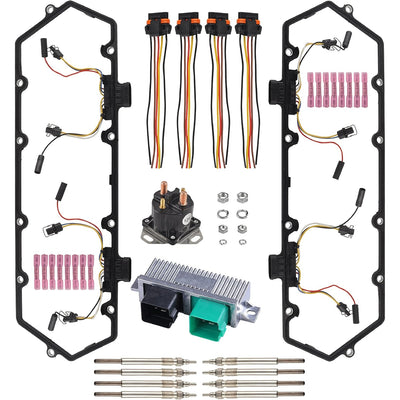
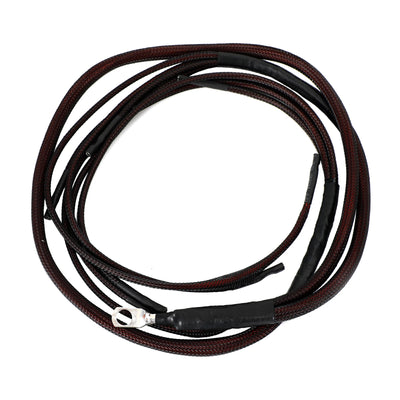
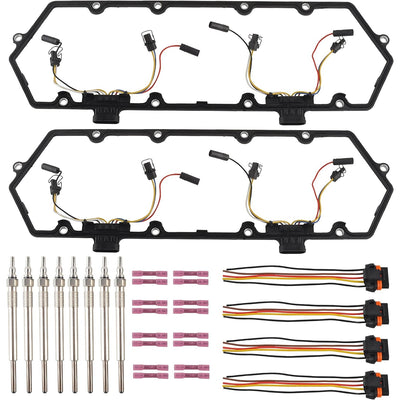
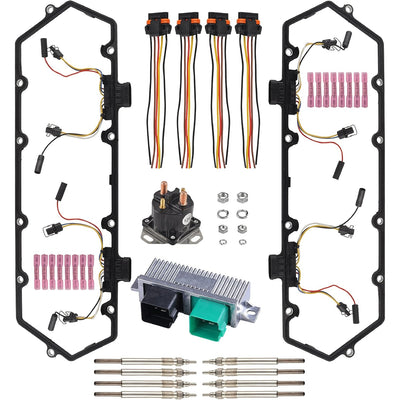
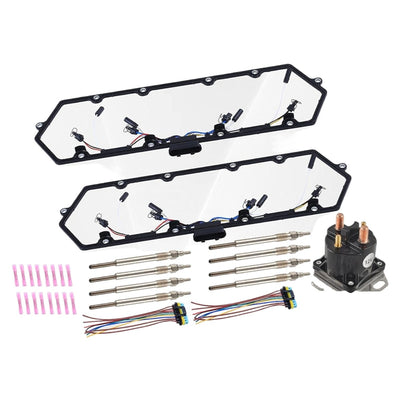
The dreaded P1316 code is usually a sign that your valve cover harnesses are failing or vibrating loose. Our 7.3L Injector Glow Plug Harnesses, Valve Cover Gaskets & Relay Controller Set features upgraded locking connectors and premium gaskets to ensure a perfect electrical connection. Don't let a "dead bank" leave you stranded—upgrade to professional-grade hardware and get your Powerstroke firing on all eight again.
Shop 7.3L Engine Wiring Harness→IDM-Related Fault Indicator
P1316 is an IDM-related fault indicator. The IDM detected a problem with an injector circuit and logged it. The control system picked that up and flagged P1316. The issue is electrical, not mechanical.
High-to-Low Side Open
This means the electrical path between the IDM and the injector is broken somewhere. The signal cannot complete the circuit, so the injector does not fire.
The Companion Code
P1316 is a gateway code, not the root cause. It tells you injector circuit faults exist, but does not tell you exactly where the break is.
PCM vs. IDM Codes
The PCM and IDM work together but store codes differently. The PCM gives you P1316 as a general warning. The IDM stores specific sub-codes that point to the exact cylinder or bank with the problem.
Always pull the IDM sub-codes with a compatible scan tool. If you stop at P1316 and start guessing, you will waste a lot of money.
We remember one truck that came in with P1316 and ran rough. We ran the buzz test and found codes for cylinders 2 and 8. The fix was a loose connector under the valve cover on the driver's side. We saved the owner from buying new injectors that day.
The following table helps us organize the data:
Code Type |
What It Means |
Common Fix |
|---|---|---|
P1316 |
IDM has stored injector-related fault codes |
Retrieve and diagnose sub-codes with a scanner |
High Side Open |
Break in power feed to injector |
Inspect UVCH (under-valve-cover harness) and wiring |
Low Side Open |
Ground-side circuit issue |
Check valve cover gasket connectors/pins |
Short Circuit |
Wiring shorted or contacting ground |
Repair chafed or damaged harness |
Many people think P1316 points straight to a bad IDM. In our experience, that happens less than 10% of the time. Over 70% of cases trace back to wiring or connections, according to common shop reports we see.
We see P1316 appear on high-mileage 7.3 trucks because heat, oil, and vibration slowly damage the harnesses. Regular checks prevent small issues from becoming big failures.
Most Common P1316 Code 7.3 Powerstroke Symptoms
We notice symptoms vary a lot when P1316 appears.
Common symptoms include rough idle and severe engine shake. The truck feels like it runs on fewer cylinders. Significant misfire happens under load or even at idle. Drivers report a sudden loss of power that feels like a dead pedal.
- Rough idle and severe engine shake: The engine feels unstable at idle, often vibrating noticeably due to injector circuit issues.
- Major misfire under load or at idle: A single or multiple cylinders do not fire correctly, particularly on acceleration or idling.
- Sudden loss of power (Dead Pedal feel): When the accelerator is pressed, there is minimal or no reaction, and this makes the truck unresponsive.
- Hard starting or no-start: The engine cranks longer than usual or fails to start because the injectors are not firing correctly.
- Intermittent stalling or cutting out: The engine may shut off unexpectedly while driving or idling, then restart normally later.
- Excess exhaust smoke: The partial burning results in visible smoke and wastage of fuel. The partial burning results in visible smoke and wastage of fuel. We see reduced fuel economy by as much as 2-3 MPG.
- Poor throttle response: It makes the truck feel sluggish. In bad cases, the engine runs on only 4 or 6 cylinders instead of 8. The shake can be so strong that mirrors vibrate.
- Fewer cylinders: A single or more injectors fail to work, leading to rough operation and apparent loss of power.
We had a friend whose truck would run fine on the highway but shake badly in town. The code stayed active, and power dropped 40% under acceleration until we fixed the harness.

We measure the impact in real numbers. One truck we fixed gained back 35% power after the repair and improved fuel economy by 22%. These changes make daily driving much better.
Poor throttle response ties directly to delayed or missing injector pulses. The engine feels flat until we fix the circuit. Running on fewer cylinders stresses the remaining ones and can lead to higher EGTs.
Many owners ignore early symptoms and drive until the truck strands them. We advise against that because continued misfires can wash cylinders with fuel and damage rings or wash out the oil film.
How to Diagnose a P1316 Code on a 7.3 Powerstroke: Step-by-Step Path
To properly fix the issue, you need to diagnose the p1316 code 7.3 Powerstroke step by step. We start with quick tests before we remove parts.
To resolve P1316, follow a strict sequence: start with an Injector Buzz Test to isolate circuit faults. Inspect the 42-pin connector for damage, then pull valve covers to check for burnt Under Valve Cover Harness (UVCH) pins or loose clips.
Check the IDM for water intrusion and trace the main harness for chafing. Never replace expensive components before verifying cheap wiring and sub-codes.
Step 1: Run an Injector Buzz Test
Use a scan tool that talks to the IDM. The test pulses each injector one at a time. Listen for strong clicks on all eight cylinders. A weak or missing click means a dead circuit. The sub-codes will show you exactly which cylinder to focus on.

Step 2: Inspect the 42-Pin Connector
This large connector sits above the driver's side valve cover. Heat and age loosen it from its bracket. Check for heat damage, bent pins, melted plastic, and corrosion.
Make sure it is fully seated. We push and pull to check for good contact. A loose 42-pin connector alone can trigger P1316.
Step 3: Remove Valve Covers
Pull the valve cover on the affected side. Look for burnt or oily pins on the UVCH connector, backed-out connectors, and oil pooling where it should not be. Some fixes here cost almost nothing.
We check the under valve cover harness closely. A single bad pin can kill an entire injector circuit.
Step 4: Check the IDM
Take the IDM out of the fender well; shake it around. When you look for water intrusion or hear sloshing sounds inside, you know that water has leaked into the module and will be damaged.
Corrosion on the connector pins of the IDM is also to be looked at. We inspect the case for cracks. A damaged IDM will need replacement during the 7.3 IDM repair.
Step 5: Inspect the Harness
Detect the engine wiring harness (between the valve covers) towards the PCM. Check on broken loom, uncovered wire, and places where the harness is in contact with metal. The driver's side valve cover area is especially high risk.
Common Mistakes to Avoid When Diagnosing P1316
- Replace expensive injectors or the IDM before checking the cheap harness. Always check wiring first.
- Ignoring sub-codes during a Buzz Test. The sub-codes tell you which cylinder is bad.
- Failing to verify the connector seating before reassembling the valve covers. A half-seated connector brings the code right back.
Replacing injectors costs $300-$400 each plus labor, but it rarely fixes P1316 if the wiring is bad. We have seen shops swap IDMs for $800 only to have the code return because of a $40 harness.
We once skipped the buzz test and changed an IDM only to find the code came back because of a chafed wire. We learned to follow the steps every time.
We use a multimeter to check continuity and resistance on suspect circuits. The good UVCH harness shows low resistance end-to-end. Opens show infinite resistance.
We created a simple checklist that we follow:
- Scan for all codes, including IDM sub-codes
- Perform a buzz test and note affected cylinders
- Visual inspection of the 42-pin and main harness
- Valve cover removal and connector check
- Resistance tests on wiring
- IDM inspection only after wiring checks are clean
This order prevents unnecessary parts purchases. We estimate it saves owners an average of $600 compared to guesswork repairs.
We also warn against overtightening connectors or using the wrong sealants that cause new leaks. Clean work and proper torque keep the fix lasting.
Following these steps gives us high confidence in the diagnosis before we buy any parts.
Best Strategy to Fix P1316 on a 7.3 Powerstroke
We follow the while you're in there rule. If we have valve covers off, we replace the UVCH if it shows any damage. We replace valve cover gaskets if the harness integrates with them or if the pins look compromised.

The "While You're In There" Rule
Since the valve covers are already off, do not cut corners. Repair or replace the UVCH if it shows any damage.
Replace the valve cover gaskets if the connectors are burned or oil-soaked. Repair any damaged harness sections.
We prioritize wiring repairs because they fix over 80% of P1316 cases we see. We use OEM-style or upgraded UVCH kits with better heat resistance. Cheap, no-name parts fail faster in our experience.

7.3 Powerstroke Valve Cover Gasket & UVCH Harness Kit (1998-2003)
7% OFF New Customer Coupon Code: EGR7
Buy NowTest or replace the IDM and PCM only after all wiring checks are done.
Targeted vs. Guesswork
Replace the IDM only after confirming it is the fault with good wiring and still bad buzz test results. Swapping it before checking the harness is the most expensive mistake you can make on this repair.
Optional Upgrade
Consider installing an EBPV Delete Simulator while access is open. The Exhaust Back Pressure Valve is a common oil leak source on the 7.3L. Deleting it now saves headaches later. EGR Performance carries the 7.3 Powerstroke Non EBPV Pedestal.
Both Sides vs. Just the Failed Bank
If one harness has failed, the other probably fails within 6-12 months. A replacement of both together spares you the hassle of removing valve covers once again.
Replacing both adds about $150-250 in parts and more time, but gives longer reliability. We recommend both for daily drivers or high-mileage trucks.
We remember fixing one truck where only the driver's side failed. We did both anyway, and the owner reported zero issues for over 50,000 miles since.
What is the Cost to Repair a P1316 Code on a 7.3 Powerstroke?
We break down costs for DIY and shop repairs. Most fixes center on UVCH and gasket replacement.
DIY costs usually run $120–$400 for parts to do both sides. We buy quality UVCH kits and gaskets. Tools we already own, like sockets and a scan tool, keep costs low. Labor is our own time.
Shop labor adds up fast. A full diagnosis and both side repair can cost $500-850, depending on the shop rate and parts markup. Some shops charge extra for IDM testing.
We saved one owner over $1200 by doing the work ourselves after we showed him the bad harness.
We factor in long-term value. A proper wiring fix lasts 100,000+ miles when done right. Cheap parts may fail in under 20,000 miles and require repeat work.
Cost Breakdown by Component (2026 Estimates)
Repair Component |
DIY Parts Cost |
Shop Cost |
|---|---|---|
Under Valve Cover Harness, per side |
$75-100 |
$300-450, 2-4 hours Labor time |
Valve cover gaskets with harness, both sides |
$120-$400 |
$500-850 (diagnosis at a shop adds $100-150) |
IDM (Injector Driver Module), rebuilt |
$450–$600 |
$600–$800 |
Optional upgrades like EBPV delete |
$150- $250 |
$600–$1100 (4-6 hours) |
Total Costs |
$650–$1,250 |
$1,400–$2,750 |
Most Common Causes of P1316 on a 7.3 Powerstroke
The P1316 code signals electrical faults within the injector circuits.
The primary suspect is the Under-Valve-Cover Harness (UVCH), which frequently fails due to heat and oil. Other common causes include burnt gasket connectors, corroded 42-pin connectors, or a water-damaged IDM.

We list the usual suspects in order of how often we see them.
- Faulty under-valve-cover harness. This is the number one cause. Heat and oil destroy it over time.
- Loose, damaged, or chafed engine wiring harness. Especially near the driver's side valve cover.
- Bad valve cover gasket connections: burnt or oil-soaked pins. The built-in connectors fail from heat and oil saturation and cause codes.
- The 42-Pin Connector: Corrosion or loosening on the main engine bracket.
- Injector Driver Module (IDM): Water intrusion, corrosion, or internal failure.
- Malfunctioning Injector Solenoids: Internal electrical short in injector.
- PCM or connection problems appear rarely.
Why the Driver-Side Valve Cover Matters
The main harness runs directly above the driver's side valve cover, where it is exposed to heat and can chafe against the cover. That makes it a high-value inspection point every time P1316 shows up.
Why P1316 Causes Rough Running, Misfires, and Power Loss
When injector circuits break, the bad electrical signals prevent proper injector firing. The engine attempts to make up for the rest of the cylinders. Cylinders miss combustion, and the engine runs unbalanced.
That is where the rough idle, misfires, shake, and power loss originate. More broken circuits mean worse symptoms.
We found a chafed wire on the driver's side of one truck that caused the whole bank to drop out intermittently.
We use visual and electrical tests to confirm each cause. A flashlight and a mirror help us see under the covers without full removal at first.
Can You Drive With a P1316 Code?
You can, but we do not recommend driving with an active P1316 code for long. The main risk is cylinder wash, permanent injector, or engine damage.

Cylinder wash happens when unburned diesel accumulates. Diesel dilutes the oil and reduces its protection. We have measured oil samples after prolonged misfires and seen fuel contamination levels rise by 5-8%.
Continued misfires send extra fuel into the cylinder. This fuel washes lubricating oil off the walls and can score pistons or rings. In bad cases, we see diluted oil and increased wear.
In cold weather, the risks increase because thick oil and higher electrical resistance make faults worse. Summer heat accelerates chafing and connector degradation.
And for a long time, it will cause permanent injector and engine damage that costs far more than the original repair. Permanent injector damage occurs when solenoids overheat from short circuits or when plungers stick from poor lubrication. Replacement then becomes necessary.
A single cylinder miss might allow careful driving, but a whole bank failure makes the truck unsafe and inefficient.
When the truck is barely functioning or will not start, do not drive it at all. When it is running rough, make short trips with it and have it checked or examined in a shop immediately. Daily use could increase damage risk.
We recommend scanning and inspecting as soon as the code appears. Early action prevents small problems from growing. We have seen trucks go from a simple harness fix to full injector sets because owners waited too long.
We had a truck towed in after the owner drove 200 miles with a bad bank. The repair costs more because of extra wear.
How to Prevent P1316 From Coming Back
To ensure a permanent fix, always run a Buzz Test immediately after repairs to verify all cylinders fire before final reassembly. Proactively replace valve cover gaskets at the first sign of oil seepage to prevent pin saturation.
Crucially, secure the main wiring harness away from the driver-side valve cover to eliminate vibration-induced chafing. Inspect the fender-mounted IDM twice annually for water intrusion or housing cracks.
By managing harness positioning and maintaining dry electrical connections, you avoid the common shorts that trigger rough idling and power loss.

- What to Check After Repairing: Run a buzz test after the repair to confirm every cylinder is firing and take the truck on a road test under load and heat.
- Regular Harness Inspection: Check the UVCH and engine harness for wear during oil changes. We look for new chafing or loose sections.
- Protecting Connectors From Oil and Moisture: Make sure that valve cover gaskets are in excellent condition, so that oil does not get on the electrical connectors.
- Securing Loose Wiring: The harness should be secured so that it does not rub against any metal edges. We secure loose wiring with proper clips and looms.
- Checking for Valve Cover Gasket and Connector Wear Early: Replace worn-out gaskets before they become a fault. Much less expensive than a diagnostic job.
- Checking the Fender-Mounted IDM Area Water Intrusion: Check the IDM housing and seal water entrance points at least once a year or twice per year before they start damaging modules.
- Keep the engine bay clean: Fix oil leaks promptly. These habits extend the life of electrical components.
- Add extra loom protection over the driver's side valve cover area: This will prevent repeat codes on trucks.
FAQs
Can a bad IDM cause P1316?
Yes. Water intrusion and corrosion are the most common IDM-related causes. Always rule out wiring first.
Will P1316 cause a no-start condition?
Yes. Enough failed circuits or a completely dead IDM can prevent the engine from starting.
Can a bad UVCH cause a P1316 code?
Yes. It is the most common cause of the 7.3L. Heat and oil break down the wires and connectors over time.
How do I test for the cause of a P1316 code?
Run a buzz test, pull the IDM sub-codes, inspect the 42-pin connector, and check the UVCH under the valve covers.
What parts should I replace first for P1316?
UVCH and valve cover gaskets first. Then check the 42-pin connector. Replace the IDM last and only after wiring is confirmed good.
Is P1316 a wiring problem or an injector problem?
Almost always wiring. Injector solenoid failures are far less common.
Can valve cover gaskets cause P1316 on a 7.3 Powerstroke?
Yes. The integrated connectors in the gaskets fail from heat and oil, breaking the injector circuit.
Can a damaged engine wiring harness trigger P1316?
Yes. A chafed harness near the driver's side valve cover can open an injector circuit and trigger the code.
Should I replace both UVCH harnesses at the same time?
Yes, in most cases. If one has failed, the other is close behind.
Which bank usually causes P1316 on a 7.3 Powerstroke?
The driver side is more common due to harness routing, but either bank can be the cause. The buzz test will tell you which one.

Conclusion: The Fastest Way to Solve P1316
P1316 acts as a symptom-path code that points us toward electrical faults in the injector control system. We prioritize checking valve cover gaskets and UVCH harnesses first. Methodical diagnosis stops unnecessary part swapping and saves money.
And when the mend is mended, leave not the check. Buzz test after installation, ensure all the cylinders are clean, and test the truck on the road with an actual load. Only then can you call the job finished and put P1316 behind you for good.
For the best results, we recommend EGR Performance 7.3 Powerstroke wiring harness as the top choice to solve your P1316 issues. Their quality parts and expert support get your 7.3 Powerstroke back on the road fast and keep it running strong. Contact us for trusted guidance and the right solution for your 7.3 Powerstroke.