5.9 Cummins Intake Elbow
5.9 Cummins Intake Elbow Upgrades for 24V & Common Rail Trucks
Straight Path Air Where the Factory Neck Chokes
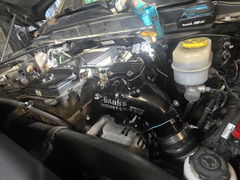
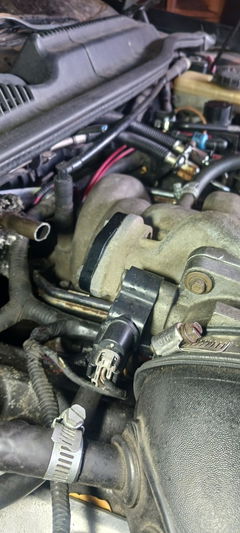
The 5.9 Cummins intake elbow replaces the restrictive factory neck between the intercooler discharge and the cylinder head with a smooth-bore CNC-machined aluminum casting. This collection carries the high flow intake elbow for the 1998.5-2002 twenty-four valve trucks, the intake horn and elbow kit for the 2003-2007 common rail engines, and the matching connection gasket kit that seals the spacer, horn, and manifold mating surfaces with high-temperature Viton-compatible material. Larger internal cross-sections and mandrel-smooth transitions raise intake air velocity, sharpen throttle response, and pull EGTs down on fueled-up trucks. Most owners do not stop at one part, so the elbow is usually the opening move in a build that pulls from the rest of our 5.9 cummins performance parts lineup.
Built for Fueled-Up Work Trucks and Tow Rigs
The factory elbow was cast for packaging, not flow, and every bit of fuel added past stock makes the restriction more expensive. A 2006 5.9 Cummins intake elbow upgrade is standard practice on common rail trucks chasing lower pyrometer readings on long grades, and 24-valve owners feel the same response gain the moment the smooth bore goes in. Owners hunting the best intake elbow for 5.9 cummins trucks are solving the same problem: give the pump's fuel the air it was promised. One elbow, one gasket set, one afternoon.
Why Tens of Thousands of Diesel Owners Trust EGR Performance
EGR Performance: Engineered for Power. Backed for Life.
Max efficiency, restored horsepower, and prolonged engine life for your EGR, DPF, and CCV systems on Powerstroke, Duramax, Cummins engines, etc.
- Free Shipping: Fast & free delivery to get you back on the road sooner.
- 45-Day Returns: Shop risk-free with our generous 45-day return policy.
- 1-Year Warranty: Tested under extreme conditions. Guaranteed to perform.
- 24/7 Live Support: Real-time tech help from fitment to post-install tuning.
Compatibility
| Product | Engine | Vehicle Model | Year Range |
|---|---|---|---|
| High Flow Intake Elbow | 5.9L Cummins 24V | Dodge Ram 2500 3500 | 1998.5-2002 |
| Intake Horn & Elbow Kit | 5.9L Cummins Common Rail | Dodge Ram 2500 3500 | 2003-2007 |
| Connection Gasket Kit | 5.9L Cummins ISB | Dodge Ram 2500 3500 | 1998.5-2007 |
Shop 5.9 Cummins Intake Elbow Now!


EGR Performance: EGR, DPF, CCV & Diesel Tuning Solutions for Powerstroke, Cummins, and Duramax


Let customers speak for us

Have to say that I like the quality of the product and ease of installation. I’ve had it in for a little over a week now and I’ve driven several hundred miles with no issues whatsoever. Certainly worth it!

Works great. Exactly what I hoped it would be.

Decent quality, saw some cheaper options but this one did the job just fine. No more worrying about carbon build up!
Was easy to install, works a stated,more horsepower ,better gas mileage

This item solves a big problem perfectly. The quality of this item is 5 star for sure. Great seller as well.

Good product. Quick shipping. Would buy from again!

Extremely satisfied with this order. Will def use this company for future orders

I fit it and it made a lot of different in my car thank u

Plate looks good. The provided hardware are the wrong thread pitch however. Shipping took a long time was close to 3 weeks.
Really happy with item took 2 and a half weeks to get but worth the wait
Company is great, received the wrong item and correct item sent. No hassle
I'd love to review it but I haven't got it yet
part fit perfectly
EGR Delete for 1986-1995 Ford F150 F250 2.8L 4.9L 5.0L 5.8L 7.5L Bronco EGR Simulator Eliminator Delete
6.0L Powerstroke Diesel Complete EGR Bypass and Valve Delete Kit for 2003-2010 6.0L Ford Powerstroke F250 F350 F450 F550