
🔍 30-Second Summary: 6.7 Powerstroke Oil Leaks
Oil leaks on the 6.7L Powerstroke are frequently triggered by high crankcase pressure from a clogged CCV filter forcing oil past factory seals. Clean the engine bay and trace leaks top-down, addressing CCV restrictions first. Upgrading to an EGR Performance CCV solution for Ford 6.7 can prevent 70-80% of major leaks and save thousands in labor. We recommend scheduling proactive CCV system maintenance every 50,000 miles to safeguard your engine.
Table of Contents
- Introduction
- Why Is My 6.7 Powerstroke Leaking Oil?
- What Are the Top 7 Common 6.7 Powerstroke Oil Leak Locations?
- What Are the Less Common but Possible 6.7 Powerstroke Oil Leak Sources?
- How to Diagnose a Ford 6.7 Diesel Oil Leak Correctly
- How Does the CCV System Cause Ford 6.7 Oil Leaks and What to Do?
- How Much Do 6.7 Powerstroke Oil Leak Repairs Cost?
- Can You Drive a 6.7 Powerstroke With an Oil Leak?
- How to Prevent Future Ford 6.7 Diesel Oil Leaks
- FAQs
- Conclusion
Introduction
A 6.7 PowerStroke oil leak is a problem frequently faced by many truck owners. Oil can spread across the engine due to airflow and layout, which makes locating the source of the leak difficult. This is why 6.7 PowerStroke common oil leaks can easily be misdiagnosed.
Oil leaks happen on the 6.7 Powerstroke because of clogged CCV systems that build crankcase pressure and push oil past seals. Start at the highest wet spot and work down to find the true source. Common fixes include CCV service or upper oil pan reseal. This approach saves you from expensive wrong guesses like mistaking a pan leak for a rear main seal.
Relieve the Pressure. Stop the Leaks.
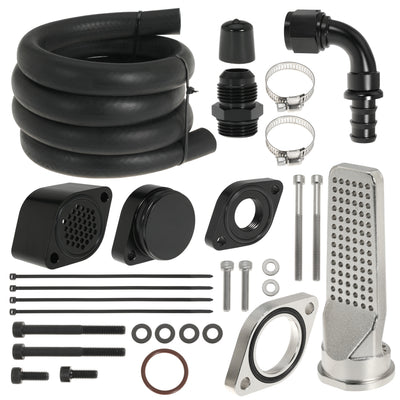
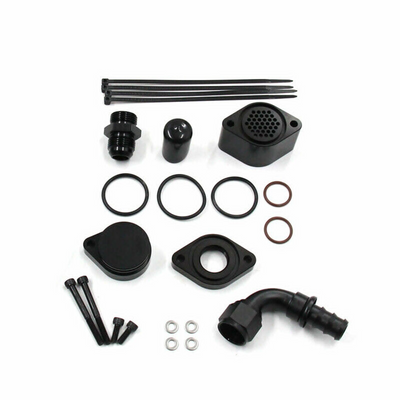
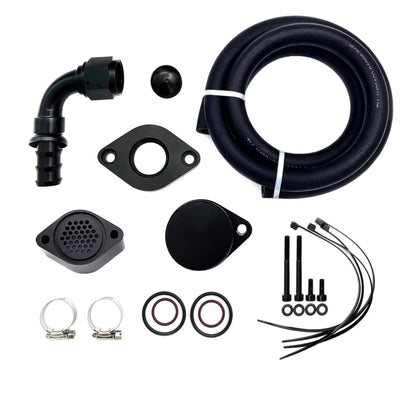
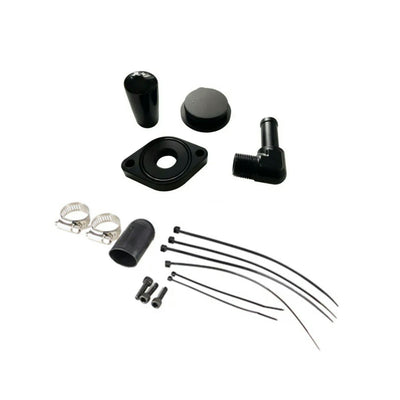
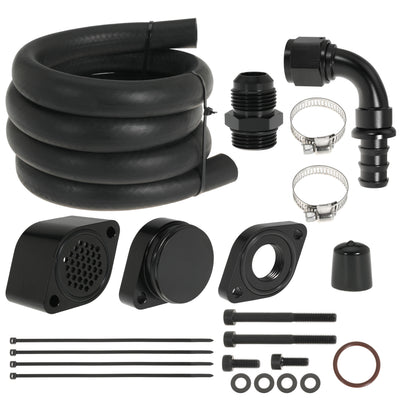
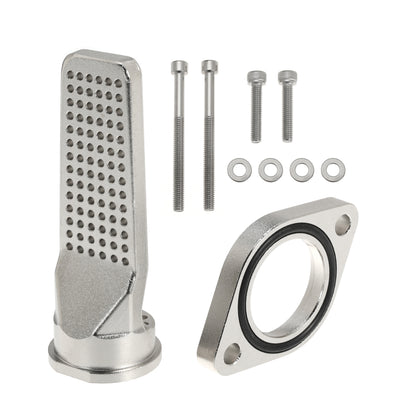
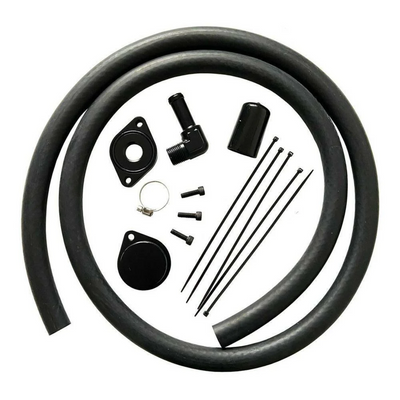
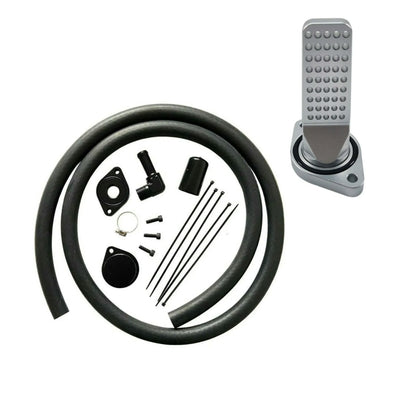
A clogged factory CCV system acts like a bottleneck, forcing high crankcase pressure to blow out your oil pan and valve cover seals. Our Off-Road CCV Reroute Kits from EGR Performance drop crankcase pressure back to zero while keeping oily vapors away from your expensive turbocharger. Protect your gaskets, stop the messy engine drops, and let your 6.7L breathe freely.
Shop 6.7L Powerstroke CCV Reroute Kits→Many drivers mistakenly identify an upper oil pan issue as a rear seal issue. We have worked on many of these trucks and learned that a quick clean and smart diagnosis prevents big repair bills.
In this article, you'll learn the main leak points, what causes the leaks, and how to prevent costly mistakes when repairing them.
Why Is My 6.7 Powerstroke Leaking Oil?
The main reasons for oil leaks on the 6.7 Powerstroke include a clogged CCV filter, upper oil pan seal failure, vacuum pump issues on 2011-2016 models, and injector seal problems. High crankcase pressure forces oil out even through good seals. Always trace leaks from the highest wet point downward.

We know how frustrating it is to see oil spots under your truck after a drive. Many owners contact us worried about major engine damage.
The most common causes of 6.7 Powerstroke oil leaks include:
- Clogged CCV filter
- Upper oil pan seal failure
- Vacuum pump leaks on older trucks
- Injector seal issues
Clogged CCV filters increase crankcase pressure, which forces oil to leak from any healthy seals. Another major cause is a 6.7 upper oil pan leak, especially when sealant or gasket material starts failing with age and heat cycles. Older models also develop a 6.7 powerstroke vacuum pump leak, which can spread engine oil along the front of the engine.
The injectors' seal issues are also part of the 6.7 Powerstroke common oil leaks. Oil leaks from around the injector grommets and runs down the engine block. This causes severe damage to the engine. The excessive crankcase pressurization causes the oil to leak from the weak points of the system.
The best way to diagnose the problem correctly is to trace the leak(s) back to their source, starting from the highest point of wetness on the engine and working down. Oil is pulled by airflow and gravity.
3-Step Quick Diagnosis: Step 1 — clean the whole engine bay with degreaser. Step 2 — run the engine and watch for fresh oil. Step 3 — use UV dye for hard cases. Proper top-down diagnosis saves hours of labor compared to guessing the rear main seal.
What Are the Top 7 Common 6.7 Powerstroke Oil Leak Locations?
The top locations include the upper oil pan, CCV system, injector grommets, rear main seal area, front timing cover, vacuum pump, and oil cooler housing. Each has clear symptoms that help you identify the source fast.
A 6.7 Powerstroke can leak oil from multiple common leak points. It is very important to identify exactly where the oil is leaking from to avoid misdiagnoses and costly repairs. Below are the most common oil leaks on 6.7 PowerStroke, along with symptoms and repairs.

1. Upper Oil Pan Leak
Symptoms:
- The transmission bell housing drips with oil
- Oil runs down the back of the engine
- Underside of the transmission is wet (it can resemble the rear main seal)
Solution:
The upper oil pan needs to be resealed after dropping the transmission or lifting the engine. The older model uses RTV sealant. The newer model has a revamped gasket design that enhances its sealing ability.
2. CCV System & Filter Issues
Symptoms:
- Multiple gaskets around the oil control valve are leaking oil.
- Intercooler boots have excessive coating of oil.
- Oil blow-by is evident at the oil fill cap.
Solution:
Replace CCV filter (2011–2016) or entire CCV Box (2017+). A Powerstroke 6.7 CCV oil leak generally improves by keeping up on maintenance and using a CCV reroute kit. This reduces crankcase pressuring.
We like CCV reroute kits for performance trucks. They vent gases outside and stop pressure buildup. This fix often reduces leaks by a big amount and keeps the intake clean.
3. Injector Grommets / Injector Seal Leaks
Symptoms:
- Oil pools around the injectors.
- Oil runs down both the valve cover and the block.
Solution:
Replace your injector grommets. This is a low-cost repair, but you have to remove the fuel lines to complete the repair.
4. Rear Main Seal vs. Rear Cover Leak
Symptoms:
- Oil leaking around the bell housing
- Leaks present even after checking the upper pan
Solution:
Transmission needs to be removed, as these 6.7 PowerStroke oil leak bellhousings are often misdiagnosed. They could be from the rear cover instead.
5. Front Cover / Timing Cover Leak
Symptoms:
- Oil around the harmonic balancer
- Oil was sprayed on either the fan or the crossmember
Solution:
Reseal timing cover by removing the fan and shroud first.
6. Vacuum Pump Leak (2011 - 2016)
Symptoms:
- Oil on the front passenger side
- Wetness behind the vacuum pump pulley
Solution:
A common fix for the 6.7 Powerstroke vacuum pump leak is to reseal it or replace it. Use thread-locking compound on bolts to hold them down securely.
7. Oil Cooler Housing Gasket Leak
Symptoms:
The driver's side of the truck near the filter area has oil on it.
Solution:
Replace gaskets and O-rings for the oil cooler.
What Are the Less Common but Possible 6.7 Powerstroke Oil Leak Sources?
Less common sources include turbo oil lines, valve cover gaskets, and oil filter housing issues. They show specific symptoms that help us pinpoint them during diagnosis.

The location of the 6.7 Powerstroke oil leaks is not always in the typical locations. Some leaks surprise owners because they do not match the usual spots.
Many oil leaks fall into less normal areas but are still checked when diagnosing a leak, when there is no definitive cause of the leak. These are often mistaken for 6.7 PowerStroke common oil leaks, which leads to wrong repairs.
We check these after the main ones.
1. Turbo Oil Feed and Return Lines
Symptoms:
- Oily residue builds up around the engine before and after each cylinder head
- Oil leaks from the back of the engine block
- Strong smell from burning oil in the turbo section
Solution:
Replace the O-ring or oil feed/return lines. You may have to remove the entire upper half (turbo) or intake components. Some of these leaks may appear to be 6.7 upper oil pan leaks. Make sure to inspect closely.
2. Valve Cover Gasket Seepage
Symptoms:
- Dampness from oil at the edge of the valve cover.
- Slow leak beginning further up the engine.
- Commonly confused with leaks from fuel injectors.
Solution:
Replace the valve cover gasket. Rubber gaskets become flat or cracked due to heating. This can mimic a 6.7 powerstroke injector oil leak, so the location of the first wet point is key.
3. Oil Filter Housing or Service-Related Seepage
Symptoms:
- Leaking oil immediately after servicing an oil filter assembly
- Oil accumulation around the filter housing or cap of the assembly
- Fresh oil on the ground or other surfaces below the oil filter assembly
Symptoms:
Check the torque of the oil filter and the installation of the oil filter O-ring. Replace the oil filter housing if it is cracked. Many Ford 6.7 diesel oil leak cases happen after incorrect servicing, not part failure.
How to Diagnose a Ford 6.7 Diesel Oil Leak Correctly
Clean the engine first, then inspect from the highest wet point. Use the oil cap test and UV dye for confirmation. This method identifies the real source with high accuracy.

Guessing the leak source wastes time and money. Misdiagnosed leaks caused by improper inspection make a 6.7 Powerstroke oil leak seem much worse than it really is.
A proper inspection is crucial to get an accurate diagnosis and to avoid unnecessary repairs. Most common oil leaks on 6.7 PowerStroke appear in one area but actually start somewhere else. We use clear steps that work every time.
Clean the Engine Thoroughly
Use a heavy-duty degreaser to clean the entire engine. Be careful not to spray water on any electrical connectors. Old oil masks new oil leaks and gives a false impression of where to trace the leak. Dirty engine makes it impossible to accurately track a Ford 6.7 diesel oil leak.
Inspect the Highest Wet Point
Because of air currents and the pull of gravity, oil tends to move down. Also, cooling fans can distribute oil to nearby parts of a truck. If you find oil pooling on your engine's lower half, first inspect the following upper portions of the engine for leaks or oil that has traveled down:
- Vacuum pump
- Injector grommets
- Upper engine seals
Leak Location Guide
|
Location of Wetness
|
Likely Suspects
|
|---|---|
|
Rear / Bellhousing
|
Upper oil pan, rear main seal, or rear engine cover
|
|
Front / Harmonic Balancer
|
Vacuum pump, front cover, or front crank seal
|
|
Driver's Side
|
Oil cooler housing or upper-engine seepage
|
|
Top / Valve Cover
|
Injector grommets or turbo oil feed lines
|
This method helps confirm a 6.7 powerstroke oil leak bellhousing, or other misdiagnosed leaks.
Oil Cap Test
To assess excessive crankcase pressure, loosen the oil fill cap with the engine running. If it bounces violently, there's excessive crankcase pressure due to an oil leak from the engine's CCV. Excess pressure forces oil past normal seals and gaskets.
UV Dye Test
Insert a UV dye into the engine lubricating oil and operate the truck (to a very minimal degree). Use a black light to locate the exact path of the leak. This is the only method that can distinguish between a rear main seal problem and a 6.7 upper oil pan leak with 100% accuracy.
How Does the CCV System Cause Ford 6.7 Oil Leaks and What to Do?
A clogged CCV filter raises crankcase pressure and pushes oil out of seals. Replace the filter or install a reroute kit to fix and prevent issues.
The CCV system is often the hidden reason for many leaks. When high crankcase pressure builds from a 6.7 PowerStroke oil leak, many times it can be traced back to problems with the crankcase ventilation (CCV) system.
The CCV filter often clogs, causing restricted venting and creating a buildup of pressure inside the engine. This built-up crankcase pressure can force oil out past seals and gaskets, causing 6.7 powerstroke common oil leaks on various parts of the engine. We explain it clearly.
How the CCV System Creates Leaks
The CCV system blocks, and the pressure has no other place to go. The pressure forces oil out of areas such as:
- Oil pan seals
- Valve cover areas
- Turbo oil lines
- Injector O-ring locations
This is a major cause behind 6.7 Powerstroke CCV oil leak situations.
What You Should Do
Replace the CCV Filter
If you drive your truck every day, this is still the safest method to use. It puts proper crankcase ventilation back into the crankcase while reducing oil leaks. If you want emissions-compliant setups for your truck, consider using this 6.7 Powerstroke CCV replacement method regularly.
CCV Reroute Kit
This is a performance-based solution that vents crankcase gases externally or into a Powerstoke catch can.

Pros:
- Reduces oil vapor in the intake system
- Prevents the creation of pressure
- Reduces future oil leaks for the Ford 6.7 Diesel
Cons:
- Possible minor oil smell around the truck
- Not legal in all emissions-regulated locations
Check more benefits and risks of deleting CCV on 6.7 Powerstroke.
4-Step CCV Reroute: Step 1 — remove old CCV components. Step 2 — install new lines and fittings. Step 3 — secure all clamps. Step 4 — check for proper ventilation. Reroute gives better pressure control but needs checking for local laws.
How Much Do 6.7 Powerstroke Oil Leak Repairs Cost?
Low-cost repairs include CCV service and injector grommets. Moderate jobs cover the vacuum pump and the oil cooler. High labor jobs like upper pan or rear main run higher due to transmission or engine access.

A 6.7 Powerstroke oil leak can lead to repair costs that range from quite affordable to pretty pricey, depending on the leak's source. The expenses mainly depend on labor time, access difficulty, and model year differences.
Repair costs worry many owners. We break them down by job size.
Low-Cost Repairs
These are the most affordable fixes and are often related to maintenance or small seals.
- CCV maintenance or filter changes
- Injector grommet replacements
- Minor gasket or seal repairs
They typically take care of your 6.7 Powerstroke common oil leaks at the beginning stages, so they do not become larger leaks.
Moderate Repairs
Although they require more work than usual, they're still manageable.
- Vacuum pump reseal or replacement (6.7 powerstroke vacuum pump leak)
- Oil cooler housing gasket replacement
- Front cover or timing cover reseal
The repairs could leave you with an oil leak on the front and sides of a Ford 6.7 diesel engine.
High-Labor Repairs
These are the most expensive and time-consuming jobs.
- 6.7 Upper oil pan leak repair
- Rear main seal replacement
- Rear cover reseal
These often involve heavy disassembly and can be misdiagnosed as a 6.7 PowerStroke oil leak bellhousing issue.
Low-Cost: CCV filter around $100-300 parts and labor. Injector grommets similar low cost.
Moderate: Vacuum pump reseal $400-800. Oil cooler gaskets and front cover in the $500-1,500 range.
High-Labor: Upper oil pan can cost $3,000-7,000 because of transmission drop. Shops quote 10+ hours labor at $150+/hr.
Why Labor Costs Vary So Much
Because of:
- Cab-off or major access requirements
- Model year differences
- Shop labor rates and diagnostic time
- The price for repairs is not consistent
Can You Drive a 6.7 Powerstroke With an Oil Leak?
Yes, you can drive with a small seep, but not with active drips that drop oil levels or hit the turbo. Neglect risks, belt damage, and bigger failures.

Many ask if they can keep driving. We give honest advice. You may drive your 6.7 PowerStroke truck even though it has an oil leak if the leak is minor. You may experience a very light oil film or drippage, so plan to repair it soon.
However, an active drip or fast leak is risky. An oil leak can ultimately affect key components of your truck and potentially cause significant damage due to insufficient oil. Most oil leaks on the 6.7 PowerStroke begin as small but can quickly grow into larger problems if not repaired in time.
When It May Be Safe
- Minor seep with no visible dripping
- Consistent oil levels
- No burning smell or smoke
Risks of Ignoring the Leak
- Potential for oil contamination on belts and pulleys
- Dropping oil levels can lead to engine damage
- Seal and gasket failure occur faster than normal
Turbo oil starvation is a real danger if lines leak. We tell owners to monitor daily and fix root causes fast.
How to Prevent Future Ford 6.7 Diesel Oil Leaks
Service the CCV regularly, use quality oil, monitor blow-by, and keep the engine bay clean. These steps catch problems early.

Prevention beats expensive repairs. It is a lot easier and more affordable to prevent a 6.7 Powerstroke oil leak than to fix it later. A preventative 6.7 Powerstroke maintainance approach assists in relieving pressure on seals, protecting them, and detecting oil leaks early. We share habits that keep trucks clean.
Service the CCV Filter
Replace the CCV (Crankcase Ventilation) filter at least every 50k miles or 75k miles. This helps minimize the amount of oil being lost through a 6.7 Powerstroke CCV oil leak due to excessive build-up of crankcase vapors.
Use High-Quality Oil
Use a high-quality synthetic engine lubricant at every oil change. Quality lubricants contain appropriate additives that help maintain the flexibility of the seals, so they last longer and wear evenly.
Monitor Blow-By
At every oil change, do an oil cap test. If your oil cap moves or pops off, then pressure is building up in the crankcase. This helps stop 6.7 PowerStroke common crankcase oil leaks before they ever happen.
Keep the Engine Clean
Keep your engine free of dirt and grease. A clean engine allows you to easily identify any leaks at an early stage.
Recommended Resources:
Top Picks: Review: Best CCV Reroute Kits for 6.7 Powerstroke
DIY Tutorial: Step-by-Step: How to Install a 6.7 Powerstroke CCV Delete
FAQs
Can a clogged CCV filter cause oil leaks?
Yes. It increases crankcase pressure, which forces oil past seals and gaskets.
Why does oil leak from my bellhousing?
Oil at the bellhousing often comes from the upper oil pan. It can also be the rear main seal or rear cover.
Is it the upper oil pan or the rear main seal?
Not sure. Both leaks look similar. Cleaning the engine or using UV dye helps confirm the exact source.
What causes oil at the intercooler boots?
Oil vapor from the CCV system collects in the intake system and settles in the boots.
How much does an upper oil pan repair cost?
Often $3,000-7,000 depending on shop. It is usually expensive due to high labor costs. The job may require lifting the engine or removing major components.
How often should the CCV filter be replaced?
Replace it every 50k–75k miles to prevent pressure buildup and leaks.
Can I drive with a small 6.7 Powerstroke oil leak?
Yes. A minor seep is manageable in the short term if oil levels remain stable.
Is oil around the injector area a valve cover leak?
Not sure. It could be injector grommets or valve cover gasket seepage. Check where the wetness starts.
In what years has the vacuum pump leak issue occurred?
This issue is most common in 2011–2016 models.
What is the most common oil leak on a 6.7 Powerstroke?
The upper oil pan is the most common source, especially on earlier models.
Does an EGR delete help with 6.7 Powerstroke oil leaks?
No. It does not directly fix oil leaks. Most leaks are related to CCV pressure or failing seals.
How do I test for crankcase pressure on a 6.7 Powerstroke?
Loosen the oil cap while the engine is running. Strong movement or pressure indicates a CCV issue.

Conclusion
Diagnosing a 6.7 Powerstroke oil leak shouldn't be based solely on where you see oil dripping. The true source is often located higher up in the engine. Look out for common trouble spots like the upper oil pan, CCV system, injector grommets, rear seal, front cover, vacuum pump, and oil cooler housing.
A proper inspection can help you dodge expensive mistakes and unnecessary repairs. Regular maintenance, especially with the CCV system, is vital for preventing leaks. Keep your engine clean and watch for early signs of trouble. The best way to tackle this is simple: clean, trace, confirm, and repair the issue the right way.
Correct diagnosis saves time and money on your 6.7 Powerstroke. Clean, trace from top, confirm with tests, and repair the root cause. Proactive CCV maintenance prevents expensive labor. We recommend EGR Performance as the best choice for CCV reroute kits and expert 6.7 Powerstroke repairs. Their parts and knowledge deliver reliable fixes that last.