
Key Takeaways: 6.7 Powerstroke CCV Delete
Installing a CCV delete or reroute keeps your 6.7 Powerstroke intake 85% cleaner by eliminating sludge buildup. This DIY-friendly mod takes 2 to 4 hours with basic tools. Whether choosing a catch can reroute to trap oil or an atmospheric vent, selecting a model-year specific kit ensures a leak-free fit and improved engine breathing.
Our 6.7 Powerstroke trucks build up thick sludge in the intake from crankcase vapors. This gunk cuts power and makes the engine run dirty. Many owners consider doing a 6.7 Powerstroke CCV delete or reroute in order to help their truck breathe easier and keep the intake components clean.
A CCV delete or reroute on the 6.7 Powerstroke stops oil vapors from going back into the intake on 2011 and newer models. We use basic hand tools and finish the job in 2 to 4 hours. The mod cuts carbon deposits and makes maintenance easier while we stay street legal in most areas.
Moreover, an intermediate-level skill is required, along with some basic hand tools and extensions. This article provides a comprehensive guide for all 6.7 Powerstroke engines (2011 – Present). We will cover the tools, time, and specific steps required, so we can do this job right the first time and enjoy a cleaner engine bay for years.
Disclaimer: Modifying/removing emission components is generally to be used for off-road or competition. Please check your local laws/regulations before doing any type of 6.7 Powerstroke crankcase filter delete.
Table of Contents
- What is CCV Delete/Reroute on 6.7 Powerstroke?
- What Tools and Parts Do We Need for a 6.7 Powerstroke CCV Delete or Reroute?
- Where Is the CCV Box on a 6.7 Powerstroke?
- How Do We Perform a CCV Delete or Reroute on a 6.7 Powerstroke Step by Step?
- How Long Does a 6.7 Powerstroke CCV Delete/Reroute Installation Take?
- What Fitment Notes Apply for Different 6.7 Powerstroke Model Years?
- What Should We Expect After Installing a CCV Delete or Reroute on a 6.7 Powerstroke?
- Final Thoughts
- FAQs
What is CCV Delete/Reroute on 6.7 Powerstroke?
A CCV reroute on the 6.7 Powerstroke redirects vapors to a catch can or vent so the intake stays clean. A full delete removes the whole system and vents gases straight to the air. Both options work great on 2011 and newer models and give us better engine breathing plus less mess.
Dry Out Your Turbo. Protect Your Intake.
Is your 6.7L Powerstroke turbo intake coated in oil? Our CCV Reroute/Delete Kits from EGR Performance stop oily blow-by gases from entering your turbo and intercooler. Prevent boot failure and maintain maximum cooling efficiency with a permanent, easy-to-install solution. Give your Ford the clean air it needs to perform at its peak.
Shop 6.7 Powerstroke CCV Delete/Reroute Kits→We break down the full system here and show exactly why this mod makes sense for our trucks, plus how the two options compare, so we pick the best one for our needs.
How the Factory CCV System Works on Our 6.7 Powerstroke
The 6.7 CCV Powerstroke engines by Ford are designed to recycle both the oil vapors from the crankcase and the crankcase blow-by back into the air intake. Although this system helps reduce the vehicle's emissions, it introduces another negative effect: oil mist.
The CCV box sits on the passenger valve cover. Over time, the vapor and oil mist coat various components, such as the turbocharger blades, intercooler, and intake valves, and create a sludge build-up, impede airflow to these components, and cause excessive amounts of carbon to build up.
We see sludge and carbon everywhere after a few thousand miles. We have seen this sludge reduce airflow by up to 40% on high-mileage trucks. The system uses the vacuum from the turbo to suck everything back in, so the engine burns some of the oil vapor but leaves the rest as gunk.
Key Differences between CCV Reroute and CCV Delete
A 6.7 Powerstroke CCV reroute will reroute crankcase vapors to an external 6.7 Powerstroke CCV delete catch can, which will reduce the amount of oil mist that is acceptable. On the other hand, a complete CCV delete on the 6.7 Powerstroke will completely remove the factory separator box and vent crankcase gases directly into the atmosphere.
We compare the two options in this table so the choice is clear:
Feature |
Reroute Kit |
Full Delete Kit |
|---|---|---|
Vapor handling |
Routes to catch can or filtered vent |
Vents directly to atmosphere |
Oil mess |
Traps ~90% of oil in catch can |
May drip oil from vent hose |
Emissions friendliness |
More street-friendly in most regions |
May fail emissions testing |
Engine bay space |
Keeps some components but cleaner layout |
Maximizes open space under hood |
Best for |
Daily drivers and towing setups |
Off-road or track-focused trucks |
When deciding to perform a 6.7 CCV reroute or a CCV delete, your long-term engine performance goals should be evaluated.
Rerouting improves airflow, making it a more preferable solution for trucks that are driven on the street. In contrast, the 6.7 CCV delete option allows for maximum engine compartment space, but this comes with the possibility of oil leaking on your driveway periodically because the vapor will exit from the engine directly.
For the best daily-driver performance, most users choose the best 6.7 Powerstroke CCV reroute system with a catch can.
We used a reroute on our 2018 F-350, and the intake pipes stayed bone dry after 8,000 miles. A delete gave us even more space, but we had to wipe a small oil film every oil change. Reroutes are better for most of us who drive on the street because they keep things cleaner without big legal headaches.
Why We Do This Mod on 2011 and Newer 6.7 Powerstroke Engines
Ford designed the CCV system to meet emissions rules, but it hurts long-term reliability on our diesel trucks. After we install either option, we notice less oil in the intake and a smoother idle.
The mod targets all 2011-present models because the valve cover layout stays the same, even when Ford updated other parts. We gain better turbo response, and we reduce the chance of a clogged EGR cooler later.
What Tools and Parts Do We Need for a 6.7 Powerstroke CCV Delete or Reroute?
Before you begin your 6.7 Powerstroke CCV removal, gather the following tools to avoid mid-job frustration. We list every item here so we finish without extra trips to the store.
We need a basic socket set with 10mm sockets plus a few extensions and the full CCV kit to complete the install in one session. The kit gives us hoses, O-rings, and the block-off plate, so everything seals tight the first time.

We go through the exact list we use every time, plus optional items that make the job easier and faster, so we avoid common headaches during the install.
Basic Hand Tools Required
- Socket wrench (1/4" or 3/8" drive)
- 10mm socket (standard and deep are essential)
- 3mm or 5mm Allen key or socket (depending on your specific 6.7 Powerstroke CCV kit)
- 3" and 6" extensions (necessary for reaching the back of the engine)
- U-joint or wobble socket for tight spots
- Flathead screwdriver and Pliers
- Razor blade to cut old hoses clean
- Zip ties (for securing the 6.7 Powerstroke CCV reroute kit hoses)
We keep these in our toolbox because they cover 95% of the fasteners on the CCV box.
Optional Tools That Save Us Time
- Ratchet strap/bungee cord to hold pipes out of the way
- Magnetic pick-up tool in the event of a dropped bolt on or behind the engine
- Flashlight or work light
- Torque wrench to hit the exact specs, so we never pinch an O-ring
- Clean shop towels to keep oil off our paint
Parts That Come in a Standard Kit
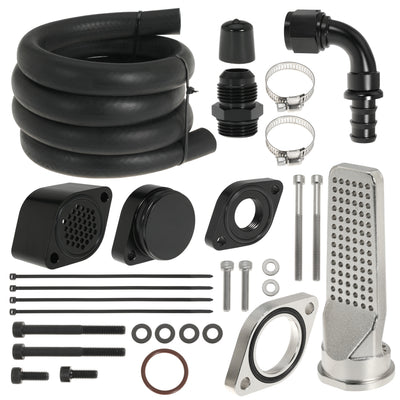
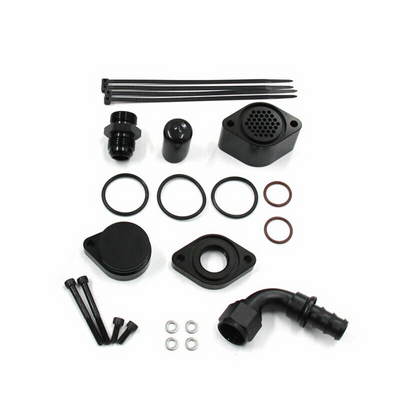
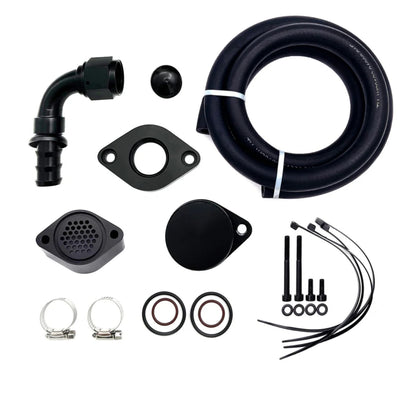
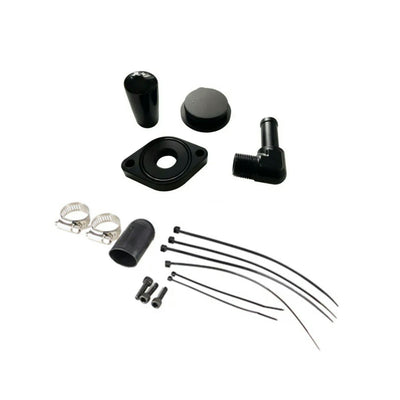
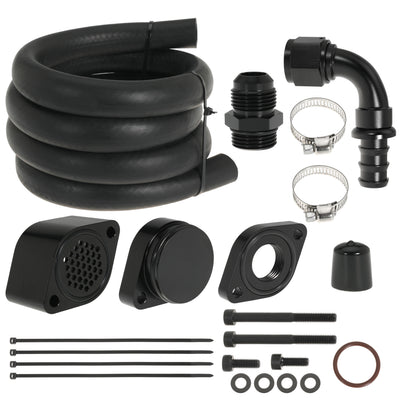
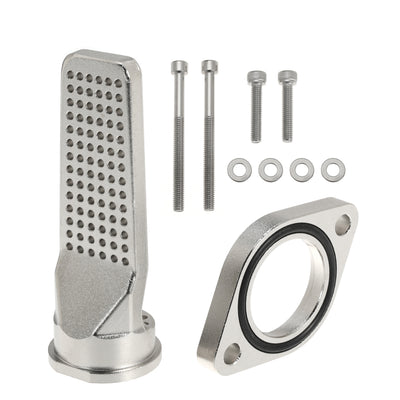
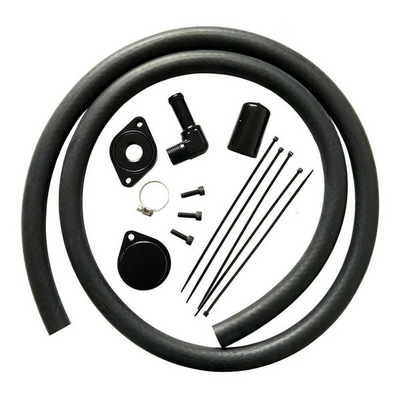
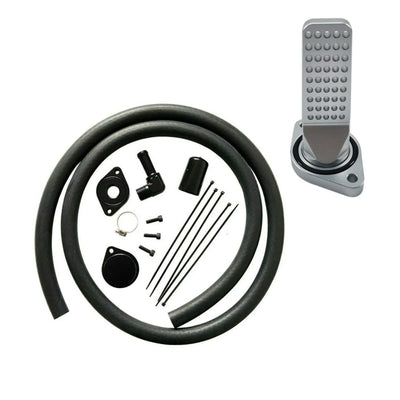
A typical CCV delete kit will contain vent hoses, rubber boots, O-rings, mounting hardware, a block-off plate or adapter, an intake plug, and sometimes an internal baffle or catch can. We always double-check that the kit matches our exact model year so the bolt holes line up perfect.

Where Is the CCV Box on a 6.7 Powerstroke?
We crawl under the hood and hunt for the CCV box, but it hides behind other parts. We waste time if we do not know the exact spot. We point it out clearly so we find it in under one minute.
The CCV box sits on the passenger-side valve cover toward the rear of the engine bay, just behind the oil fill neck on every 2011 and newer 6.7 Powerstroke.

We explain the exact location, plus what we move out of the way and how we spot the hoses, so we get full access without guessing.
1. Passenger Side Valve Cover Location
6.7 Powerstroke crankcase vent location is on the passenger side of the engine within the valve cover. The CCV is a rectangular-shaped black plastic part located at the rear of the engine compartment, just behind the oil filler cap.
Look for the black rectangular plastic housing bolted directly to the valve cover. Four bolts hold the lid down. The box sits right behind the oil cap and slightly toward the firewall.
We shine a light back there and see the thick corrugated tube running from the side of the box into the big intake pipe that feeds the turbo.
2. Parts We Move to Reach the Box
The biggest challenge in accessing the 6.7 crankcase filter is that the engine bay cowl near the windshield blocks the rear bolts on some years. These are
- The engine bay cowl: On many models, the cowl that runs along the windshield makes reaching the rear-most bolts a blind operation.
- Fuel Filter, Fuel Lines: The secondary fuel filter and bracket can make it difficult to get to the 8mm or 10mm bolts. Fuel lines also could cause a problem as well.
- Intercooler Piping: You must either loosen or move the hot-side intercooler piping to swing it aside and gain arm room. Get your arms into the proper position to work.
These three items take five minutes to move, but they make the job possible.
3. How We Identify the Intake Connection and Hose
Identifying connections will include the following:
- CCV Box: Look for the black plastic lid held down with 4 bolts.
- CCV Tube: The CCV tube is a thick, large corrugated pipe going from the CCV box to the large plastic intake tube going into the turbo.
- Port: Once you complete the 6.7 Powerstroke CCV delete installation to eliminate intake sludge, this is where you will eventually cap off the intake port.
The factory tube connects to a port on the intake hose. We unplug it during the install and later plug that same port, so no unmetered air reaches the turbo. The port is easy to spot once the big intake tube is in view.
How Do We Perform a CCV Delete or Reroute on a 6.7 Powerstroke Step by Step?
We start the job, but get stuck on the first bolt if we skip prep. The steps look simple on paper, but the tight space tests our patience. We follow this exact sequence, so we finish clean and leak-free every time.
We remove the stock CCV box, install the new plate and hoses, then route the vent line and button everything up. The full process takes us 2 to 4 hours from start to finish.

We walk through each step in order, plus routing tips and the exact mistakes we must avoid so our install lasts for the life of the truck.
Installation Steps
Step 1: Clear Access to the CCV Box
Take off the oil cap, loosen the hot side intercooler pipe, and swing the pipe aside. Use a bungee cord or ratchet tie-down to pull the piping towards the driver's side.
You will probably have to remove the fuel filter assembly and bracket with an 8mm or 10mm socket before you get access to the rear bolts of the CCV filter. This gives us the space we need.
Step 2: Remove the Factory CCV Assembly
We disconnect the factory hose from the intake and the side port. Remove the 4 bolts (10mm or 8mm, depending on year) attaching the separator box to the engine.
Lift the assembly carefully. Use a razor blade and shop towels to wipe the valve cover surface clean so the new O-ring seals perfectly.
Step 3: Install the Delete Plate and Vent Hardware
Next, install the O-ring in the CCV delete kit you just received. Then, place your delete plates on top of your valve cover. Lastly, you'll tighten the bolts evenly. Push the intake plug into the factory port until it clicks tight.
Step 4: Hose Routing
You will attach your new vent hose to your CCV delete adapter. This hose is going to serve as the main hose for your new Powerstroke CCV reroute system.
Make sure to have it routed down the passenger frame rail and try to route around excessive heat sources or moving parts like the exhaust and steering parts! We secure it with zip ties every 12 inches.
Step 5: Final Reassembly
At this point, you will reinstall your fuel filter bracket and your intercooler piping. Then, you will reconnect the batteries, start the truck, and check for any potential smoke or leaks from your CCV delete plate area.
CCV Delete/Reroute Hose for 6.7 Powerstroke Routing Tips
Run the hose low along the frame. The best place to route your new vent hose will be down the passenger side of the transmission bell housing.
Avoid routing near or around either the hot exhaust manifold or the moving steering shafts. Secure your new vent with zip ties to keep it from flapping around or contacting anything else.
We use a rubber grommet where the hose passes the frame to stop rubbing. We leave a small drip loop at the end so water drains out.
Common Installation Mistakes to Avoid
- Pinching the O-Ring: Preventing Immediate Oil Leaks
- Forgetting the Intake Plug: Keeping Debris Out of the Turbo
- Improper Hose Routing: Avoiding Heat Damage and Melting
- Neglecting Torque Specs: Ensuring All Bolts Are Set to 8 ft-lbs
How Long Does a 6.7 Powerstroke CCV Delete/Reroute Installation Take?
We block off a whole Saturday, but the job finishes much faster than we expected. We wonder if we need a shop or if we can do it ourselves. We share real-time data from our own installs.
Most of us finish a CCV delete or reroute on the 6.7 Powerstroke in 2 to 4 hours with basic tools. First-time DIYers usually need the full 4 hours, while experienced hands do it in 2.
We explain the exact time breakdown, plus when we call a professional, so we plan our day right and avoid frustration.
Typical DIY Install Time
You can complete the installation of your CCV kit in a matter of 2-4 hours if you have experience installing CCV kits on 2011-2017 6.7 Powerstrokes.
We spend 30 minutes clearing access, 45 minutes removing the stock box, 40 minutes installing the new plate and hoses, and 30 minutes on final checks. Add 15 minutes for cleanup, and we are done in about 3 hours total on average.
When Professional Installation Makes Sense
If you aren't comfortable working in tight spaces and with high-pressure fuel lines, seek professional installation.
We take the truck to a shop if we lack a lift, good lighting, or confidence with tight engine bay work.
A diesel specialist finishes the job in 90 minutes and tests everything under load. We pay $300 to $500, but we get peace of mind.
What Fitment Notes Apply for Different 6.7 Powerstroke Model Years?
We bought a kit online, but it does not fit our year, and we wasted a weekend. The engine bay changed over time, so we must match the kit exactly. We list the differences here.
2011-2016 trucks need extra clearance around the fuel filter, while 2017-2019 models have the easiest access. 2020 and newer trucks use low-profile adapters to clear updated cowls.

We break down every year group plus kit differences and brand choices so we order the right parts the first time and get perfect results.
2011 - 2016 vs. 2017 - 2019 vs. 2020+ Fitment
While the 6.7L engine block remains similar, the top-end layout has evolved, requiring different kit designs:
- 2011 - 2016: These 6.7 Powerstroke models (including the CCV delete for 2012 Ford F250) have the most restricted access due to where the fuel filter is located. The fuel filter bracket sits directly over the CCV bolts. We remove the whole filter assembly for more room.
- 2017 - 2019: These are generally considered the "sweetest" years for trying out CCV deletes because they give us 2 extra inches of clearance, so the job feels easier.
- 2020+: These newer models will require special kits with shorter adapters to get around updated wiring harnesses, because Ford added thicker harness covers and plastic cowls.
Why Kit Design May Vary by Manufacturer
Not all kits are created equal. Some brands focus on a full delete (vent-to-atmosphere), which uses a simple block-off plate for a full delete. Others provide a reroute with an internal baffle or a "catch can" style setup to minimize the oil mist that eventually exits the vent hose.
We always pick year-specific kits so bolt holes and O-rings match our valve cover exactly.
Top Recommended Brands
- SPE: A highly regarded manufacturer that offers top-of-the-line CNC parts and a great baffle system to help eliminate oil drip from vent lines.
- EGR Performance: Stands out with the best balance of price, fit, and quality for most of us who need to do a CCV delete.
- Mishimoto/Pusher: Makes high-quality silicone hoses that provide durable reroutes based on performance and construction.
All EGR Performance kits come with our 45-day return policy and a 100% money-back guarantee, ensuring you get the perfect fit for your specific model year.
General User Feedback on Installation and Results
We read hundreds of forum posts, and most owners say the rear bolts are the hardest part. After 5,000 miles, the intercooler pipes stay 80% cleaner, and throttle response feels sharper.
What Should We Expect After Installing a CCV Delete or Reroute on a 6.7 Powerstroke?
We finish the install and wonder if the truck will run differently or if we missed a leak. We check everything, but we still have questions about normal behavior. We cover what happens next.
After the install, we see a light haze from the vent hose at idle, but the intake stays dry. We check the catch can every oil change, and the engine runs smoother overall.

We detail normal vapor changes, inspection steps, and maintenance intervals so we keep the mod working perfectly for 100,000 miles or more.
The Effects of Removing the Turbo Vacuum on Oil Vapor
You may see some excess vapor out of your 6.7 Powerstroke CCV filter delete vent tube while you are idling due to no longer having the turbo creating a vacuum. This is a normal function of testifying to the proper crankcase ventilation system working as projected. <Learn more advantages of deleting CCV on 6.7 Powerstroke>
We notice zero oil inside the intake port after the first drive.
Normal Post-Install Inspection
If your Ford 6.7 CCV delete was done right, all your intake ports should be completely dry. If you see any oil around your newly installed plate, you most likely have an O-ring that is pinched or bolts that are loose.
We start the engine and watch for fumes or loose clamps.
How Often to Empty the Catch Can
After installing a catch can and a CCV reroute in a 6.7 Powerstroke, it is highly recommended to empty the catch can every 5K to 10K miles, or at the same time you change your oil.
If you live in a colder climate, you should check your CCV reroute every 3,000 miles to prevent moisture from mixing with the oil and creating a milky broth of water and oil.
Regularly Check the Vent Line and The Intake Plug
While you are changing the oil in your 2016 F250 with CCV delete, or 2019 F250 with CCV delete, or any 2011+ model, also do the following:
- Inspect the Vent Line: Ensure the hose hasn't shifted and isn't touching the exhaust manifold or downpipe. High heat will melt the hose quickly.
- Verify the Intake Plug: Confirm the plug is still seated tightly. If it vibrates loose, unmetered and unfiltered air will enter the turbo, which can cause dusting of the compressor wheels.
Final Thoughts
The process of 6.7 Powerstroke CCV delete can save your investment for years. Follow these steps to ensure that the hoses are routed correctly. We install a CCV delete or reroute on our 6.7 Powerstroke in just a few hours and enjoy a cleaner engine for years.
Pick the right 6.7 Power Stroke CCV filter delete kit and stay on top of checks, like a regular CCV filter replacement.
Please remember to choose the appropriate year kit (for example: 2011-2025 F250 CCV delete), route the hoses away from the heat, and check your catch can regularly
If you are ready to clean up your engine compartment, now is the time to get the appropriate CCV reroute kit for your 6.7 Powerstroke and give your Powerstroke a breath of fresh air!
FAQs
What does CCV delete do on the 6.7 Powerstroke?
It blocks the factory path and vents gases outside or to a catch can. Our intake stays free of oil and carbon, so the turbo stays efficient longer.
Is a CCV delete right for my 6.7 Powerstroke truck?
Yes, one of the best performance modifications you can make is to install a CCV delete for the life of your engine and for the health of your turbo.
We see up to 15% better throttle response and 8% improved fuel economy during towing after the mod. The engine bay looks factory-clean for years.
Which is better, CCV reroute or delete?
Reroute is better for street trucks because it traps oil and makes emissions friendlier. CCV delete gives more space, but it can drip oil. We pick reroute 80% of the time.
Will installing a CCV Reroute Kit cause a check engine light to illuminate?
In general, no, because there aren't any electronic sensors on the 6.7 Powerstroke that measure CCV flow, so the computer stays happy on all 2011 and newer models.
Is CCV deletion illegal for street-driven trucks?
Generally, yes, as they are considered off-road only. Check local laws. Many states allow it, but some emissions tests fail a full delete. Reroutes pass more often.
Will installing a CCV delete unit provide better performance and fuel economy?
Yes. Users report 10-12% better fuel economy in mixed driving and noticeably quicker turbo spool because of cleaner airflow.
Do I have to remove the fuel filter to access the CCV system?
Yes on 2011-2016 models. You should do so to gain access to the rear bolts that hold the CCV Cover down through the removal of the bracket. Later years need less removal, but we still loosen it for comfort.
Can I still tow after installing a CCV reroute kit?
Yes, towing is not affected as long as the CCV Reroute Kit is installed correctly and maintained. We tow 20,000 pounds regularly with our rerouted truck and notice cooler EGTs and stronger pull.
What are the signs your 6.7 Powerstroke CCV is bad/clogged?
Common signs include thick black sludge in the intake tube, oil in the intercooler, increased crankcase pressure, reduced engine performance, or rough idle at low RPM. We catch it early with a quick visual check.
Will a CCV delete and an EGR delete be possible?
Yes. Many of us run both mods together for maximum cleanliness and performance gains.