
⛽ 30-Second Summary: Fuel Regulator & Pressure Diagnostics
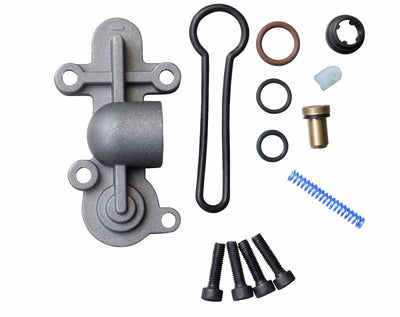
Isolating fuel system faults begins with checking the vacuum line for raw fuel; an immediate regulator swap is required if gasoline escapes. For 6.0L Powerstroke platforms, utilizing a specialized gauge to verify stable fuel delivery between 55–65 PSI is critical. To restore proper hydraulic pressure and shield expensive injectors from devastating fuel cavitation failure, installing heavy-duty upgrades like the legendary Blue Spring Kit provides the ultimate platform-specific reliability win.
Table of Contents
- Introduction
- What Does a Fuel Pressure Regulator Do?
- Common Symptoms of a Bad Fuel Pressure Regulator
- Rich vs. Lean: Symptoms Based on How the Regulator Fails
- What Causes a Fuel Pressure Regulator to Go Bad or Faulty?
- How to Tell If the Fuel Pressure Regulator Is the Problem
- Bad Fuel Pressure Regulator vs. Bad Fuel Pump
- How to Test a Bad Fuel Pressure Regulator
- Can You Clean a Fuel Pressure Regulator? When does Cleaning Work?
- Is it Safe to Drive with a Bad Fuel Pressure Regulator?
- How Much Does it Cost to Replace a Fuel Pressure Regulator?
- Choose the Right Replacement Fuel Pressure Regulator and Best Options
- FAQs
- Conclusion
Introduction
If your vehicle is having a rough idle, black smoke, or a strong fuel odor, it may all be due to one part - a bad fuel pressure regulator.
A failing fuel pressure regulator disrupts stable PSI in the fuel rail, causing rich or lean mixtures that lead to misfires, power loss, and potential engine damage. Symptoms include extended cranking beyond 5-10 seconds, black smoke from unburned fuel, and fuel trim DTCs like P0172 or P0087.
The symptoms of a bad fuel pressure regulator can be similar to other fuel system problems, making diagnosis difficult.You might be losing power, burning more gas or having trouble starting your engine.
The positive side is that these symptoms have definite, identifiable patterns. We have spent two decades wrenching on heavy-duty diesels. Fuel pressure problems hit hard and fast. Keep reading to spot the exact bad fuel pressure regulator symptoms, why it's occurring, run the right tests, and pick the best fix for your truck.
What Does a Fuel Pressure Regulator Do?
The fuel pressure regulator maintains steady pressure in the fuel rail, typically 45-65 PSI depending on the engine, so injectors deliver precise atomized fuel for efficient combustion across all loads.
Restore Precision Fuel Delivery.
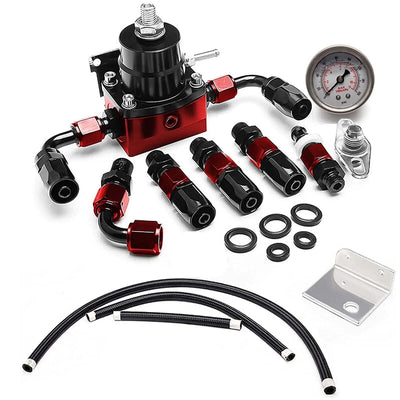
Don't let a failing fuel pressure regulator compromise your engine's performance or injector longevity. Our Fuel Pressure Regulators from EGR Performance are precision-calibrated to maintain consistent rail pressure, eliminating surging, hard starts, and power loss. Get the responsive throttle and reliable fuel delivery your platform demands.
Shop Fuel Pressure Regulators→The fuel pressure regulator maintains a constant fuel pressure regardless of the engine's operating conditions. It regulates the amount of fuel that is supplied to the injectors at any given time.
How It Controls Fuel Delivery
- Holds fuel pressure constant under different engine loads.
- Maintains accurate fuel injector atomization.
Understanding Fuel System Architecture in Heavy-Duty Diesels
Heavy-duty diesel fuel systems demand precision. The 6.0L Powerstroke uses a high-pressure oil system (HEUI) where the IPR valve controls injector actuation, but the low-pressure regulator feeds the rails first.
Cummins 5.9L and 6.7L rely on the FCA (Fuel Control Actuator) mounted on the CP3 pump to meter fuel volume.
Component |
Function |
Typical Pressure Range |
Failure Impact |
|---|---|---|---|
Vacuum Regulator |
Diaphragm balances rail pressure |
45-60 PSI |
Rich mixture, black smoke |
Electronic FCA (Cummins) |
Solenoid controls pump output |
4,000-26,000 PSI rail |
Surging idle, P0087 code |
IPR Valve (Powerstroke) |
Regulates high-pressure oil |
500-3,800 PSI |
No-start hot, erratic RPM |
LB7 Relief Valve (Duramax) |
Limits max rail pressure |
Prevents over 26k PSI |
Power loss under load |
Why Balanced Fuel Pressure is Critical for Combustion
- Excess fuel results in a rich condition. This results in fuel waste and contaminates engine parts.
- Low fuel levels result in a lean condition. This deprives the engine and may cause overheating or misfiring.
Both extremes show up as bad fuel pressure regulator signs that get worse over time.
System Variations & Diagnostic Overlap
Vacuum-operated regulators are used in older vehicles. Electronic fuel pressure control is used in newer vehicles. This overlap can make regulator issues appear the same as a failing fuel pump, clogged filter, or failing injectors.
That's why drivers look for symptoms rather than the name of the part. Symptoms provide a clear starting point. The confirmation of the part is typically done later, after the basic testing.
Common Symptoms of a Bad Fuel Pressure Regulator
Common symptoms include hard starting with extended cranking over 10 seconds, rough idle with RPM fluctuations of 100+, poor acceleration, black exhaust smoke, strong fuel odors, and MPG drops of 2-5 miles per gallon.

Let's take a look at the most frequent bad fuel pressure regulator symptoms that drivers experience. Each one is associated with a particular failure type.
- Hard starting or extended cranking. The engine starts up slower. Overnight bleed-off of residual fuel pressure. One of the most obvious bad fuel pressure regulator signs.
- Rough idle. RPMs vary, surge or almost stall. An improper air-fuel ratio can cause unstable combustion at idle.
- Lack of acceleration and loss of power. Hesitation or slow throttle response. Hills or merging becomes more difficult.
- Black smoke from the exhaust. This is a clear sign of a rich-running engine. One of the most apparent signs of a rich fuel mixture. Unburned fuel comes out of the tail pipe and can foul spark plugs.
- Strong smell of gasoline. If the fuel smell is coming from the engine bay, it is likely that the internal diaphragm has failed.
- Poor fuel economy. Fuel consumption increases even though driving patterns do not change. This is typically due to a rich running regulator.
- Misfiring or bucking engines. In lean or unstable pressure conditions, misfires and jerks may occur randomly.
- Check engine light. Fuel trim or misfire codes are caused by pressure deviations. Drivability issues may occur before the light comes on.
- Fuel appears in the vacuum line. This is a classic mechanical symptom of a diaphragm tear that is allowing gas to enter the intake.
- Engine cranks but won't start. If the pressure is too low, it is not within the specification and cannot be ignited.
Dive Deeper: Analyzing Each Symptom with Real-World Data
Hard starts link directly to pressure bleed-down rates. A healthy system holds 40+ PSI after 30 minutes shutoff. Bad regulators drop to zero in under 5 minutes.
Symptom |
Likely Cause |
Diagnostic Test |
Expected Reading |
|---|---|---|---|
Hard Start |
Pressure bleed |
Gauge after shutdown |
Hold >35 PSI for 10 min |
Black Smoke |
Rich condition |
Smoke opacity |
Visible heavy smoke |
Rough Idle |
Unstable PSI |
Scan live data |
RPM variance >50 |
Poor MPG |
Excess fuel |
Fuel trim data |
Positive trims >10% |
We use this metric in diagnostics. Rough idle stems from AFR deviations. Target 14.7:1 on gas, but diesels run leaner. Fluctuations cause torque variations of 50-100 ft-lbs at idle.
Rich vs. Lean: Symptoms Based on How the Regulator Fails
Stuck open regulators cause rich mixtures with black smoke and fuel smells. Stuck closed leads to lean conditions with hesitation and power loss. Ruptured diaphragms send fuel into the intake manifold.
Symptoms will vary depending on the type of failure. Knowing this helps to quickly narrow down the diagnosis.

Regulator Stuck Open: Rich Mixture
Excess fuel enters the combustion chamber. This results in typical symptoms of a rich fuel mixture such as:
- Black exhaust smoke
- Strong fuel smell
- Poor gas mileage
- Fouled spark plugs
- A heavy, rough idle
Lean Mixture: Regulator Stuck Closed
There is insufficient fuel reaching the injectors. This results in the common symptoms of low fuel pressure including:
- Hesitation under acceleration
- Engine bucking
- Failure to maintain power under load.
- Lean misfires
- Hard starting
Technical Breakdown of Mixture Imbalances
Rich conditions from stuck-open regulators increase fuel delivery by 20-30% beyond spec. This leads to carbon buildup on valves and 50% faster catalytic converter degradation.
EGTs spike 200°F higher. Lean mixtures raise combustion temperatures above 2,500°F, risking piston ring damage.
Failure Mode |
Air-Fuel Effect |
Key Symptoms |
DTC Examples |
|---|---|---|---|
Stuck Open |
Rich (+15-25% fuel) |
Black smoke, odor, low MPG |
P0172, P0175 |
Stuck Closed |
Lean (-10-20% fuel) |
Hesitation, misfires |
P0171, P0174 |
Rupture |
Unmetered fuel |
Fuel in vacuum, rich idle |
P0087 |
Ruptured Diaphragm: Fuel in the Vacuum Hose
Raw fuel is drawn directly into the intake manifold by the engine vacuum. The fuel will smell immediately and there will be liquid gas in the vacuum hose. This failure mode is always a "must replace".
What Causes a Fuel Pressure Regulator to Go Bad or Faulty?
Primary causes include torn rubber diaphragms, fatigued springs, fuel contamination, high mileage over 150,000, seal failures, and varnish from bad fuel.

Over time, regulators deteriorate from heat, age and fuel quality. Here are the most common causes:
- Rubber diaphragm is worn or torn inside.
- Fatigue of internal springs due to prolonged use.
- Fuel system contamination and debris within the fuel system.
- Normal age, high mileage and extended heat exposure
- Failure of the o-ring or seal that leads to leakage.
- Old or poor quality fuel causing corrosion or varnish build up.
Debris accumulation is particularly prevalent. A slow fuel leak is one of the common clogged fuel pressure regulator symptoms. They also can simulate a weak fuel pump, so test first.
Root Cause Analysis and Prevention
Diaphragms harden from heat cycles above 200°F. Springs lose tension after 200,000 miles. Ethanol and poor diesel quality accelerate varnish buildup, restricting orifices by 40%.
Most clogged fuel pressure regulator symptoms are caused by old fuel. Using a well-known fuel brand can help to reduce the accumulation in the future.
How to Tell If the Fuel Pressure Regulator Is the Problem
Fuel in the vacuum line, rich/lean symptoms without spark issues, and sudden pressure-related drivability changes confirm regulator failure.

One quick fuel pressure air test to determine the problem is to look for fuel in the vacuum line. When gas is involved, the odds are that the regulator is to blame.
Quick Signs That Point Directly to the Regulator
- Rich or lean symptoms without any ignition or spark problem
- Fuel in the vacuum reference line.
- Immediate pressure issues immediately after starting the engine.
These are good fuel pressure regulator failure symptoms to help distinguish this failure from other fuel system failures. These details are important to watch for early to avoid unnecessary part swaps.
Make a note of the time of onset of each symptom in your mind. If the same bad fuel pressure regulator symptoms occur during cold start and highway driving, the fuel pressure regulator is a likely culprit.
Symptoms That Can Be Confused With Other Problems
- Bad fuel pump: Causes identical low-pressure or lean symptoms.
- Fuel filter clogged: Reduces fuel volume and can simulate a failing regulator.
- Leaking injectors: Causes rich conditions and pressure bleed-down.
- Bad MAF sensor or vacuum leak: Misleads the ECM's air-fuel calculations.
Due to this overlap, testing is the only way to identify a true fuel pressure regulator failure. This can result in the wrong part being replaced and waste time and money.
Bad Fuel Pressure Regulator vs. Bad Fuel Pump
Regulator issues show fuel in vacuum lines and black smoke. Pumps cause tank noises and load-specific drops.
Both have similar symptoms, but there are a few distinguishing factors.
Signs More Common With a Bad Fuel Pressure Regulator
- Liquid fuel in the vacuum hose
- Thick black exhaust smoke from a rich condition
- Raw fuel smell around engine bay area
Signs More Common With a Bad Fuel Pump
- Whining or humming noises from the fuel tank
- High pressure loss in particular under heavy load
- No-start conditions from a complete lack of fuel delivery
- Stalling or cutting out at higher speeds
If the symptoms match the pump noise, then the pump is the more likely cause. If you're not sure, suspect both parts. Fuel pressure regulator symptoms and fuel pump symptoms can overlap on the same vehicle.
How to Test a Bad Fuel Pressure Regulator
Inspect the vacuum line for fuel, hook up the gauge for PSI readings, monitor trims, and scan codes like P0087.

Wondering how do you check fuel pressure regulator function before buying a new part? Do the following 4 steps. Testing is always cheaper than replacing parts based on guesswork.
Step 1. Check the Vacuum Line
Ensure that the engine is shut down and cool. Take out the small vacuum line from the regulator. If there is a leaking fuel pressure regulator, there will be a liquid fuel smell or a strong gas smell.
Step 2. Always use a Fuel Pressure Gauge.
Connect a mechanical gauge to the fuel rail test port. Compare static, idle and load readings with manufacturer specifications. If the readings are unstable or the PSI is high, it means it has failed.
Step 3. Observe Rich or Lean Behavior
If available, use a scan tool to check live fuel trim data. Rich running is indicated by black smoke. Slow starts or stumbles indicate poor running.
Step 4. Look for any Diagnostic Trouble Codes.
Look for lean codes such as P0171 or P0174. Look for rich codes such as P0172 or P0175. Look at fuel rail pressure codes like P0087 as well. Codes are used to aid in diagnosis, but are not a substitute for manual testing.
Can You Clean a Fuel Pressure Regulator? When does Cleaning Work?
Cleaning helps only with varnish buildup. Torn diaphragms require new units.

In some cases, cleaning will help, but not all. Cleaning will not work if the diaphragm is torn or the spring is fatigued. At that stage, the only true fuel pressure regulator fix is replacement.
When Cleaning Actually Helps
- Removing varnish, gum, or sediment left by old fuel.
- Removing debris from internal screens on electronic diesel regulators.
Safe Cleaning Methods
Use special fuel system cleaners or aerosol fuel system cleaners. Ultrasonic cleaning tanks are also effective without harming internal rubber seals.
Always read product labels before use. Certain solvents are too damaging to rubber diaphragms and seals. If you're not sure, use cleaners that are safe for fuel system components.
Is it Safe to Drive with a Bad Fuel Pressure Regulator?
The short answer is no, driving with a failing regulator is a real risk. Hesitation creates unsafe conditions. Lean conditions overheat engines. Rich mixtures destroy cats and risk fires.
- Drivability concerns: hesitation, stalling and erratic throttle response.
- Engine damage: Overheating under lean conditions and dilution of engine oil under rich conditions.
- Damage to components: Unburned fuel can cause damage to the catalytic converter and plug fouling.
- Safety hazard: If the diaphragm ruptures, there is a direct fuel leak and fire hazard.
With these risks in mind, seek diagnosis of the issue as soon as symptoms are noticed. Waiting a few weeks more will not save money. It typically makes a straightforward part replacement job a much bigger repair cost.
How Much Does it Cost to Replace a Fuel Pressure Regulator?
DIY external regulators run $50-150 in parts. Shop labor for in-tank units reaches $800+.
The price depends on the year, make, model and availability of the parts. After you've identified bad fuel pressure regulator symptoms, it's easy to budget for the repair.
- Older vacuum style regulators are located on the fuel rail and easily accessible. These are easy and inexpensive DIY swaps.
- Modern in-tank or integrated systems require dropping the fuel tank. This typically requires professional labor and a greater overall expense.
The individual parts can be inexpensive or high quality, depending on the brand and vehicle. For in-tank designs, there are additional costs for labor. A quote from a reliable shop enables you to plan ahead.
Consider the pros and cons of DIY savings and the potential for fuel system errors. This will help you decide which fuel pressure regulator fix is right for your budget.
Choose the Right Replacement Fuel Pressure Regulator and Best Options
Select OEM or premium aftermarket matched to year and model. Diesel platforms need specific upgrades.
Buying Guide
- Always replace it with the same year, make, model and engine size.
- Check your system layout before: external rail mounted, in-tank or electronic returnless. Confirm symptoms by testing before ordering parts.
- The wrong regulator is a waste of time and money. Verify part numbers with your VIN prior to checkout.
- A vehicle-specific fit eliminates leaks, pressure mismatches and future problems.
Diesel-Specific Replacement Options
6.0L Powerstroke (2003-2007 F-250/F-350/F-450/F-550, 2003-2005 Excursion):
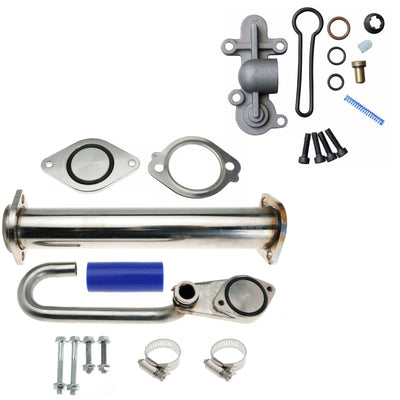
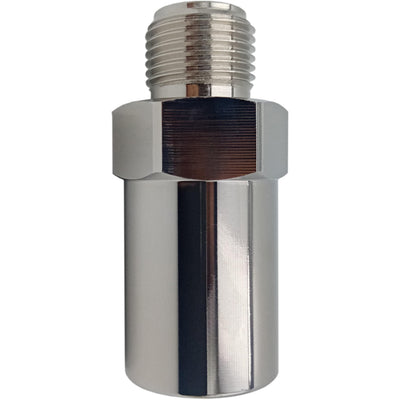
A Blue Spring Kit increases fuel pressure by 10-15 PSI to help prevent injector failure. It can be easily verified when used in combination with a fuel pressure test fitting. Owners also use an EGR bypass valve delete kit with this to increase reliability. Check 6.0 Powerstroke Fuel Pressure Regulator.
7.3L Powerstroke (1999-2003 F-250/F-350):
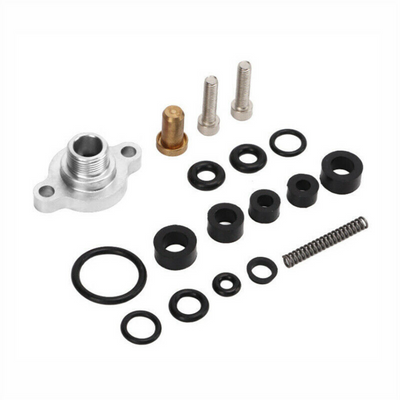
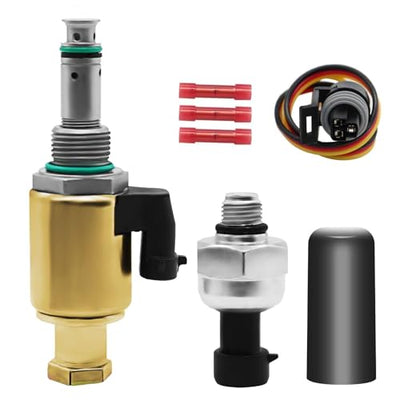
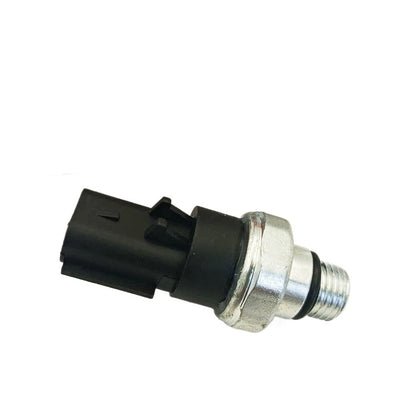
The high pressure oil system is controlled by the Injection Pressure Regulator (IPR) valve. No-starts, warm-engine stalling and surging are caused by a failing IPR. A valve cap spring kit restores the proper baseline pressure to the fuel filter bowl. Shop 7.3 Fuel Pressure Regulator.
6.6L LB7 Duramax (2001-2004 Silverado/Sierra 2500HD/3500HD):
The factory weak pressure limiter is replaced with a relief valve plug. This prevents fuel from bleeding off under load, and prevents codes such as P1093.
5.9L and 6.7L Cummins (2003-2018 Ram 2500/3500):
The Fuel Rail Pressure regulator (FCA/MPROP) is attached to the CP3 or CP4 pump. Idle surging and loss of fuel economy are caused by a worn unit. These are some of the most frequently reported fuel pressure regulator symptoms on high mileage Cummins trucks. Choose a Fuel Rail Pressure Regulator for Cummins.
Note: These are diesel specific parts and are designed for HEUI and common rail systems. They are aimed at the common rail fuel pressure regulator symptoms in diesel trucks. Gasoline vehicles require an OEM-specific vacuum or electronic regulator for their specific engine. Buy LB7 Fuel Injection Pressure Regulator Relief Valve Plug.

FAQs
Is it better to replace the regulator or clean it?
It depends on the failure. Cleaning is helpful with debris, but a torn diaphragm will always require replacement.
What causes a fuel pressure regulator to go bad?
Age, wear, heat, contamination, and a torn diaphragm are the leading causes.
What would happen if the diaphragm of the regulator burst?
Raw fuel is drawn into the intake manifold via the vacuum line. This type of leaking fuel pressure regulator should be replaced immediately.
Is black smoke a symptom of a bad fuel pressure regulator?
Yes, a regulator that is stuck open will cause a lot of fuel to enter the engine and cause thick black exhaust smoke.
Does a faulty fuel pressure regulator lead to hard starting?
Yes, pressure that escapes overnight will cause the engine to crank longer before starting.
How can you tell if fuel is leaking into the vacuum line?
Just do a testing. Disconnect the line when the engine is cool. Check for liquid fuel or a strong gas smell.
What is the easiest way to test a fuel pressure regulator at home?
The easiest way to test fuel rail pressure is with a mechanical gauge on the test port.
What are the first symptoms of a bad fuel pressure regulator?
Rough idle and hard starting are typically the first symptoms that drivers notice.
Will a bad fuel pressure regulator trigger a check engine light?
Yes, fuel trim or misfire codes will appear on the dashboard when there are pressure deviations.
Is a bad fuel pressure regulator a cause of poor fuel economy?
Yes, a rich running regulator will consume additional fuel when driving without changing anything.
What's the difference between a bad fuel pump and a bad fuel pressure regulator?
Pump failures tend to make noise, regulator failures tend to smell or smoke fuel.
Conclusion
If your regulator fails, your engine's air-fuel balance is upset. This manifests itself as poor starting, rough idling, high fuel consumption and black smoke. The first step to a correct diagnosis is to determine the exact failure mode, whether it is stuck open, stuck closed, or ruptured.
Often, these symptoms do not go away if they are ignored. A small pressure issue only gets larger and more costly over time. Acting early protects your engine, your wallet, and your daily commute.
When purchasing parts, always test bad fuel pressure regulator symptoms. Inspect vacuum line for fuel or attach mechanical gauge to verify vacuum reading.
For heavy-duty diesels, EGR Performance delivers the most reliable Blue Spring kits, IPR valves, FCA units, and platform fuel pressure regulator upgrades to restore pressure and protect your investment. Trust their components for lasting fixes on Powerstroke, Cummins, and Duramax trucks.