


⚡ 30-Second Summary: 6.7L Cummins Delete Guide & Generational Differences
Performing a full delete on a 6.7L Cummins RAM removes the failure-prone EGR valve, EGR cooler, DPF, and DEF/SCR systems—significantly enhancing throttle response, eliminating intake carbon clogging, and lowering Exhaust Gas Temperatures (EGTs). Because EGR layouts, turbocharger plumbing, and ECM security protocols evolved across RAM generations, year-specific hardware is required. Early 2007.5–2009 models require basic block-off hardware, whereas 2018+ models require a Security Gateway Module (SGM) bypass cable to enable ECM writing. A complete EGR Performance kit tailored to your year and chassis costs between $800 and $1,200 and takes 4 to 8 hours for a DIY installation. Crucially, always flash your custom calibration to the ECM before removing physical hardware to prevent hard fault codes or active vehicle derate.
Table of Contents
- Introduction
- 6.7 Cummins Year Differences & Fitment Breakdown
- What Is Included in a Full 6.7 Cummins Delete Package?
- Pre-Installation Checks & Cost to Delete a 6.7 Cummins
- Tools & Equipment Required for Deleting a Cummins 6.7
- Step-by-Step 6.7 Cummins Delete Instructions
- Critical Fitment & Installation Mistakes to Avoid
- How Hard Is It to Delete a 6.7 Cummins? (DIY vs. Professional Shop)
- EGR Performance 6.7 Cummins Delete Solutions, Expectations & Legal Considerations
- FAQs
- Conclusion
Introduction
The short answer to how to delete a 6.7 Cummins is simple: flash the tune first. Then, take off the factory exhaust and EGR equipment. Install delete pipes and block-off plates and secure all connections.
Your model year decides the parts. From 2007.5 to 2026, EGR, DPF, DEF/SCR, tuner support, and ECM security all changed.
A 6.7 Cummins delete removes the EGR valve, DPF filter, and DEF/SCR system. You add block-off plates, a straight race pipe, and a proper tune. The kit and tuning change with the year. 2007.5-2009 trucks need basic hardware. 2013+ trucks need a Security Gateway Module cable. Always use the kit made for your exact year or you will break bolts, leak coolant, or throw codes.
So, delete kits are not universal. Damage to mechanical and electrical components is significant when parts are swapped across generations. Specific resources, such as EGR Performance 6.7 Cummins Delete Kits, help ensure the parts you buy are compatible with your vehicle.
Legal notice: The removal of emissions parts on road vehicles is a violation of the Clean Air Act (42 U.S.C. Section 7522). State regulations, such as California CARB, also apply. These parts are intended for off-road and race use only.
Read on to see the full breakdown of 6.7 Cummins delete instructions, year differences, and avoid the mistakes that stop most owners.
We have helped hundreds of Ram owners pick the right year-specific kit, and we have done dozens of these deletes. The right parts make the job go smooth.
6.7 Cummins Year Differences & Fitment Breakdown
2007.5-2009 trucks have the simplest EGR and DPF setup. 2013+ trucks add DEF/SCR and the Security Gateway Module on 2018+ models. 2019-2021 trucks have a new CGI block and tighter clearances. 2022-2026 trucks use encrypted ECM controls that need full unlock tools.
The emissions layout, exhaust fit, and ECM security level are different for each generation. Use a kit made for your exact year.
2007.5-2009 Generation
- Emissions Layout: EGR valve and cooler, DPF/DOC filter. No factory DEF/SCR system.
- Fitment & Electronics: Simplest mechanical teardown and basic tuning. Uses early-style exhaust flange connections.
2010-2012 Generation
- Emissions Layout: DPF/DOC only (no DEF/SCR on pickup models). The size of the DPF filter was updated.
- Fitment & Electronics: Exhaust lengths and hanger locations vary by year. Tuning moves to digital OBD-II flashing tools.
2013-2018 Generation
- Emissions Layout: Arrival of factory DEF/SCR (Selective Catalytic Reduction) systems.
- Fitment & Electronics: EGT and NOx sensor arrays grow. 2018+ models include a Security Gateway Module (SGM) which requires an inline bypass cable.
Study how to delete DEF system on 6.7 Cummins trucks before touching these model years.
2019-2021 Generation
- Emissions Layout: A new Compacted Graphite Iron (CGI) block and new turbocharger.
- Fitment & Electronics: Modified downpipe outlet flange and close engine-bay clearances. 5th Gen ECMs run strict digital signature checks.
2022-2026 Generation
- Emissions Layout: Advanced high-pressure emission loop with encrypted controls.
- Fitment & Electronics: Heavily locked ECM architecture. Before flashing, you must have an ECM swap package or hardware unlock tools.
We always pull the VIN before we order anything. One wrong year and you waste money or damage the truck.
Navigating the hardware nuances between early 2007.5-2012 platforms and later DEF-equipped 2013+ RAM trucks requires matching specific pipe lengths and sensor bung configurations. For a general foundation on component sizing, basic tool setups, and platform overviews, consult our companion 6.7 Cummins delete guide.
What Is Included in a Full 6.7 Cummins Delete Package?
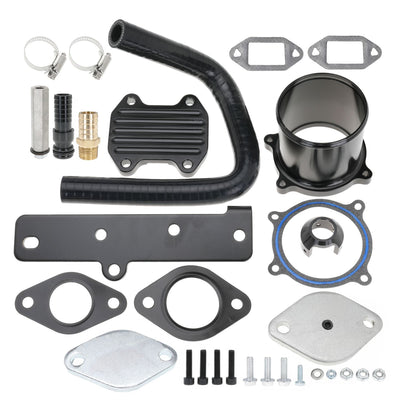
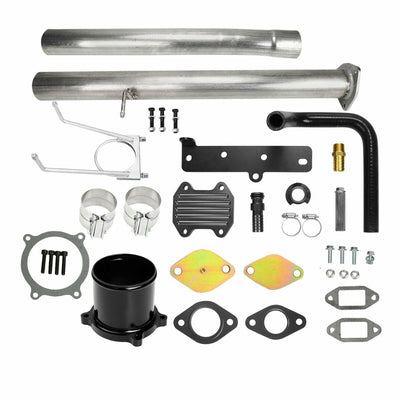
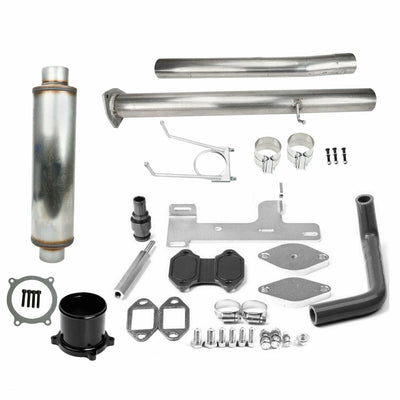
The core includes EGR block-off plates, straight race pipe, DEF plugs for 2013+, and a CCV reroute. Supporting parts like a high-flow intake elbow and grid heater fix make the job complete.
Bulletproof Your 6.7 Cummins for Extreme Off-Road Work.
Stop letting clogged factory ceramic filters and soot-laden EGR coolers choke your engine's reliability. Our 6.7 Cummins Delete Kits from EGR Performance feature direct-fit CNC-machined aluminum block-off plates, heavy-duty mandrel-bent 4" and 5" stainless steel exhaust pipes, and weather-sealed harness plugs—giving you maximum exhaust velocity, significantly lower EGTs, and total off-road durability.
Shop 6.7 Cummins Delete Kits→A full package includes EGR delete hardware, a race pipe, and DEF/SCR plugs. Completing the job are supporting parts such as a tuner.
Core Hardware Included
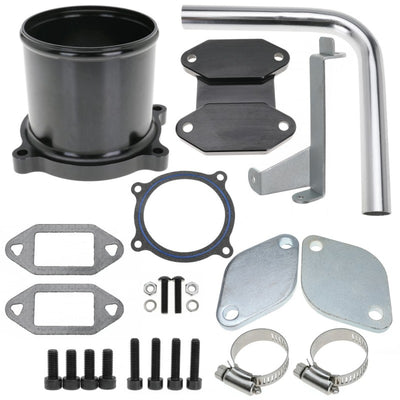
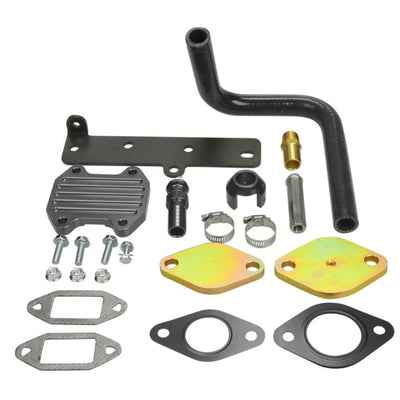
- EGR Delete Kit: Billet block-off plates, coolant reroute hose, support brackets, and high-temp seals.
- Race/Delete Pipe: 4" or 5" straight aluminized or stainless pipe. It replaces the DPF/SCR units.
- DEF/SCR Plugs: 2013+ weatherproof harness plugs and bypass jumpers.
Check that every seal is in the box before installing EGR delete 6.7 Cummins hardware.
Recommended Supporting Components to Delete and Tune
- Tuner / Calibration Device: A necessary programmer or software. It prevents limp mode and clears engine lights.
- SGM Bypass Harness: A required cable for 2018+ models. It bypasses security hardware during tuning.
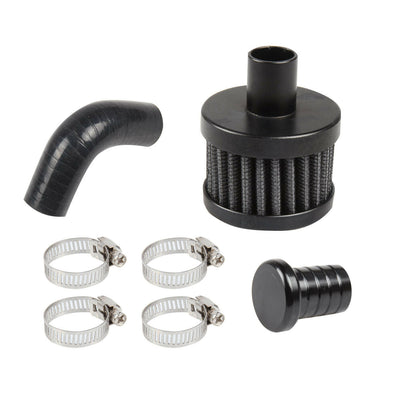
- CCV Reroute Kit: Reroutes crankcase oil vapor. This prevents sludge from accumulating in the intake and turbo.
- High-Flow Intake Elbow: Replaces the restrictive factory intake horn after EGR removal for improved intake flow.
- Grid Heater Fix/Upgrade: A replacement bolt or plate. It protects the engine from damage caused by failure of the grid heater nut.
Mechanical block-off plates must be paired with dedicated ECM calibration software to turn off active regeneration protocols and clear diagnostic trouble codes on 6.7L Cummins control modules. Select the optimal hardware flash programmer or custom tuner for your specific model year in our Cummins Tuner collection.
We always add the CCV reroute and grid heater fix. They stop the two biggest long-term problems we see.
Pre-Installation Checks & Cost to Delete a 6.7 Cummins
Confirm the model year, pickup vs Cab & Chassis, and whether you need an SGM cable. Pickup trucks and Cab & Chassis trucks need different exhaust routing. Hardware only costs $600-900. Full hardware plus tuner runs $1,400-2,200.
Verify your year, body style and ECM security before ordering. Next, estimate parts, tuning and labor.
Run these checks, because how to delete emissions on 6.7 Cummins trucks shifts by year.
Key Pre-Installation Verifications
- Confirm Exact Year & Generation: Do not make cross-generation errors. For example, confirm a 2007.5 6.7L versus an early 2007 5.9L.
- Pickup vs. Cab & Chassis Differences: Cab & Chassis models (3500/4500/5500) use different frame widths and fuel tank placements. They also need commercial ECM tunes.
- ECM Security Readiness: Before disassembly, check for the need of an SGM cable (2018+) or ECM unlocking (2022-2026).
Cost Breakdown: Parts vs. Complete Tune Packages
- Hardware Only: An EGR delete kit is $150 to $350 when purchased as a standalone component. A DPF delete pipe and fittings add to that total.
- Hardware + Tuner: Budgeting for delete and tune 6.7 Cummins trucks means complete kits of roughly $800 to $2,000. For 2022 and newer trucks, ECU requirements can push totals to $3,000-$6,000 or more.
- Labor Costs: Shop labor typically costs $500 to $1,500. The average total cost of most shop-installed deletes is $2,000 to $3,500. Doing it yourself can save you $500 to $1,000.
Eliminating thermal stress on the rear cylinder wall improves total engine longevity and restores fuel economy, though owners must balance these performance gains against regional emissions inspection standards. To weigh dyno-proven output increases against compliance factors, review our detailed guide on 6.7 Cummins delete pros and cons.
Tools & Equipment Required for Deleting a Cummins 6.7
Metric sockets, penetrating oil, torque wrenches, and an OBD-II programmer are the main items. You will also need weatherproof tape and a coolant drain pan.
When all the tools are in place before you begin, deleting a 6.7 Cummins is quicker.
- Hand Tools: Metric socket sets (8mm-15mm deep sockets), flex-head ratchets, and combination wrenches.
- Exhaust Specialty Tools: Penetrating oil or rust breaker, pry bars, and exhaust hanger removal pliers.
- Torque Tools: In-lb and ft-lb torque wrenches for intake manifold and EGR plate hardware.
- Diagnostics & Flashing: An OBD-II reader or programmer, an SGM cable (2018+), and a diagnostic scan tool.
- Fluids & Electrical: Weatherproof tape, heat shrink, zip ties, drain pan, fresh coolant.
Step-by-Step 6.7 Cummins Delete Instructions
The Steps Overview:
- Step 1: Verify all parts and connect the tuner before you touch anything.
- Step 2: Remove DPF, DOC, and SCR components.
- Step 3: Delete the EGR valve and cooler.
- Step 4: Install the straight pipe and reroute coolant.
- Step 5: Flash the tune and check for leaks and codes.
Step 1: Prepare Truck & Verify Tuning Communication
- Inspect all components against the packing list. If a gasket is missing, the job can stall halfway.
- Plug the tuner into the OBD-II port. For 2018+ models, connect the SGM bypass cable first.
- Write the calibration file and check that it was successful.
Step 2: How to Delete DPF & DEF System Exhaust Components
- Remove the DOC and DPF, and the SCR (2013+ models).
- Disconnect and isolate EGT, differential pressure and NOx sensors.
- Install straight or race pipe. Align hangers with the OEM rubber isolators.
Step 3: How to Do an EGR Delete on a 6.7 Cummins
- Drain engine coolant into a clean drain pan.
- Remove the crossover tube and unbolt the EGR valve. Pull the EGR cooler assembly out.
- Install the 6.7 Cummins EGR block-off plate on the exhaust manifold and intake ports.
- Install coolant reroute hose to maintain proper coolant circulation.
Step 4: System Verification & Post-Checks
- Use weatherproof caps to seal unplugged connectors. Keep them out of exhaust heat.
- Fill with 50/50 HOAT/OAT coolant and bleed air.
- Start the engine, inspect for leaks and verify that there are no active DTCs.
We always run the truck through a full scan after the tune. This catches any missed sensors.
When unbolting the heavy cast-iron exhaust manifold joint and installing coolant crossover plugs on 6.7L platforms, precise bolt torque values and proper gasket orientation are critical to prevent boost leaks. For exact wrenching diagrams, hose routing schematics, and step-by-step photos, reference our dedicated 6.7L Cummins EGR delete install instruction manual.
Critical Fitment & Installation Mistakes to Avoid
Flashing the tune after you unbolt parts means you sit with limp mode. Improper coolant rerouting causes air pockets and leaks. Forcing the wrong pipe on a Cab & Chassis truck can damage the fuel tank or driveshaft.
- Flashing Software After Mechanical Teardown: Rule 1 is to write the off-road flash before unbolting anything. If the flash fails, the truck continues to drive.
- Improper Coolant Rerouting: Air pockets or serious coolant leaks result from loose bypass hoses after EGR cooler removal.
- Unprotected Electrical Connectors: Exposed OEM sensor connectors collect water and dirt. This results in corrosion of the harness.
- Forcing Incompatible Pipes: Pickup exhaust forced onto a Cab & Chassis frame may impact the driveshaft or fuel tank.
We have fixed these mistakes on several trucks. Proper planning fixes them every time.
How Hard Is It to Delete a 6.7 Cummins? (DIY vs. Professional Shop)
Parameter |
DIY Installation |
Professional Diesel Shop |
|---|---|---|
Skill Required |
Intermediate to Advanced |
Certified Diesel Technician |
Time Required |
4-8 Hours |
2-4 Hours |
Pros |
Saves on shop labor; hands-on familiarity |
Commercial lifts handle heavy exhaust easily; experienced with seized bolts and ECM recovery |
Cons / Risks |
Rusted bolt breakage; possible ECM flashing stalls on jack stands |
Higher overall cost; subject to local shop compliance policies |
EGR Performance 6.7 Cummins Delete Solutions, Expectations & Legal Considerations
You can choose standalone EGR block-off kits or full packages that include the pipe and tuner. The catalogs list every year and chassis type so you never mix parts.
EGR Performance 6.7 Cummins EGR, DPF, Tuner Kits
- Year-Filtered Navigation: Shop generation catalogs (2007.5-2009, 2010-2012, 2013-2018, 2019-2021, 2022+) to avoid mismatches.
- Package Selection Options: Choose EGR block-off kits or complete packages that include exhaust piping and tuners.
- Component Verification: Product listings help you cross-check body type and ECM security requirements.
Performance & Mechanical Expectations
- Elimination of Limp Mode & Warnings: Constant DPF, DEF, and SCR warning lights are eliminated with a proper off-road calibration.
- Lower Exhaust Gas Temperatures (EGTs): Removing DPF on 6.7 Cummins trucks, along with the EGR loop, reduces heat under heavy towing.
- Elimination of Intake Sludge: With no recirculated exhaust, soot does not block the intake manifold and grid heater.
- Improved Fuel Economy & Throttle Response: Less backpressure usually means better fuel economy and faster turbo spool.
Legal and Compliance Considerations
The legal risk is a must-know for anyone thinking about how to delete emissions on 6.7 Cummins trucks.
- Federal Clean Air Act: The removal of EPA-certified emissions systems from road vehicles violates 42 U.S.C. Section 7522.
- Off-Road & Competition Notice: Parts are for non-registered, closed-course competition or off-road vehicles only.
- State & Inspection Risks: Road use can result in failed inspections (such as California CARB), warranty voids, and big fines.
We always put this notice at the top of every order so owners know the rules.
By preventing abrasive carbon soot from circulating through the cylinder bores and diluting engine oil, removing the recirculation loop significantly reduces bearing and valvetrain wear over time. To examine real-world engine hour expectations, oil sample analysis, and mileage benchmarks, explore our analysis on how long will a deleted 6.7 Cummins last.
FAQs
These are the questions we answer for customers every week.
How hard is it to delete a 6.7 Cummins by yourself?
It can be done with moderate mechanical proficiency. Take the time to plan a full day, use jack stands and have someone help you lift the exhaust. The most serious problems are seized bolts and tuning errors.
How much does installation usually cost at a diesel shop?
Shop labor usually runs $500 to $1,500. Newer 2022+ trucks can climb to $3,000-$6,000 or more with tuning.
No. It is not recommended. Unplugging sensors before flashing can cause a limp mode or derate. If the flash fails, the truck may not be able to be driven.
How do I tell if my Ram 3500 is a Pickup or a Cab & Chassis?
Look at the rear. A Pickup is a vehicle with a factory bed. A Cab & Chassis is a bare frame for a flatbed or service body. It is also confirmed by a VIN decoder.
Are all 6.7 Cummins delete kits interchangeable across model years?
No. The exhaust lengths, flanges, sensor counts and ECM security vary from generation to generation. Always purchase parts that are specific to your year.
What is the primary difference between 2007.5-2012 and 2013+ delete kits?
2013+ kits must handle the DEF/SCR system. This results in longer piping, different tuning and more sensor plugs. Previous kits only include EGR and DPF hardware.
What is an SGM bypass cable and why is it required for 2018+ Ram trucks?
It is a harness that routes around the Security Gateway Module. Ram added the SGM to prevent unauthorized OBD-II writes. The cable allows your tuner to access the ECM.
Do buyers need to verify tuner compatibility before ordering hardware?
Yes. Your year and ECM should be supported by the tuner. Without a working flash, your hardware sits idle. Check compatibility with the seller before ordering.
How do I diagnose a DPF or DEF warning light on a Ram 6.7 Cummins?
Use an OBD-II scan tool to read the codes. This can be caused by a clogged DPF, low quality DEF or a faulty NOx sensor. Clear codes after fixing the root cause.
Should I buy a deleted 6.7 Cummins used truck?
Be careful. In some states, a deleted truck is ineligible for inspection or registration. Emissions parts are costly to replace. Request records and consult local legislation.
Conclusion
Key Takeaway: Knowing how to delete a 6.7 Cummins correctly means matching hardware, exhaust routing, and tuning to your exact year and chassis.
Next Steps:
- Determine your specific model year, engine generation, and chassis type (Pickup vs. Cab & Chassis).
- Check tuner compatibility and ECM security requirements (SGM cable or ECM unlock).
- Use dedicated catalogs such as EGR Performance 6.7 Cummins Delete Kits to browse year-matched parts.
The key takeaway is to use a year-specific kit. It keeps the installation smooth and reliable for off-road use only.
We have deleted dozens of 6.7 Cummins trucks. The right kit makes all the difference. Explore our full range of heavy-duty 6.7 Cummins delete kits, or send us your year, model, and chassis type, and we will tell you the exact kit that fits in one message.