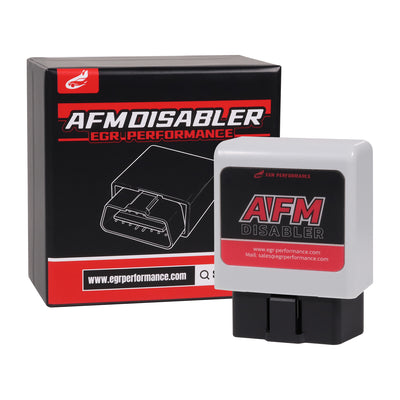

⚡ 30-Second Summary: Can an AFM Disabler Drain Your Battery?
Because vehicle OBD-II ports supply unswitched 12V battery power, an AFM disabler draws constant power even when the ignition is switched off. However, modern low-draw devices like the EGR Performance AFM/DFM Disabler enter an automatic low-power sleep mode, consuming under 20 mA—a negligible draw that will not drain a healthy battery during regular daily driving. If a vehicle exhibits a dead battery or slow engine cranking after being parked for 1 to 2 weeks, the disabler is typically acting alongside secondary parasitic draws, such as an aging battery with reduced reserve capacity or background vehicle electronics failing to enter sleep mode. Simply unplugging the module during long-term storage and testing your battery annually prevents unexpected power drain issues.
Table of Contents
- Introduction
- Can an AFM Disabler Actually Drain a Truck Battery?
- Why an OBD-II AFM Disabler Can Use Power With the Key Off
- Why Does the Battery Die Only After the Truck Sits?
- How Long Can You Leave an AFM Disabler Plugged In?
- Signs the AFM Disabler May Be Contributing to Battery Drain
- How to Test Whether the AFM Disabler Is Really the Problem
- Should You Use a Switched OBD-II Power Cable or Relay?
- AFM Disabler vs. Tune: Which Is Better for Battery Concerns?
- Best Practices to Prevent Battery Drain
- FAQs
- Conclusion
Introduction
Yes, AFM disabler battery drain is possible if the device stays connected for a long period of time. The draw is very small when driving normally. If the battery is healthy and the truck is driven regularly, it should be fine.
An AFM disabler can drain your truck battery by drawing a small parasitic load from the OBD-II port, which stays powered even when the ignition is off. The draw is usually only 10-30 mA in standby mode and rarely causes issues on a healthy battery in a regularly driven vehicle. Battery problems appear mainly after extended parking, with a weak or old battery, cold weather, or multiple other accessories connected.
The device is installed in your OBD-II port, which is always powered. The drain occurs in the following manner:
- Parasitic draw: A tiny monitor runs in sleep mode to detect engine starts.
- Normal use: Driving every few days keeps a healthy battery charged.
- Long periods of disuse: Leaving the truck parked for a week or two can completely drain the battery.
- Factors that increase the risk: Old batteries, extreme weather, additional accessories, and awake modules.
Typical plug-in AFM/DFM disablers draw about 10-30 mA in standby mode from the always-live OBD-II port. Modern low-power modules like the EGR Performance AFM/DFM Disabler typically consume under 20 mA, which will not kill a healthy battery in daily use.
The OBD-II port gives you easy access to vehicle data, but it also supplies constant 12-volt power. When you plug in any device, even a small one, it can add to the load that the alternator must keep up with. We explain exactly when this small load becomes a real problem on your 5.3L, 6.0L, or 6.2L GM V8 and how to fix it fast.
Can an AFM Disabler Actually Drain a Truck Battery?
An AFM disabler draws a small amount of power even when the truck is off and remains in sleep or standby mode. A healthy battery in a regularly driven truck can usually handle this low draw. Problems appear when the truck sits for extended periods, the battery has low reserve capacity, the weather is extreme, or other accessories remain connected.
Yes, it can, but it's a small draw.
- Parasitic Draw Explained: The disabler pulls a bit of power when the truck is off. This parasitic power drain is ongoing while it is on standby.
- Why the Draw Usually Seems Small: It is designed for low-power use. It is not a problem for a healthy battery in a truck that is driven regularly.
- When Small Draw Becomes a Real Problem: A truck battery dead after sitting usually points to a long park, a weak battery, or too many accessories.
Protect Your Valvetrain Without Parasitic Battery Drain.
Stop letting collapsible lifter failure threaten your GM V8 engine. Our AFM/DFM Disablers from EGR Performance feature advanced smart power-management circuitry with ultra-low standby draw—keeping all 8 cylinders active 100% of the time for instant throttle response and zero V4 shudder while keeping your battery safe.
Shop EGR Performance AFM/DFM Disablers→Symptom and Cause Interpretation guide:
- The truck starts every day but is weak after 1 to 2 weeks parked: The always-connected device, normal standby load, battery condition, or a combination may be involved.
- Battery dies overnight: See past the disabler. A weak battery, heavy draw, charging fault, or awake module is more likely.
- Problem goes away when the disabler is removed: Test the device, its compatibility, its firmware, and how it works with your truck.
- Battery still dies when unplugged: Check the battery, alternator, wiring, grounds, accessories, and factory modules.
Best Practices To Prevent Drain:
- Unplug during storage: Unplug the device before leaving the truck for days or weeks.
- Check firmware: Newer models include improved power management. An AFM disabler with sleep mode consumes very little current compared to previous models.
Why an OBD-II AFM Disabler Can Use Power With the Key Off
On standard OBD-II systems, pin 16 is vehicle battery power, which is normally live even with the ignition off so diagnostic equipment can be powered. The AFM disabler consumes standby current to monitor vehicle state or remain ready to function. If the module keeps communicating on the vehicle network after shutdown, it may delay sleep mode or keep another vehicle module awake, causing a larger total draw than the disabler's own current consumption.
It is powered by the OBD-II port remaining active when the ignition is off.
- Constant Power Source: On standard OBD-II systems, pin 16 carries battery power. It stays live so diagnostic tools can run.
- Direct Module Draw: The device uses standby current to monitor the state of the vehicle and stay ready.
- Network Wake-Up Draw: A module that is talking on the vehicle network can delay sleep or keep another module awake. This can be more than the device consumes, and it is one of the common parasitic battery drains.
Does Sleep Mode Mean Zero Battery Draw? No. Sleep mode reduces current but leaves the device connected to the battery, so some AFM disabler battery drain is still possible.
Because the OBD-II port maintains unswitched battery voltage at Pin 16 even with the ignition turned off, plug-in modules stay continuously connected to the vehicle's CAN-bus network. To understand how internal processors negotiate handshake protocols with the engine computer to block cylinder deactivation without reflashing factory software, consult our master AFM DFM disabler guide.
Why Does the Battery Die Only After the Truck Sits?
Batteries are most vulnerable when several small loads stack up over time without the alternator replenishing energy. Weak or aging battery, cold or hot weather, short trips and incomplete recharging, and other accessories all contribute to the problem.
Because nothing recharges the battery while small loads keep pulling power.
Stacking Small Loads: Battery discharge becomes more likely when several small electrical loads continue while the truck is parked and the alternator is not running to replenish that energy. This type of parasitic battery drain creeps up over days.
Contributing factors:
- Weak or Aging Battery: Older batteries have reduced reserve capacity.
- Cold or Hot Weather: Cold decreases cranking power. Batteries do not last as long when they are hot.
- Short Trips and Incomplete Recharging: Frequent short trips do not fully recharge the battery.
- Other Accessories: Dash cams, aftermarket radios, GPS trackers, alarms, phone chargers, and OBD-II splitters are all common parasitic battery drains.
- Vehicle Modules Not Fully Going to Sleep: Body control, infotainment, telematics, or keyless-entry modules may stay awake.
How Long Can You Leave an AFM Disabler Plugged In?
For a healthy, regularly driven truck, a compatible low-power AFM disabler is typically intended to remain connected. Risk increases during long parking periods, especially a week or more. Storage situations to watch include airport parking, seasonal vehicle storage, weekend-only trucks, and vehicles parked during winter.
Safe for Daily Driving in Most Cases:
A healthy, well-driven truck will typically allow you to leave it plugged in at all times. A compatible, low-power unit is typically designed to stay connected.
Will EGR Performance AFM disabler drain battery power on a daily driver? Usually only slightly.
Risk Increases During Long Parking Periods:
The risk increases after the truck has been parked for a week or more. The risk of parasitic battery drain climbs even higher after two weeks or more.
Storage Situations To Watch:
- Airport parking
- Seasonal vehicle storage
- Weekend-only trucks
- Winter parking of vehicles
Signs the AFM Disabler May Be Contributing to Battery Drain
Slow cranking after sitting for several days. Dead battery after a week or two, especially if it started fine before installation. No starting problem during frequent, daily use. Battery problems starting immediately after installing the device.
The easiest way to tell is if a truck has trouble getting started after sitting.
- Slow cranking after a few days of inactivity.
- Dead battery after a week or two, especially if it started fine before installation.
- No starting issues with regular, daily use. In that case, does an AFM disabler drain battery power enough to matter? Probably not.
- Battery problems starting right after installing the device point to AFM disabler battery drain.
Older disabler firmware or mismatched modules may fail to enter low-power sleep mode on newer Global B digital electrical architectures, keeping the vehicle's body control module awake indefinitely. To ensure your hardware matches your truck's specific model year and electronics setup, check our guide on GM AFM DFM disabler compatibility.
How to Test Whether the AFM Disabler Is Really the Problem
If your truck battery keeps dying, guessing won't solve the issue. The best way to perform a parasitic draw test and isolate the AFM disabler involves a systematic, step-by-step diagnostic process: charge and test battery health, remove the disabler and any other nonessential OBD-II accessories, compare under same conditions, and isolate other electrical drains.
Test it by taking it out and comparing the results under the same conditions. Guessing will not fix a dying battery. There are four steps to good battery drain parasitic draw testing:
- Charge and test battery health: Fully charge the battery. Next, perform a load test or conductance test.
- Remove the disabler: Take out the AFM disabler and any nonessential OBD-II accessories.
- Compare under the same conditions: Park and drive the truck in the same manner as before. Check voltage and starting. Matching conditions keep battery drain parasitic draw testing results fair.
- Isolate other electrical drains: If problems persist, check factory-module draws, charging faults, and wiring. This is the fundamental troubleshooting parasitic battery drain work.
Should You Use a Switched OBD-II Power Cable or Relay?
The DIY Workaround: Older forum discussions describe modifying OBD-II power so the disabler receives power only with ignition-on. The drawbacks: wiring changes can create diagnostic-port issues, introduce poor connections, or cause unintended behavior such as suppressing or clearing stored check-engine codes, hiding diagnostic problems.
Recommended: prefer a current, vehicle-compatible low-power module like the EGR Performance AFM/DFM Disabler; unplug it for long-term storage; avoid cutting factory OBD-II wiring.
Usually no, because a low-power module and smart habits are safer.
- The DIY Workaround: Older forum posts talk about wiring the port so that the disabler only receives power when the ignition is on.
- The Drawbacks: Improper OBD-II wiring modifications can cause poor connections, communication faults, or interfere with normal diagnostic access.
- Recommended: Use a current, vehicle-compatible, low-power module such as the EGR Performance AFM/DFM Disabler. Unplug it for long-term storage. Never cut factory OBD-II wiring.
AFM Disabler vs. Tune: Which Is Better for Battery Concerns?
AFM disabler pros and cons: easy to install, reversible, no ECU reflash required; however, it has a possible parasitic draw and occupies the OBD-II port. Tune pros and cons: no plug-in module left drawing power and a more permanent solution; however, it comes with a higher cost, less reversibility, and potential warranty or emissions impacts.

A tune is completely plug-in free, and a disabler is easier to reverse.
Option |
Pros |
Cons |
|---|---|---|
AFM disabler |
Easy to install, reversible, no ECU reflash |
Possible parasitic draw, uses the OBD-II port |
Tune |
No plug-in module drawing power, more permanent |
Higher cost, less reversible, possible warranty and emissions impacts |
If you're looking for an affordable, easily reversible solution, an AFM disabler with sleep mode is the easier route.
If your vehicle routinely sits idle for extended periods and you prefer a zero-draw solution, alternative methods such as software calibration or manual range selection eliminate the need for an active OBD-II hardware connection. Explore all active bypass approaches in our step-by-step tutorial on how to disable AFM on GM engine.
Best Practices to Prevent Battery Drain
Unplug the device during extended parking, storage, or vacations. Keep the battery healthy, clean terminals, and test voltage regularly. Drive long enough to recharge the battery instead of relying purely on short trips. Use a smart battery maintainer for vehicles parked for weeks at a time. Reduce other parasitic loads by disconnecting unnecessary aftermarket accessories.
Maintain battery health and unplug the device when the truck is not in use.
- Unplug the device for long periods of parking, storage, or vacation. This removes AFM disabler battery drain completely.
- Keep the battery in good condition, clean the terminals, and check voltage periodically. Periodic testing simplifies troubleshooting parasitic battery drain.
- Take long drives to recharge the battery, rather than short ones.
- If the truck sits for weeks at a time, use a smart battery maintainer.
- Disconnect any unnecessary aftermarket accessories to reduce parasitic power drain.
While an OBD-II disabler presents a small parasitic power draw when parked long-term, it remains a far safer approach for factory powertrain warranties than re-flashing the ECM, which leaves an undeniable digital footprint. To weigh battery maintenance against ECU flash counters and long-term valvetrain preservation, read our safety review on is it safe to disable AFM.
FAQs
Can an AFM disabler kill a battery overnight?
Unlikely. A healthy battery can cope with the small draw. If it dies overnight, check for a weak battery, a charging fault, or an awake module.
Why is my truck battery dead after sitting for a week?
The battery drains when the truck is off and the alternator is not charging. Age, weather, accessories, and awakened modules speed it up. Test the battery first.
How long can a truck sit with an AFM disabler plugged in?
A healthy truck will last a week or two. After that, the risk increases, so unplug it for longer periods.
Does an OBD-II port have power when the truck is off?
Yes. Pin 16 normally carries constant battery power, even with the ignition off.
Does an EGR Performance AFM disabler drain the battery?
A little bit, as with any plugged-in module. Daily driving balances it out. Disconnect it for extended periods of storage.
Is the AFM disabler always the cause of battery drain?
No. Weak batteries, charging faults, accessories, and factory modules often cause it. Test before blaming the device.
Can I leave my EGR Performance AFM disabler plugged in all the time?
Yes, on a well-maintained, well-driven truck. If the truck is going to be stored for more than a week or two, unplug it.
Do newer AFM disablers have better sleep mode?
Generally yes. Newer models are more efficient in power management and reduce sleep-mode power consumption. Check your firmware version.
Should I unplug an AFM disabler before storing my truck?
Yes. Unplugging eliminates the draw altogether. For storage longer than a couple of weeks, add a smart battery maintainer.
Is a tune better than an AFM disabler for avoiding battery drain?
A tune leaves no plug-in module drawing power. It costs more and is harder to undo.
Can an AFM disabler prevent a vehicle from going to sleep?
It can. A module that keeps talking on the network can delay sleep or keep other modules awake.
How do I check for parasitic battery draw on my truck?
Charge and test the battery, take out the disabler, and then check the draw using a multimeter. If it continues, inspect modules, charging, and wiring.
Does turning an AFM disabler off eliminate all battery draw?
No. It may stay connected to constant power. Only unplugging removes the draw.
Conclusion
AFM disabler battery drain is real, but the draw is too small to cause a problem during daily driving. The larger problem comes when the truck sits for a long period of time. It gets worse if the battery is old, the weather is extreme, or other electronics are also drawing power.
The smartest approach is simple. Keep your AFM/DFM disabler module plugged in during normal use. Disconnect it for extended periods of storage. Maintain a healthy battery.
Looking for an ultra-low-draw solution that keeps your engine in full V8 mode without hassle? Explore our full collection of AFM/DFM disabler modules, featuring premium DFM modules, OBD2 disablers, and adapter cables designed for seamless, reliable operation.