
⚠️ 30-Second Summary: Is DoD Delete Legal
Determining is DoD delete legal depends on state compliance, federal regulations, and hardware configuration. Under federal Clean Air Act rules, AFM systems count as emissions controls; California and CARB-compliant states mandate a valid Executive Order (EO) number for street use. Installing precision-machined components like a non-DoD valley cover from EGR Performance eliminates oil manifold leaks, but aftermarket tunes permanently void factory warranties. Pair with EO-verified software updates to ensure complete street-legal reliability.
Table of Contents
- Introduction
- What Is a DOD/AFM Delete and Why Do People Do It?
- Short Answer: Is DOD Delete Legal?
- Federal Emissions Rules: Why DOD Delete Legality Is a Compliance Issue
- State-Level Legality, Smog Testing, and California (CARB)
- Is a Tune-Only AFM/DOD Disable Legal?
- Does a Legal DOD Delete Protect Your Warranty?
- How to Verify Compliance Before Buying an AFM DOD Delete Kit?
- Common Misconceptions About DOD Delete Legality
- Best Alternatives If You're Worried About DOD Legality?
- Weighing the Risk: Cost vs. Benefit of a DOD Delete
- FAQs
- Conclusion
Introduction
Your lifters are ticking, or your idle is rough, and you're wondering: is a DOD delete legal? Good question. A DOD delete will remove cylinder deactivation, but the legal situation gets complicated quickly. Some kits pass smog. Others don't.
A DOD/AFM delete is legal only under narrow conditions: a CARB Executive Order kit matched exactly to the vehicle year, make, model, and engine, with the approved calibration. Most kits lack this approval and violate federal anti-tampering rules for street use.
Your lifters are ticking, or your idle is rough, and you're wondering: is a DOD delete legal? Good question. A DOD delete will remove cylinder deactivation, but the legal situation gets complicated quickly. Some kits pass smog. Others don't.
Many trucks and SUVs still run factory AFM systems that cycle cylinders and wear parts. This guide explains federal rules, CARB requirements in California, and the risks of warranties. You will discover when a DOD delete is legal, when it is not, and how to prevent a costly error. This is not another opinion thread; it's your pre-purchase checklist.
What Is a DOD/AFM Delete and Why Do People Do It?
A DOD/AFM delete replaces the factory camshaft and lifters, installs a non-deactivation cam, and loads a calibration that permanently disables cylinder deactivation. Owners do this mainly to prevent collapsed lifters and cam lobe wear that can cost $4,000-$8,000 to repair.
Secure Your Small-Block's Valvetrain.
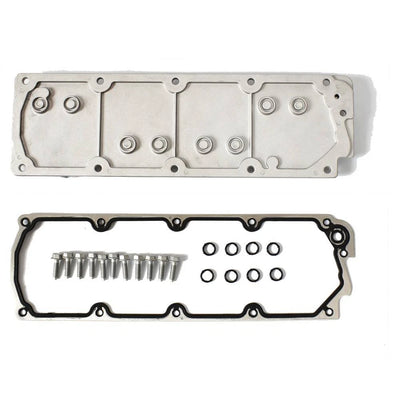
Eliminate failure-prone cylinder deactivation hardware before it leaves you stranded with a dropped lifter. Our Non-AFM Valley Covers from EGR Performance provide the clean, robust architecture needed for a complete mechanical AFM/DOD delete on GM V8 platforms. Verify your local regulations and upgrade with confidence.
Shop Non-AFM Valley Covers→A DOD delete turns off Displacement on Demand, GM's cylinder-deactivation system. It is removed to prevent known lifter failures.
Many GM engines are also known as Active Fuel Management (AFM) by DOD. Four cylinders are turned off to conserve fuel.
However, it is associated with lifter and cam damage on a few V8 platforms. This system is used in many trucks and SUVs, such as the Silverado, Sierra, Tahoe and Yukon.
- Changes the camshaft, lifters and valley cover
- Disables cylinder deactivation in the ECU
- Common on 5.3L, 6.0L, and 6.2L engines
A full mechanical delete requires pulling the intake manifold and cylinder heads to physically replace the VLOM manifold, deactivation lifters, and replace the camshaft.
For a step-by-step breakdown of the hardware, labor, and component requirements for Chevy V8 platforms, refer to our walkthrough on how to delete AFM on 5.3 Chevy engines.
Component |
Factory AFM |
Delete Kit |
|---|---|---|
Camshaft |
Special lobes for collapse |
Full-lift continuous profile |
Lifters |
Collapsible oil-pressure type |
Standard hydraulic roller |
Valley Cover |
Oil control solenoids present |
Solenoids deleted or blocked |
ECM Calibration |
AFM enable maps active |
AFM maps zeroed out |
Typical Failure Risk |
High after 80k-120k miles |
Near zero for AFM-related wear |
Why You Might Consider a Delete
- Avoids expensive lifter and cam wear and tear
- Enhances long term engine reliability
- Minimizes rough idle and misfire issues
That reliability upside is genuine. However, it does pose a serious question: is this change legal?
Short Answer: Is DOD Delete Legal?
A DOD/AFM delete is sometimes legal for street use, but only when a CARB-exempt kit is installed on a vehicle listed in that specific Executive Order and the approved calibration is used without changes. Most aftermarket kits lack any EO and are illegal for on-road use.
Sometimes. A DOD delete is legal, but only under certain circumstances.

Legality is based on your state, your kit and if CARB approved that exact setup. There is no right or wrong answer to this question.
Why the Answer Gets Complicated
- The emissions standards differ from state to state
- DOD systems are subject to federal anti-tampering law.
- California has more stringent smog and inspection regulations.
- Only some CARB approved kits are exempted
Is dod delete legal for your truck? The specific kit and documentation is more important than the brand.
Factor |
Legal Path |
Illegal Path |
|---|---|---|
Kit Status |
Valid CARB EO for exact application |
No EO or "off-road only" labeling |
Calibration |
Exact approved software |
Custom or modified tune |
Vehicle Match |
Year/make/model/engine listed |
Similar but unlisted application |
Use Case |
Street use only with EO |
Street use without EO |
To know why, you must know what federal law actually says.
Federal Emissions Rules: Why DOD Delete Legality Is a Compliance Issue
The EPA prohibits tampering with any emissions-related component under the Clean Air Act. AFM/DOD systems are emissions-related, so a delete without a federal exemption or CARB EO is illegal for vehicles used on public roads. "Off-road only" labels do not create a legal exception for street use.
DOD is considered an emissions-related system under federal law. It can be tampered with and thus be in violation of the Clean Air Act.
The EPA bans removing or bypassing emissions controls on street-driven vehicles. This includes cylinder deactivation systems like DOD and AFM. This rule is applicable to both a tuner and a hardware kit (or both).
Street Use vs. Off-Road Use
- "Off-road only" labels are a legal disclaimer, not a shield.
- The federal rules still apply when driving on public roads.
- Mechanical reliability is not the same as legal compliance.
The minimum standards are established by federal rules. State regulations, particularly those in California, take it another step.
Rule Source |
What It Covers |
Penalty Risk |
|---|---|---|
Clean Air Act 203 |
Removal or disable of emissions controls |
Civil fines, forced repair |
EPA Tampering Policy |
AFM/DOD treated as emissions design |
Shop or manufacturer liability |
"Off-Road Only" Label |
Manufacturer disclaimer only |
No protection for street use |
CARB EO |
State exemption that also satisfies federal |
Valid only for listed vehicles |
State-Level Legality, Smog Testing, and California (CARB)
California requires a valid CARB Executive Order for any AFM/DOD delete on a street-driven vehicle. The EO must list the exact year, make, model, and engine. Other states may pass a vehicle on OBD readiness alone, yet federal rules still apply and some states perform visual or CVN checks that fail non-approved kits.
California has the toughest DOD delete laws in the nation. The question of whether is dod delete legal in california depends entirely on CARB approval. Only vehicles listed in the CARB Executive Order are covered.
What a CARB Executive Order REALLY Means
- Only covers the exact year, make, model and engine combinations.
- Expects your tune to be exactly the same as the approved calibration.
- Doesn't apply to unlisted vehicles, even similar ones.
Will DOD Delete Pass Smog in Other States?
- Some states only test for OBD readiness.
- Others require visual and calibration checks.
- Passing local inspection does not mean compliance.
If you're asking, is a dod delete legal in california for your truck, look at the EO number first.
If you're not in California, you may want to avoid hardware altogether and opt for a tune-only solution.
State Type |
Inspection Focus |
Delete Risk Level |
|---|---|---|
California / CARB states |
Visual + EO + CVN |
High without valid EO |
OBD-only states |
Readiness monitors + DTCs |
Moderate (tune-only may pass) |
Visual + OBD states |
Hardware presence + readiness |
High for hardware deletes |
No inspection states |
None |
Federal rules still apply |
Is a Tune-Only AFM/DOD Disable Legal?
A tune-only AFM/DOD disable is legal only if the calibration itself carries a CARB Executive Order for the exact vehicle. Most aftermarket tunes lack any EO and are considered emissions tampering under federal and California rules. They can also fail CVN or readiness checks during inspection.
Even without new parts, a tune-only disable is a real legal risk.
You may want to use it because it is less expensive and decreases DOD cycling. If the tune affects emissions parameters, however, it probably requires CARB approval as well. Even a simple flash can trigger the same compliance concerns as a full hardware delete.
The Risk
- Non-approved tune can be deemed to be a failure in state inspection.
- Just because there are no physical changes, doesn't mean there are no legal changes.
- Some states test calibration, not just hardware.
There's another expense you may not be considering: your warranty.
Tune Type |
Hardware Left Intact |
EO Required |
Typical Inspection Outcome |
|---|---|---|---|
Stock calibration |
Yes |
N/A |
Pass |
CARB-approved disable |
Yes |
Yes |
Pass if EO matches |
Aftermarket non-EO tune |
Yes |
No |
Fail CVN or visual in strict states |
Full hardware delete + non-EO tune |
No |
No |
Fail visual + CVN |
If you want to keep your GM V8 in permanent 8-cylinder mode without modifying emissions control hardware or flashing permanent ECU software, a plug-and-play OBD module is the safest alternative. It will stop V4 cylinder deactivation instantly without leaving a trace on your factory computer.
Does a Legal DOD Delete Protect Your Warranty?
A CARB Executive Order confirms emissions compliance for the listed application. It does not require the vehicle manufacturer to honor the powertrain warranty. Most manufacturers treat any AFM/DOD delete-legal or not-as a modification that can void remaining powertrain coverage if the failure is linked to the change.
No. Emissions legality and warranty coverage are two separate issues.
A CARB approved kit does not mean that your manufacturer will support the powertrain warranty. Even if the delete is 100% compliant, it can still lead to a warranty claim.
Even if emissions compliance is not an issue, dealers can refer to the modification itself. In practice, dealers often deny powertrain claims once they see non-stock camshafts, lifters, or calibrations, shifting the burden to the owner.
Situation |
Emissions Status |
Typical Warranty Result |
|---|---|---|
Stock AFM system |
Compliant |
Full factory coverage |
CARB EO delete |
Compliant for listed apps |
Often denied if linked to failure |
Non-EO delete |
Non-compliant |
Denied + possible inspection fail |
Tune-only non-EO |
Non-compliant |
Denied if CVN flagged |
Here are some ways to verify compliance before you spend a dime.
How to Verify Compliance Before Buying an AFM DOD Delete Kit?
Before purchasing any AFM/DOD delete kit, identify the exact vehicle, confirm a current CARB EO number, verify the vehicle is listed on that EO, confirm the calibration is part of the approved package, and check the specific emissions inspection rules for the state of registration.
There are five quick checks that will protect you from an illegal or unsupported delete.
- Identify your vehicle, including year, make, model, engine and VIN. <Learn GM Valve Lifter Lawsuit Update 2026>
- Check the EO number. Check that it is valid, current and correct for your part
- Make sure your vehicle is on the list, not "close enough"
- Verify calibration. Your tune should be exactly as it is set up in the approved tune.
- Check your state's regulations (California and CARB require additional attention)
- Save your paperwork. Save the EO copy and receipt for later proof
Despite all these measures, there are some common myths that you may encounter.
Verification Step |
What to Confirm |
Common Failure Point |
|---|---|---|
Vehicle ID |
VIN + engine family |
Using model year alone |
EO Validity |
Active CARB EO number |
Expired or revoked EO |
Application Match |
Exact year/make/model/engine |
Assuming "close enough" |
Calibration |
Approved software ID |
Post-install custom tune |
State Rules |
Local inspection protocol |
Ignoring visual or CVN checks |
Common Misconceptions About DOD Delete Legality
Passing a local smog test does not equal federal or California compliance. A single CARB-approved kit does not make every DOD delete legal. Mechanical reliability advice from a technician does not equal emissions legality.
Don't assume that passing smog is legal.
- "It passed smog, so it's legal" - local tests don't equal federal compliance
- "If one kit is CARB approved, they're all okay" - approval remains limited and targeted.
- "My mechanic said it's safe" - safe and legal are two different things
- "Even if it is already installed, it is still okay" - you may still get fined later.
Myth |
Reality |
Risk if Believed |
|---|---|---|
Passed smog = legal |
Local pass != federal/CARB compliance |
Later fail or sale issues |
One EO covers all |
EO is vehicle- and part-specific |
Voided exemption |
Mechanic said safe = legal |
Reliability != emissions legality |
Inspection fail + warranty denial |
If you're feeling stressed, there are safer options available.
Best Alternatives If You're Worried About DOD Legality?
The lowest-risk options are OEM repair or replacement of failed AFM components, installation of a verified CARB-exempt kit only on a listed application, and obtaining written confirmation of both emissions compliance and warranty impact from the seller before any work begins.
If you're concerned about the legality, there are three safer routes.
- Repair or replace with OEM parts to stay factory-compliant
- If your specific car is CARB exempt, use a verified CARB-exempt kit, otherwise, do not use it.
- Ensure written confirmation before installation of smog and warranty impact.
- Request a written statement of compliance from your shop for your state
Option |
Emissions Compliance |
Warranty Impact |
Reliability Gain |
|---|---|---|---|
OEM repair |
Full |
None |
Temporary |
CARB EO kit |
Full for listed apps |
Possible denial |
High |
Non-EO kit |
None |
Likely denial |
High |
No action |
Full |
None |
None |
Deciding between an external electronic disabler and a physical mechanical rebuild involves weighing legal compliance against permanent hardware reliability. To see how plug-in devices compare to complete camshaft and lifter swaps in terms of cost, legality, and maintenance, read our comparison on AFM disabler vs DOD delete setups.
In addition to the legal aspect, there is also the question of whether a delete is worth it.
Weighing the Risk: Cost vs. Benefit of a DOD Delete
A complete AFM/DOD delete typically costs $800–$2,500 installed and can prevent $4,000–$8,000 engine repairs. The reliability gain is real only when the kit is legal in the state of registration; an unapproved kit can trigger failed inspections, fines, or denied warranty claims that erase any savings.
A DOD delete is never only a legal question. It is also a pure cost-and-benefit decision that owners must run before spending money.
The Potential Benefit
- Prevents future repeat lifter and cam problems
- May save you thousands of dollars in future engine repair costs
- Smooths out rough idle and throttle response often
The larger financial upside is the avoidance of a full upper-end or short-block repair. Documented AFM-related rebuilds on 5.3L and 6.2L engines routinely land between $4,000 and $8,000 once parts, labor, and machine work are totaled. Preventing even one such event more than covers the cost of a quality delete kit.
The Real Cost and Risk
- Kits and labor can cost anywhere from a couple hundred dollars to more than a thousand dollars.
- An unapproved kit could fail the smog test.
- Either way you might lose warranty coverage.
Parts alone for a reputable kit range from roughly $400 for a basic cam-and-lifter package to more than $1,200 when a valley cover, pushrods, and upgraded springs are included.
Professional labor to remove the intake, replace the cam and lifters, and reassemble typically adds $600–$1,300 depending on shop rates and whether the engine stays in the vehicle.
A non-approved kit or a non-EO calibration introduces three additional cost risks: failed smog inspection (re-test fees plus possible forced reverse of the work), civil penalties in states that actively enforce anti-tampering rules, and loss of remaining powertrain warranty coverage.
A denied warranty claim on a later bearing or head-gasket failure can easily exceed the original delete investment.
Practical State-by-State Cost Example
Consider the same 2016 Silverado 5.3L. In a non-CARB state that performs only OBD readiness checks, a non-EO delete may clear inspection for years and deliver the full reliability benefit.
Move that identical configuration to California, and the vehicle can fail the visual and CVN portions of the smog check within months. The owner then faces either a costly reverse installation or continued non-compliance.
The reliability benefit therefore exists only when the legal cost is controlled. A low-price, non-approved kit that later forces a reverse or a fine often becomes the more expensive choice over the life of the vehicle.
Cost Category |
Typical Range |
Notes |
|---|---|---|
Basic kit (cam + lifters) |
$400–$700 |
No valley cover or springs |
Complete kit + labor |
$1,200–$2,500 |
Includes install and calibration |
AFM engine repair (lifter/cam) |
$4,000–$8,000 |
Parts + labor + possible machine work |
Failed smog re-test + reverse |
$500–$2,000+ |
Depends on state and shop rates |
Denied powertrain claim |
$3,000–$10,000+ |
If later failure is linked to delete |
Summary of the Cost-Benefit Balance
The reliability upside is clear and measurable for high-mileage AFM engines. That upside remains intact only when the chosen kit and calibration meet the emissions rules of the state where the vehicle is registered and driven.
Compliance is therefore not an optional extra; it is the factor that determines whether the money spent on the delete actually produces net savings.
Owners who match the kit to a valid EO for their exact application keep both the mechanical benefit and the legal standing. Owners who ignore that step risk turning a preventive repair into a more expensive problem later.
FAQs
Can a tune-only DOD delete be legal?
This is dependent on the tune. Only if the exact calibration carries a CARB Executive Order for the vehicle. Most aftermarket tunes do not. If it alters the emissions parameters without CARB approval, it probably isn't street legal.
Is a DOD delete legal in California?
Yes, but only with a valid CARB EO that lists the specific year, make, model, and engine, and only when the approved calibration is used.
Is a DOD delete legal outside California?
Not sure. Federal anti-tampering rules still apply. Some states pass OBD-only checks; others fail non-approved hardware or calibrations.
Can I get my truck to pass smog with a DOD delete?
Not sure. This is dependent on your state and kit. It can pass in OBD-only states if monitors set. In California and visual-inspection states, it will fail without a matching EO.
Is a DOD delete considered tampering with emissions?
Yes. AFM/DOD is an emissions-related system. Disabling it without an exemption violates the Clean Air Act. It can be considered tampering if it is removed without CARB approval.
Does a legal DOD delete protect my factory warranty?
No. Emissions legality and warranty coverage are two different things. Even if it is an approved kit, it can lead to a dispute. Most manufacturers can still deny powertrain claims linked to the modification.
Before purchasing a DOD delete kit, what should I look for?
Check the VIN, engine family, current CARB EO number, exact application list, approved calibration, and state's smog regulations as well.
Can "off-road only" DOD delete kits be used on the street?
No. The label is a manufacturer disclaimer, not an exemption. Federal anti-tampering laws still apply to street driving. Street use of a non-exempt kit remains illegal.
Does a CARB Executive Order imply that all DOD deletes are legal?
No. The EO covers only the specific part number and the listed vehicles. It's not an automatic yes.
Can I use a CARB-approved DOD delete kit on a different vehicle?
No. Using it on an unlisted application voids the exemption.
Will using a plug-and-play AFM disabler void my factory vehicle warranty or fail smog checks?
Unlike mechanical deletes that alter engine hardware and ECU checksums, an OBD plug-in disabler does not reprogram your ECU or remove physical emissions devices. Simply unplugging the device before an inspection restores factory operation.
Conclusion
So, is DOD delete legal? Only occasionally, and only under certain circumstances.
A DOD delete is legal only for exact CARB-EO applications with the approved tune. Federal rules still apply, and warranty coverage is separate. When purchasing, make sure to confirm the Executive Order and warranty impact. Skip the forum guesswork. Look at the paperwork instead.
Upgrade your LS for true off-road endurance. Our non-DOD valley plates delete failure-prone factory hardware and heavy-duty performance parts for Chevy LS/LT engine at EGR Performance ensure maximum durability and uncompromised power.