
🔧 30-Second Summary: How to Mechanically Delete AFM or DoD on a 5.3L Chevy Engine
Learning how to mechanically delete AFM or DoD on a 5.3L Chevy engine is vital when collapsed lifters trigger persistent valve tick, high oil consumption, and P0300 misfires. While OBD disablers only mask software routines, a complete mechanical conversion: swapping in standard LS lifters, a non-AFM camshaft, updated guide trays, and an EGR Performance NON-AFM Valley Cover, permanently eliminates hardware failure points. Utilizing a full mechanical delete kit, paired with a precise PCM tune permanently secures reliable full-time V8 operation.
Table of Contents
- Introduction
- Why Do You Need to Delete AFM/DoD on Your 5.3L?
- What Are the Signs Your Chevy 5.3L Needs an Immediate AFM Delete?
- What Parts Are Required for a 5.3 AFM DoD Delete
- What Are the Alternatives to a Full Mechanical AFM/DoD Delete Kit?
- How Do You Perform a Full AFM/DoD Delete Step by Step?
- How Do You Re-Tune the ECU After a Mechanical Delete?
- What Are Common Problems After AFM Delete on a Chevy 5.3?
- What Can You Expect After the AFM/DOD Delete?
- What Is the Cost Breakdown for AFM/DOD Delete Options on a 5.3?
- FAQs
- Conclusion
Introduction
Lifter tick, oil loss, and random misfire codes plague GM's 5.3L V8. These issues are typically related to Active Fuel Management (AFM). You're probably here because you need to know how to delete AFM on a 5.3 Chevy.
A mechanical AFM/DoD delete replaces the factory collapsing lifters, AFM camshaft, and oil-control valley cover with standard non-AFM lifters, a solid cam, and a blocked valley cover. This eliminates cylinder deactivation hardware on Gen IV and Gen V 5.3L engines and stops the primary failure mode permanently.
AFM and DoD (Displacement on Demand) are GM's cylinder deactivation systems. They turn off cylinders to conserve fuel, but the additional equipment fails prematurely. A full mechanical delete can permanently remove these weak parts, and solve the collapse, valvetrain tick, misfires, and oil consumption issues.
This guide discusses symptoms, exact parts, teardown steps, reassembly, tuning and real costs so you finish the job once and keep the truck on the road.
Why Do You Need to Delete AFM/DoD on Your 5.3L?
Factory AFM and DoD systems on GM 5.3L engines use specialized collapsing lifters and oil solenoids to deactivate cylinders 1, 4, 6, and 7 under light load. Those lifters fail from oil aeration, debris, and weak springs, producing tick, misfires, and high oil consumption that software cannot repair.
Eliminate Factory Lifter Failure Points.
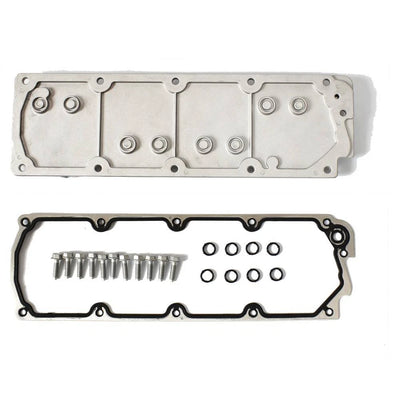
Stop letting factory cylinder deactivation risk your engine's longevity. Our Non-AFM Valley Covers from EGR Performance provide a clean, block-off architecture designed for mechanical AFM/DFD deletes on GM 5.3L and 6.0L platforms. Pair it with standard lifters and a proper cam to secure your small-block's reliability for the long haul.
Shop a DOD Delete Valley Plate →AFM delete is required because factory lifters are prone to wear and failure. The factory AFM lifters are spring-loaded and collapse on command. These lifters tend to stick or fail over time due to oil sludge and normal wear. A GM cylinder deactivation delete eliminates this failure point at the source.
A stuck lifter causes ticking noises, rough idling and misfire codes. Software patches only cover these symptoms. The only way to prevent lifter failure for the long-term is to physically and mechanically delete them.
This is a problem on all trucks and SUVs, including the Silverado, Sierra, Tahoe and Suburban. A Tahoe AFM delete is similar to a Silverado delete. Learning how to do a DoD delete on 5.3 keeps these engines protected for years.
Failure Mode |
Typical DTC |
Mileage Range |
Outcome if Ignored |
|---|---|---|---|
Collapsed AFM lifter |
P0300-P0308 |
60k-120k |
Cam lobe destruction |
AFM solenoid stuck |
P3400 series |
40k-90k |
Persistent tick |
Oil aeration |
None early |
80k+ |
Bearing wear |
Excessive oil use |
None |
70k+ |
Catalytic converter damage |
Root causes of lifter collapse
The AFM/DoD system routes pressurized oil through solenoids in the valley cover to collapse the special lifters, opening and closing the valves off. Over time the locking pins wear, oil passages clog with debris, and the roller fails to follow the cam lobe.
Once the roller stops turning, the lobe grinds flat within a few hundred miles. Common codes include P0300 random misfire, P0301-P0308 cylinder-specific misfires on AFM cylinders, and P3400-series AFM performance codes.
Oil consumption often jumps past one quart every 1,000 miles because the collapsed lifter allows oil past the valve stem seals.
Why software workarounds fail
Plug-in OBD modules and tunes can keep the engine in V8 mode and stop the solenoids from activating, but they do nothing for a lifter that has already collapsed or a cam lobe already damaged. The mechanical parts remain the weak link - only removing the AFM lifters, AFM cam, and oil-control valley cover eliminates the failure points.
Vehicles most affected
The same AFM hardware appears across the 2007-2013 Gen IV 5.3L (LC9, LH6, LMG) and later Gen V 5.3L (L83) engines in Silverado 1500, Sierra 1500, Tahoe, Suburban, Yukon, and Avalanche. High-mileage examples and trucks that spend long periods at highway cruise see the highest failure rates because the system sits in four-cylinder mode more often.
What Are the Signs Your Chevy 5.3L Needs an Immediate AFM Delete?
Persistent valvetrain tick, P0300-series misfires limited to AFM cylinders, sudden oil consumption above one quart per 1,000 miles, rough idle, and loss of power are the primary indicators that the AFM lifters or cam on a 5.3L require a full mechanical delete.
Be alert for lifter tick, misfire codes, and increased oil consumption. These symptoms typically indicate that the AFM system is already broken.
- Valve cover area has a tick or tapping sound when running
- Random misfire codes are codes in the P0300 series
- The difference in oil consumption between changes
- Rough idle or loss of power when cylinder deactivated
A collapsing VLOM (Valve Lifter Oil Manifold) or stuck deactivation lifter often produces a loud metallic ticking sound from the valvetrain long before total engine failure occurs.
If you need a true Chevy 5.3 lifter tick fix, it is nearly always a replacement of the AFM lifters. The only permanent solution is usually a Silverado active fuel management delete.
To identify early warning signs, mechanical misfires, and valve damage, refer to our diagnostic guide on common lifter failure symptoms in Chevy small-block engines. Early detection of these symptoms will save you money and avoid additional engine damage.
Symptom |
Severity |
Recommended Action |
|---|---|---|
Light tick at idle only |
Early |
Schedule delete within 2-3 weeks |
Tick + P030x codes |
Moderate |
Stop highway driving, delete soon |
Tick + oil use >1 qt/1k |
Advanced |
Do not drive until repaired |
Knock + metal in oil |
Critical |
Engine teardown required |
Valvetrain noise patterns
The classic AFM tick starts as a light metallic tap at idle and becomes a louder knock once the engine reaches operating temperature. The noise is loudest on the passenger side near cylinders 1 and 7 or the driver side near 4 and 6.
A stethoscope or long screwdriver pressed against the valve cover isolates the sound to the lifter valley. Once the roller bearing inside the AFM lifter fails, the tick turns into a deeper knock that indicates the cam lobe is already being damaged.
Misfire codes and power loss
Scan tools routinely show pending or current P0300 random/multiple cylinder misfire along with specific codes for the deactivated cylinders. The PCM may also set P3401-P3418 AFM system performance codes when the oil pressure solenoids cannot achieve the commanded state.
Drivers notice a stumble under light throttle, reduced power when merging, and an illuminated check-engine light that returns after clearing.
Oil consumption and secondary damage
Collapsed lifters allow pressurized oil to escape past the pushrod seat into the rocker arm and down the valve stem. Consumption can climb from normal levels to one quart every 500-800 miles.
Unburned oil fouls spark plugs, coats the catalytic converters, and raises hydrocarbon emissions. Continued driving after the first signs of collapse frequently leads to a flat cam lobe, metal debris circulating through the oil system, and eventual bearing failure.
What Parts Are Required for a 5.3 AFM DoD Delete
Required parts include a torque-oriented non-AFM camshaft, conventional hydraulic roller lifters and guides, a non-AFM valley cover that blocks the oil control passages, optional VVT delete components, high-quality head gaskets, head bolts or studs, a standard-volume oil pump, and a new timing set.
A complete removal will need a new camshaft, lifters and valley cover. This kit replaces all of the weak factory parts.
The typical requirements for the job are:
- Non-AFM camshaft featuring a standard lobe profile that is torque friendly
- Standard lifters and trays to replace the AFM units which have failed
- Non-AFM valley cover to prevent factory oil control passages from being exposed
- Supporting hardware like gaskets, head bolts, and a standard oil pump

Non DOD Valley Cover for Chevy 5.3L 6.0L 6.2L (2007-2013)
7% OFF New Customer Coupon Code: EGR7
Buy NowA physical AFM wipe-out requires replacing factory VLOM plates with non-AFM valley covers, non-AFM camshafts, heavy-duty LS7 lifters, and fresh head gaskets.
Explore our heavy-duty Chevy LT/LS Performance Parts to source high-grade replacement hardware for your Gen 3, Gen 4, or Gen 5 V8 engine.
Should You Keep or Remove Your VVT Components?
Many 5.3L engines (Gen 4 & Gen 5) use both AFM and VVT. VVT can be maintained with a limiter or phaser setup. Alternatively, you can install a complete VVT delete kit. A complete kit uses a 3-bolt timing set and standard cover.
The selection of quality parts now will avoid repeat failures later. One of the most frequent and expensive errors is to miss the opportunity to swap the valley cover. All of the parts on this list are part of one system.
Component |
Purpose |
Typical Spec |
|---|---|---|
Non-AFM cam |
Eliminate deactivation lobes |
0.520 inch lift, 208/214 degree duration |
Standard lifters |
Replace collapsing units |
Hydraulic roller, LS-style |
Lifter trays |
Retain and guide lifters |
New OEM or aftermarket |
Non-AFM valley cover |
Block oil control passages |
Solid plate, no solenoids |
Oil pump |
Match new oil volume needs |
Standard volume |
Timing set |
Reliable cam drive |
Double-roller or OEM-style |
Non-AFM camshaft selection
Factory AFM cams have special lobe profiles and reduced base circles on the deactivated cylinders. A replacement non-AFM cam for truck use typically features a mild hydraulic roller grind with 0.500-0.550 inch lift, 200-215 degrees of duration at 0.050 inch, and a lobe separation angle around 112-114 degrees.
These profiles restore low-end torque while staying compatible with stock heads and intake. Keep the factory VVT phaser interface if you retain Variable Valve Timing, or use a fixed 3-bolt cam if you delete VVT entirely.
Standard lifters and trays
AFM lifters are taller and contain internal locking mechanisms. Standard GM or aftermarket hydraulic roller lifters drop into the existing bore once the AFM trays are replaced.
New lifter trays prevent the lifters from rotating and keep oil feed aligned - always install new trays, because reused trays often have worn retention clips that let the lifter spin and destroy the new cam.
Non-AFM valley cover
The factory valley cover contains the AFM oil control solenoids and passages that feed the collapsing lifters. A non-AFM cover, such as the Gen IV LS plate for 5.3L/6.0L/6.2L engines, seals those passages and eliminates the solenoids - this single part stops oil from ever reaching the deactivation circuit again.
Supporting hardware
Always replace the head gaskets, intake gaskets, valve cover gaskets, and front cover gasket. Replace torque-to-yield head bolts with new TTY bolts or upgraded studs.
A standard-volume oil pump matches the non-AFM oil demand better than high-pressure pumps in most street applications. A new timing chain, gears, and tensioner complete the front-end refresh.
What Are the Alternatives to a Full Mechanical AFM/DoD Delete Kit?
Electronic OBD-II disablers and custom PCM tunes keep the 5.3L in full V8 mode without opening the engine, making them suitable only for prevention on engines that still have intact AFM hardware.
Electronic OBD-II Disablers
For truck owners looking to keep their 5.3L engine in permanent V8 mode without unbolting cylinder heads, a plug-and-play disabler module offers an instant software-level bypass. Check out our buyer's walkthrough in our AFM/DFM disabler guide to learn about device compatibility and battery-drain protection.
The AFM/DFM modules are small and fit into the OBD port located under the dash. They fool the computer into operating all 8 cylinders at all times. If your engine is still in good condition and within warranty, this is a good idea.
Choosing between a plug-in OBD disabler and a complete mechanical delete comes down to whether your factory lifters are already damaged.
While electronic devices stop the ECU from entering V4 mode, they cannot fix mechanically worn hardware. Read our detailed comparison on AFM disabler vs DoD delete setups to pick the right path for your 5.3L build.
Custom ECU Tuning
Custom ECU tuning is software-based and not a hardware change. A tuner can reprogram your PCM using software such as HP Tuners. This technique can also enhance throttle response and shift quality.
Both of these options do not fix a failed lifter. For those wondering how to do a DoD delete on 5.3 with worn parts, only the mechanical route works. These are preventative, not treatment options. The only real solution is a mechanical delete.
Method |
Reversible |
Fixes Collapsed Lifter |
Warranty Impact |
Best Use Case |
|---|---|---|---|---|
OBD disabler |
Yes |
No |
Minimal |
Healthy engine prevention |
PCM tune |
Yes |
No |
Possible |
Healthy engine + performance |
Mechanical delete |
No |
Yes |
N/A after install |
Failed or failing hardware |
When alternatives fall short: Neither method restores a collapsed lifter or rebuilds a worn cam lobe. Once metal is present in the oil or a lobe is flat, continued operation risks catastrophic failure - mechanical delete is the only curative path when physical damage exists.
How Do You Perform a Full AFM/DoD Delete Step by Step?
A complete mechanical AFM delete on a 5.3L begins with fluid drain and battery disconnect, proceeds through intake, head, and timing cover removal, installs the non-AFM cam and lifters, replaces the valley cover and oil pump, then reassembles the top end with new gaskets and proper torque sequences.
Check if a DOD delete is legal firstly. Follow these six steps to get a clean, reliable AFM delete. All set to go to work? Install in this order for a smooth and reliable install.
Step 1: Prep-work and safety
Disconnect the battery and drain all fluids first.
Disconnect the negative battery cable. Relieve fuel pressure at the Schrader valve on the fuel rail. Drain the engine oil and coolant completely. Support the vehicle securely if any under-vehicle work is needed for exhaust manifold access.
Step 2: Top-end teardown
Take off the intake, valve covers and cylinder heads.
Remove the intake manifold, throttle body, and associated vacuum and electrical connectors. Take off both valve covers. Unbolt the exhaust manifolds or headers.
Remove the rocker arms and pushrods, keeping them in order. Extract the cylinder heads after removing the head bolts in the reverse of the torque sequence. Lift out the old AFM lifters and trays. Label everything to avoid mix-ups.
Step 3: Camshaft removal
Remove the timing set and slide out the old camshaft.
Rotate the engine to top dead center on cylinder 1 and mark the timing chain relationship. Remove the cam sprocket bolt(s), slide the chain and sprocket off, and carefully withdraw the AFM camshaft, inspecting the journals and bearings.
Step 4: Install new parts
Install the non-AFM cam, lifters and trays.
Lubricate the new non-AFM cam with assembly lube, install the new timing set aligning the marks, drop the new lifters into fresh trays, and verify each lifter moves freely.
Step 5: Replace the valley cover
Put on a standard cover and oil pump.
Clean the valley thoroughly and install the non-AFM valley cover with a new gasket, torquing the bolts to specification. Replace the oil pump with a standard-volume unit, priming it before final installation.
Step 6: Reassemble top end
Torque heads correctly and refill all fluids.
Clean the head surfaces, install new head gaskets, torque the head bolts or studs in the proper multi-stage sequence, set valve lash or preload per the cam manufacturer's instructions, reinstall the intake, valve covers, exhaust, and all sensors, then refill and prime the oil system before start-up.
This is exactly how to delete AFM on 5.3 Chevy permanently. Take your time during reassembly to avoid costly mistakes. This is a job where torque is more important than speed.
Torque Spec Example |
Value |
Notes |
|---|---|---|
Head bolts (TTY) |
22 ft-lb + 90 deg + 70 deg |
Replace every time |
Valley cover bolts |
18 ft-lb |
Even pattern |
Cam sprocket bolt |
26 ft-lb |
Thread locker |
Rocker arm bolts |
22 ft-lb |
After preload set |
How Do You Re-Tune the ECU After a Mechanical Delete?
After a mechanical AFM delete the PCM must be reprogrammed to disable all AFM enable parameters, clear related DTCs, and adjust fuel and spark tables for the new non-AFM camshaft profile so the engine runs correctly in continuous V8 mode.
Tuning is needed immediately after each mechanical delete. Your truck needs it to run correctly afterward.
The factory computer still assumes that the old AFM signals are present. With a proper tune, these parameters are totally eliminated from the code. It also removes any previous diagnostic trouble codes from the system.
Fuel and spark tables will need to be adjusted for the new camshaft. If you don't do this, your check engine light will stay on. This can be completed by a qualified tuner in less than an hour.
Why tuning is mandatory
The factory calibration contains tables that command the AFM solenoids, monitor oil pressure for deactivation, and adjust injector pulse and ignition timing when cylinders are shut down. With the hardware gone, those commands produce immediate codes and can put the PCM into limp strategies. A proper tune removes the AFM logic entirely.
Key calibration changes:
Disable the AFM enable flag and related torque management tables, set cylinder deactivation thresholds to zero, update the camshaft position sensor correlation and VVT tables if VVT was retained or deleted, recalibrate the volumetric efficiency and spark maps to match the new cam's airflow, and clear all historical AFM and misfire DTCs so they do not return.
Tools and process:
HP Tuners, EFI Live, or an equivalent interface is required. A professional tuner experienced with LS platforms can finish in one session. DIY users need the correct license and a solid understanding of the table structure, then should perform a road test and monitor for any remaining codes or adaptive learning issues.
What Are Common Problems After AFM Delete on a Chevy 5.3?
Persistent check-engine lights usually result from uncleared AFM parameters in the tune, oil pressure swings from mismatched pumps, valvetrain noise from incorrect pushrod length, and leaks from reused head bolts or poorly sealed gaskets.
Most problems after deleting are due to a hurried reassembly. There are minor problems that can arise after a careful delete.
- Check engine lights from missed calibration steps in the tune
- Pressure fluctuations in the oil system due to incorrect pump and relief valve components
- Valvetrain noise due to improper pushrod length after cam change
- Small leaks from re-used gaskets or from unevenly torqued bolts
Most of these problems can be avoided with a proper GM cylinder deactivation delete. Most problems after AFM delete Chevy Silverado 1500 are due to hurried reassembly. Most of these headaches can be avoided by slowing down during the build. Most mistakes are picked up at a second inspection prior to startup.
Problem |
Likely Cause |
Fix |
|---|---|---|
CEL with AFM codes |
Incomplete tune |
Re-flash full AFM disable |
Low oil pressure |
Wrong pump or debris |
Correct pump, flush galleries |
Valvetrain tick |
Wrong pushrod length |
Measure and replace |
Oil/coolant mix |
Head bolt or gasket |
New TTY bolts, re-torque |
Persistent codes and misfires:
If the tune leaves any AFM enable bits or secondary sensor monitors active, the PCM keeps setting P3400-series or P0300 codes. A full scan and verification of the calibration tables is required before assuming a mechanical problem.
Oil pressure fluctuations:
Installing a high-volume or high-pressure oil pump without corresponding relief valve changes, or failing to clean debris from the oil passages, can produce low idle pressure or high pressure at higher RPM. Always match the pump to the non-AFM oil demand and verify gallery cleanliness.
Valvetrain noise from preload errors:
Non-AFM cams often change the base circle, which alters the required pushrod length. Using the original pushrods frequently results in excessive or insufficient preload, producing a light tick or clatter. Measure pushrod length with a checking tool and order the correct length.
Coolant and oil leaks:
Reused torque-to-yield head bolts can yield further and lose clamping force. Improper torque sequence or a damaged valley cover gasket allows oil to seep into the coolant or create external leaks. Always use new hardware and follow the published torque steps.
What Can You Expect After the AFM/DOD Delete?
A completed mechanical AFM delete removes the primary failure point, restores smooth full-time V8 throttle response and low-end torque, and typically produces a small reduction in highway fuel economy because the engine no longer deactivates cylinders.
Expect better reliability, smoother power, and a small drop in mileage. This is one of the main benefits once the weak hardware is gone.
The main failure point is permanently removed from your engine. Throttle response feels smoother, and low-end torque improves noticeably. You will notice the power delivery feels more consistent overall.
A small drop in highway fuel economy is expected after the delete. The engine now runs on all 8 cylinders at all times.
- Reliability gains: With the collapsing lifters and oil-control solenoids gone, the most common catastrophic failure mode on these engines is eliminated. Properly executed deletes routinely exceed 150,000 additional miles when oil is changed on schedule and the tune is correct.
- Performance and driveability: Throttle response becomes immediate because the engine never transitions between four- and eight-cylinder modes. Low-end torque feels stronger and more consistent, especially under light-to-moderate load, and idle quality improves once any previous misfires are resolved.
- Fuel economy impact: Highway mileage commonly drops 1-3 mpg because the engine stays in V8 mode at cruise. City and mixed driving usually show little change. Most owners accept the trade-off for the reliability gain over the modest AFM fuel savings.
A finished Silverado DoD delete feels like a new engine. This is the real, lasting Chevy 5.3 lifter tick fix you have been searching for.
What Is the Cost Breakdown for AFM/DOD Delete Options on a 5.3?
Component costs for a full AFM delete kit including cam, lifters, trays, valley cover, gaskets, and oil pump range from $800 to $1,500. Professional tuning adds $300-$600. DIY labor takes 20-30 hours; shop rates commonly total $2,500-$4,000 for the complete job.
The total cost is typically from parts-only to a few thousand dollars. The price can differ significantly depending on the quality of the parts and the laborer.
- Delete kit parts: cam, lifters, valley cover and oil pump. A quality non-AFM cam and lifter kit averages $400-$700. The non-AFM valley cover is typically $150-$250. Gaskets, head bolts, timing set, and oil pump add another $250-$500, with premium studs or billet trays increasing the total.
- Professional tuning: software license or a one-time tuner fee. A mail-order or in-person tune for AFM disable and cam calibration runs $300-$600 depending on the tuner's experience and whether dyno time is included.
- Labor rates: DIY is cheaper, but shop labor is more expensive in terms of hours. An experienced DIY mechanic can complete the job in a long weekend plus one or two evenings. A professional shop bills 18-25 hours at $120-$180 per hour, bringing labor alone to $2,200-$4,500. Many owners choose DIY for the substantial savings.
Item |
DIY Cost |
Shop Cost |
|---|---|---|
Parts kit |
$800-$1,500 |
$800-$1,500 |
Tune |
$300-$600 |
$300-$600 |
Labor |
$0 (20-30 hrs) |
$2,200-$4,500 |
Total |
$1,100-$2,100 |
$3,300-$6,600 |
DIY vs. Professional Install
The total cost of a full shop job is usually several thousand dollars. Do-it-yourself builders spend less money, but require more time and tools. If you know how much to delete AFM on 5.3, then you can budget accordingly.
Consider the initial expense versus years of avoided repairs.
FAQs
Is a DoD delete worth it?
Yes. A permanent delete stops lifter failure and protects your engine long-term. Once AFM lifters begin to fail, the mechanical delete is the only permanent solution that prevents repeated cam and lifter damage and the associated repair costs that often exceed $4,000–$6,000 for a full engine rebuild.
Is AFM the same as DoD on a Chevy 5.3?
Yes. Active Fuel Management and Displacement on Demand are the same GM cylinder deactivation system; the names were used in different marketing periods, but the hardware is identical on the 5.3L.
When is a full mechanical delete the only option?
A full mechanical Active Fuel Management (AFM) delete on a GM 5.3L engine is necessary when you experience internal component failure (such as a collapsed lifter or loud ticking/knocking), when upgrading the camshaft for performance, or when you want permanent structural reliability.
When a lifter has already collapsed, a cam lobe is damaged, or metal is present in the oil filter, software solutions cannot restore the engine. Mechanical replacement is required.
Do I need a tune right after a mechanical delete?
Yes. Skipping the tune leaves your check engine light on permanently. Driving without the AFM parameters disabled will set multiple codes and can put the PCM into reduced-power strategies. Tune before or immediately after the first start-up.
Can I drive with a collapsed AFM lifter before the delete?
Not recommend. Short distances at low load are possible, but every mile risks further cam damage and circulating metal debris. Schedule the delete as soon as the tick and codes appear.
How long does a full AFM delete take?
An experienced DIY mechanic typically needs 20–30 hours of actual work time spread over several days. A shop can finish a Silverado DoD delete in 2–3 business days depending on parts availability.
Will deleting AFM fix engine ticking noises?
If the tick is caused by AFM lifters or early cam wear, yes. Removing the AFM lifters eliminates the main source of ticking. If a lobe is already flat or other valvetrain components are worn, additional parts may be required.
Does the delete affect fuel economy?
Yes. Expect a small drop in highway mileage after the delete. Highway fuel economy usually drops 1–3 mpg because the engine remains in V8 mode. Most owners consider the reliability gain worth the small difference.
Can a beginner DIY this job?
Not sure. The job requires intermediate to advanced mechanical skill, proper tools, and careful attention to torque sequences and timing marks. Beginners should budget extra time or seek help for the cam and head work.
What upgrades should I add during the delete?
Consider a Silverado active fuel management delete kit with new head gaskets, head bolts or studs, a timing set, standard-volume oil pump, and a quality non-AFM valley cover. Many also add updated valve springs if the new cam requires them.
Can I just turn off AFM in the ECU without replacing the mechanical lifters?
Disabling AFM in the software prevents future V4 cylinder deactivation, but if a mechanical lifter has already collapsed, physical hardware replacement is mandatory.
Conclusion
The only way to permanently fix AFM failure is with a full mechanical delete. The majority of AFM issues on the 5.3L engine are due to weak factory lifters. Software fixes and disablers just postpone the inevitable repair.
The cam, lifters and valley cover are all replaced, eliminating all failure points. A good tune does the rest and clears all trouble codes.
The full mechanical AFM/DoD delete is worth it, since it permanently removes the failing factory hardware on the 5.3L and restores long-term reliability.
We recommend the Gen IV non-AFM valley cover from EGR Performance as the proven, direct-fit solution for a clean and durable installation. Now you know how to delete AFM on 5.3 Chevy permanently. Do it gradually and your engine will thank you.