


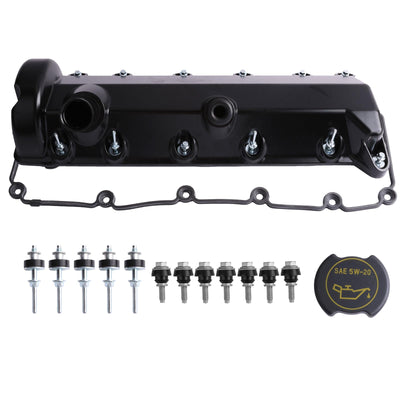
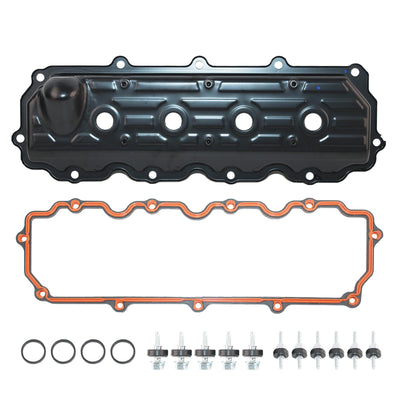
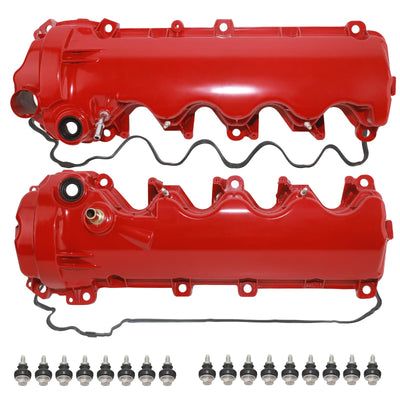
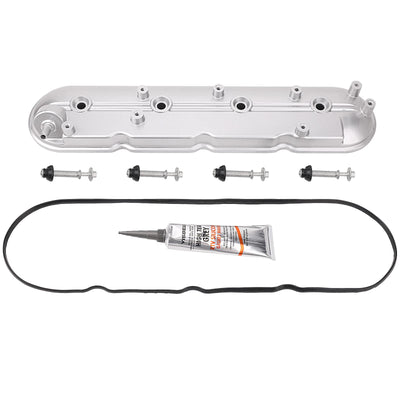

A valve cover is the casting that bolts to the top of the cylinder head and seals the valvetrain inside: it keeps the oil splashing off your camshafts, rockers, and valves from escaping the engine while keeping dirt, debris, and moisture out. On most engines it is also the part carrying the oil filler cap, the spark plug wells, and increasingly the crankcase ventilation hardware that modern emissions systems require.
This guide defines the cover piece by piece, walks the aluminum-versus-plastic material story, covers the integrated designs that changed what a "simple lid" does, and lays out how covers themselves fail and what replacement involves, with the upgrade valve cover hardware for engines that outgrow their factory lids.
Table of Contents
Key Takeaways
- [The definition]: The valve cover is the casting bolted to the top of the cylinder head, sealing the valvetrain's oil inside the engine and the world's dirt outside it.
- [What it carries]: The oil filler cap, the spark plug wells and coil mounts on overhead-cam engines, the PCV or CCV hardware on many designs, and the wiring and sensors the valvetrain needs above it.
- [The material split]: Cast aluminum is the durable classic: rigid, heat-tolerant, rebuildable. Molded plastic is the modern cost-saver: lighter, quieter, and warpage-prone over enough heat cycles.
- [The integrated era]: On a growing list of engines, the cover is a component, not a lid: PCV diaphragms, check valves, and separators molded inside, which moves the failure from a five-dollar gasket to the whole casting.
- [The failure modes]: Warped sealing surfaces, cracked bolt towers and bungs, stripped fastener holes, and failed internal diaphragms, with the oil leaks and pressure symptoms to match.
- [The replacement fork]: A leaking cover with a sound body takes a gasket; a warped, cracked, or diaphragm-failed cover takes a cover. The diagnosis, not the parts catalog, decides.
- [The upgrade path]: High-mileage keepers and performance builds replace tired plastic with cast or billet aluminum covers whose sealing surfaces stay true for the rest of the engine's life.
The Definition: the Sealed Lid
Under the cover is a controlled storm: the camshaft spinning at half engine speed, rocker arms and lifters following lobes, oil spraying from the valvtrain's feed galleries, all in a chamber that must stay pressurized exactly as the crankcase ventilation system expects, clean enough for electronics, and sealed enough to hold oil. The valve cover is the lid that makes that chamber a chamber.
Bolted to the cylinder head through a gasket, it is the boundary between the messiest part of the engine's top end and everything clean above it, which is why the cover's condition decides so much about an engine's cleanliness, its oil consumption, and the health of the parts bolted to it.
In the parts lexicon it is also called the rocker cover, or cam cover, the same lid by the valvetrain it protects.
Upgrade the Lid Itself
When plastic warps past gasket salvation or a build outgrows the factory cover, aluminum is the answer. Cast and billet valve covers for Ford 6.0 Powerstroke and Chevy LS engines give the gasket a machined surface that stays flat.
Shop Valve CoversWhat Lives Under It
Remove the cover and the census explains its bolt holes, baffles, and ports:
- The valvetrain: camshaft(s), rockers or followers, lifters, valve springs and retainers, the machinery that opens the valves, all fed by oil under pressure and splash.
- The oil baffles: internal baffling under the cover's PCV ports keeps liquid oil from being sucked straight into the ventilation circuit, the engineering link our CCV explainer covers from the separator side, in the More Reading list below.
- The spark plug wells: on overhead-cam engines, the plugs sit in deep wells that pass through the cover, sealed by the tube gaskets that are usually part of the gasket kit, and flooded with oil when those seals fail.
- The bolt pattern: a ring of fasteners that must be tightened in sequence and to spec, because an over-torqued cover is a warped cover and a stripped hole.
Aluminum versus Plastic: the Material Story
The cover's material tells you the engineering priorities of the era that built it:
| Cast Aluminum | Molded Plastic | |
|---|---|---|
| Rigidity | The benchmark: the sealing surface stays flat through decades of heat cycles | Flexes and warps with heat over time, taking the gasket's seal with it |
| Heat tolerance | Unaffected by engine-bay temperatures | Well-suited new, degrading slowly at the extremes of turbo-era bay heat |
| Weight and cost | Heavier, costlier to cast and machine | Dramatically cheaper and lighter, the industry's default for decades |
| Repairability | Stripped holes can be threaded and sealed; cracks weldable | Cracked or stripped is replaced; the repair aisle has nothing for polymer |
The pattern across high-mileage ownership: plastic covers seal well for their first decade and then begin the warp-and-leak cycle that sends owners shopping, and the shopping usually ends in aluminum.
The Integrated Era: when a Lid Stopped Being Simple
The biggest change in what a valve cover is came when engineers moved the crankcase ventilation hardware inside it. On a growing list of engines, the cover now contains the PCV diaphragm, check valves, and the oil separator: the entire pressure-management circuit of the crankcase lives under the lid. The consequences are practical:
- The failure migration: a blown diaphragm mimics a gasket leak exactly, but no gasket fixes it, the cover is the part. This is the failure chain the cluster's P0171 guide documents from the lean-code side.
- The diagnosis upgrade: "is it the gasket or the cover?" became a real question with real money attached, answered by the pressure tests rather than hope.
- The parts logic: on these engines, the aftermarket's aluminum replacement covers ship with new diaphragms and separators installed, which is why cover replacement on integrated designs doubles as ventilation-system renewal.
How Covers Themselves Fail
Four failure modes own the category:
- Warpage: heat cycles bow the sealing surface, and no gasket can follow a surface that is no longer flat. Plastic's signature failure.
- Cracks: impact damage from drops, over-torqued bolt towers, and brittled polymer splitting at thin sections, with oil weeping through the casting itself.
- Stripped fastener holes: repeated over-torque or aged threads let bolts lose clamp load, and the leak follows the loosened corner.
- Failed internals: the integrated-diaphragm era's contribution: blown PCV diaphragms and stuck check valves that leak pressure, not oil, take the cover with them, the chain our P0171 cluster guide documents.
Gasket-Only versus Cover Replacement
The fork every leaking cover arrives at, with the honest decision logic:
- Clean and retest first: degrease, drive, and trace the fresh oil. A leak at the seam with a flat, sound cover is a gasket job, the cheap outcome.
- Check the surface: a straightedge across the sealing flange reveals warpage that no gasket will cure. Warped cover means cover.
- Test the pressure side: recurring leaks, pressurized crankcase symptoms, or a known integrated-diaphragm design point at the cover's internals, and the cover is the part.
- Age and material decide the tie: a fifteen-year-old plastic cover coming off for a gasket is often better replaced outright, because the labor is identical and the new gasket deserves a flat surface. The full leak-repair walkthrough lives in the cluster's leak guide, linked below.
The complete walkthrough, torque sequence included, is our valve cover leak guide.
FAQ
What is a valve cover on an engine?
The casting bolted to the top of the cylinder head that seals the valvetrain inside: it holds the splash oil in, keeps contamination out, and carries the filler cap, plug wells, and often the PCV hardware.
What is the difference between a valve cover and a valve cover gasket?
The cover is the lid; the gasket is the seal between the lid and the head. The gasket is the wear item; the cover is the structure, until warpage, cracks, or integrated-diaphragm failure make it the wear item too.
Are valve covers aluminum or plastic?
Both, by era and price point. Cast aluminum is the durable classic; molded plastic is the modern default, lighter and cheaper and warpage-prone over long heat-cycle lives.
Can a valve cover itself leak?
Yes: warped flanges, cracked castings, and stripped bolt holes all leak oil directly through or around the cover, and no gasket repairs any of them.
Why do modern covers have PCV parts inside?
Packaging and emissions integration: locating the diaphragm, check valve, and separator in the cover saves separate components and plumbing, at the cost of making the cover a wearable emissions part.
Can I replace just the gasket on a plastic cover?
If the cover is flat and intact, yes, and that is the cheap outcome. Age and a straightedge test decide whether the new gasket is being trusted to a surface that will hold it.
What are the symptoms of a cracked valve cover?
Oil weeping from the casting itself rather than the seam, external oil loss with no gasket-pattern trail, and on integrated designs, the pressure symptoms of failed internals.
Is an aluminum valve cover worth it?
On high-mileage keepers and performance builds, usually yes: the machined sealing surface stays true, stripped holes repair, and the cover outlives the engine instead of aging with it.
The Verdict
A valve cover is the lid that makes the valvetrain a sealed system: the boundary between splash oil and the world, the carrier of the filler cap and plug wells, and increasingly the home of the crankcase's pressure hardware. Know its material story, test before replacing gaskets on aged plastic, and treat integrated designs as the components they are. The cluster around this part, the gasket's definition, the leak walkthrough, and the head-gasket comparison, covers every layer beneath the lid, and the lid itself turns out to be one of the most quietly consequential castings on the engine.
For precision hardware, structural upgrades, and OEM replacements, explore our full catalog of heavy-duty valve covers at EGR Performance to stop oil leaks and protect your valvetrain.


