



That oily grime creeping down the side of the engine, the burning smell after a hot drive, or oil pooled around a spark plug: a valve cover leak is one of the most common oil leaks on any engine, and one of the easiest to misrepair.
This guide covers the valve cover leak symptoms worth acting on, the hidden cause that makes new gaskets leak again, the torque-and-prep rules that separate a lasting fix from a comeback, and when it needs replacing with a new aluminum valve cover rather than the seal.
Table of Contents
Key Takeaways
- [The telltale]: Oil is sticky, so a leaking gasket shows up as oily grime that dirt sticks to, tracing the seam where the cover meets the head. Fresh oil on a clean engine confirms it in one drive.
- [The serious signs]: Oil level that keeps dropping, misfires or rough running from oil wicking into the spark plug wells, a burning oil smell as it hits the hot exhaust manifold, and in the worst case smoke or fire risk.
- [The hidden cause]: A clogged PCV valve pressurizes the crankcase and pushes oil past a brand new gasket. If the leak returns after a proper repair, the gasket was the symptom, not the disease.
- [The repeat-leak list]: Old gasket debris left on the mating surface, a wire brush on the aluminum head, a gasket that slipped during install, over-tightened bolts, and pinched harnesses all undo a fresh valve cover gasket.
- [The fix rules]: Buy the gasket and spark plug tube seals as one kit, prep the surfaces with a plastic scraper, dab silicone at the corners, and torque in a star pattern with a wrench, never an impact.
- [Job size]: An inline-four with the cover on top is an hour of hand tools; V engines with intake clearance can turn into half a day.
- [Urgency]: A weeping seam is a monitor-and-schedule item. Oil running onto the manifold or into plug wells moves it up the list fast.
Valve Cover Leak Symptoms
Nearly two million people have watched Scotty Kilmer open a valve cover to fix the classic symptom nobody expects: spark plugs swimming in oil.
The symptoms arrive in a predictable order, and each one tells you how far the leak has progressed:
- Oily grime on the engine: the first and most obvious sign. The gasket seals the seam between the cover and the cylinder head, and leaked oil collects dirt immediately, leaving a dark, fuzzy trail along that seam.
- Dropping oil level: small weeps barely move the dipstick; a failed gasket will have you topping up between changes.
- Misfire or rough running: the same gasket also seals the spark plug wells. When the tube seals fail, oil wicks down around the plugs and fouls them, which shows up as a misfire long before the exterior leak looks bad.
- Burning oil smell: the cover sits near the exhaust manifold, so leaking oil burns off on hot metal. A faint whiff after a drive is the early stage.
- Smoke from under the hood: enough oil on a hot manifold makes visible smoke, which is the point where the leak stops being cosmetic.
- Fire risk: the worst-case end of the same path, and the reason a leaking cover near the manifold does not get parked on a to-do list forever.
Finding oil on the spark plug threads themselves, as in the video above, is the tube seal version of the same failure: the spark plug tubes are built into the cover, so the fix is the cover gasket kit, not a plug change.
Replacing the Cover, Not Just the Seal?
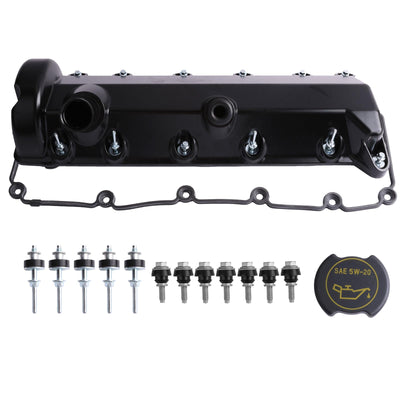
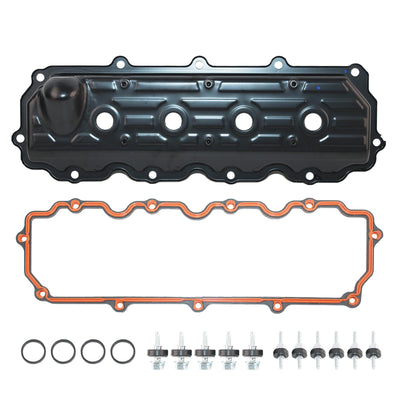
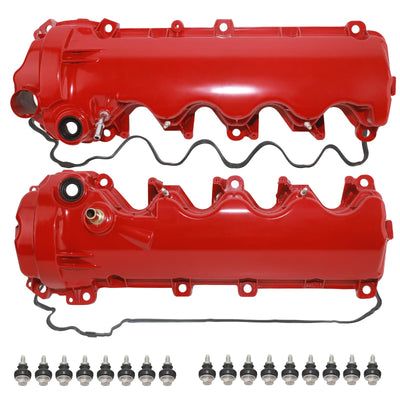
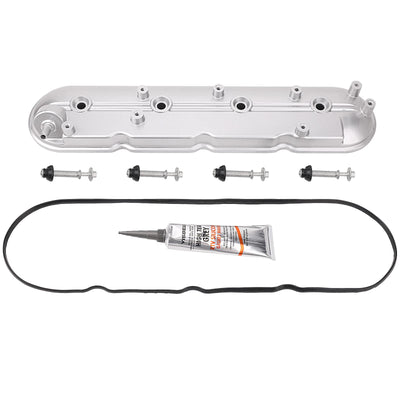
Cracked, warped, or stripped covers waste new gaskets. Aluminum valve covers for Ford 6.0 Powerstroke and Chevy LS engines replace tired plastic and stamped covers with a sealing surface that stays true.
Shop Valve CoversWhy Valve Covers Leak (and Leak Again)
The straightforward causes are age and heat. The gasket is rubber or cork that hardens and shrinks through thousands of heat cycles until it can no longer follow the mating surfaces. Add over-torqued bolts that split the seal, and warped plastic covers that flex where aluminum stays flat, and the exterior story is complete.
But the cause mechanics see most often in repeat offenders is pressure. The PCV valve lives on or near the valve cover, venting crankcase pressure into the intake. When it clogs, that pressure has nowhere to go and pushes oil past every seal on the engine, including a brand new gasket. An owner on the Cruze forums described the exact chain:
"This is almost always caused by the check valve in the intake failing, leading to over pressure of the crank case, leading to oil leaks everywhere and eventually that diaphragm blowing." (u/diablo75, r/cruze)
On engines with the PCV diaphragm built into the cover, that failure mode means the gasket was never the problem: the cover's internal diaphragm is, and the repair is the cover. The full pressure-system walkthrough, from testing to repair options, lives in our PCV diagnostics coverage.
Confirming the Leak Before Buying Parts
A parts retailer's own tech walks the diagnosis: where the seam runs, how grime marks a leak, why plug wells fill, and the PCV pressure connection that brings leaks back.
Oil splashed around the oil fill cap from careless topping-up mimics a gasket leak, so confirm before ordering parts:
- Clean first: degrease the whole cover and head, then drive normally. Fresh oil reappearing along the seam is your answer, and you will see exactly where.
- Follow the seam: the gasket line runs the full perimeter of the cover. Trace the grime trail to its highest point; oil runs down and back, so the origin is the cleanest wet spot at the top.
- Check the plug wells: pull a coil and look for oil in the well around the plug. Wet wells mean the tube seals are gone, which the full gasket kit replaces.
- Rule out pressure: if the last gasket failed young, test the PCV valve before condemning the new one.
The job itself needs no oil drain: on a cold engine, the oil has drained to the pan, and the cover comes off dry above it.
The DIY Fix, Done Right
The replacement is straightforward hand-tool work, and the difference between a fix that holds and one that leaks in a month is entirely in the preparation. The order that works:
- Buy the full kit: the gasket and the spark plug tube seals together, because they are the same age and the same heat cycles. Replacing one leaves the other on a countdown.
- Prep the surfaces: remove every trace of the old gasket with a plastic scraper or razor. Never use a wire brush on an aluminum head: the scratches become leak paths no gasket can seal.
- Seat the gasket: a thin dab of silicone inside the cover's gasket cavity holds it in place during installation, plus small dabs at the 90-degree corners and any half-moon cutouts in the head. Thin layers only; the gasket does the sealing, not a thick bead.
- Let it skin over: give the silicone fifteen minutes or more before flipping the cover, and let corner beads cure for a few hours before startup.
- Torque, do not crush: snug the bolts in a star pattern with a torque wrench to spec. Over-tightening splits the gasket; an impact gun on these bolts is how a good kit gets ruined in five seconds.
- Sweat the small stuff: match bolt lengths to their holes (a long bolt in a shallow hole runs out of clamp force), confirm none are missing, and check that no wiring harness is pinched under the cover flange.
- Clean up and verify: brake-clean the spilled oil off the head and manifold so the engine will not smoke on startup, and so any future leak shows up as fresh oil against a clean surface.
When the Cover Itself Is the Problem
Some leaks are not gasket failures at all. Cracked covers, usually from prying against a bolt somebody missed, leak right through the casting. Plastic covers warp with heat until no gasket can follow them. Bolt holes strip out and lose clamp load forever. And on modern designs from several manufacturers, the PCV diaphragm and check valve live inside the cover, so when that diaphragm blows, the cover is the part.
That last design is why some owners replace a "gasket" twice before anyone diagnoses the pressure system: the diaphragm failure mimics a sealing failure exactly. Test the crankcase pressure side before the second gasket goes in, and if the cover is the diagnosed problem, an aluminum replacement with fresh machining is the durable answer over another plastic copy.
What Owners Say
The question that opens most owner threads is urgency: is this a today problem or a someday problem? The practical consensus that follows is always the same ladder. A weeping seam with a stable oil level is a schedule-it item. A leak that drops the level between changes, fouls plugs, or smokes on the manifold moves to this weekend. And anyone who has replaced a gasket twice learns the community's hardest-won lesson: recurring leaks mean pressure.
FAQ
What are the symptoms of a valve cover leak?
Oily grime along the cover-to-head seam, a dropping oil level, misfires from oil in the spark plug wells, a burning oil smell after driving, and in advanced cases smoke from the manifold area.
Can I drive with a leaking valve cover gasket?
A minor weep, yes, while you watch the level and schedule the fix. Oil running onto hot manifolds or into the plug wells is when the answer becomes no: misfires and fire risk are next on the list.
Why is my valve cover gasket leaking again after replacement?
Four usual suspects: leftover old gasket debris on the mating surface, a gasket that shifted during install, over-tightened bolts, or a clogged PCV valve pressurizing the crankcase past the new seal.
What does oil on my spark plugs mean?
The spark plug tube seals inside the valve cover have failed. The fix is the gasket kit with new tube seals, installed with the cover off.
Do I need RTV or silicone when replacing the valve cover gasket?
Only in small dabs: to hold the gasket in the cover during installation, and at sharp corners and half-moon cutouts where the casting changes direction. The gasket seals; thick silicone beads actually cause leaks.
How long does valve cover gasket replacement take?
About an hour on an inline engine with the cover on top and clear access. V configurations and trucks with intake or bracket interference can stretch it to half a day.
Do the bolts need a torque wrench?
Yes. These bolts are small and the gasket is soft: a star-pattern pass with a torque wrench to the factory spec is the difference between a seal and a split. Never run them down with an impact.
Can a valve cover leak damage the engine?
Indirectly and progressively: low oil level if ignored, fouled plugs and coil damage from wet wells, and oil cooked onto the manifold or harness. The repair is always cheaper than the chain of consequences.
The Verdict
A valve cover leak is a small problem with a well-defined fix: confirm it on a clean engine, replace the gasket and tube seals as a kit, prep the surfaces properly, torque to spec, and clean up so the next leak announces itself early.
Before the second gasket goes in, check the pressure side—a crankcase pushing oil past new seals is often a ventilation issue in disguise. Read our comprehensive PCV system problems guide to diagnose excess blow-by before replacing hardware.
Fix the underlying pressure cause alongside your seal replacement, and consider upgrading to our heavy-duty billet valve covers for permanent warpage resistance and a leak-free seal.


