


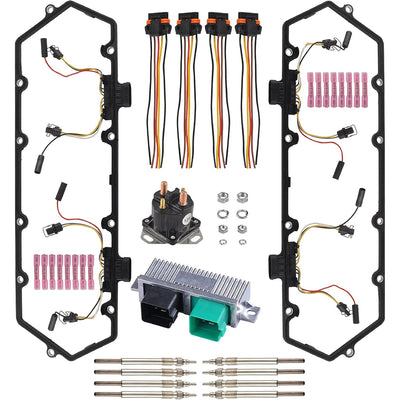
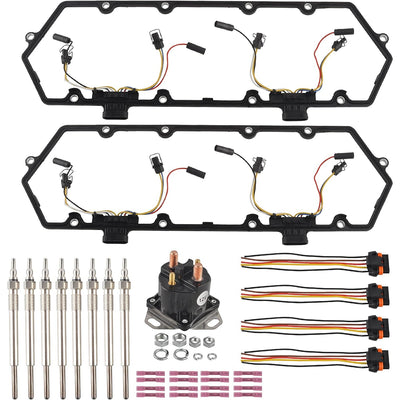
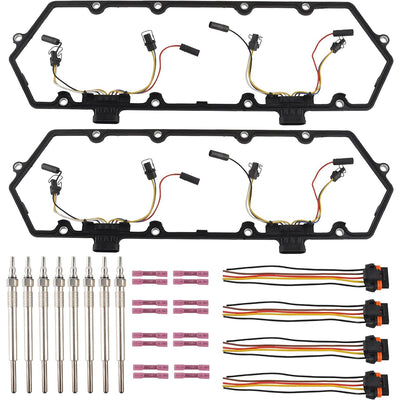
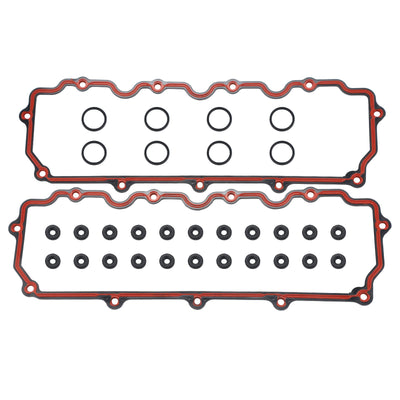

A valve cover gasket is the crucial seal positioned between the valve cover and cylinder head—a contoured strip of rubber, cork, or silicone designed to prevent oil leaks and keep contaminants out of the valvetrain. Positioned in one of the hottest and most heat-cycled areas under the hood, this relatively small component is among the most frequent sources of oil seepage as it ages.
This guide breaks down its function, placement, and material designs, explains common causes of failure, and differentiates a simple gasket breakdown from crankcase pressure issues—featuring top-tier replacements like a premium valve cover gasket to ensure your engine stays leak-free.
Table of Contents
Key Takeaways
- [The definition]: A shaped seal, usually rubber or silicone, that closes the joint between the valve cover and the cylinder head so pressurized, splashing oil stays in the valvetrain.
- [Three jobs in one part]: it seals the outer perimeter of the cover, seals the spark plug wells on overhead cam engines, and on many engines carries or neighbors the PCV valve that manages crankcase pressure.
- [The failure clock]: heat cycles harden the elastomer until it shrinks and cracks, which is why most fail between 80,000 and 150,000 miles regardless of brand.
- [The usual suspect hides below]: a clogged PCV system pressurizes the crankcase and pushes oil past even a brand new gasket, the number one cause of "my gasket failed twice."
- [Materials ladder]: molded rubber is the modern standard, silicone compounds last longest and need no re-tightening, cork survives in older engines, and some designs are a machined surface with RTV only.
- [The tell]: oily grime along the cover-to-head seam, oil in the spark plug wells, and a burning oil smell are the classic trio, and all three point at this part.
- [The economics]: the gasket is cheap and the labor is straightforward on inline engines, so the diagnosis, not the part, is where the money decision lives.
The Definition, Plain and Simple
A parts retailer's own tech explains the gasket's job on camera: where the seam runs, how the seal works, and why a failing one shows up as grime, oil loss, and misfires.
Strip the engine down to its castings and the definition writes itself. The cylinder head holds the valvetrain, the cams or rockers that open the valves, and it is drilled with oil passages that spray and splash lubricant everywhere inside.
The rocker cover or valve cover bolts over the top of the head to keep that oil in and debris out, and because two castings bolted together never seal themselves, a gasket sits between them. It is a shaped strip, molded to follow every corner and bolt hole of the cover, compressed when the bolts clamp down, and it does its job by conforming to both surfaces perfectly, forever, at temperature.
That last word is the whole lifespan story, because the part is an elastomer asked to behave like a metal component:
- Every heat cycle: expansion and contraction work the seal a little further from its molded shape.
- Every mile: heat hardens the elastomer until it shrinks and can no longer conform to both surfaces.
- The failure day: nothing dramatic, no event, just an old seal that finally lets oil walk down the side of the engine, which is how most owners learn what this part is.
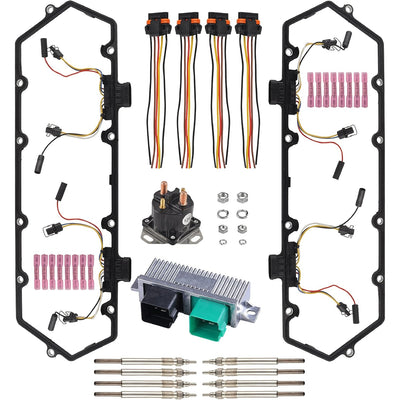
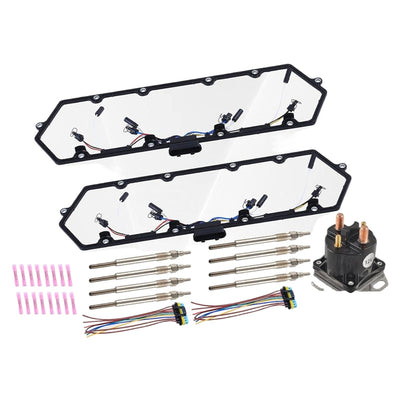
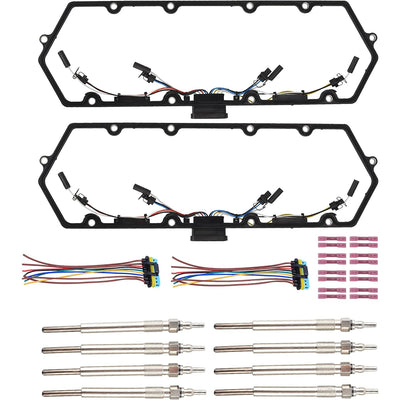
Eliminate Valvetrain Leaks and Harness Corrosion Permanently.
Stop letting hardened factory rubber gaskets cause messy cylinder head oil leaks and corrode fuel injector connections. Our Leak-Proof Valve Cover Gaskets and Harness Kits from EGR Performance feature high-temp molded silicone seals and oil-resistant pass-through wiring—delivering superior sealing memory and complete electrical protection under extreme heavy-duty loads.
Shop Leak-Proof Valve Cover Gaskets→Where It Sits and What It Seals
Open the hood and the location is no mystery: the valve cover is the long casting, aluminum or plastic, sitting on top of or alongside each cylinder head, and the gasket is the seam line around its base. What that one seal is actually responsible for surprises most owners:
- The outer seam: the perimeter joint between cover and head, where internal oil splash and mist meets the outside world. This is the visible leak path.
- The spark plug wells: on overhead cam engines, the plugs sit in deep wells that pass through the cover, sealed by tube seals that are usually part of the same gasket kit. When they fail, oil pools around the plugs and fouls them.
- The pressure boundary: the cover is not just an oil lid. It is the top of the crankcase vent system, and the gasket holds a slight vacuum or pressure against the PCV circuit on many designs.
- The bolt holes: some designs add small O-rings or grommets around the fasteners themselves, because oil mist finds bolt holes the way water finds basements.
That third item is why the gasket deserves more respect than its price suggests: it is a moving part in the engine's breathing system, not just a lid seal.
Materials and Designs You Will Meet
Scotty Kilmer's million-plus-view replacement walkthrough shows the classic kit layout: perimeter gasket, spark plug tube seals, silicone corners, and a cross-pattern tightening sequence.
The parts counter hands you one of four answers, and knowing which one your engine takes explains most of the maintenance lore:
Type |
Where You Find It |
Character |
|---|---|---|
Molded rubber |
Most modern engines |
The standard: flexible, precise, ages out in a decade of heat cycles |
Silicone compounds |
Quality aftermarket kits |
Lasts longest, tolerates heat, needs no re-tightening |
Cork and rubber-cork |
Older engines |
Forgiving on imperfect surfaces, fragile if over-torqued |
RTV only, no gasket |
Machined-joint designs |
The casting seals itself with a thin bead; prep is everything |
Two structural details matter more than material. Kits that integrate the spark plug tube seals into the perimeter gasket replace every sealing surface in one part, which is why shops buy them as a set. And on a growing list of engines, the cover itself is the wearable part, because the PCV diaphragm and check valve are molded into it: when that diaphragm tears, no gasket on earth stops the symptoms, because the leak is internal to the cover's own plumbing.
Certain diesel engine architectures incorporate internal glow plug and fuel injector wiring directly through the molded perimeter gasket interface. On 7.3L platforms, heat degradation frequently melts these pass-through connectors, requiring a combined overhaul; follow our step-by-step procedure for a complete 7.3 wiring harness replacement alongside your gasket swap.
Why the Gasket Fails
The aging story is the same everywhere: heat hardens elastomers, hardening shrinks them, shrinkage opens gaps, and oil mist under the cover walks out through the first gap it finds. Add the flexing from thousands of cold-start-to-full-temp cycles and the part has a service life the way tires and belts do. Three accelerants shorten it:
- Over-tightening: these are small bolts into soft aluminum, and an over-torqued bolt splits the gasket or strips the hole, turning a seal into a leak on installation day.
- Bad surface prep: old gasket material left on the head, or a wire-brushed aluminum surface full of scratches, gives the new seal hills and valleys it cannot conform to.
- Crankcase pressure: the hidden killer. A clogged PCV valve pressurizes the crankcase, and the excess pressure pushes oil past every elastomer seal on the engine, this one included.
That third bullet deserves its own section, because it is the difference between fixing a leak once and fixing it twice.
Continuous exposure to extreme thermal cycling causes rubber sealing polymers to lose elasticity, go brittle, and weep oil under normal operating pressure. To identify burning oil smells, fouled spark plug wells, and visible cylinder head oil traces before low fluid levels damage valvetrain components, consult our detailed guide on leaking valve cover gasket symptoms.
Gasket Problem or Pressure Problem?
Here is the diagnostic fork that saves repeat repairs. If the gasket is simply old, a quality replacement installed on clean surfaces with a torque wrench fixes the leak permanently. If the crankcase is pressurized, the new gasket starts leaking on the same schedule the old one did, because it was never the weakest link. Owners on the Cruze forums described the chain precisely:
- Step one: the check valve in the intake fails.
- Step two: the crankcase over-pressurizes and pushes oil out of every seal.
- Step three: the diaphragm in the cover blows, which mimics a gasket failure exactly.
Distinguishing top-end valve cover seepage from internal combustion chamber leaks is critical for accurate engine diagnostics. While a weeping valve cover causes localized external oil residue, a compromised head gasket allows high cylinder combustion pressure to escape into cooling channels or oil galleries; read our technical autopsy on the infamous blown head gasket on 6.0 powerstroke engines.
Valve Cover Gaskets Replacement
The job on an inline engine is an hour of hand tools: remove the cover, scrape both mating surfaces clean with plastic, seat the new gasket with a dab of silicone at the sharp corners and half-moon cutouts, and torque the bolts in a star pattern to spec, never with an impact. Buy the kit with the spark plug tube seals included, because they share the gasket's age and heat.
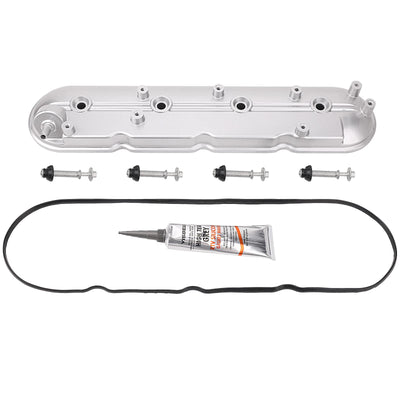
If your original composite cover has warped from severe engine heat or cracked around torque hold-down points, fitting a new rubber strip will fail to hold a leak-free seal. Upgrade to precision-machined aluminum or OEM replacement assemblies by browsing our high-durability valve cover product lineup.
FAQ
What is a valve cover gasket made of?
Mostly molded rubber on modern engines, premium silicone in quality aftermarket kits, cork on older engines, and some machined-joint designs use only a thin RTV silicone bead with no gasket at all.
How long do valve cover gaskets last?
Typically a decade or 80,000 to 150,000 miles of heat cycles. Over-tightening, poor surface prep, and crankcase pressure shorten that dramatically.
Can I drive with a leaking valve cover gasket?
A weeping seam, briefly, while you watch the oil level. Oil reaching hot manifolds or the spark plug wells moves it to a fix-it-now repair.
Is the valve cover gasket the same as the head gasket?
No, and the difference is the whole price tag. This gasket seals oil at the top of the engine, outside the combustion chamber. A head gasket seals combustion pressure, oil, and coolant between the head and block.
Why do spark plugs get oil on them?
The spark plug tube seals, part of the same sealing system, have failed, and oil is wicking down the wells around the plugs. The fix is the gasket kit with new tube seals.
Do valve cover gaskets need sealant?
Only in small dabs: to hold the gasket in the cover during installation and at sharp corners and half-moon cutouts. The gasket does the sealing; thick beads cause leaks.
What are the symptoms of a failing one?
Oily grime along the cover seam, dropping oil level, misfires from wet plug wells, and a burning oil smell as oil reaches the hot manifold.
Why did my new gasket leak again?
Four usual answers: leftover debris on the mating surface, a gasket that shifted during install, over-torqued bolts, or crankcase pressure from a clogged PCV system pushing oil past a perfectly good new seal.
The Verdict
A valve cover gasket is the engine's most accessible hard worker: a shaped elastomer seal holding hot, splashy oil inside the valvetrain, sealing the cover seam, the spark plug or injector wells, and the pressure boundary in one part. It ages like any elastomer, fails like any seal, and gets blamed for leaks the PCV system actually causes. Treat it as a system rather than a strip of rubber, verify your crankcase pressure, and ensure a leak-free repair by choosing our 6.0, 7.3 Powerstroke & Chevy Silverado valve cover gaskets designed for exact fitment and high-temperature durability.


