



DEF freezes at 12 degrees Fahrenheit, minus 11 Celsius, a precise physical specification around which the entire Selective Catalytic Reduction (SCR) system is engineered. Formulated as a $32.5\%$ urea solution to achieve the lowest possible freezing point, Diesel Exhaust Fluid relies on integrated tank and line heaters that use engine heat to thaw the mixture as you drive.
This guide breaks down the science behind freeze-thaw cycles, explains how your truck manages a frozen tank, highlights the genuine risk of a full tank expansion in deep freezes, and covers winterization failure points, alongside a permanent hardware alternative like a DEF Fluid delete kit for owners looking to bypass the system entirely.
Table of Contents
Key Takeaways
- [The number]: DEF freezes at 12 degrees Fahrenheit, minus 11 Celsius. Below that, it is a slushy solid, and above it, it is fluid. Nothing in between matters to the chemistry.
- [The design fact]: 32.5 percent urea is the lowest-freezing mixture of urea and water that exists. The spec picked the concentration that freezes least, at the temperature it freezes at.
- [The reassurance]: Freezing does not damage DEF. It thaws back to the exact same 32.5 percent solution, through unlimited freeze-thaw cycles, with no separation and no additives needed.
- [The hardware]: SCR trucks heat their DEF tanks and lines with engine coolant and electric elements, thawing the fluid while driving. The system expects frozen fluid and handles it.
- [The real risk]: A tank filled to the brim in a deep freeze can crack, because freezing water expands. Leave expansion room in hard-winter country.
- [The actual winter problems]: Crystallized residue at the filler neck, diluted or water-stretched fluid that freezes wrong, and old heat-degraded DEF, none of which are the cold's fault.
- [The fork]: Owners who are done managing DEF entirely can remove the system on off-road trucks. On street trucks, that is emissions tampering, full stop.
The Answer: 12 Degrees F
The question has a one-number answer, and the number is more interesting than it looks. Diesel exhaust fluid is 32.5 percent high-purity urea and 67.5 percent deionized water by weight, and that exact ratio is what chemists call a eutectic point: the concentration of urea and water that freezes at a lower temperature than any other mix of the two.
Dilute it, or concentrate it, and the freezing point goes up, not down. The engineers who standardized DEF were not surprised by winter; they picked the mixture that argues with it the hardest.
So the honest reading of "what temp does DEF freeze" is: 12 degrees F, and the fluid spends its whole life one warm night away from being fine, because that is the worst freezing behavior the chemistry allows.
Off-Road Truck, Done With Fluids?
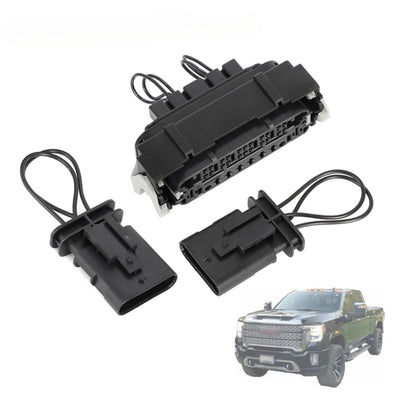
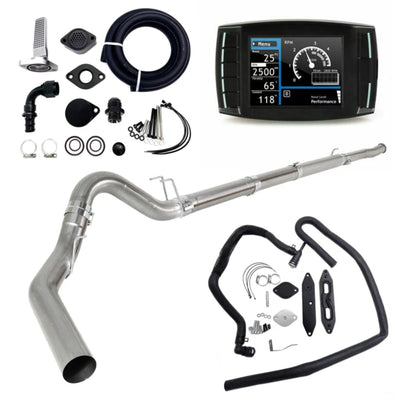
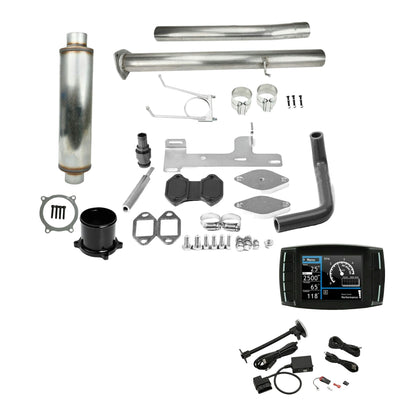
For competition and closed-course builds, winter DEF management ends with hardware instead of heaters. DEF delete kits for Powerstroke, Cummins, and Duramax remove the dosing system from the loop, street trucks excepted.
Shop DEF Removal ToolsWhy Frozen DEF Is Not a Problem
The fear is intuitive: if it freezes, something must separate, degrade, or stratify. The chemistry says otherwise, and the industry's freeze-and-thaw guidance is unanimous:

- No separation: the urea and water freeze and thaw as one solution. What returns to liquid is the same 32.5 percent mix, every time.
- No degradation: freeze-thaw cycles do not age the fluid or consume its purity, whether it happens once or every night of a northern winter.
- No additives: there is nothing to pour into DEF to lower its freezing point, and anything you add is contamination, not help. The spec is the spec.
That third bullet matters more than owners expect. The system's dosing math assumes exactly 32.5 percent urea, and anything added to "improve" winter behavior, alcohol, water, cleaner, changes the chemistry the SCR catalyst is calibrated for.
While dealing with frozen urea lines during severe cold snaps frustrates truck owners, federal emissions regulations continue mandating active SCR systems across all late-model diesel platforms. To separate widespread internet rumors from actual EPA enforcement shifts and manufacturer updates, read our technical breakdown on is DEF going away 2026.
How the Truck Handles a Frozen Tank
The truck is not surprised by the freeze either. Every SCR-equipped diesel carries a defrost kit from the factory:
- Tank heating: engine coolant loops through the DEF tank, warming the fluid as the engine reaches temperature, with electric elements covering the pump and sender.
- Line heating: the supply lines are heated so that thawed fluid reaches the dosing valve without refreezing on the way.
- Strategy, not panic: the system knows when the fluid is frozen. It dosing-waits while the tank thaws, and modern trucks will run this way from a cold start, exactly as the dealer winter guides describe: drive normally, let the heaters work, expect the light to clear.
- The rules on driving frozen: emissions rules let the truck run while the system thaws; what they do not allow, indefinitely, is ignoring the warnings once everything is thawed and the system still reads empty or faulted.
The practical translation: a truck parked outside at minus 20 starts, drives, and thaws its own DEF on the commute. Force-thawing with heaters, torches, or garage drama is solving a problem the cooling system already owns.
The One Real Risk: a Full Tank
Water expands when it freezes, and DEF is two-thirds water, expanding roughly seven percent as it solidifies. The tanks are designed with expansion headroom for exactly this, which is where the one genuine winter rule comes from: do not fill the tank to the brim before a deep freeze.
A completely full tank has nowhere to put that expansion, and cracked tanks, as Mitchell 1's service literature documents, are the real freeze damage, not the fluid. The habit is simple: in hard-winter country, top the tank to most-of-the-way, and fill it proper after the thaw.
Winter Problems That Are Actually Real
Most "frozen DEF" service visits turn out to be one of these instead:
- Crystallization at the filler neck: spilled DEF dries into white urea crystals around the cap and neck. Wipe spills, and keep the neck clean, because crystals work into threads and seals.
- Diluted or stretched fluid: water-added or off-spec DEF can freeze at the wrong temperature, dose incorrectly, and trigger quality codes. Buy fluid that meets the ISO spec, from busy pumps or sealed containers.
- Old, heat-cycled DEF: sustained summer heat ages DEF long before winter tests it. Check the date code, store sealed containers cool, and do not stockpile years of supply.
- Frozen dispenser hardware: at the pump, it is sometimes the station's frozen lines, not your tank. A pump that delivers slowly in a cold snap is telling you something about the pump.
When urea sensors register frozen fluid conditions or missing reductant pressure, recalibrating the engine management software is essential to clear check engine lights and prevent power derates. Learn how custom calibration files handle sensor feedback and injection parameters in our detailed guide on tune after a DPF EGR delete.
Done With DEF: the Delete Question
Every winter, the freeze-thaw-warn cycle pushes some owners toward the same question: can the fluid system just go away? The honest answer is the same fork this site's other emissions topics use. Repeated freeze-thaw cycles frequently ruin internal DEF tank heating elements, leaving truck owners with steep repair bills to avoid speed-derate countdowns.
On a street-registered truck, removing DEF is tampering under the same laws that cover DPF and EGR deletes, with inspection and fine consequences, and the heaters already handle winter better than the forums fear. To explore DEF Fluid delete options, sensor overrides, and legal boundaries for off-road builds, review our guide on whether can I delete DEF.
The system was engineered for the cold; whether you keep engineering around it is a decision about where the truck drives, not about the temperature.
FAQ
What temperature does DEF freeze at?
12 degrees Fahrenheit, minus 11 Celsius, at the standard 32.5 percent urea concentration, which is the lowest freezing point of any urea-water mix.
Is DEF ruined if it freezes?
No. It thaws back to the same 32.5 percent solution with no separation or degradation, through as many freeze-thaw cycles as winter can deliver.
Can I add anything to keep DEF from freezing?
No, and nothing you add helps. Any additive changes the concentration the SCR system is calibrated to dose. The heaters are the solution, and they are already installed.
Can I drive with a frozen DEF tank?
Yes, that is the designed operation: start, drive, and let the coolant-heated tank and heated lines thaw the fluid while the system waits to resume dosing.
Can a frozen DEF tank crack?
A completely full one can, because freezing DEF expands about seven percent. Tanks carry expansion headroom, so the rule is simply do not brim the tank before a deep freeze.
How long does a frozen tank take to thaw?
Typically a normal drive cycle, tens of minutes of engine running with the coolant loop warming the tank. Force-thawing is unnecessary and risks the tank.
Why is my DEF warning on in cold weather?
Usually the system reporting frozen or low-quality fluid, or a tank level sensor reading slush. Drive until warmed, verify with known-good fluid, and check the filler neck for crystal buildup before assuming the worst.
Does deleting DEF solve winter problems?
It removes the fluid system entirely, on trucks that never use public roads. On street trucks it is illegal tampering, and the factory heaters already handle the cold the system was designed for.
The Verdict
DEF freezes at 12 degrees Fahrenheit because 12 degrees is the best winter behavior urea and water can produce, and everything above and below that number is engineered accommodation: heaters in the tank and lines, strategy that waits out the thaw, and a fluid that survives every freeze cycle unchanged.
Respect the one physical rule by leaving expansion room, buy spec fluid with fresh date codes, and let the truck do the thawing it was built to do. For off-road trucks the fluid question ends with hardware, and for everyone else it ends with the reassurance that this is the most designed-for freeze in the truck.
When the decision lands, the DEF delete kits selection from EGR Performance is the place to start.


