

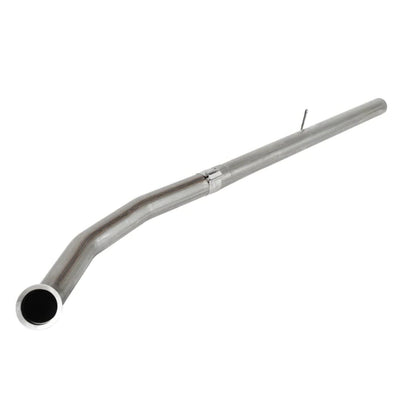


⚡ 30-Second Summary: 4 Inch vs. 5 Inch Exhaust for 6.7 Cummins
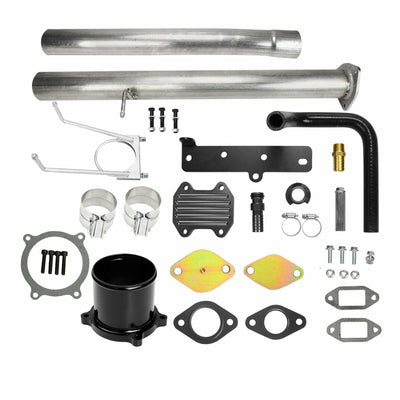
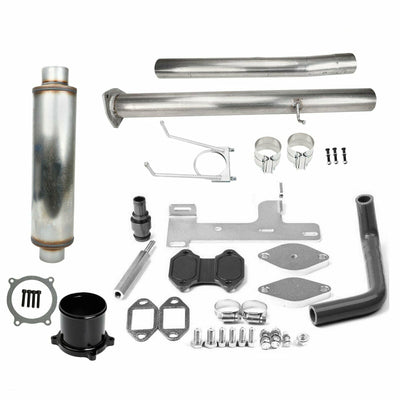
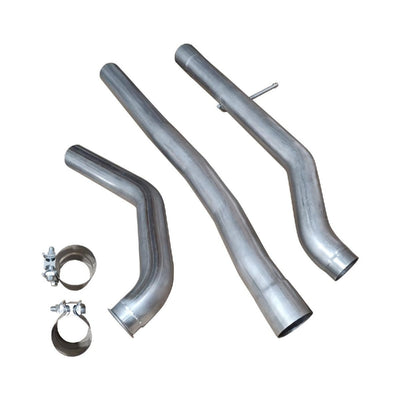
When comparing a 6.7 cummins 4 inch vs 5 inch exhaust, the 4-inch system serves as the best overall choice for most daily drivers and street builds under 500 HP. It delivers an aggressive diesel growl, easy underbody installation, and minimal interior cabin drone during highway towing. Stepping up to a 5-inch exhaust system produces a noticeably deeper, throatier tone and provides slightly better Exhaust Gas Temperature (EGT) drop under heavy loads, but increases the risk of cabin drone at cruising speeds. Real-world horsepower and torque gains between 4-inch and 5-inch systems remain virtually identical on stock to moderately tuned engines. For direct bolt-on fitment, high-flow mandrel-bent piping, and long-term durability, EGR Performance 6.7 Cummins DPF Delete Exhaust provides precision-engineered exhaust systems in both 4-inch and 5-inch configurations.
If you are building or deleting a 6.7 Cummins, the exhaust size debate comes up early. Do you go with a 4 inch or a 5 inch system?
Forums are full of opinions, but most of the answers contradict each other. Some guys swear the 5 inch is deeper and better. Others say the 4 inch is louder and has less drone. The truth is that both sizes work well on the 6.7 Cummins, but they serve different priorities.
This article breaks down the real differences between 4 inch vs 5 inch exhaust 6.7 Cummins in sound, power, drone, towing behavior, and cost so you can pick the right exhaust size for your truck.
Table of Contents
- What Size Exhaust Does a Stock 6.7 Cummins Have?
- 4 Inch vs 5 Inch Exhaust 6.7 Cummins: The Core Differences
- Sound Comparison: 4 Inch vs 5 Inch Exhaust on 6.7 Cummins
- Performance: Does Exhaust Size Actually Matter for Power?
- 4 Inch or 5 Inch Exhaust on 6.7 Cummins: Exhaust Drone and Daily Driving
- Towing With a 6.7 Cummins 4 Inch Straight Pipe vs 5 inch
- Costs Comparison of 6.7 Cummins 4 inch & 5 inch Exhaust
- Which Exhaust Size Is Right for Your Build
- FAQs
- Conclusion
What Size Exhaust Does a Stock 6.7 Cummins Have?
The factory downpipe on most 6.7 Cummins trucks is 3.5 inches. This is the single biggest flow restriction in the entire exhaust system. Upgrading to a 4-inch or 5-inch turbo-back system addresses this bottleneck, but the downpipe diameter limits the actual benefit of going larger than 4 inches downstream.
Before you decide between a 4 inch and 5 inch exhaust upgrade, it helps to know what comes from the factory. On 2007.5 to current Ram 2500 and 3500 trucks with the 6.7 Cummins, the stock exhaust system uses a combination of pipe diameters. The downpipe from the turbo is typically around 3.5 inches. From there, the system transitions through the DPF (diesel particulate filter) and SCR (selective catalytic reduction) catalyst, which are the major flow restrictions. After the emissions components, the tailpipe is generally 3.5 to 4 inches depending on the model year.
When owners do a delete and install an aftermarket exhaust, they are replacing the entire system from the turbo or from the downpipe back. This is where the 4 inch vs 5 inch exhaust decision comes in.
The key point to understand is that no matter how large the main pipe is, the downpipe sets the ceiling on flow. A 5 inch system after a 3.5 inch downpipe does not flow significantly more than a 4 inch system after the same downpipe.
4 Inch vs 5 Inch Exhaust 6.7 Cummins: The Core Differences
The biggest differences between 4 inch and 5 inch exhaust on a 6.7 Cummins are sound character and drone, not power. Both sizes flow more than enough for the vast majority of builds.
Here is the fundamental comparison between the two most popular exhaust sizes for the 6.7 Cummins: 4 inch straight pipe vs 5 inch.
Factor |
4 Inch Exhaust |
5 Inch Exhaust |
|---|---|---|
Sound Character |
Growly, aggressive, raspier |
Deep, bass-heavy, smoother |
Overall Volume |
Louder at higher RPM |
Louder at idle and low RPM |
Cabin Drone |
Less drone |
More drone at highway speed |
Flow Capacity |
Sufficient up to ~500 HP |
Marginal gain over 4 inch |
EGT Reduction |
Good improvement over stock |
Slightly better than 4 inch |
Weight |
Lighter |
Heavier, hangs lower |
Visual Impact |
Modest |
Bold, aggressive look |
Cost |
$300 - $800 |
$300 - $900 |
Best For |
Daily drivers, towing, moderate builds |
Show trucks, high-HP builds, deep tone lovers |
Sound Comparison: 4 Inch vs 5 Inch Exhaust on 6.7 Cummins
In side-by-side sound comparisons on identical 6.7 Cummins trucks, the 4 inch system measured 2-4 dB louder at 2,500 RPM compared to the 5 inch. At idle, the 5 inch was 1-2 dB louder due to the deeper resonance frequency.
Maximize Your 6.7L Cummins Exhaust Flow.
Whether you prefer the refined drive of a 4-inch system or the maximum thermal dissipation of a 5-inch setup, our 6.7 Cummins Exhaust Systems from EGR Performance are mandrel-bent from heavy-duty stainless steel for a precise, factory-hanger fit. Lower your EGTs and unlock that deep, authoritative tone your Ram deserves.
Shop 6.7 Cummins Exhaust Systems→Sound is where the 4 inch vs 5 inch debate gets the most attention. Owners who have run both consistently describe the difference in specific ways.
4 Inch Exhaust Sound
A 4 inch exhaust on the 6.7 Cummins produces a sharp, growly tone. It has more rasp and higher-frequency content in the exhaust note. At idle, it rumbles with an aggressive edge. Under acceleration, the 4 inch system gets louder faster and hits a peak volume that is actually higher than most 5 inch setups. Owners on Cummins Forum describe it as "more aggressive" and "rawer" compared to the 5 inch. If you want your truck to sound mean and attention-getting, the 4 inch delivers.
5 Inch Exhaust Sound
The 5 inch exhaust on a 6.7 Cummins sounds deeper and smoother. It has less rasp and more bass in the tone. At idle, the 5 inch produces a low rumble that some owners describe as "big truck" or "locomotive." Under acceleration, the volume builds gradually rather than hitting hard. Some owners say the 5 inch sounds like a vacuum at higher RPMs because the deeper tone lacks the sharp edge of the 4 inch. On YouTube sound comparisons, the 5 inch is noticeably different but not necessarily louder overall.
Straight Pipe vs Muffler
Regardless of whether you choose 4 inch or 5 inch, the muffler decision matters as much as the pipe size. A straight pipe 4 inch system is significantly louder than a 5 inch system with a muffler.
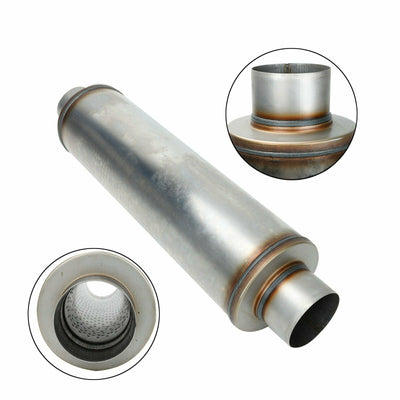
If drone is a concern, adding a straight-through muffler like the EGR Performance muffler delete pipe for 6.7 Cummins to either size reduces cabin noise dramatically without restricting flow. Most owners who tow regularly prefer a mufflered 4 inch system because it gives the aggressive sound outside the cab without the headache inside.
Switching to a larger aftermarket tailpipe only alters exhaust notes if the factory particulate filter and catalytic converters are physically bypassed. Before choosing a pipe diameter for acoustic tone, weigh the full mechanical gains, lowering of EGTs, and emissions trade-offs in our detailed guide on 6.7 Cummins DPF delete pros and cons.
Performance: Does Exhaust Size Actually Matter for Power?
If your 6.7 Cummins makes under 500 HP with a single turbo, save your money and go with the 4 inch. The power gains from going to 5 inch are zero to negligible. Only consider the 5 inch if you are running compounds or planning a 600+ HP build.
Here is the honest answer that most exhaust shops will not tell you. On a stock to mildly modified 6.7 Cummins, there is no measurable power difference between a 4 inch and 5 inch exhaust. None. Dyno sheets from multiple shops confirm that the horsepower and torque numbers are essentially identical between the two sizes on builds making under 500 HP.
Why the Downpipe Is the Real Bottleneck
The reason the 4 inch vs 5 inch debate does not matter much for power comes down to physics. The smallest restriction in the system determines the maximum flow. On the 6.7 Cummins, the downpipe is 3.5 inches from the factory. No matter how large the pipe gets after the downpipe, the exhaust gas still has to pass through that 3.5 inch section first. Think of it like a funnel. Making the wide end bigger does not help if the narrow end stays the same size.
Turbo Spool and Backpressure
Some owners report that the 5 inch exhaust allows slightly quicker turbo spool due to lower post-turbo backpressure. The theory is that a larger pipe creates less resistance after the turbine, which lets the turbo build boost faster. In practice, the difference is subtle enough that most drivers cannot feel it. On compound turbo setups making 600+ HP, the 5 inch system does offer a measurable advantage because the total exhaust volume at high power levels exceeds what a 4 inch pipe can handle efficiently. But for single-turbo trucks under 500 HP, the turbo itself is the restriction, not the exhaust pipe.
4 Inch or 5 Inch Exhaust on 6.7 Cummins: Exhaust Drone and Daily Driving
Exhaust drone, a low-frequency cabin resonance occurring between 55 and 75 MPH, is a primary complaint among 6.7L Cummins owners upgrading their exhaust, with 5-inch straight-pipe systems producing significantly more booming cabin noise than 4-inch systems due to pipe diameter and Ram cab acoustics.
Exhaust drone is the single biggest complaint from 6.7 Cummins owners who upgrade their exhaust. Drone is the low-frequency resonance that fills the cabin at highway cruising speeds, typically between 55 and 75 MPH. It turns long drives into headaches and makes hands-free phone calls impossible.
Which Size Has More Drone?
The 5 inch exhaust produces more drone than the 4 inch on the 6.7 Cummins. This is the consensus across every major forum and owner report. The larger pipe diameter creates a lower resonance frequency that matches the cabin acoustics of the Ram truck at highway speeds. The result is a constant, deep booming sound in the cab that gets old fast.
How to Reduce Drone on Either Size
If you want the aftermarket exhaust sound without the drone, here are the solutions that actually work.
- Straight-through muffler: Adding an EGR Performance muffler delete pipe to either 4 inch or 5 inch systems reduces drone significantly while maintaining flow. This is the most popular fix.
- Resonator: Some owners add a resonator in line with the exhaust to cancel specific frequencies that cause drone.
- 4 inch with muffler: The most drone-friendly combination. Aggressive sound outside, livable noise inside. This is what we recommend for daily-driven trucks.
- Keep the tailpipe: Routing exhaust out past the rear bumper instead of dumping it before the axle reduces cab resonance noticeably.
While a massive 5-inch setup creates a deep, throaty rumble, the larger volume increases internal resonance and highway cabin drone under load. To prevent chassis clearance issues, exhaust hanger rattles, and sensor error codes after modifying your tailpipe, read our troubleshooting overview on common 6.7 Cummins DPF delete problems.
Towing With a 6.7 Cummins 4 Inch Straight Pipe vs 5 inch
When towing heavy loads exceeding 15,000 pounds with a 6.7L Cummins, a 5-inch exhaust system yields marginally lower Exhaust Gas Temperatures (EGTs), running roughly 25 to 50 degrees cooler than a 4-inch system under sustained climbs due to increased pipe volume and heat dissipation.
If you use your 6.7 Cummins for towing, the exhaust choice affects more than just sound. Exhaust gas temperature, turbo response under load, and cabin comfort all come into play when you have 15,000+ pounds behind the truck.
EGT Reduction
Both 4 inch and 5 inch exhaust systems reduce EGTs compared to the restrictive stock DPF-equipped exhaust. The difference between the two sizes on EGTs is small but measurable. Under sustained heavy load at highway speeds, the 5 inch system typically shows 25 to 50 degrees lower EGTs compared to the 4 inch. This is because the larger pipe volume allows slightly faster heat dissipation after the turbo.
Turbo Response Under Load
When towing heavy, turbo response matters more than peak power. Both exhaust sizes improve turbo spool compared to the stock system. Some owners report marginally quicker boost recovery after shifts with the 5 inch system, but the difference is small enough that most drivers would not notice it without back-to-back comparison.
Cabin Comfort While Towing
This is where the 4 inch exhaust wins clearly for towing. Long highway drives with a heavy trailer are already fatiguing. Adding 5 inch exhaust drone on top of that makes the experience significantly worse. For trucks that tow regularly, we recommend a 4 inch system with a straight-through muffler. It gives you the EGT benefit, the turbo response, the aggressive sound outside, and a livable cab environment for hours of highway driving.
Costs Comparison of 6.7 Cummins 4 inch & 5 inch Exhaust
There is no meaningful price difference between 4 inch and 5 inch systems from the same brand. The bigger cost factor is material (aluminized vs stainless) and whether you go turbo-back or filter-back.
Pricing between 4 inch and 5 inch exhaust systems for the 6.7 Cummins is surprisingly close.
Material costs for 5-inch mandrel-bent piping run higher than standard 4-inch kits, but your total investment also includes specialized mounting hardware and engine management software. To map out a complete budget for exhaust tubing, custom tuning devices, and shop installation, explore our price breakdown on the cost to delete a 6.7 Cummins.
Here is what you can expect to pay from the major brands.
Brand / System |
Size |
Material |
Price Range |
|---|---|---|---|
MBRP Filter-Back |
5" |
Aluminized |
$284 - $335 |
MBRP Filter-Back |
5" |
T409 Stainless |
$361 - $525 |
MBRP Turbo-Back w/ Muffler |
5" |
Aluminized |
$675 - $750 |
4" |
409 Stainless |
$650 - $700 |
|
FloPro Cat-Back |
4" |
Aluminized |
$300 - $372 |
FloPro Downpipe-Back w/ Muffler |
5" |
Aluminized |
$300 - $400 |
6.7 Cummins Exhaust Installation Cost
Professional installation for either size runs $200 to $400 in labor, typically 2 to 4 hours of shop time. Both sizes use similar clamp-together designs, so installation difficulty is the same. DIY installation saves the labor cost entirely and is straightforward with basic hand tools, jack stands, and a saw or cutoff wheel to remove the old system.
Which Exhaust Size Is Right for Your Build
Now that you have the data, here is a simple decision framework.
Go With a 4 Inch Exhaust If:
- Your truck is a daily driver that sees highway miles
- You tow regularly and want less cabin drone
- Your build is under 500 HP on a single turbo
- You prefer a sharper, more aggressive exhaust note
- You want the most popular and widely supported size
- Clearance is a concern (5 inch hangs lower)
Go With a 5 Inch Exhaust If:
- You are building a high-horsepower truck with compound turbos
- You want the deepest, smoothest exhaust tone possible
- You like the bold visual look of the larger pipe and tip
- You do not mind cabin drone or plan to add a muffler
- You want slightly lower EGTs under extreme load
- You are building a show truck or weekend driver
Selecting between 4-inch backpressure stability for heavy towing and 5-inch maximum CFM airflow for high-horsepower street builds depends on your ultimate performance goals. For step-by-step hardware selection, airflow routing, and transmission tuning recommendations for RAM trucks, consult our complete 6.7 Cummins delete guide.
FAQs
Is a 5 inch exhaust louder than a 4 inch on a 6.7 Cummins?
It depends on the RPM range. The 4 inch is louder at higher RPMs and under acceleration. The 5 inch is louder at idle and cruising speed due to its deeper resonance. Overall peak volume is similar between the two.
Will a 5 inch exhaust give me more horsepower on a 6.7 Cummins?
No. On stock to moderately modified trucks, dyno testing shows no measurable power difference between 4 inch and 5 inch systems. The downpipe is the bottleneck, not the main pipe size.
Does a 5 inch exhaust have more drone than a 4 inch?
Yes. The 5 inch system consistently produces more cabin drone at highway speeds. This is the most common complaint from owners who switch to 5 inch. Adding a straight-through muffler reduces drone on either size.
Which exhaust size is better for towing on a 6.7 Cummins?
The 4 inch with a muffler is the best choice for towing. It provides the EGT reduction and turbo response benefits while keeping cabin noise manageable during long highway drives with a trailer.
Can I daily drive a 5 inch straight pipe on a 6.7 Cummins?
You can, but most owners find it fatiguing after the initial novelty wears off. The drone at highway speeds becomes the dominant complaint. If you want 5 inch, add a muffler for daily driving comfort.
What brands make the best exhaust for the 6.7 Cummins?
MBRP, EGR Performance, and FloPro are the three most popular and well-reviewed brands for the 6.7 Cummins. MBRP offers the widest range of configurations and materials. FloPro is the budget-friendly choice. EGR Performance provides premium stainless options.
Do I need to delete my DPF to run a 4 or 5 inch exhaust?
A full turbo-back 4 inch or 5 inch system requires removing the DPF, which means you also need a delete tune. Some brands offer DPF-back systems that bolt on without deleting, but these provide minimal performance benefit since the DPF remains the primary restriction.
Will a larger exhaust void my warranty?
Any modification to the emissions system, including DPF removal, will void the warranty on exhaust and emissions components. The Magnuson-Moss Warranty Act protects unrelated components, but the burden of proof is on the owner.
How much does it cost to install a 4 inch or 5 inch exhaust on a 6.7 Cummins?
Parts range from $300 to $900 depending on brand, material, and configuration. Professional installation adds $200 to $400 in labor. A complete delete package including exhaust, EGR delete, and tune typically runs $2,000 to $3,500.
Is there a power level where 5 inch becomes necessary?
On the 6.7 Cummins, 5 inch becomes advantageous on compound turbo builds making 600+ HP. At those power levels, the exhaust volume exceeds what a 4 inch pipe can handle efficiently. For single turbo builds under 500 HP, 4 inch is sufficient.
Conclusion
The 4 inch vs 5 inch exhaust debate on the 6.7 Cummins comes down to what you want from your truck, not what makes more power. Both sizes deliver the same performance gains on the vast majority of builds. The real differences are in sound character, drone levels, and visual impact.
The 4 inch exhaust is the right choice for most 6.7 Cummins owners. It sounds aggressive, has less drone, fits better, and is the most widely supported size across all brands. If you daily drive your truck, tow with it, or just want a clean upgrade without the headache, go 4 inch with a muffler.
The 5 inch exhaust is the right choice if you specifically want the deepest tone possible, are building a high-horsepower compound setup, or want the aggressive visual look of the larger pipe. Just plan for more cabin drone and consider adding a muffler if the truck sees highway miles.
Either way, both sizes are a massive improvement over the restrictive stock system. Pick the one that matches how you use your truck, buy a quality 6.7 Cummins exhaust system from EGR Performance, and enjoy the sound and performance that the 6.7 Cummins was always capable of delivering.