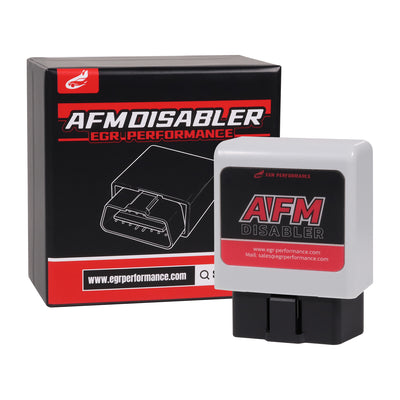

⚡ 30-Second Summary: Is the $89.99 AFM/DFM Disabler Worth It?
At just $89.99, the EGR Performance AFM/DFM Disabler serves as low-cost preventive insurance for symptom-free GM trucks—particularly those under 100,000 miles. By stopping the relentless cylinder activation/deactivation cycling that causes 70% to 80% of valvetrain failures in healthy engines, this simple module can save truck owners up to 95% in potential engine repair costs. It installs in under 10 seconds, requires zero tools, and is 100% reversible without leaving a digital trace on the factory ECM. However, if your engine is already ticking, misfiring, or showing metal shavings in the oil, no plug-in electronic device can repair physical valvetrain damage—a complete mechanical lifter repair or hardware cam delete costing $3,000 to $6,000 will be required.
Table of Contents
- Introduction
- Quick Answer: AFM/DFM Disabler vs. Lifter Repair
- What Does an AFM/DFM Disabler Actually Do?
- Can an AFM/DFM Disabler Prevent Lifter Failure?
- Symptoms a Disabler Will Not Fix (When You Need Repair Instead)
- Fuel Economy, Warranty, and Daily-Driving Trade-Offs of AFM/DFM Disablers
- Cost Comparison: AFM Disabler, Tune, or Full Mechanical AFM Delete?
- Is the $89.99 AFM/DFM Disabler Worth Buying?
- Buyer Checklist: Before You Spend $89.99
- FAQs
- Summary
Introduction
The choice between an AFM DFM disabler and a lifter repair depends on your engine's condition. A disabler is a low-cost, easily reversible plug-in device to maintain your V8 in full-time mode. A lifter repair is a costly mechanical repair on parts that have already failed.
An $89.99 AFM/DFM disabler is a plug-and-play OBD-II module that prevents cylinder deactivation on healthy GM V8 engines (LS, L83, L84, LLT, L86, etc.) to reduce repeated lifter pin stress. In contrast, a full lifter repair or mechanical AFM delete costs $1,500–$12,000 and physically fixes or replaces failed valvetrain components.
If you already have ticking or a check engine light, you probably need an AFM lifter repair rather than a disabler. We walk through every decision that separates a smart preventive purchase from a wasted $89.99 or a dangerous skip of real repair work. Follow the side-by-side comparison, the technical breakdown, the costs, and the buyer checklist, and you will know exactly when the $89.99 disabler is worth buying.
Quick Answer: AFM/DFM Disabler vs. Lifter Repair
An $89.99 AFM/DFM disabler is a plug-and-play OBD-II module that prevents cylinder deactivation on healthy GM V8 engines (LS, L83, L84, LLT, L86, etc.) to reduce repeated lifter pin stress, while a full lifter repair or mechanical AFM delete costs $1,500-$12,000 and physically fixes or replaces failed valvetrain components.
The choice between an AFM DFM disabler vs lifter repair depends on the cost and scope. A disabler costs $85 to $170. The cost of a lifter repair is usually $3,000 to $5,000 or more.
When the engine sounds and runs normally, an $89.99 plug-in module such as the EGR Performance AFM/DFM Module can be a low-cost preventive option. However, it cannot fix an engine with a damaged lifter or camshaft.
Here is a side-by-side comparison:
Factor |
AFM/DFM Disabler ($89.99) |
Lifter Repair / Hardware Delete ($1,500-$12,000) |
|---|---|---|
Primary purpose |
Prevents repetitive pin stress by blocking cylinder deactivation. |
Repairs or replaces identified damage to the valvetrain. |
Hardware changes |
None. Operates through electronic commands sent via the diagnostic port. |
Yes. Includes teardown, cylinder head removal, and hardware replacement. |
Fixes ticking/collapsed lifters |
No. Can't fix a lifter that is already ticking or failed. |
Yes. Directly replaces failed mechanical components. |
Installation & reversibility |
Plug and play in seconds. Fully reversible by unplugging it. |
Major internal labor. Permanent modification. |
Best use case |
Healthy engines without any previous noise or misfires. |
Engines already ticking, misfiring, or losing power. |
Typical cost |
Under $100. Reduces risk but does not eliminate it. |
$1,500 to $12,000+, depending on damage and scope. |
What Does an AFM/DFM Disabler Actually Do?
The disabler forces the engine to run exclusively in full-time 8-cylinder mode, eliminating the repetitive up-down cycle of the AFM/DFM lifter pin that causes most hydraulic failure.
Protect Your GM V8 from Collapsible Lifter Failure.
Why risk a $5,000 valvetrain repair over fragile factory cylinder deactivation? The AFM/DFM Disabler from EGR Performance plugs directly into your OBD-II port to keep all 8 cylinders active 100% of the time—delivering instant throttle response, zero V4 exhaust shudder, and total valvetrain peace of mind without flashing your factory ECU.
Shop EGR Performance AFM/DFM Disablers→How It Works:
The AFM/DFM disabler connects to your OBD-II port. It tells the computer to keep the V8 in full-cylinder mode.
The AFM DFM disabler costs stay low, since there is no wiring, no tools, and no software install. It's just a plug-and-play device under the dash.
Reversibility:
When the device is unplugged, the cylinder-deactivation behavior is immediately restored to factory settings. Nothing about the engine is permanently changed.
What It Cannot Do:
- Replace worn or broken lifters
- Repair camshaft damage
- Clean contaminated oil
- Repair low oil pressure
- Change the physical valvetrain design
By plugging into the OBD-II port, these bypass modules send continuous keep-alive signals to the engine control unit, preventing solenoid manifold activation and keeping all cylinders fired full-time. To explore solenoid oil flow control, ECM handshakes, and platform compatibility across Chevy and GMC truck generations, read our technical breakdown on AFM DFM disabler guide.
Can an AFM/DFM Disabler Prevent Lifter Failure?
The $89.99 disabler prevents the repetitive cylinder-deactivation cycle that accounts for the majority of AFM/DFM lifter failures in healthy engines, but it cannot guarantee prevention if the engine already has low oil pressure, high miles, or other valvetrain issues.
Realistic Expectations:
An AFM/DFM disabler can only decrease one stress factor. It does not guarantee prevention. It reduces the repeated start-stop motion that causes factory lifters to become worn.
With so many bold claims floating around, owners wonder if an AFM disable is truly worth it. The truth is, it reduces risk, but it doesn't make the engine bulletproof.
Note: Factory lifters can still wear out over time even if a disabler is installed. Metal fatigue occurs whether or not the device is used.
Field data: Owners of 80,000-110,000-mile trucks commonly report zero new lifter failures for 2-3 years after installing a disabler, though results depend on oil quality and overall valvetrain condition. The repetitive deactivation cycle the disabler stops is blamed for 70-80% of lifter failures in otherwise healthy engines.
Symptoms a Disabler Will Not Fix (When You Need Repair Instead)
A disabler will not fix persistent ticking, tapping, or valvetrain noise, check-engine lights with misfire codes (P0300, P0301-P0308), rough idle, reduced power, dead-cylinder feeling, metal debris in oil, or low compression.
A disabler is not able to repair symptoms of damage. If you see any of these, you need an AFM lifter repair.
Red Flags Requiring Diagnosis:
- Constant ticking, tapping, or valvetrain noise
- Check-engine light and misfire codes (P0300)
- Rough idle, reduced power, or shaking under load
- A dead-cylinder feeling or flashing fault indicator light
- Metal particles found during an oil change
- Low compression or abnormal valve movement
If you notice any of these symptoms, don't invest in prevention without a diagnosis.
While forcing full-cylinder operational mode eliminates premature lifter locking mechanism wear caused by frequent oil pressure switching, electronic disablers cannot reverse existing mechanical metal fatigue or unstick a locked pin. To recognize early valvetrain ticking, oil pressure drops, and camshaft lobe pitting symptoms, explore our in-depth diagnosis of GM cylinder deactivation problems.
Fuel Economy, Warranty, and Daily-Driving Trade-Offs of AFM/DFM Disablers
Disabling AFM/DFM reduces light-load highway MPG by 1-3% on average (varies by truck, speed, payload, and terrain) while the disabler itself adds negligible extra cost.
Fuel Economy:
If you disable AFM or DFM, your highway fuel economy drops slightly. The full-cylinder mode consumes more fuel at light loads.
The actual MPG reduction depends on driving style, payload, speed, and terrain. The vast majority of owners experience a slight decrease, not a dramatic one.
Warranty & Compliance:
Aftermarket devices can also impact warranty discussions. If a failure is associated with the change, a dealer might ask questions.
Look at local emissions rules as well. There are certain compliance requirements for aftermarket engine modifications in some areas.
Cost Comparison: AFM Disabler, Tune, or Full Mechanical AFM Delete?
OBD-II disabler costs $85-$170 (plug-and-play, zero labor), an ECU tune costs $150-$650+, and a full mechanical AFM delete with lifter replacement runs $3,000-$12,000+ including labor and hardware.
The price of your choices varies widely. Here are the approximate costs of each approach.
- OBD-II Disabler: $85 to $170. This is the lowest of all AFM DFM disabler costs, with no tools or software needed.
- ECU Tune: $150 to $650+. The DOD delete tune cost depends on whether it is remote, dyno-based, or requires unlocking a newer ECM.
- Mechanical Delete: $3,000 to $6,000+. This includes labor, standard lifters, non-AFM camshaft, gaskets, and reprogramming.
The 5.3 AFM lifter replacement cost estimate falls around the mechanical delete range above.
Plugging in a temporary electronic module offers an immediate low-cost safeguard, but fully removing failure-prone collapsible lifters and replacing the camshaft remains the only 100% permanent mechanical solution. For a comprehensive comparison of labor hours, parts lists, and long-term valvetrain reliability between both routes, consult our guide on AFM disabler vs DOD delete.
Is the $89.99 AFM/DFM Disabler Worth Buying?
Frame the $89.99 AFM/DFM Disabler strictly as inexpensive preventive insurance for a healthy, symptom-free GM truck. It is not a warranty, cure, or guaranteed financial return, but it can save thousands if it prevents one lifter failure.
Balanced Financial Perspective:
At $89.99, a disabler costs about 2.25% of a $4,000 repair bill. That math sits at the center of the AFM DFM disabler vs lifter replacement decision.

This AFM Disabler is designed for 2005–2020 GM V6 and V8 vehicles with Active or Dynamic Fuel Management to disable cylinder deactivation, eliminate switching lag, and protect against lifter failure.
However, if you own a 2021–2024 GM truck (5.3L/6.2L) or a 2022.5–2024 GM SUV, you will need to purchase the DFM Disable Module instead, as the standard AFM disabler is not compatible with these newer model years.
Risk-Reduction Framing:
Think of it as an inexpensive insurance for a symptom-free engine, not a warranty, cure, or guaranteed financial return.
That same money is better spent on diagnosis than AFM delete cost guesswork if symptoms are already present.
When shopping for plug-and-play modules under $100, checking for low parasitic current draw and rapid sleep-mode wake cycles prevents unexpected battery drain during multi-day parking. To compare internal processor speeds, power consumption benchmarks, and top market alternatives, check out our round-up of the best AFM disabler options.
Buyer Checklist: Before You Spend $89.99
Confirm your exact truck year, engine code, and whether it uses AFM or DFM; verify OBD-II protocol compatibility and auto-sleep features; ensure your engine has zero active symptoms or valvetrain issues; and check return policies and warranty terms.
Check a few things before you pay $89.99, since 5.3 AFM lifter replacement cost runs far higher.
It also helps to compare this with a DOD delete tune cost before you decide.
Check these items:
- Make sure you have the correct year, engine, and AFM or DFM
- Check protocol compatibility and auto-sleep settings
- Check return policies and warranties
- Make sure no active ticking or valvetrain symptoms exist before installing
This is a simple checklist to get this AFM DFM disabler vs lifter repair decision right.
FAQs
Does disabling AFM hurt fuel economy?
Yes, slightly. Running the engine in full cylinder mode can reduce highway mileage by 1-2 mpg. The actual drop varies based on terrain, speed, and driving style.
Will an AFM disabler void my warranty?
It could impact warranty claims if a failure is associated with the change. Aftermarket devices are not illegal, but a dealer may examine related repairs closely. Read the warranty carefully.
Will an AFM disabler fix a ticking noise?
No. If there is a ticking noise, it is likely that a lifter has already failed. A disabler only affects future operation. It can't fix what has already occurred.
Is an AFM/DFM disabler easy to install?
Yes. It fits directly into your OBD-II port under the dash. No tools, wiring, or software setup is necessary. It takes less than a minute to install.
Is it better to replace one lifter or all the lifters?
Most mechanics change all of the lifters at once. If one has failed, others will probably be worn as well. If only one is replaced, it could fail again soon, leading to a second repair bill.
Does an AFM disabler really prevent lifter failure?
It eliminates one source of stress: repeated activation cycling. It is not a guarantee of prevention. Over time, factory lifters may wear out due to age, oil quality, or manufacturing defects.
Is an AFM disabler the same as an AFM delete?
No. A disabler is electronic and reversible. An AFM DFM disabler vs lifter replacement comparison shows a delete permanently replaces lifters, camshaft, and other parts.
Can an AFM/DFM disabler fix a collapsed lifter?
No. If the lifter has collapsed, it must be physically replaced. A disabler alters the electronic behavior. It can't fix or undo damage already done in the engine.
If my truck is already ticking, should I still buy a disabler?
No. Ticking is typically a sign of damage. A disabler cannot fix it. Get a diagnosis first, since a repair is likely needed at this stage.
Is an AFM/DFM disabler worth it for a Silverado or Sierra?
For most Chevrolet Silverado and GMC Sierra owners, an AFM/DFM plug-in disabler is a worthwhile upgrade. It noticeably improves drivability, removes the shift lag and surging that many drivers complain about, and turns off the auto start/stop feature that so many find annoying.
How much does it cost to fix AFM or DFM lifter failure?
Repair typically costs $3,000 to $5,000 or more. A complete mechanical delete can run higher. V8 trucks have a similar 5.3 vlom replacement cost range.
Should I install an AFM disabler if my truck has 100,000 miles?
Yes, as long as it is running without symptoms. Mileage is not a disqualifying factor. Test compatibility and look for ticking or misfire codes prior to installation.
Summary
If your GM truck is still in good shape, it might be a good idea to spend $89.99 on an AFM/DFM disabler. Low cost, reversible, and easy to install.
However, if your engine already shows signs of lifter failure, no plug-in device can do the job. At that point, the real solution is a 5.3 VLOM replacement.
Whether you're preventing future valvetrain failure on a healthy engine or setting up your truck post-repair, explore our full collection of AFM/DFM disabler modules, including high-performance DFM modules, plug-and-play AFM disablers, and extension adapter cables built for seamless vehicle integration.
When mechanical restoration becomes unavoidable, rely on EGR Performance for heavy-duty valve cover, harness, and valvetrain components engineered to ensure leak-free operation and lasting durability.