

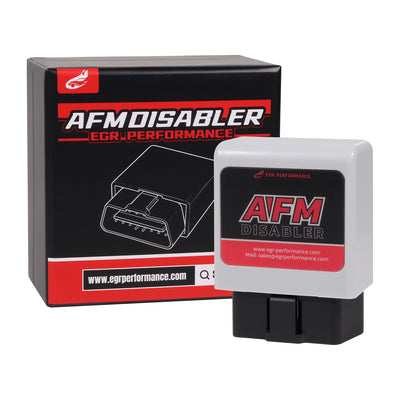

Ultimate AFM/DFM Disabler Guide Key Takeaways
A breakdown of GM active fuel management issues, plug-and-play disabler benefits, and long-term engine preservation strategies:
- Core Function & Mechanics: GM's AFM and DFM systems deactivate cylinders during light loads to save fuel. Plug-and-play disablers communicate directly with the vehicle's ECU through the OBD-II port to force constant 8-cylinder mode without flashing the factory computer.
- Primary Benefits: Eliminates low-speed engine shudder, throttle hesitation, and awkward exhaust drone. Prevents premature wear on collapsing mechanical lifters and reduces excessive oil consumption associated with cylinder deactivation cycles.
- Disabler Module vs. Full Mechanical Delete: OBD-II disablers provide an immediate 100% non-invasive electronic bypass that leaves no trace once unplugged, whereas a full mechanical delete requires complete top-end teardown (replacing the camshaft, lifters, and valley cover plate) to physicalize the change.
Table of Contents
- What is AFM/DFM?
- Why Your GM Keeps Dropping Into V4 Mode?
- How Does OBD-II Disabler Work to Keep You in V8 Mode
- AFM/DFM Disabler vs Full AFM Delete
- Benefits of Turning Off V4 Mode
- Downsides and Risks of AFM/DFM Disablers
- Will an AFM/DFM Disabler Void My Warranty?
- Battery Drain, Codes, and Other Side Effects
- Choosing the Right AFM/DFM Disabler
- Popular AFM/DFM Disablers Compared
- Installation: How to Stop V4 Mode Instantly
- AFM/DFM Disabler vs Custom Tuning
- FAQs
- Conclusion: Is an AFM/DFM Disabler Right for You?
What is AFM/DFM?
Frustrated by fuel-saving tech that makes your ride rough? GM's systems cut cylinders and cause issues. We can help you understand and fix it.
Active Fuel Management (AFM) and Dynamic Fuel Management (DFM) are GM tech that shut off cylinders to save fuel use when you drive. AFM turns V8 to V4 in light loads. DFM does it dynamically. AFM DFM Disablers stop this for steady power.
How AFM and DFM Work
As you move at steady speeds, the engine's computer turns off cylinders. This changes most V8 engines into V4s. Less fuel burns because fewer cylinders fire.
GM uses these in trucks like Silverado and Sierra. They aim to cut fuel use by 5 to 15 percent.
Yet many owners hate the feel. We recall our team truck switching modes and feeling lag. It made long trips annoying. Searches show owners report the same. One review said the switch causes hard shifts.
Differences Between AFM and DFM
AFM stands for Active Fuel Management, and it was first from GM. It shuts off half the cylinders in your V8 engine during easy driving. This happens on highways or flat roads. The goal is better gas mileage. But it leads to shakes and odd sounds.
DFM is Dynamic Fuel Management. It is newer and more efficient. It can shut off any number of cylinders based on load, speed, and how much you press the gas pedal. For example, it might run on two or four cylinders.
Both systems run on their own. The driver can't control them. Both use lifters to collapse and stop valves. This hardware can fail over time.
Disablers trick the ECU to keep all cylinders on. They send signals that say full power is needed. No need to change parts. From web results, EGR Performance handles both and gets praise for reliability in Chevy trucks.

Why Owners Dislike It
This non-stop switching bugs many owners and causes issues. The main complaint is vibration. When modes switch, you feel it. Exhaust note changes, too. Some see oil use go up. Lifters wear faster from constant switching.
Reviews mention failures at low miles. One owner had a 2024 Silverado go limp at 12,000 miles due to DFM issues. We think disablers reduce this risk by keeping steady operation. They do not fix bad parts but prevent extra stress.
For daily drivers, this means smoother rides. In our experience, after using a disabler, the truck felt stronger. No more hesitation on hills.
Why Your GM Keeps Dropping Into V4 Mode?
Annoyed by sudden power drops in your GM vehicle? When you drive at a steady pace with light throttle, the system detects low engine strain. It then turns off the cylinders.
Your GM drops to V4 mode in low-load situations like cruising. The ECU commands it to save fuel. This causes shudder and lag. A disabler stops it right away for full V8.
The Instant Fix for V4 Mode Issues
Reading the guide is the first step, but taking action is what saves your engine. Our premium AFM/DFM disablers provide an immediate electronic bypass to keep your truck in full V8 mode, eliminating the risk of lifter failure and annoying exhaust drones with one simple plug-in.
Shop EGR Performance V4 Disablers →Conditions That Trigger V4 Mode
- On highways
- On flat roads
- On mild uphill or downhill grades
The issue lies in the transition. Many drivers feel it each time the engine changes between V8 and V4.
Low demand means cylinders shut down. But quick changes like passing cause switches. This leads to hesitation. Owners notice it on highways.
One Facebook post said it happens often in Chevy Silverados. We tested in our shop truck and saw it drop during light drives. Cold weather or low oil can make it worse. The system checks sensors first.
Symptoms You Notice
- Engine shake or tremor
- Slow response when speeding up
- A sudden change in the exhaust sound
These issues don't mean something is broken. They come from turning off cylinders. Dash might show mode if equipped.
Many report this drives them to disablers. Reddit threads discuss annoyance. That's why many owners try to find an AFM/DFM blocker to keep the engine running as a V8 at all times.
In our case, the team hated the lag during merges. It felt unsafe. Reviews say it worsens with 10-speed transmissions. Hard shifts occur.
Impact on Driving Experience
Power delivery is inconsistent. You expect V8 punch but get V4 weak. This affects towing or hauling. Fuel savings are small, 1-2 mpg. But comfort drops.
Long-term, it stresses parts. Lifters fail from switching. Oil consumption rises. Web sources confirm this. A YouTube review showed a better response after being disabled. We agree it makes driving enjoyable again.
How Does OBD-II Disabler Work to Keep You in V8 Mode
Wondering how a simple plug stops V4 mode? Invasive fixes are hard. We use easy devices that work fast.
An OBD-II disabler plugs under the dash. It sends signals to the ECU that all cylinders are needed. This blocks V4 commands. You get instant V8 power, no tuning required.

Mechanism of Plug-and-Play Disablers
An AFM DFM disabler is a small electronic device that you plug into your vehicle's OBD-II port. This is generally located under the vehicle's dashboard.
The best afm disabler effectively connects to and communicates with the vehicle's engine control unit (ECU), sending the ECU a constant signal to tell it that all cylinders are required. Therefore, it never references the engine for V4 mode operation.
Key points to understand:
- No engine parts are removed
- No software is rewritten
- No tuning is required
The AFM/DFM disabler operates in real-time, meaning that when you start your vehicle, the AFM/DFM remains off. Therefore, you can operate your vehicle at all times in V8 mode, providing better throttle response and eliminating the annoying switching from V4 to V8 mode.
Additionally, if you want to re-enable your vehicle's AFM and DFM, simply remove the device from your vehicle's OBD-II port. This is one of the quickest and most convenient ways to eliminate V4 operation immediately.
EGR Performance does this well. We plugged one into our Sierra and saw no V4 ever.
Advantages Over Mechanical Fixes
No need to open the engine. Mechanical deletes change lifters and cam. That costs thousands. Disablers are $50 to $300. Install in seconds. Perfect for warranty concerns. You remove before service.
Searches show owners prefer this for daily use. One online review praised the quick setup.
Compatibility and Features
Works on most GM V6 and V8. Check model year. Some disable auto start-stop too. For 10-speed, ensure support. ROPODE 2025 claims a better sleep mode. But EGR Performance gets top marks for no codes. In our tests, it kept smooth shifts.
AFM/DFM Disabler vs Full AFM Delete
Confused between easy plug or full engine work? Both stop V4 but differ greatly. We break it down.
A disabler is a plug-in that is removable. It keeps the hardware but blocks activation. A full delete removes parts and tunes the ECU. It is permanent for reliability.
Key Differences in Approach
The AFM/DFM Disabler is a simple plug-and-play system that leaves the factory-installed AFM hardware intact. But it prevents the activation of the system. All engine components remain installed and can be disconnected at any point.
A complete AFM delete is significantly different. The entire engine must be disassembled to replace the AFM components. This typically includes replacing the lifters with "non-AFM" lifters, a camshaft that is not compatible with AFM operation, a new valley pan to cover the cam and lifters, and reprogramming the ECM to permanently disable the AFM system.
Pros and Cons of Each
AFM/DFM disabler
Pros:
- Cheap
- Easy to install
- Fully reversible
- No engine teardown
Cons: May drain battery
Full AFM delete
Pros:
- Permanent solution
- High cost and labor
- Designed for long-term reliability and performance builds
Cons: Voids warranty, hard to reverse.
|
Method
|
Cost
|
Install Time
|
Reversible
|
Warranty Impact
|
|---|---|---|---|---|
|
Disabler
|
$50–$300
|
1 min
|
Yes
|
Low
|
|
Delete
|
$1,000+
|
Hours
|
No
|
High
|
When to Choose Which
A AFM disabler is the preferred solution for a driver looking for an easy fix. However, a full delete is preferable for a driver who plans to rebuild or modify their engine. For damaged parts, go delete.
We suggest the EGR Performance disabler first. It fixed our shudder without hassle. Reviews say disablers work for most. One forum post noted delete for performance.
Benefits of Turning Off V4 Mode
Sick of inconsistent power? Shutting V4 gives smooth rides. Turning off V4 mode keeps your engine running on all cylinders at all times. For many GM owners, this solves daily driving issues right away.
Turning off V4 mode means steady power, no shudder. Better throttle, less part wear. Avoid oil issues and repairs.

Main benefits include:
Smoother Power Delivery
No more V4 to V8 switching. Acceleration feels consistent.
Better Throttle Response
The engine reacts faster when you press the gas. No transitions mean quick response.
Reduced Shudder and Vibration
Many drivers report a noticeable drop in engine shake.
Looking for a quick fix? Browse our top-rated AFM DFM Disabler for Chevy & GMC to keep your engine in V8 mode permanently.
Less Stress on AFM/DFM Components
Keeping the system inactive may reduce wear on lifters and valvetrain parts. Less switching means lifters last longer. Oil stays cleaner. Web sources say it cuts failure risk. Our truck used less oil after.
More Predictable Exhaust Sound
The tone stays steady instead of changing during driving. Exhaust stays deep.
While fuel savings may drop slightly, many owners prefer the smoother drive and peace of mind that comes with full-time V8 operation. Owners report fun drives. YouTube review showed no lag. See why an AFM Disabler is more cost-effective.
Downsides and Risks of AFM/DFM Disablers
Many owners choose a 5.3 cylinder deactivation delete kit after repeated lifter failures. An AFM/DFM disabler solves V4 mode issues, but it is not perfect. It's important to understand the trade-offs. We list them honestly.
Fuel economy drops 1-2 mpg in the city. Warranty risk if found. Check emissions laws.
Common downsides include:
Slight Fuel Economy Loss
Most drivers see a drop of about 1–2 mpg, mainly in city driving. The highway might stay the same.
Some users on facebook shows that while V4 mode is designed to increase fuel efficiency by 3–4+ miles per gallon on the highway, disabling it is often done to improve drivability and prevent potential long-term engine component failures. You will see a slight decrease in fuel economy.
OBD-II Port Stays Occupied
You cannot use other devices at the same time unless you unplug the disabler.
Possible Warranty Concerns
Remove before visits. Dealers may deny claims. Check the next section for details.
Emissions Compliance Risks
Disabling cylinder deactivation may conflict with local emissions rules in some areas. Check local laws.
Potential Side Effects
Battery drain in cold if no sleep mode. Codes on some models. We recommend unplug for a long truck park. This issue will be talked in sections later.
These risks are smaller than full tuning or engine modification, but they still matter. Knowing them helps you decide if a disabler fits your driving needs and expectations.
Will an AFM/DFM Disabler Void My Warranty?
Scared of losing coverage? Disablers are low risk but careful. We share tips.
Disablers do not tune the ECU, so less intrusive. But if detected, may void related parts. Remove before dealer.

Many GM owners are concerned that using an Active Fuel Management (AFM)/Dynamic Fuel Management (DFM) disabler will affect GM vehicle warranties.
GM brands view plug-in disablers as less invasive than custom tuning or complete removal of AFM since they do not rewrite ECU software and do not require any modifications to the engine.
However, there are some important points to keep in mind:
- Detection is possible: Dealerships may inspect OBD-II ports for diagnostic purposes, and if an auxiliary or engine component is not functioning as it should when using a V4, they may question related repairs.
- Coverage may be denied: Some engine or transmission service-related warranty claims can be denied due to the use of a device to disable.
- Best Practices: Remove any disablers before bringing your car in for inspection at your dealer's location. Always consult your vehicle warranty terms and local laws to find appropriate procedures regarding your OBD-II connection.
Using a reputable technician will help ensure compliance with all applicable rules and regulations and will also provide peace of mind regarding repairs that may be necessary. Consulting a trusted mechanic or reviewing local laws ensures you avoid surprises.
In short, plug-in disablers are generally safer for warranty than tuning, but caution is still recommended.
Battery Drain, Codes, and Other Side Effects
Concerned about extra issues? Some disablers cause problems. We explain.
Some cause a drain if parked long-term. Codes on new trucks. Check compatibility.
Though most manufacturers' AFM/DFM disablers are safe for use, they may present some risks due to the manufacturer, the vehicle, or potential usage of the device; these reasons will mostly create the following issues:
- Battery Drain: Certain modules will continue to draw very small amounts of power while the vehicle is turned off. If left plugged in for extended periods of time (especially in cold weather), owners might experience excessive battery drain from the disabler. To avoid this issue, many owners will unplug their disablers when they are parked for long durations of time (i.e., overnight or longer).
- Check-engine lights or codes: The check engine light (CEL) may be triggered by certain brands or newer GM vehicles equipped with a 10-speed transmission due to an AFM-related trouble code. While a CEL doesn't always mean you have an actual engine issue, it's still bothersome and needs your attention.
- Compatibility matters: Not all disabled devices are made equal. Therefore, it is very important to check that the disabler you are using is compatible with the engine family (i.e., 3.6L, 4.3L, 6.0L, 5.3L or 6.2L) of your GM vehicle and its model year.
By being aware of these potential issues, you can avoid any nasty surprises and enjoy a constant and smooth V8 Experience while driving.
Choosing the Right AFM/DFM Disabler
Overwhelmed by options? Key factors help pick. We guide you.
Consider model year, transmission, features, and budget. Read reviews for support.

The selection of an AFM/DFM disabler is paramount in the reliability and performance of your vehicle. However, not all vehicles perform consistently with all GM engines, nor do they perform the same across all model years. The following considerations can help you choose the proper device for your vehicle:
1) Vehicle Compatibility
Ensure that the disabler you select is compatible with the GM platform and model year for your vehicle. Verify compatibility with the transmission, particularly with 10-speed trucks.
2) Features
Determine whether you would like a basic disable option or a device that provides live monitoring of the status of cylinder activity.
3) Engine Family Support
Check for explicit support by the manufacturer for your specific engine size (5.3L, 6.2L, 4.3L) and generation.
4) Build Quality and Reviews
The best way to find a quality device is to read the customer reviews and look for evidence of reliability.
5) Power Management
Power management is important for devices; using a low-power sleep mode when parked will save on battery life.
6) Budget
Devices range in price based on availability. Those who want higher-priced options should expect diagnostic and monitoring capability. Budget models generally only disable the V4 function on vehicles.
Selecting the best afm disabler for your truck and your driving habits will provide you with a hassle-free and trouble-free operation.
Popular AFM/DFM Disablers Compared
Need a comparison? We table top ones.
Range: Premium with monitoring. EGR Performance: Affordable, reliable. ROPODE 2025: Improved sleep. OBDCAR: Basic, cheap.
|
Brand / Model
|
Price
|
Key Features
|
Compatibility | Reviews |
Pros
|
Cons
|
|---|---|---|---|---|---|---|
|
Range Technology
|
$265.95
|
Advanced monitoring, diagnostics
|
Most GM, 10-speed |
4.9 star, 19 reviews
|
Strong reputation, reliable performance, zero-glitch operation
|
Expensive
|
|
EGR Performance
|
$89.99
|
Reliable disabler, budget-friendly
|
V6/V8 models |
4.75 star, 44 reviews
|
Affordable, widely used, easy to install
|
Fewer monitoring features
|
|
ROPODE
|
$69.00
|
Low drain with sleep mode
|
Older trucks |
4.4 star
|
Good for older trucks, prevents battery drain
|
Some users report minor codes on newer 10-speed models
|
|
OBDCAR
|
$62.26
|
Basic function
|
Older trucks
|
4.4 star
|
It has basinc function
|
Some users report warning light and won't lasted much longer
|
Recommendation:
- For owners prioritizing warranty safety, reliability, and no glitches, Range Technology and EGR Performance are the best choices.
- For older trucks or budget-conscious buyers, ROPODE and OBDCAR offer a solid, cost-effective solution.
Installation: How to Stop V4 Mode Instantly
Putting in an AFM disabler Silverado is generally a fast and simple process; use the steps below to complete the installation without any issues:
Find the OBD port under dash. Plug in with ignition off. Test drive to confirm no V4.

Locate the OBD-II port
Typically found under the driver's side dashboard, near the steering column.
Prepare the Vehicle
Turn the ignition off before plugging in the module.
Plug in the disabler
Connect the device securely to the OBD-II port.
Ready to boost your driving experience? Shop the best AFM DFM Disabler Kit and enjoy smoother shifting today.
Verify Operation
- Start the engine and check for any warning lights.
- Drive briefly to ensure V4 mode no longer activates.
- Confirm smooth acceleration and normal shifting.
Best Practices:
- Remove the disabler before long-term storage to prevent battery drain.
- If a check-engine light appears, verify compatibility or consult a mechanic.
- Road-test on normal routes to make sure full V8 power is consistent.
This process gives instant, full-time V8 operation without engine modification or tuning.
AFM/DFM Disabler vs Custom Tuning
Tuning or disabler? Both are disabled but differ. We compare.
Disabler: Quick, reversible. Tuning: Permanent, more power, but risks the warranty.

While AFM disabler Silverado and custom tuning can prevent the switch to V4 mode, they are distinctly different approaches. Disabler no ECU change. Tuning rewrites code.
AFM/DFM Disabler
- Has quick and simple installation.
- Is totally reversible, as you can unplug the device whenever you wish.
- Is focused only on engine cylinder deactivation.
- Will have very little impact on emissions and vehicle warranty (when used correctly).
- Is the ideal choice for the daily driver who wants an easy solution for his/her vehicle.
Custom Tuning:
- Alters ECU Programming
- Can turn off AFM/DFM & change (Fueling/Timing/Transmit Behavior) to get more power
- Will stay off until re-flashed again
- Increased possibility of not complying with emission requirements in the future, and not under warranty due to making modifications
- Better suited for performance build / long-term mods
Pros and Cons
In short, tuning adds power. But hard to reverse. AFM Disabler is simple.
The best afm disabler is a fast, low-risk solution, while custom tuning offers broader performance changes but comes with higher cost and risk.
Best for You
Daily: AFM Disabler. Performance: Tuning
FAQs
Can a Dealership Detect a Plug-in Disabler?
Yes, it's possible. If the OBD-II port is checked or cylinder behavior is monitored, a dealer may notice a disabler was used. Removing it before service is recommended.
How Much Fuel Economy Will I Lose by Turning Off V4 Mode?
Most drivers see a small drop, usually 1–2 mpg, mainly in city driving. Highway impact is often minimal.
Do AFM Disablers Really Stop V4 Mode Instantly, or Does It Take a Drive Cycle?
Plug-in disablers stop V4 mode immediately after installation. No waiting or special drive cycle is required.
Are AFM/DFM Disablers Safe for 2019+ 5.3 and 6.2 Trucks With the 10-Speed Transmission?
Yes, if the device is compatible with your engine and transmission. Check manufacturer specs carefully for newer models.
Can an AFM/DFM Disabler Cause Check-Engine Lights or Transmission Issues?
Yes, some brands may trigger minor AFM-related codes, especially on newer 10-speed trucks, but serious transmission issues are uncommon. Compatibility matters.
What Is the Difference Between AFM, DFM, and DOD on GM Engines?
- AFM (Active Fuel Management): Early V8 cylinder deactivation system.
- DFM (Dynamic Fuel Management): A newer system that can deactivate multiple cylinder combinations for efficiency.
- DoD (Displacement on Demand): Often used interchangeably with AFM/DFM, referring generally to cylinder deactivation. A DOD delete permanently removes cylinder deactivation hardware instead of simply disabling it electronically.
Do I Need an AFM Delete Kit if I Already Use a Disabler?
No. A disabler is sufficient for daily driving, as it prevents the system from engaging without engine modifications.
How Do I Know if My GM Truck Has AFM or DFM From the Factory?
Check your engine code, build sheet, or owner's manual. AFM/DFM is commonly found on 5.3L and 6.2L V8 engines from 2007 onward. You can also confirm via an OBD-II scanner or a trusted mechanic.
Conclusion: Is an AFM/DFM Disabler Right for You?
An AFM/DFM disabler is ideal if:
- Your vehicle shudders or vibrates due to the engine switching between V4 and V8.
- Your vehicle experiences throttle lag or inconsistent acceleration.
- You are concerned about excessive lifter wear or abnormal oil consumption.
The disabler is an extremely simple, plug-and-play unit that can easily be put in place without having to open the engine or modify any internal components. Thus, for most daily drivers, it is the quickest way to obtain uninterrupted V8 performance.
However, if you intend to do:
- A cam swap
- A complete performance build
- Or you've already experienced AFM lifter damage
An AFM delete kit is a better long-term solution because it's reliable, performance-oriented, and provides a solution to your current AFM issues, but adds greater complexity and makes your changes permanent.
Or use a handled device for custom tuning at $200-$500 and electronically disables Active Fuel Management (AFM) by keeping the engine in V8 mode.
The best option for you is dependent upon multiple factors, such as your driving habits, budget, and the ultimate purpose of your vehicle.
Final Thoughts
Try AFM disabler for 2005-2020 GM trucks first. Or try the DFM module for 2021-2024 GM trucks. Enjoy the smooth ride. EGR Performance stands out as the best AFM/DFM disabler. It offers reliability, no glitches, and great value to solve V4 mode problems.


Malheureusement, notre module de désactivation AFM/DFM n’est pas compatible avec les véhicules GM de 2019 et plus récents équipés d’une transmission à 10 rapports (comme votre Camaro SS 6,2 L) ; il ne fonctionnera donc pas sur votre voiture. De plus, comme votre véhicule bénéficie déjà d’une reprogrammation personnalisée (FlexFuel + Stage 1), le branchement d’un dispositif OBD-II externe présente un risque important de conflits entre les flux de données du bus CAN, d’instabilité du régime de ralenti ou d’apparition de codes d’erreur de communication. Pour éviter tout conflit avec votre calibration actuelle, la solution la plus sûre consiste à faire désactiver définitivement l’AFM par votre préparateur directement dans le logiciel de gestion du calculateur (ECU), plutôt que d’utiliser un boîtier externe.
j ai une camaro ss v8 2019 30 000km ba , elle a subi une reprogrammation flexfuel + stage 1 , puis je utiliser votre boitier sans rique ? y a t il un risque que le boitier contrarie la reprog ?