
⚡ 30-Second Summary: Why GM AFM/DFM Lifters Fail
General Motors' Active Fuel Management (AFM) and Dynamic Fuel Management (DFM) systems deliver a modest 5% to 8% improvement in real-world fuel economy under light-load cruising conditions. However, this efficiency comes at the cost of complex valvetrain hardware that is prone to premature mechanical failure. Driven by hydraulic oil pressure drops, varnish accumulation, and rapid high-frequency cylinder cycling, special collapsible valve lifters regularly stick, collapse, or bend pushrods. Early warning indicators include noticeable drivetrain transition shudder, accelerated engine oil consumption, and P0300 random misfire codes. Installing a plug-and-play AFM/DFM disabler module is the most practical preventive step GM V8 owners can take to lock the engine in full V8 mode and stop lifter damage before it escalates into costly internal engine repairs.
Table of Contents
- Introduction
- What Is GM Cylinder Deactivation and How Does it Work?
- Why GM AFM and DFM Systems Are Failing
- Early Warning Signs & Affected Models: Spot AFM/DFM Issues Early
- Best Ways to Prevent AFM and DFM Damage on GM Engines
- Continue Driving vs. AFM/DFM Disabler vs. ECM Tuning vs. AFM Delete vs. Repair
- Is an AFM/DFM Disabler Better Than Waiting for Failure?
- FAQs
- Final Verdict: Why GM Cylinder Deactivation Is a Long-Term Reliability Concern
Introduction
The collapsible lifters in AFM and DFM can stick or collapse, causing GM cylinder deactivation problems. These systems are designed to turn off cylinders to conserve fuel during low loads. The hydraulic stress, fluctuating oil pressure, and varnish accumulation are constant problems with the hardware. This leads to ticking, misfiring and camshaft wear over time.
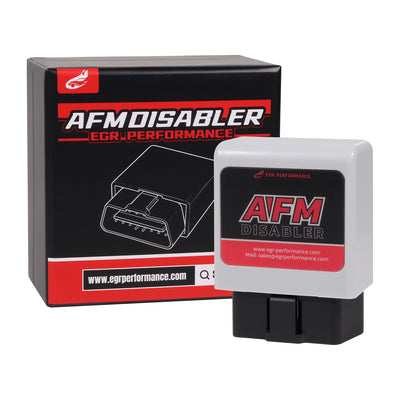
GM Active Fuel Management (AFM) and Dynamic Fuel Management (DFM) deactivate cylinders under light load using collapsible hydraulic lifters and oil solenoids. These systems fail through lifter sticking, pin lockup, or cam lobe damage, causing ticking, misfires, and repair bills of $3,500 to $10,000+. An OBD-II disabler like the EGR Performance AFM/DFM Disabler keeps engines in full V8 mode without touching the factory ECU.
Not all noises are AFM or DFM related, so accurate diagnosis is important first. This guide will cover the reasons why these systems fail, what models are vulnerable, and how to avoid costly repairs.
What Is GM Cylinder Deactivation and How Does it Work?
AFM (Active Fuel Management) drops fixed V8-to-V4 cylinders under light load using collapsible lifters and solenoids. DFM expands this to 17 dynamic patterns across every cylinder, exposing all eight lifters to failure. The hardware collapses to stop valve operation on selected cylinders while hydraulic oil pressure and solenoids control the engagement.
Protect Your GM V8 From Catastrophic Lifter Failure.
Stop letting complex cylinder deactivation systems threaten your engine with collapsed lifters and wiped camshaft lobes. Our AFM/DFM Disablers from EGR Performance plug directly into your OBD-II port to keep all cylinders firing 100% of the time—stabilizing oil pressure, eliminating destructive valvetrain shock, and bulletproofing your GM truck for the long haul.
Shop AFM/DFM Disablers→GM cylinder deactivation is a fuel-saving system that turns off some of the cylinders when driving at a low speed. It features unique collapsible lifters which prevent valve motion on selected cylinders.
GM uses two versions of this technology.
- AFM (Active Fuel Management): The older system, also known as Displacement on Demand. Transitions from V8 to V4 with a fixed cylinder pattern.
- DFM (Dynamic Fuel Management): A newer system using Dynamic Skip Fire. It can deactivate up to 6 cylinders simultaneously and can run up to 17 patterns.
DFM equips all eight cylinders with collapsible lifters. This increases the number of parts that can fail. Each lifter is engaged or disengaged by hydraulic oil pressure and solenoids. Any disruption of that oil flow can cause cylinder deactivation problems.
You must know how to deactivate AFM on silverado trucks before it causes any damage.
Why GM AFM and DFM Systems Are Failing
ECM signals the VLOM solenoid, which sends hydraulic oil to the lifter, actuating the locking pin. Normal operation collapses the lifter safely. Failure modes include the pin sticking locked, leaving the lifter collapsed (dead cylinder) or unlatched (cam damage). Varnish, oil pressure drops, and mechanical wear turn this sequence into a failure mode.
The primary reason for the failure of GM AFM and DFM systems is the inability of the collapsible lifters to withstand continuous hydraulic cycling. A solenoid is energized by the ECM and oil is directed to the lifter, and a locking pin is actuated. During normal operation, the lifter collapses and the valve remains closed safely. In failure mode, the pin sticks or locks, leading to GM cylinder deactivation problems like dead cylinders or cam damage.

Collapsible Lifters Can Stick, Collapse, or Lock
Hydraulic locking pins can stick, collapse, or lock because of wear or loss of oil pressure. If a lifter remains in a fixed position, the valve will not function and the cylinder will be dead.
DFM Increases Mechanical Complexity and Exposure
DFM puts collapsible lifters on every cylinder instead of just four. This adds more failure points and increases the risk of GM DFM problems.
Oil Pressure Fluctuations Trigger Operational Malfunctions
Oil pressure fluctuations cause operational malfunctions in these systems. A lifter can latch incorrectly even with a slight loss of oil pressure.
Varnish and Sludge Buildup Accelerate Internal Wear
Long oil change intervals allow varnish and sludge to accumulate inside the engine. This accumulation can cause sluggish solenoid response and exacerbate cylinder deactivation problems.
Camshaft Lobe Wear Often Follows Lifter Failure
A stuck lifter often damages the matching camshaft lobe. This makes a minor problem into a much bigger and expensive repair.
Diagnostic Tips: Not Every Issue Is AFM/DFM
Exhaust manifold leaks and fuel injector noise cause some ticking noises. These are eliminated by proper diagnosis before pointing fingers at the lifters.
Early Warning Signs & Affected Models: Spot AFM/DFM Issues Early
Transition shudder and hesitation happen during AFM/DFM mode changes. Abnormal oil consumption and intermittent misfire codes (P0300/P030X) during switching are common. The 5.3L, 6.0L, and 6.2L V8s in Chevrolet Silverado, Suburban, Tahoe, GMC Sierra, Yukon, and Cadillac Escalade are most affected.

Transition shudder, oil loss, and misfire codes are the first indications of AFM/DFM failure. It can save you thousands of dollars in repairs if you catch them early.
Transition Shudder and Hesitation (V8/V4/Dynamic Switching)
Transition shudder occurs when the engine is switching between cylinder modes. Under light load, you may experience throttle lag or vibration. This is usually the first symptom of GM active fuel management issues.
Abnormal Oil Consumption (Ring-Seal & Vacuum Issues)
Abnormal oil consumption can appear before any ticking noise starts. During long periods of deactivation, oil is drawn into the combustion chamber. This is one of the important points to consider while researching a 5.3 AFM oil consumption fix.
Before a collapsing hydraulic lifter causes severe ticking or pushrod damage, low-pressure cylinder vacuum states during deactivated modes often draw crankcase oil past the piston rings, creating heavy carbon buildup. To see how ring fouling and VLOM pressure drops accelerate valvetrain failures, read our technical breakdown on GM oil consumption.
Intermittent Misfire Codes During Mode Changes
Misfire codes like P0300 or P030X often appear right when the ECM switches modes. These codes are not random misfires, but are related to solenoid activation problems.
Affected GM Vehicles & Engine Platforms
Several GM models use AFM or DFM engines.
- Chevrolet Silverado, Suburban, Tahoe
- GM C Sierra, Yukon
- Cadillac Escalade
They are usually powered by a 5.3L, 6.0L or 6.2L V8 engine.
Diagnostic Note: Rule Out False Alarms Before Tear-Down
Always rule out simpler causes before assuming lifter failure. The sound of a high-pressure fuel injector and exhaust manifold leaks can be similar. If you need a complete diagnostic walkthrough, check out Lifter Failure Symptoms & How to Diagnose.
Best Ways to Prevent AFM and DFM Damage on GM Engines
Strict oil change intervals with high-grade synthetic oil, early detection of ticks or shudder, and disabling cylinder deactivation early stop the stress cycles that destroy lifters and cams.

The most effective way to avoid AFM and DFM damage is through strict maintenance combined with early detection. Little things now can save you a big repair bill later.
Strict Oil Change Intervals and Quality Specifications
Shorter oil change intervals and high-quality synthetic oil help to reduce varnish and sludge. Oil at the proper fill level prevents pressure loss, which causes lifter faults.
Early Detection and Diagnostic Testing
Catching symptoms early prevents small issues from becoming expensive repairs. Look into any valvetrain tick, shudder or oil drop immediately.
A good diagnostic strategy involves:
- Recording your year, model, engine, transmission, mileage, and VIN
- Scanning for diagnostic trouble codes (DTC)
- Noting when symptoms occur: cold, hot, cruise, load or transition
- Checking oil level, condition and service history
- Requesting a technician to verify the problem is a valvetrain issue
Disabling Cylinder Deactivation Early
Many owners choose to turn off active fuel management before symptoms even start. The constant switching cycle is reduced, which decreases hydraulic and mechanical stress on the lifters.
This is one of the reasons why drivers consider how to disable cylinder deactivation on Silverado models in advance.
Continue Driving vs. AFM/DFM Disabler vs. ECM Tuning vs. AFM Delete vs. Repair
Continue stock operation leaves the factory system active but offers no protection. An OBD-II disabler keeps all cylinders active full-time without reprogramming the ECU. ECM tuning changes deactivation behavior. A mechanical delete removes AFM components during engine work. Mechanical repair fixes failed parts. The table below shows the best fit for each situation.
Each option solves part of the problem but has limits. Choosing the right one depends on your current symptoms and priorities.
|
Criteria
|
Continue Stock Operation
|
OBD-II AFM/DFM Disabler
|
ECM Tuning
|
Mechanical AFM Delete
|
Mechanical Repair
|
|---|---|---|---|---|---|
|
What it does
|
Leaves factory AFM/DFM active
|
Commands full-cylinder mode on compatible vehicles
|
Changes deactivation behavior via calibration
|
Removes AFM components during engine work
|
Diagnoses and repairs failed parts
|
|
Best fit
|
No symptoms, factory-focused owners
|
Reversible prevention, no teardown
|
Owners working with a trusted, reputable tuner
|
Engines already being rebuilt
|
Vehicles with confirmed faults
|
|
What it cannot do
|
Prevent wear or guarantee no failure
|
Fix hardware that already failed
|
Repair mechanical damage
|
Avoid teardown labor and cost
|
Guarantee other parts won't fail later
|
Preventing catastrophic valvetrain collapse requires keeping the solenoid-operated oil control valves from cycling the dynamic lifters into deactivated positions. For a complete step-by-step walkthrough comparing electronic bypass adapters, custom ECM tuning software, and mechanical delete kits, follow our guide on how to disable AFM on gm engine.
Will an AFM disabler void my warranty?
An AFM/DFM disabler may or may not impact your warranty, depending on the terms and conditions of your vehicle and the warranty.
Warranty results vary by vehicle, warranty coverage and local law. A dealer needs to determine if a modification resulted in a repair requirement. Always read the warranty before installing any device.
Will disabling AFM/DFM reduce fuel economy?
In most cases, when deactivation would otherwise be beneficial, probably. AFM/DFM is designed to increase efficiency under light load conditions, and full-time operation may reduce economy. The real-world economy is estimated to increase by 5 to 8 percent with cylinder deactivation.
Is it legal to disable AFM or DFM?
Modification, inspection and emissions regulations are different depending on the location. A disabler is not the same as removing emissions equipment, but please check local requirements first.
Is an AFM/DFM Disabler Better Than Waiting for Failure?
Yes, an AFM/DFM disabler is usually more cost-effective than waiting for failure, as prevention is much cheaper than repair.
There are three levels of repair costs.
- Minor Scenario: Replacing failed lifters, guides, and head gaskets
- Moderate Scenario: Replacing all lifters, a new camshaft, and labor
- Major Scenario: Full top end rebuild or replacement engine
The high cost of labor is due to the fact that the cylinder head has to be removed to access the internal lifters.
A disabler is inexpensive and allows the engine to remain in full V8 configuration without any teardown. The delay of failure can result in a lifter that sticks, a cam lobe that is wiped out, and a $3,500 to $10,000-plus repair bill.
Using a plug-and-play OBD-II module is the simplest way to force full-time 8-cylinder operation without rewriting engine control software or voiding dealership warranties. To evaluate power delivery gains, battery draw considerations, and long-term valvetrain protection, consult our detailed analysis on AFM disabler pros and cons.
If your engine is mechanically sound, you may want to consider a plug-and-play solution such as the EGR Performance AFM/DFM Disabler.
- No Tools or Wire Cutting Required: Plugs into the OBD-II port without requiring any tools or wire cutting.
- Full-Time V8 Operation: Tells the ECM to run all cylinders.
- Non-Invasive: Does not affect the factory ECU and can be undone at a moment's notice when unplugged.
Important Positioning Note: An OBD-II disabler is strictly a preventative tool. It cannot unstick a lifter or repair a worn camshaft that has already failed. If there is existing damage, it requires a qualified technician.
Want to stop cycling before it turns into GM DOD lifter failure? Check out the EGR Performance AFM/DFM Disabler to keep your GM V8 running in full-cylinder mode.
FAQs
Why do GM AFM and DFM lifters fail?
They collapse because of collapsible pins that get stuck during continuous hydraulic cycling. Over time these GM active fuel management issues are compounded by oil pressure loss and varnish buildup.
Can a bad lifter cause severe engine damage?
Yes. A stuck lifter will typically cause the other camshaft lobe to wear. If left unchecked, this GM DOD lifter failure can result in a complete top end rebuild.
Should I disable AFM/DFM before symptoms appear?
Yes, particularly if you're driving a lot of light-load highway miles. If you decide to turn off active fuel management early, you're not putting as much stress on the hardware.
Can low oil levels or bad oil cause AFM lifter failure?
Yes. Low or dirty oil will impact hydraulic pressure for latching lifters. This can be prevented by using fresh synthetic oil after a proper 5.3 AFM oil consumption fix.
Will an AFM/DFM disabler void my vehicle warranty?
This will rely on your vehicle, warranty and local law. A dealer is responsible for deciding whether a modification has created a repair requirement. Always check your warranty first.
Is It safe to keep driving with symptoms like ticking?
No. Driving with ticking noises is risky. It can indicate that a lifter has already failed, and that camshaft damage is beginning. Have it diagnosed as early as possible.
What is the main difference between AFM and DFM?
The main difference between GM's Active Fuel Management (AFM) and Dynamic Fuel Management (DFM) is how many and which cylinders they can deactivate. AFM only shuts down a fixed set of four specific cylinders (turning a V8 into a V4), whereas DFM can independently deactivate any combination of cylinders across 17 different patterns, running on anywhere from one to eight active cylinders.
What are the earliest signs of AFM or DFM lifter failure?
The initial symptoms are transition shudder, hesitation and excessive oil consumption. Misfire codes may also occur before any ticking before changing modes.
Is a mechanical delete better than an OBD2 disabler?
A mechanical delete is a permanent solution that removes the failure-prone hardware, whereas an OBD2 disabler is a simple, temporary software workaround that leaves the original parts inside the engine. Whether one is "better" depends entirely on your budget, goals, and the current condition of your engine.
Can an AFM/DFM disabler fix an already collapsed lifter?
No. A disabler is just a way to avoid future cycling stress on healthy hardware. If a lifter collapses, it must be mechanically repaired by a qualified technician.
Does disabling AFM or DFM noticeably hurt fuel economy?
It can, because these systems are designed to increase efficiency when they are lightly loaded. In the real world, it is estimated that the economy can be improved by 5 to 8 percent with deactivation.
Which GM engines are most affected by cylinder deactivation issues?
The 5.3L, 6.0L and 6.2L V8 engines in the Silverado, Sierra, Tahoe, Suburban, Yukon and Escalade are most impacted. Some truck owners choose to deactivate AFM on silverado engines in particular.
Final Verdict: Why GM Cylinder Deactivation Is a Long-Term Reliability Concern
GM's AFM and DFM systems provide true efficiency benefits, but their hydraulic lifters pose a long-term reliability concern. If left unchecked, minor lifter problems can lead to serious camshaft and valvetrain damage.
Most owners will find it easiest to do three habits. Watch for symptoms early, carefully maintain the oil, and prevent damage by disabling deactivation.
Recommendation: When your GM V8 engine is healthy, a plug-and-play device such as EGR Performance AFM/DFM Disabler is a real solution. It is a practical and economical solution to GM cylinder deactivation problems.