


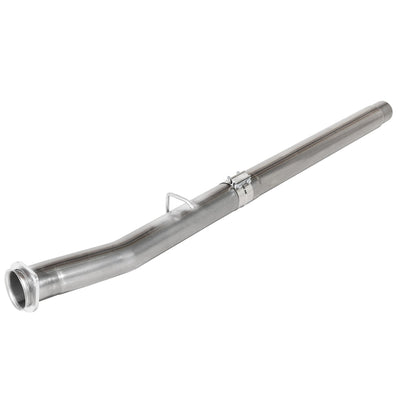
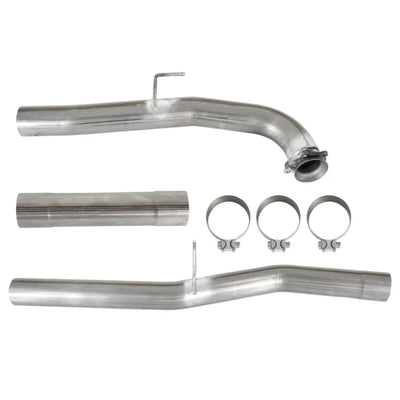


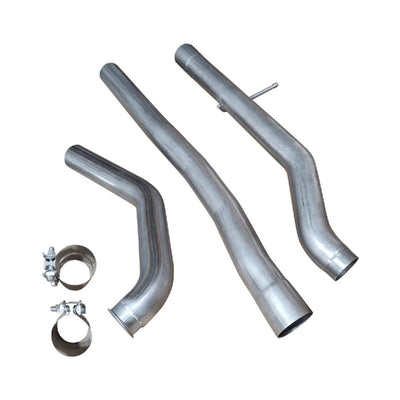

A delete pipe and a full turbo-back kit answer the same itch two different ways: the pipe swaps only the section carrying the emissions hardware and leaves the rest of the factory system in place, while the turbo-back replaces everything from the turbine outlet back, downpipe, piping, and tip included. Forum consensus lands on a conclusion that surprises first-time buyers: the performance difference between the two is small, because the restriction left with the deleted section, and the real difference is sound, scale, and budget, with pipes from the low hundreds and full systems multiples of that. Both routes remove emissions equipment, so both carry the same off-road-only legal standing and the same delete-tune requirement.
This comparison lays out what each box contains, what each costs, what each sounds like, and who each one suits, with the complete DPF delete collection covering the hardware side.
Table of Contents
Key Takeaways
- Scope: the pipe replaces only the DPF and catalyst section; a turbo-back kit replaces the whole system from the turbine outlet to the tip.
- Performance: forum consensus reports little to no difference between the two, because the restriction leaves with the deleted section either way.
- Sound: the delete pipe with the stock muffler retained stays moderate; the full system, especially straight piped, is the loud one.
- Cost: the pipe route runs from the low hundreds with budget options under 300; full turbo-back systems run to several times that.
- Effort: the pipe is a clamp-in swap in the deleted section's footprint; the full system adds downpipe access and hanger work end to end.
- Same rules: both remove emissions equipment, both need delete-capable tuning, both are competition and closed-course off-road only.
What Each One Actually Replaces
The turbo-back kit is the whole wardrobe. It starts at the turbine outlet with a new downpipe, runs new mandrel-bent piping the length of the truck, usually offers a muffler or straight-through option, and finishes with the tip, replacing rather than joining the factory system, which is why the box count and the install time both grow.
Owners at the turbo-back or delete pipe thread looking for a complete overhaul—such as a full 6.7 Cummins turbo-back exhaust system describe the choice exactly this way: the pipe solves the problem, the system re-dresses the whole truck.
Both Routes, One Aisle
Delete pipes for the DPF and catalyst sections, full turbo-back systems, and everything between, grouped by platform in the exhaust pipe collection. Off-road hardware, sold for competition and closed-course use.
What Is in Each Box
The unboxing tells the story faster than the spec sheet. A pipe kit is short: the straight-through section, clamps, and hanger hardware, everything else on the truck stays factory. A turbo-back kit arrives in more boxes than a pipe kit has parts, and that difference is the price difference in physical form.
- Delete pipe kit: the pipe section, band clamps, hanger brackets, and gaskets; factory system retained around it.
- Turbo-back kit: downpipe, intermediate piping in 4 or 5 inch, delete section incorporated, muffler or straight-through option, tip, clamps, and full hardware.
Cost and Effort Compared
The money question splits cleanly. Pipes start in the low hundreds, with budget options reported under 300 and nicer pieces above that, and the install is a section swap: support the truck, open the surrounding joints, swap the section, clamp, check. The turbo-back multiplies both numbers, several times the price in parts and a longer install that adds downpipe access work, the fenderwell or snake maneuvers every platform is famous for.
Route |
Parts Range |
Install Scope |
Best For |
|---|---|---|---|
Pipe only |
Low hundreds and up |
Section swap, clamps |
Budget flow fix, moderate sound |
Pipe plus cat-back |
Mid range |
Section swap plus rear piping |
Split the difference on sound |
Full turbo-back |
Multiples of the pipe |
Whole system, downpipe access |
Full build, loudest result |
The hybrid in the middle row is the quiet favorite of the threads: delete the restrictive section, then upgrade the rear piping for sound, and skip the downpipe labor entirely.
One more practical note from the buying threads: verify the configuration before ordering, because the section layout changes with model year and emissions generation, and a pipe bent for the wrong footprint is a return shipment, not an install. The listing to trust names the platform, the year range, and the configuration, street or off-road, in the same sentence.
What the full delete path costs end to end, including the tuning side, is priced in our DPF delete cost breakdown.Sound and Performance: the Forum Verdict
The performance answer is short enough to quote around: you will notice little to no difference between a delete pipe and a full turbo-back, because the flow restriction concentrated in the deleted section and both routes remove it. The owners on the remove DPF vs full exhaust thread report the same conclusion from the Powerstroke side, with the full system's advantages living in sound depth, stainless construction, and looks rather than in measurable flow.
Sound is where the choice becomes personal. A delete pipe with the factory muffler retained sounds better than stock and stays civilized; the same pipe with a straight-through rear section opens up; the full turbo-back, especially in its straight-piped configuration, is the one you hear three blocks out and feel in the cab at highway speed. The drone conversation belongs to the loudest options, and it is worth reading the drone coverage in our straight pipe and muffler delete guides before choosing volume at the top of the dial.
The Tune and the Law
Both routes carry the same obligations because both remove the same equipment. The truck's PCM monitors the DPF and catalyst systems, and the delete tune that keeps codes and derates away is part of either purchase, not an optional extra. The legal standing is equally shared: deleted emissions equipment limits the truck to competition and closed-course off-road use, it will not pass an emissions inspection where one applies, and the choice between pipe and system changes the sound, not the rules.
For a street-legal build, neither route is the answer, and the alternatives are the DPF-retained exhaust upgrades covered across the site's exhaust guides, where the flow and sound conversation continues without the legal weight.
FAQ
Is a delete pipe the same as a full exhaust?
No, the pipe replaces only the DPF and catalyst section and keeps the factory system around it; the full kit replaces everything behind the turbo.
Do you get more power from a full turbo-back than a delete pipe?
Forum consensus says little to no difference, because the restriction leaves with the deleted section either way; sound is the real variable.
How much cheaper is the pipe route?
Substantially: budget pipes land under 300 dollars while full turbo-back systems run to several times that before labor.
Can I keep the stock muffler with the pipe?
Yes, and that combination stays moderate in volume while still removing the restrictive section.
Does a delete pipe need a tune?
Yes, the PCM monitors the deleted systems, and a delete-capable tune is part of either route to prevent codes and derates.
Which sounds better, pipe or turbo-back?
The pipe with a stock muffler is the civilized option; the full system, straight piped, is deeper and far louder with drone to manage.
Is a delete pipe legal on the street?
No, removing the DPF or catalyst is federal tampering on a registered truck; both routes are competition and off-road use only.
Can I start with a pipe and add the rest later?
Yes, the hybrid route is common: delete the section first, then upgrade the rear piping when the budget or the sound goal says so.
The Verdict
Buy an individual race pipe to eliminate exhaust restriction, or select a full system for maximum acoustic presence—just know your build goals before filling your cart. Drivers who regret their exhaust setup usually misjudge the difference between a modular pipe upgrade and a full turbo-back setup.
When you are ready to lower exhaust gas temperatures (EGTs) and free up backpressure on your competition rig, explore EGR Performance's complete lineup of DPF delete kits and race pipes. Engineered from heavy-gauge stainless steel with precision flanges, our pipes deliver unrestricted exhaust flow and maximum durability for off-road platforms.


